


Cuno Filtergehäuse
In industrial filtration, the housing is as critical as the filter element itself. A cuno filtergehäuse (filter housing) serves as the pressure vessel that contains the filter cartridge or bag, ensuring that the fluid stream is forced through the filtration media without bypass. For engineers and procurement specialists in the chemical, pharmaceutical, and food and beverage sectors, selecting the correct housing involves a deep understanding of material compatibility, pressure ratings, and flow dynamics. As a professional manufacturer, Kaifil specializes in providing the high-precision stainless steel components and custom filtration solutions that integrate seamlessly into these industrial systems.
Engineering Fundamentals of Industrial Filter Housings
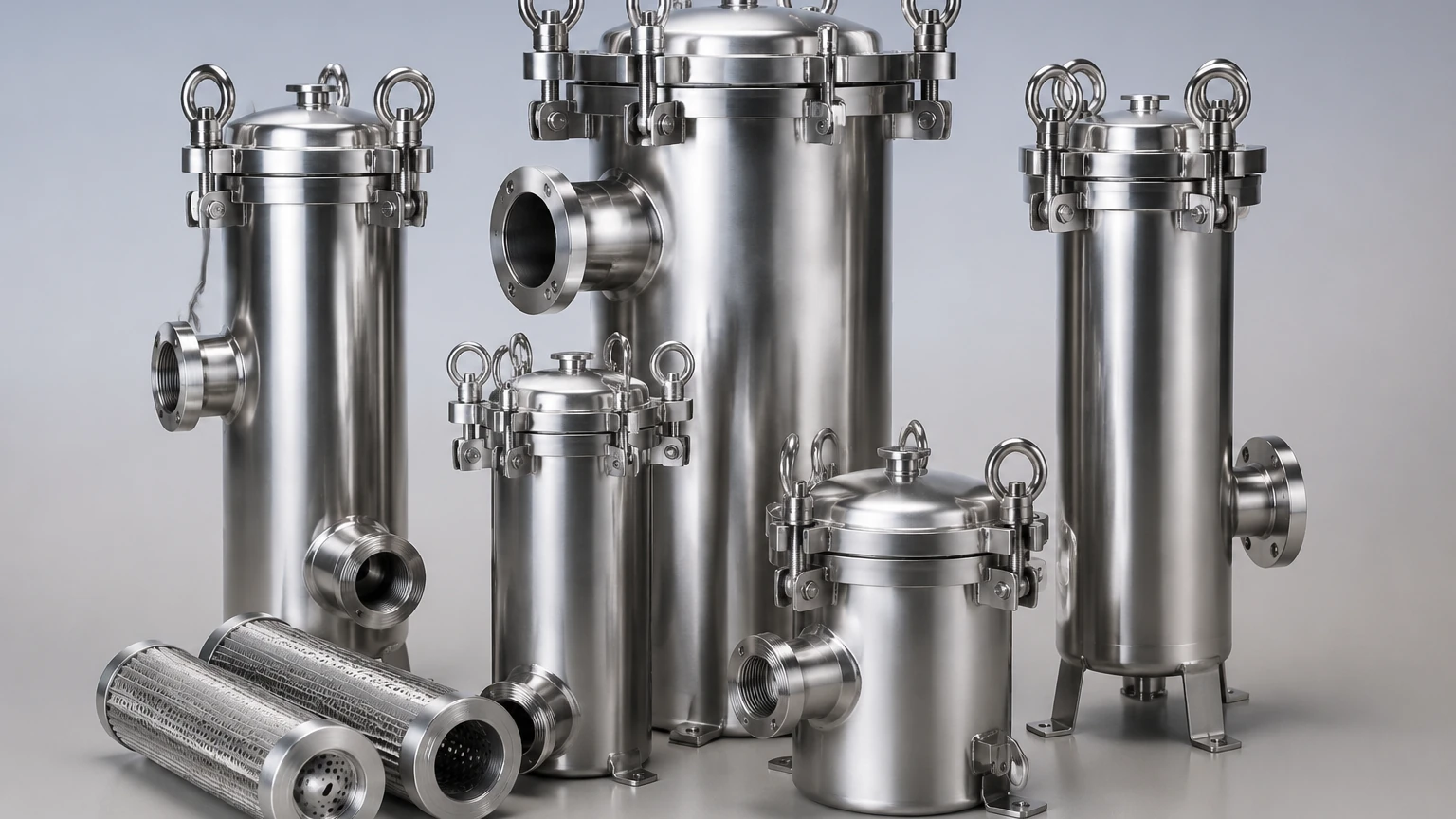
The primary function of a cuno filtergehäuse is to maintain structural integrity under pressure while facilitating efficient fluid transition. Industrial housings are typically designed to accommodate single or multiple cartridges, depending on the required flow rate and the solids loading of the process fluid.
From an engineering perspective, the internal geometry of the housing must minimize turbulence and pressure drop. A well-designed housing ensures that the velocity of the fluid is distributed evenly across the surface of the filter media. This prevents premature clogging of specific areas of the filter element and extends the overall service life. When evaluating a cuno filtergehäuse, technical teams must consider the closure mechanism—whether it is a swing-bolt design for high-pressure applications or a V-band clamp for lower-pressure, quick-change requirements.
Material Selection for Cuno Filtergehäuse Applications
Material science is at the heart of filtration performance. Most industrial applications require stainless steel due to its corrosion resistance and ability to withstand high temperatures.
1. 304 Stainless Steel: This is the standard choice for general industrial applications, including water treatment and less aggressive chemical processing. It offers good durability and cost-effectiveness.
2. 316L Stainless Steel: For more demanding environments, such as pharmaceutical manufacturing or handling corrosive chemicals, 316L is preferred. The addition of molybdenum provides superior resistance to pitting and crevice corrosion, particularly in chloride-rich environments.
3. Surface Finish: In the food and beverage and pharmaceutical industries, the internal surface finish of the cuno filtergehäuse is paramount. Electropolishing or mechanical polishing to a specific Ra (Roughness Average) value is often required to prevent bacterial growth and ensure effective Cleaning-in-Place (CIP) or Steam-in-Place (SIP) processes.
Kaifil’s expertise in manufacturing custom stainless steel filtration components ensures that every housing component meets these stringent material and finish requirements, providing a reliable foundation for complex filtration systems.
Operational Performance and Selection Criteria
Selecting a cuno filtergehäuse is not merely about matching a pipe size. Engineers must conduct a thorough analysis of the operational parameters to ensure the housing can handle the peak demands of the system.
Pressure and Temperature Ratings
The housing must be rated for the maximum operating pressure of the system, including potential pressure spikes. Standard industrial housings often carry ratings of 10 bar (150 psi) or 20 bar (300 psi), but custom-engineered solutions can be designed for significantly higher pressures. Temperature is equally important, as it affects the selection of sealing materials (O-rings and gaskets) and the structural strength of the metal itself.
Flow Rate and Viscosity
The flow capacity of a cuno filtergehäuse is determined by the inlet and outlet sizes and the internal volume. High-viscosity fluids require larger housings and specialized internal supports to maintain flow without excessive pressure loss. Engineers should consult flow curves provided by manufacturers to determine the "clean pressure drop" across the housing and the filter element combined.
Connection Types
Integration into existing piping requires the correct connection interface. Common options include:
* NPT/BSP Threaded: Suitable for smaller, lower-pressure systems.
* Flanged (ANSI/DIN): The standard for heavy industrial and high-pressure applications.
* Tri-Clamp: Essential for sanitary applications where frequent disassembly for cleaning is required.
For those looking to explore a wide range of custom options and technical support for these specifications, visiting the Main Page of a specialized manufacturer like Kaifil is a critical step in the procurement process.
Customization and OEM Integration in Filtration Systems
While standard off-the-shelf housings meet many needs, many industrial processes require customized cuno filtergehäuse solutions. Customization can range from unique port configurations to the integration of specialized sensors for monitoring differential pressure.
OEM (Original Equipment Manufacturer) services are particularly valuable for companies building larger filtration skids or specialized machinery. A custom-designed housing can be optimized for space constraints, specific mounting requirements, or unique filtration media. For example, if a process requires a specific type of stainless steel wire mesh filter, the housing must be engineered to provide a perfect seal with that specific cartridge end-cap style (such as Code 7, Code 3, or DOE).
Kaifil’s manufacturing capabilities allow for the production of precision metal filter components that fit perfectly within these housings, ensuring that the entire filtration assembly operates at peak efficiency. This synergy between the housing and the internal filter element is what defines a high-performance filtration system.
Maintenance, Durability, and Long-Term Value
The total cost of ownership (TCO) for a cuno filtergehäuse is influenced by its durability and ease of maintenance. A housing that is difficult to open or prone to seal failure will lead to increased downtime and labor costs.
Sealing Systems
The choice of O-ring material—such as EPDM, Viton (FKM), or PTFE—must be compatible with the process fluid and the operating temperature. A failure in the seal can lead to bypass, where unfiltered fluid contaminates the downstream process. Regular inspection of these seals during filter change-outs is a mandatory maintenance task.
Cleaning and Sterilization
In industries like dairy or biotechnology, the housing must be capable of undergoing rigorous sterilization. The design should eliminate "dead legs" or areas where fluid can stagnate and harbor contaminants. Stainless steel housings are ideal here because they can withstand the high temperatures of steam sterilization and the harsh chemicals used in CIP cycles.
Replacement Cycles
While the stainless steel housing itself may last for decades, the internal components and seals have specific replacement cycles. Monitoring the differential pressure across the housing is the most effective way to determine when the internal filter elements need cleaning or replacement. A sudden drop in differential pressure often indicates a seal failure or a ruptured filter media, requiring immediate attention.
Engineering Considerations for Purchasing
When engineers prepare to purchase or specify a cuno filtergehäuse, they should confirm several key data points with the manufacturer:
1. Chemical Compatibility: Ensure every wetted part, including the housing body and the gaskets, is compatible with the process fluid.
2. Filtration Accuracy: While the housing holds the filter, the choice of the internal element (e.g., wire mesh, sintered metal, or pleated cartridge) determines the micron rating and filtration efficiency.
3. Regulatory Compliance: Check if the housing needs to meet specific standards such as ASME Section VIII, PED (Pressure Equipment Directive), or FDA/USP Class VI for sanitary applications.
4. Scalability: Consider whether the housing design allows for future increases in flow rate, perhaps by choosing a multi-round housing that can initially be used with fewer cartridges.
By focusing on these technical details, purchasing teams can avoid the risks of system underperformance or premature equipment failure. Reliable manufacturers provide the documentation and engineering support necessary to validate these choices before the equipment is installed.
Conclusion: Optimizing Filtration Efficiency
The cuno filtergehäuse is a foundational component of industrial fluid management. Its role in protecting downstream equipment, ensuring product purity, and maintaining process safety cannot be overstated. Whether you are dealing with water treatment, chemical synthesis, or food production, the integrity of your filter housing determines the reliability of your entire operation.
Kaifil remains committed to supporting these critical applications through the manufacturing of high-quality stainless steel filter cartridges, wire mesh filters, and precision components. By combining advanced manufacturing with deep engineering knowledge, Kaifil helps global customers achieve the precise filtration performance required in today’s demanding industrial environments. For more information on customized filtration components and to review product options, visit the Main Page to connect with technical experts who can assist in optimizing your filtration strategy.
