


Custom Filter Housings for Food and Beverage Processing
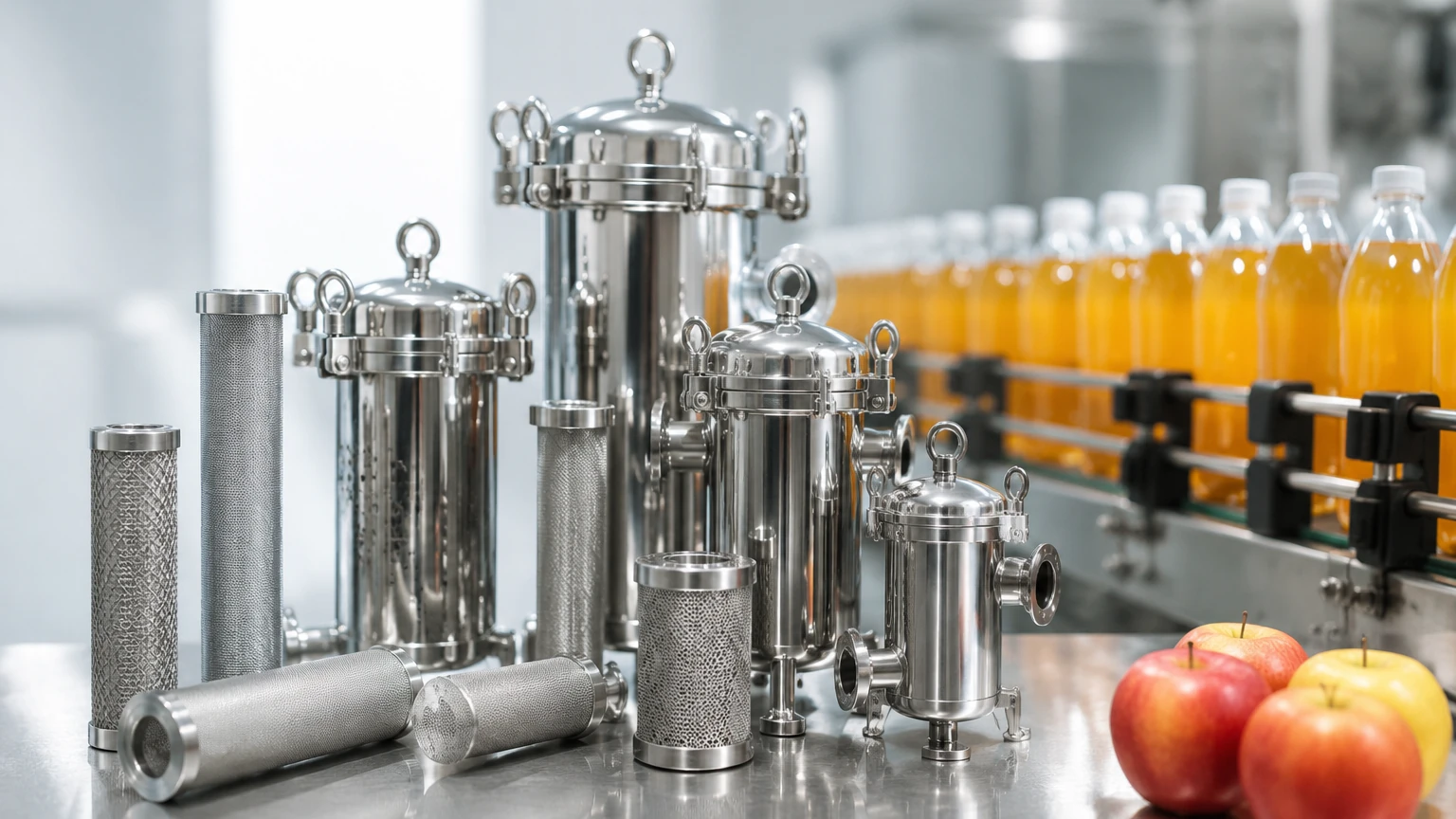
In the food and beverage industry, filtration is a critical process step that ensures product safety, clarity, and shelf-life stability. While standard filtration units are available, many processing lines require specific configurations to accommodate unique flow rates, space constraints, and stringent sanitary standards. Custom filter housings for food and beverage processing provide the necessary flexibility to meet these engineering challenges while maintaining compliance with global safety regulations. As a specialized manufacturer, Kaifil provides high-performance stainless steel filtration solutions designed to withstand the rigorous demands of industrial food production.
Selecting the right housing involves more than just matching a pipe size. It requires a deep understanding of fluid dynamics, material compatibility, and the specific hygienic requirements of the application, whether it involves dairy, soft drinks, brewing, or edible oils.
Engineering Standards for Sanitary Filter Housings
When designing custom filter housings for food and beverage processing, the primary focus is on hygiene and cleanability. Unlike general industrial housings, sanitary versions must eliminate areas where bacteria or product residue can accumulate. This is achieved through specific engineering practices:
Material Selection and Surface Finish
Stainless steel is the industry standard due to its corrosion resistance and durability. Most food-grade applications utilize 304 or 316L stainless steel. 316L is often preferred for its superior resistance to chlorides and acidic cleaning agents.
A critical technical specification is the surface roughness, often measured as Roughness Average (Ra). For food and beverage applications, internal surfaces are typically polished to an Ra of less than 0.8 μm (32 micro-inches). In high-purity applications, such as pharmaceutical-grade beverage additives, electropolishing may be employed to achieve even smoother finishes, reducing the mechanical bond between the metal surface and potential contaminants.
Eliminating Dead Legs and Crevices
Sanitary design dictates that the housing must be free of "dead legs"—sections of the piping or housing where fluid can stagnate. Custom engineering allows for the precise placement of inlets and outlets to ensure full drainage. Furthermore, all internal welds should be ground smooth and flush to prevent crevices that could harbor microbial growth. This level of precision is vital for maintaining the integrity of Clean-in-Place (CIP) and Steam-in-Place (SIP) cycles.
Customization Parameters for Processing Efficiency
Every production facility has unique spatial and operational requirements. Custom filter housings allow engineers to optimize the filtration stage for the specific needs of the line rather than forcing the line to adapt to a standard component.
Flow Rate and Multi-Round Configurations
Depending on the volume of production, a single-cartridge housing may be insufficient. Custom multi-round housings can accommodate anywhere from three to over a hundred filter cartridges. Engineering these units requires careful calculation of the internal volume to ensure uniform flow distribution across all filter elements. This prevents premature clogging of certain cartridges and ensures consistent filtration efficiency across the entire batch.
Inlet and Outlet Configurations
Standard housings often come with fixed port sizes and orientations. However, in a crowded processing plant, custom filter housings for food and beverage processing can be designed with tangential inlets, offset outlets, or specific connection types such as Tri-Clamp, DIN, or SMS sanitary fittings. This customization reduces the need for additional elbows and piping, which in turn minimizes pressure drops and potential leak points.
Heating and Cooling Jackets
Certain food products, such as chocolate, syrups, or fats, require precise temperature control to maintain the correct viscosity for filtration. Custom housings can be equipped with integrated heating jackets (steam or hot water) to ensure the product remains in a liquid state throughout the filtration process. Conversely, cooling jackets can be used for heat-sensitive products to prevent thermal degradation during high-pressure filtration cycles.
Integration with CIP and SIP Systems
In modern food and beverage processing, downtime for manual cleaning is a significant cost factor. Therefore, custom filter housings are frequently designed to be fully compatible with automated cleaning systems.
Clean-in-Place (CIP) Compatibility
CIP systems circulate cleaning chemicals and water through the housing at high velocities. A custom-designed housing ensures that the internal geometry allows the cleaning solution to reach every surface. Features such as spray balls or specialized internal baffles can be integrated into the design to enhance the turbulence and mechanical scrubbing action of the CIP fluid.
Steam-in-Place (SIP) and Thermal Stress
For products requiring sterilization, such as juices or dairy alternatives, the filter housing must withstand the thermal stress of repeated SIP cycles. Custom engineering ensures that the housing wall thickness, gasket materials, and closure mechanisms (such as heavy-duty swing bolts or sanitary clamps) can handle the expansion and contraction cycles without compromising the seal or structural integrity.
Technical Selection Criteria for Engineers
When specifying a custom filter housing, engineering teams must confirm several technical variables to ensure the final product meets the application’s demands.
1. Operating Pressure and Temperature: The housing must be rated for the maximum surge pressures and the peak temperatures encountered during both production and sterilization.
2. Seal Compatibility: O-rings and gaskets must be made from FDA-compliant materials such as EPDM, Silicone, or Viton. The choice depends on the chemical composition of the food product and the cleaning agents used.
3. Filtration Micron Rating: The housing must be compatible with the specific type of filter media required, whether it is a depth filter, pleated membrane, or stainless steel wire mesh. The internal support structures must be designed to hold these elements securely under pressure.
4. Venting and Drainage: Proper venting is essential to remove air pockets that can cause oxidation in certain beverages. Custom housings can include specialized sanitary vent valves and low-point drains to ensure 100% product recovery at the end of a run.
Managing Total Cost of Ownership (TCO)
While the initial investment in custom filter housings for food and beverage processing may be higher than off-the-shelf alternatives, the long-term savings are substantial. A housing that is perfectly matched to the process requirements reduces waste by ensuring higher product recovery and extends the life of expensive filter cartridges by optimizing flow distribution.
Furthermore, durable stainless steel construction from a reputable manufacturer like Kaifil ensures that the housing remains a functional asset for decades. By reducing the time required for cleaning and maintenance, custom solutions directly contribute to higher Overall Equipment Effectiveness (OEE) for the production line.
Quality Assurance and Compliance
In the B2B filtration sector, documentation is as important as the hardware itself. When procuring custom housings, it is essential to work with a manufacturer that provides full material traceability. This includes Material Test Reports (MTRs) for the stainless steel used, confirming its chemical composition and mechanical properties. Compliance with standards such as the ASME Pressure Vessel Code or regional equivalents ensures that the equipment is safe for high-pressure operations.
For the food and beverage sector, adherence to 3-A Sanitary Standards or EHEDG guidelines provides third-party verification that the equipment meets the highest levels of hygienic design. These certifications are often required by food safety auditors and regulatory bodies to ensure that the production environment is capable of producing safe consumer goods.
Conclusion
Custom filter housings for food and beverage processing are foundational components for any high-quality production line. By focusing on sanitary design, material integrity, and process-specific customization, manufacturers can achieve superior filtration results while maintaining the highest safety standards. Whether the goal is to improve the clarity of a craft beer, ensure the purity of bottled water, or protect sensitive downstream equipment in a dairy plant, a custom-engineered housing provides the reliability and performance that standard units cannot match.
For technical professionals looking to optimize their filtration systems, evaluating the specific needs of the fluid, the environment, and the regulatory landscape is the first step toward a successful installation. To explore the full range of custom stainless steel filtration components and engineering support available, visit the Main Page for detailed product specifications and application-specific solutions.
Download Custom Filter Housings for Food and Beverage Processing as a PDF
