


Cyclone Dust Collector Filter
In industrial air quality management, the cyclone dust collector stands as a fundamental piece of equipment for separating particulate matter from gas streams. While the primary mechanism of a cyclone relies on centrifugal force to precipitate larger particles, the overall system efficiency often depends on the secondary stage: the cyclone dust collector filter. For engineers and facility managers, selecting the correct filtration media and housing configuration is critical to ensuring regulatory compliance, protecting downstream equipment, and optimizing energy consumption.
Industrial filtration is rarely a one-size-fits-all application. Depending on the particle size distribution, temperature, and chemical composition of the exhaust gas, the requirements for a cyclone dust collector filter can vary significantly. As a specialized manufacturer of stainless steel filtration solutions, Kaifil provides the technical expertise and high-performance components necessary to meet these demanding industrial standards.
Understanding the Mechanics of Cyclone Dust Collection
A cyclone dust collector operates by creating a high-speed vortex within a cylindrical or conical chamber. As the dust-laden air enters tangentially at the top, it spirals downward. The centrifugal force moves the heavier particles toward the outer walls, where they lose momentum and fall into a hopper. The cleaned air then reverses direction and exits through the center of the vortex at the top.
However, centrifugal separation has physical limitations. Fine particles—typically those below 10 to 20 microns—often remain entrained in the air stream because their mass is insufficient for the centrifugal force to overcome the drag of the upward-moving air. This is where the cyclone dust collector filter becomes essential. By placing a high-efficiency filter at the exhaust outlet, the system can capture the remaining sub-micron particles that the cyclone alone cannot process.
For many industrial operators, the goal is to achieve a balance between high separation efficiency and low pressure drop. A well-designed filter stage prevents the emission of fine dust into the atmosphere or the recirculated indoor air, ensuring a safer work environment and longer life for secondary fans and blowers.
The Critical Function of Secondary Filters in Cyclone Systems
The integration of a secondary filter into a cyclone system transforms a basic mechanical separator into a comprehensive filtration solution. In many heavy-duty applications, such as wood processing, metal grinding, or chemical powder handling, the cyclone acts as a "pre-cleaner." By removing the bulk of the dust load (often up to 90-95%), it prevents the secondary filter from becoming quickly blinded or clogged.
Particle Size and Filtration Efficiency
While the cyclone manages the "heavy lifting," the cyclone dust collector filter is responsible for the final polish. In pharmaceutical and chemical processing, where even trace amounts of fine dust can be hazardous or represent lost product value, the filter must meet stringent efficiency ratings.
Protecting Downstream Components
Without an effective filter, fine abrasive dust can pass through the cyclone and enter the system's fan or blower. Over time, this leads to impeller erosion, imbalance, and mechanical failure. By capturing these particles, the filter protects the most expensive mechanical components of the air handling system, reducing long-term maintenance costs.
Material Engineering: Why Stainless Steel is Preferred for Industrial Cyclone Filters
In many standard applications, fabric bags or pleated paper cartridges are used. However, in demanding industrial environments, these materials often fall short. Kaifil specializes in stainless steel wire mesh and precision metal filter components, which offer several distinct advantages for cyclone dust collector filter applications.
High Temperature Resistance
Many industrial exhaust streams, particularly in smelting, glass manufacturing, or chemical synthesis, exceed the temperature limits of synthetic fibers. Stainless steel filters can operate continuously at temperatures where polyester or aramid would melt or degrade, providing a stable filtration solution for hot gas applications.
Chemical Compatibility and Corrosion Resistance
When the dust being collected is corrosive—such as acidic vapors or alkaline powders—standard filter media can deteriorate rapidly. Using 304 or 316L stainless steel ensures that the filter remains structurally sound and effective even when exposed to aggressive chemical environments. This is particularly vital in the chemical processing and food and beverage sectors, where hygiene and material integrity are paramount.
Mechanical Durability and Reusability
Unlike disposable cartridges, a stainless steel cyclone dust collector filter is designed for longevity. It can withstand high-pressure pulses during cleaning cycles and is resistant to abrasion from sharp or hard particles. Furthermore, metal filters can often be cleaned and reused multiple times, significantly lowering the total cost of ownership compared to frequent replacements of consumable filters.
Key Performance Metrics for Cyclone Dust Collector Filters
When evaluating a cyclone dust collector filter for a specific application, engineers must look beyond the initial purchase price and focus on technical performance specifications.
Pressure Drop ($ΔP$)
The pressure drop across the filter media is a direct indicator of the energy required to move air through the system. A high pressure drop means the fan must work harder, increasing electricity costs. Stainless steel wire mesh filters can be engineered with specific weave patterns to optimize airflow while maintaining high filtration accuracy, ensuring that the system operates efficiently.
Air-to-Cloth Ratio
This metric represents the volume of air passing through a square foot of filter media per minute. In cyclone systems, maintaining a proper air-to-cloth ratio is essential to prevent "blinding," where dust is driven so deeply into the media that it cannot be removed by standard cleaning mechanisms. Engineering the filter with sufficient surface area—often through pleated designs—is key to managing high flow rates.
Micron Rating and Capture Efficiency
The micron rating determines the smallest particle size the filter can reliably capture. Depending on the application, a cyclone dust collector filter may need to be rated for 5 microns, 1 micron, or even sub-micron levels. It is important to distinguish between "nominal" and "absolute" ratings to ensure the filter meets the specific safety or process requirements of the facility.
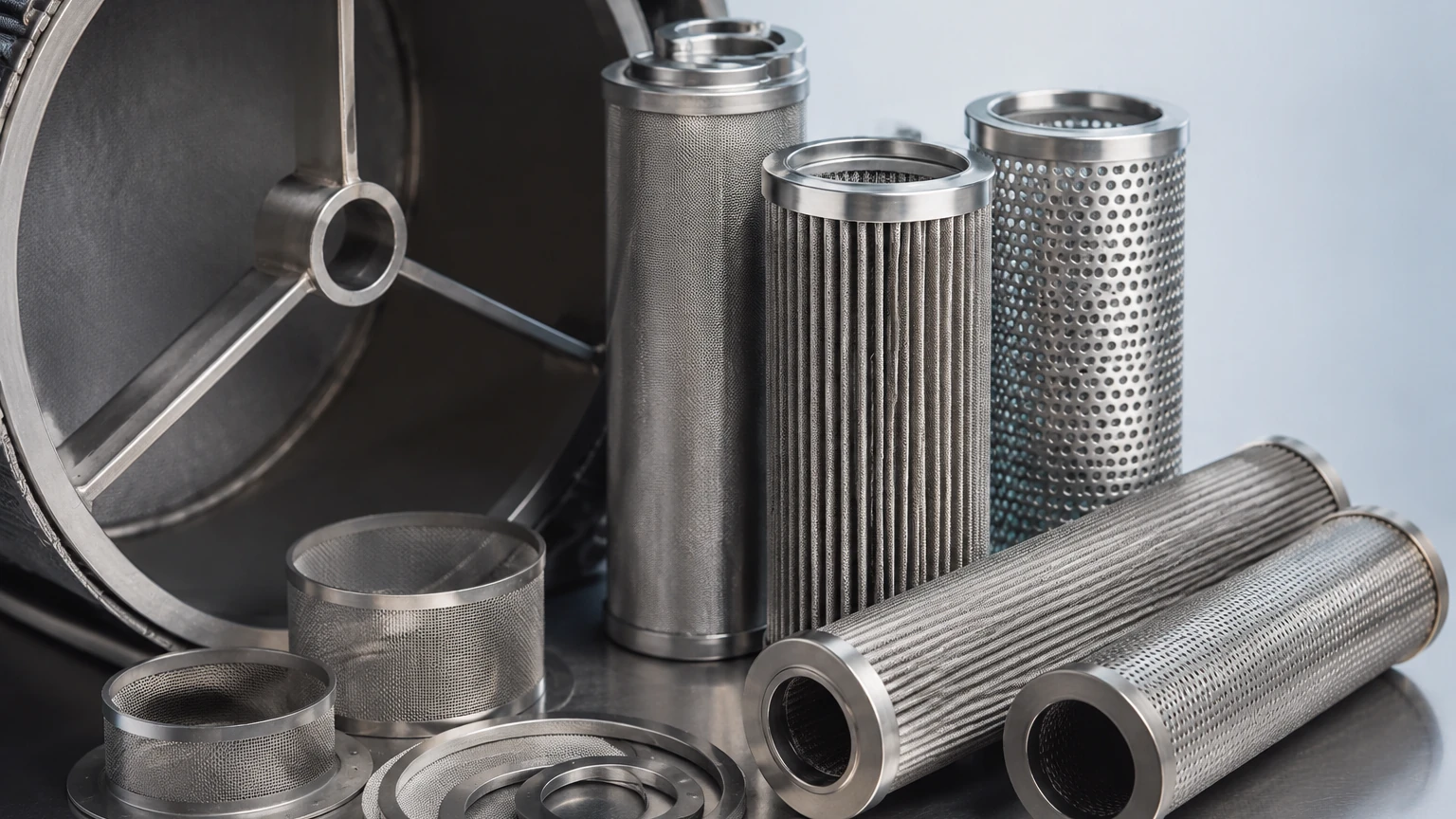
Customization and Selection Criteria for Technical Buyers
Every industrial facility has unique spatial constraints and process requirements. Standardized filters often require expensive modifications to existing ductwork or housings. Kaifil addresses this by offering customized filtration solutions tailored to specific OEM or aftermarket needs.
When selecting a filter, technical buyers should confirm the following parameters:
1. Connection Type: Does the filter require a flange, a threaded connection, or a quick-release clamp? Secure sealing is vital to prevent bypass leakage.
2. Structural Integrity: Will the filter be subjected to high vacuum or positive pressure? The internal support core must be robust enough to prevent collapse.
3. Cleaning Mechanism: Is the system equipped with a pulse-jet cleaning system, or is manual cleaning required? The filter media must be compatible with the intended cleaning method.
4. Regulatory Compliance: Does the application require food-grade materials (FDA compliance) or specific certifications for hazardous environments?
By consulting with a professional manufacturer, engineers can ensure that the filter they select is not just a component, but a high-performance asset designed for their specific environment. For more information on specialized metal filtration components and custom designs, you can Review product options and application support on our Main Page.
Maintenance and Operational Longevity
The longevity of a cyclone dust collector filter is heavily dependent on the maintenance regime. In a cyclone system, the first sign of filter trouble is usually a steady increase in the baseline pressure drop, indicating that the media is becoming permanently fouled.
Pulse-Jet Cleaning
Many modern systems use a pulse-jet of compressed air to dislodge dust from the filter surface. For this to be effective, the filter media must be flexible enough to vibrate but rigid enough to maintain its shape. Stainless steel mesh is particularly well-suited for this, as it does not stretch or sag over time like fabric.
Inspection for Abrasion
In applications involving abrasive dust (such as silica or metal filings), the filter should be periodically inspected for signs of wear. Even though stainless steel is highly durable, high-velocity impact over thousands of hours can eventually thin the wire. Early detection of wear prevents dust bypass and protects the rest of the facility.
Conclusion: Optimizing Your Filtration Strategy
The cyclone dust collector filter is a vital component in the pursuit of industrial efficiency and environmental responsibility. By understanding the relationship between the primary cyclone separation and the secondary filtration stage, engineers can design systems that are both effective and economical.
Choosing the right materials, such as the precision-engineered stainless steel solutions provided by Kaifil, ensures that the filtration system can handle high temperatures, corrosive chemicals, and heavy dust loads without frequent downtime. Investing in high-quality, durable filtration components is the most effective way to reduce the total cost of ownership while maintaining the highest standards of air purity in industrial operations.
