


Cylindrical Air Filter
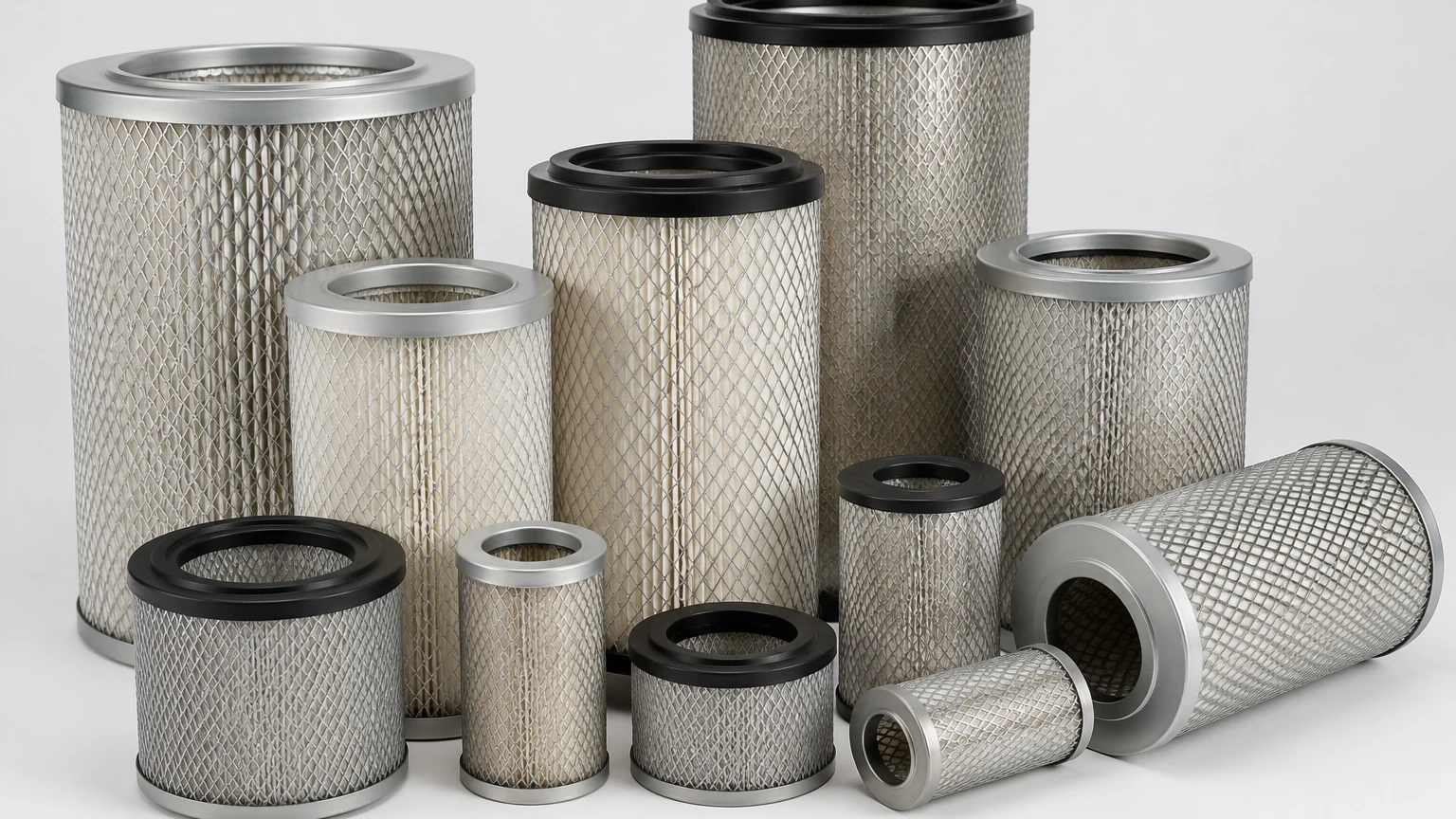
In industrial environments, the integrity of air intake and exhaust systems is critical to the longevity of machinery and the purity of process outputs. A cylindrical air filter serves as a primary component in these systems, designed to remove particulate matter, aerosols, and contaminants from air streams. Unlike standard flat panel filters, the cylindrical geometry provides a high surface-area-to-volume ratio, making it an ideal choice for high-flow applications where space is a constraint and durability is a prerequisite.
For engineers and procurement professionals, selecting the right filtration component requires an understanding of material science, fluid dynamics, and the specific environmental stressors of the application. As a specialized manufacturer, Kaifil provides precision-engineered stainless steel filtration solutions that address the limitations of conventional media, offering enhanced thermal and chemical resistance for demanding industrial sectors.
Engineering Fundamentals of Cylindrical Air Filters
The performance of a cylindrical air filter is dictated by its structural design and the media used to capture particles. In industrial settings, these filters are often required to operate under high pressure, extreme temperatures, or in the presence of corrosive gases.
Geometric Advantages
The cylindrical shape allows for the even distribution of air pressure across the filter surface. This radial flow pattern minimizes localized stress on the filter media, reducing the risk of structural failure or "blow-through." By utilizing a pleated design within the cylindrical frame, manufacturers can significantly increase the Effective Filtration Area (EFA). A higher EFA results in a lower face velocity (the speed at which air passes through the media), which improves particle capture efficiency and extends the service life of the filter by reducing the rate of pressure drop increase.
Material Selection: Metal vs. Synthetic
While many commercial applications use paper or synthetic fiber media, industrial-grade cylindrical air filters frequently utilize stainless steel wire mesh or sintered metal. Stainless steel (typically 304 or 316L grades) offers several technical advantages:
* Thermal Stability: Metal filters can operate in environments exceeding 500°C, where synthetic materials would melt or degrade.
* Chemical Compatibility: Resistance to oxidation and corrosive agents is essential in chemical processing and petrochemical applications.
* Mechanical Strength: Stainless steel mesh maintains its pore structure under high differential pressure, preventing media migration into the clean air stream.
Performance Metrics: Efficiency and Pressure Drop
When evaluating a cylindrical air filter for a specific system, two primary metrics define its suitability: filtration efficiency and initial differential pressure.
Micron Ratings and Capture Mechanisms
Filtration efficiency is typically categorized by the micron rating, which indicates the size of particles the filter can reliably intercept. In air filtration, particles are captured through several mechanisms:
1. Inertial Impaction: Larger particles unable to follow the air streamlines collide with and adhere to the filter fibers.
2. Interception: Mid-sized particles following a streamline come within one particle radius of a fiber and are captured.
3. Diffusion (Brownian Motion): Very small particles move erratically and eventually contact the filter media.
For precision applications, Kaifil’s stainless steel wire mesh filters can be manufactured with specific weave patterns to achieve precise absolute or nominal micron ratings, ensuring that sensitive downstream components are protected from even microscopic debris.
Managing Differential Pressure
Differential pressure ($ΔP$) is the difference in pressure between the upstream (dirty) and downstream (clean) sides of the filter. A high initial $ΔP$ indicates that the filter is restrictive, which forces fans or compressors to work harder, increasing energy costs. Engineers must balance the need for high-efficiency filtration with the requirement for low airflow resistance. Through optimized pleat geometry and wire diameter selection, a well-designed cylindrical air filter maintains a low profile of resistance throughout its operating cycle.
Industrial Applications and Environmental Compatibility
Cylindrical air filters are integrated into various systems across diverse industries. The choice of filter often depends on the specific contaminants present and the cleanliness requirements of the process.
Chemical and Petrochemical Processing
In these environments, air filters are exposed to volatile organic compounds (VOCs) and acidic vapors. A stainless steel cylindrical air filter is often the only viable solution due to its inert nature. These filters are used in reactor venting, catalyst recovery, and protecting high-speed compressor stages from atmospheric dust that could cause catastrophic mechanical failure.
Food, Beverage, and Pharmaceuticals
In hygiene-sensitive industries, filters must not only remove particles but also withstand rigorous cleaning protocols. Stainless steel filters are preferred because they do not shed fibers (media migration) and can be sterilized using Steam-in-Place (SIP) or Clean-in-Place (CIP) methods. They are commonly used in sterile air venting for storage tanks and as pre-filters for HEPA systems in cleanrooms.
Power Generation and Heavy Machinery
Gas turbines and large internal combustion engines require massive volumes of clean air. Cylindrical filters in these systems often feature a multi-stage design, where a coarse outer mesh protects a finer inner layer. This staged approach prevents the fine media from being prematurely blinded by large debris, ensuring consistent power output and reducing maintenance frequency.
Customization and OEM Integration
Standard off-the-shelf filters rarely meet the precise requirements of specialized industrial equipment. Customization is often necessary to ensure a perfect fit within existing housing and to match the specific flow characteristics of the system.
Kaifil specializes in the development of bespoke filtration components. By visiting the Main Page, technical teams can explore the range of customization options available, including:
* Custom Dimensions: Tailoring the height, outer diameter, and inner diameter to fit proprietary housings.
* End-Cap Configurations: Designing specialized gaskets, threaded connections, or flange mounts to ensure a leak-proof seal.
* Reinforcement Structures: Adding internal perforated cores or external cages to withstand high-pressure pulses or vacuum conditions.
For OEM manufacturers, collaborating with a dedicated filtration partner ensures that the cylindrical air filter is treated as an engineered component rather than a generic consumable. This approach leads to optimized system performance and lower total cost of ownership for the end-user.
Maintenance, Cleaning, and Service Life
The total cost of a filtration system is not just the purchase price, but the cumulative cost of maintenance and downtime. One of the primary advantages of a stainless steel cylindrical air filter is its cleanability.
Cleaning Methodologies
Unlike disposable paper filters, metal filters can often be restored to near-original performance levels through various cleaning techniques:
* Ultrasonic Cleaning: High-frequency sound waves create cavitation bubbles that dislodge deeply embedded particles from the mesh.
* Backwashing: Reversing the flow of air or a cleaning fluid through the filter to push contaminants out of the media.
* Chemical Cleaning: Using compatible solvents or detergents to dissolve accumulated oils or organic matter.
Monitoring for Replacement
Despite their durability, all filters eventually reach the end of their service life. This is typically determined by the "terminal pressure drop." Once the $ΔP$ reaches a pre-defined threshold, the filter must be cleaned or replaced. Continuous monitoring via differential pressure gauges is a standard industry practice to prevent system inefficiency and protect downstream equipment from the risks of filter bypass or collapse.
Selection Criteria for Technical Procurement
When specifying a cylindrical air filter, engineers should confirm the following technical details with their supplier to ensure application success:
1. Operating Temperature: What is the maximum and continuous operating temperature the filter will encounter?
2. Flow Rate (SCFM/m³/h): What is the required air volume, and what is the maximum allowable initial pressure drop?
3. Contaminant Characteristics: Are the particles abrasive, sticky, or corrosive? What is the particle size distribution?
4. Housing Compatibility: Are the seal surfaces and dimensions compatible with existing hardware to prevent air bypass?
5. Regulatory Compliance: Does the application require FDA-compliant materials or specific industry certifications for safety and hygiene?
By addressing these factors during the design phase, organizations can implement a filtration strategy that maximizes equipment uptime and process reliability. Kaifil’s expertise in stainless steel wire mesh and precision metal components provides the technical foundation necessary for these high-performance solutions, ensuring that every cylindrical air filter meets the rigorous demands of modern industry.
