


Cylindrical Filter
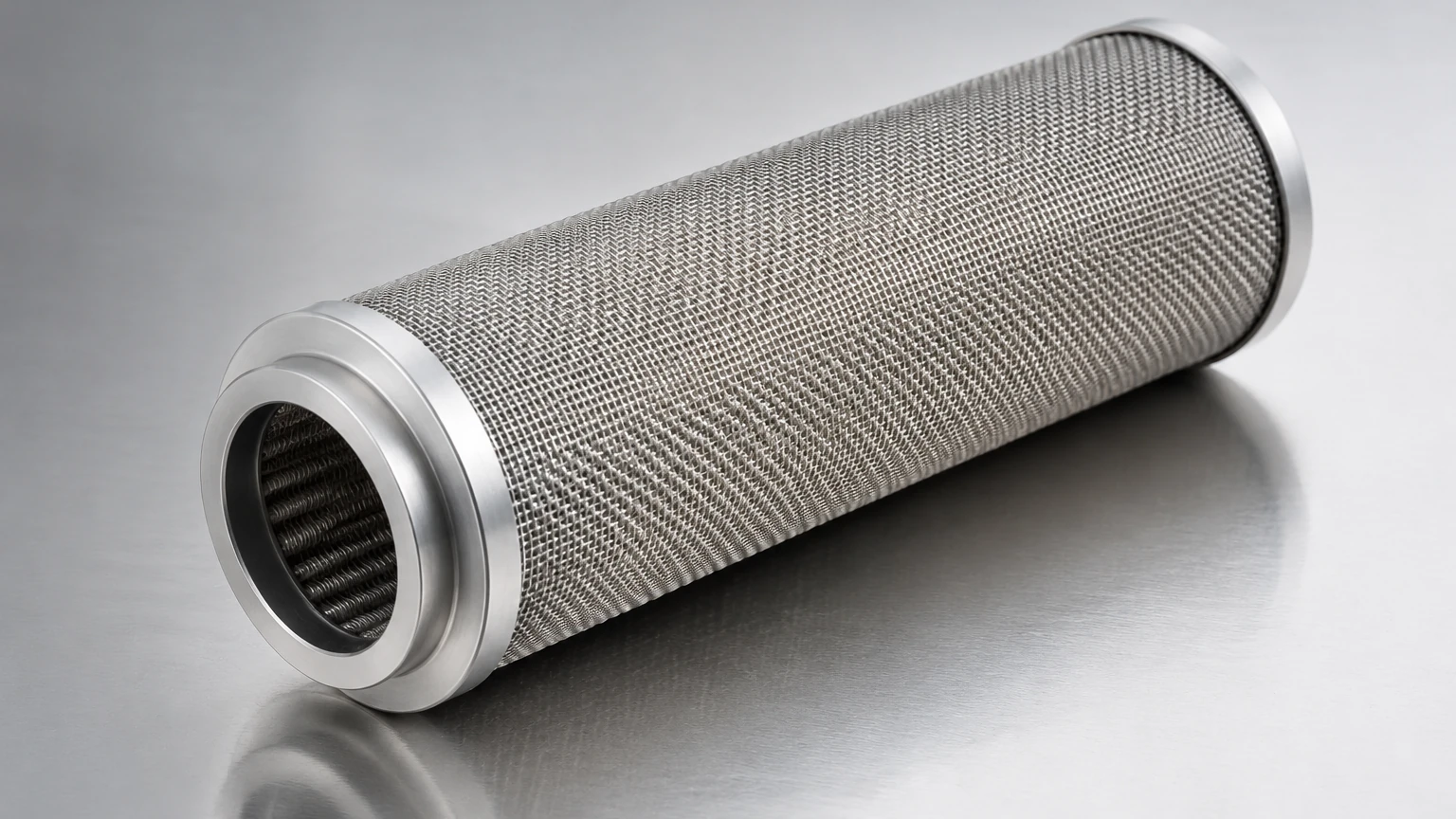
In industrial fluid dynamics and separation science, the cylindrical filter serves as a fundamental component for ensuring process purity and protecting downstream equipment. Unlike disposable polymer-based alternatives, industrial-grade metal cylindrical filters are engineered to withstand extreme temperatures, high pressure differentials, and corrosive chemical environments. For engineers and procurement specialists, selecting the correct filtration media and structural configuration is critical to optimizing the total cost of ownership and maintaining system integrity.
As a specialized manufacturer, Kaifil provides precision-engineered stainless steel filtration solutions designed for demanding applications. Understanding the technical nuances of cylindrical filter design—from material selection to structural reinforcement—is essential for achieving reliable performance in chemical processing, hydraulic systems, and food production.
Engineering Principles of Cylindrical Filter Design
The geometry of a cylindrical filter is chosen primarily for its inherent structural strength and efficient use of space. When fluid passes through a filter, it exerts pressure on the media. A cylindrical shape distributes this mechanical stress more uniformly than flat-panel designs, reducing the risk of media deformation or structural failure under high-flow conditions.
Structural Components
An industrial cylindrical filter typically consists of three primary layers:
1. The Inner Support Core: Usually constructed from perforated stainless steel or high-strength wire mesh, the core prevents the filter media from collapsing under external pressure (outside-in flow).
2. The Filtration Media: This is the functional layer, which may consist of single or multiple layers of woven wire mesh, sintered metal fiber felt, or sintered powder. The choice of media determines the micron rating and dirt-holding capacity.
3. The Outer Protective Layer: In high-velocity applications, an outer mesh or perforated shroud protects the delicate filtration media from mechanical damage during installation and operation.
Flow Directionality
Most industrial systems utilize an "outside-in" flow pattern, where the contaminant is trapped on the exterior surface of the cylinder. This configuration allows for easier mechanical cleaning and provides a larger surface area for initial particle impingement. However, "inside-out" configurations are also utilized in specific applications, such as basket strainers, where the goal is to contain the debris within the filter for easy removal.
Material Selection and Chemical Compatibility
The performance of a cylindrical filter is inextricably linked to the metallurgy of its components. Stainless steel is the industry standard due to its balance of mechanical strength, corrosion resistance, and thermal stability.
Common Stainless Steel Grades
* AISI 304: Suitable for general industrial use, water treatment, and applications where moderate corrosion resistance is required. It is cost-effective but may be susceptible to pitting in high-chloride environments.
* AISI 316L: The "L" denotes low carbon content, which improves weldability and resistance to intergranular corrosion. 316L contains molybdenum, making it the preferred choice for chemical processing, marine environments, and pharmaceutical applications where aggressive cleaning agents are used.
* Specialty Alloys: For extreme environments involving high-temperature oxidation or highly acidic fluids, alloys such as Inconel, Monel, or Hastelloy may be employed to ensure the longevity of the cylindrical filter.
When specifying materials, engineers must consider the pH of the fluid, the presence of oxidizing agents, and the operating temperature. Material certificates (MTRs) should be requested to verify that the alloy composition meets the required standards for the specific application.
Performance Metrics: Filtration Accuracy and Flow Rates
Selecting a cylindrical filter requires a deep dive into technical specifications beyond simple dimensions. The primary objective is to achieve the required level of purity without creating an excessive pressure drop ($ΔP$) that would strain pumps and increase energy consumption.
Nominal vs. Absolute Micron Ratings
* Nominal Rating: Indicates the filter's ability to retain a majority of particles of a specific size (e.g., 95% of 10-micron particles). This is often used for general-purpose straining.
* Absolute Rating: Refers to the diameter of the largest hard spherical particle that will pass through the filter under specified test conditions. For critical pharmaceutical or hydraulic applications, an absolute-rated cylindrical filter is necessary to ensure zero bypass of oversized contaminants.
Effective Filtration Area (EFA)
The EFA directly impacts the service life of the filter. A cylindrical filter can be designed with a smooth surface (plain) or a pleated surface. Pleating significantly increases the surface area within the same footprint, leading to lower flux rates (flow per unit area), reduced pressure drop, and extended intervals between cleaning or replacement.
Customization Options for Industrial Applications
Standard off-the-shelf filters rarely meet the precise requirements of complex industrial systems. Customization is often necessary to integrate the filter into existing housing or to address specific process challenges.
End Fitting Configurations
The method by which a cylindrical filter seals into its housing is critical for preventing bypass. Common configurations include:
* Double Open End (DOE): Features flat gaskets on both ends; relies on mechanical compression for a seal.
* Single Open End (SOE): Often features O-ring seals (such as 222 or 226 configurations) with a bayonet lock or fin end. This provides a more secure, leak-proof interface suitable for high-purity applications.
* Threaded Connections: NPT or BSP threads for direct integration into piping systems.
Multi-Layer Sintered Construction
For applications requiring both high precision and extreme durability, multiple layers of wire mesh can be sintered together. This process uses heat and pressure to fuse the wires at their contact points without the use of binders. The result is a cylindrical filter that maintains its pore structure even under high-pressure pulses or backwashing cycles.
Operational Lifecycle: Maintenance and Cleaning
One of the primary advantages of a stainless steel cylindrical filter is its reusability. Unlike depth filters made of polypropylene or glass fiber, metal filters can be cleaned and returned to service, significantly reducing waste and long-term procurement costs.
Cleaning Methodologies
1. Backwashing: Reversing the flow of fluid to dislodge particles from the surface of the media. This is often automated in continuous process systems.
2. Ultrasonic Cleaning: Using high-frequency sound waves in a cleaning solvent to create cavitation bubbles that remove fine particles trapped deep within the mesh pores.
3. Chemical Pickling/Solvent Cleaning: Employing specific chemicals to dissolve organic or inorganic scaling. It is vital to ensure the cleaning agent is compatible with the filter's metallurgy.
4. Burn-off/Pyrolysis: For filters used in polymer or resin processing, high-temperature ovens can be used to carbonize and remove organic buildup.
Determining Replacement Cycles
While metal filters are durable, they are not infinite. Engineers should monitor the "clean pressure drop" after each cleaning cycle. If the baseline $ΔP$ begins to rise, it indicates that the media is becoming permanently fouled or "blinded." Additionally, physical inspection for mesh fatigue, wire thinning, or structural deformation is necessary to prevent catastrophic failure in the process line.
Critical Considerations for Procurement and OEM Partnerships
When sourcing a cylindrical filter for an OEM project or a facility upgrade, technical documentation and quality assurance are as important as the hardware itself. Purchasing teams should evaluate potential suppliers based on their ability to provide precise engineering data.
Verification and Testing
A reliable manufacturer should be able to perform or provide data on:
* Bubble Point Testing: To verify the integrity of the filter and confirm its micron rating.
* Pressure Collapse Testing: To ensure the support core can handle the maximum expected differential pressure.
* Flow Fatigue Testing: To simulate the stresses of start-stop cycles in hydraulic or process systems.
Total Cost of Ownership (TCO)
While the initial capital expenditure for a stainless steel cylindrical filter is higher than for disposable cartridges, the TCO is often much lower. To calculate this, engineers must factor in the cost of replacement filters, the labor required for frequent change-outs, the cost of hazardous waste disposal for contaminated disposable media, and the potential cost of system downtime. In most high-volume or high-temperature industrial applications, the reusable metal filter emerges as the more economical and sustainable choice.
Conclusion
The cylindrical filter remains a cornerstone of industrial filtration due to its structural versatility and high-performance capabilities. By focusing on material compatibility, precise micron ratings, and robust structural design, engineers can ensure their systems operate at peak efficiency with minimal risk of contamination. Whether you are designing a new chemical reactor or optimizing a hydraulic power unit, the selection of the filtration component dictates the reliability of the entire process.
For technical specifications and to explore customized filtration components tailored to your specific industrial requirements, visit the Main Page of Kaifil to review product options and application support. Partnering with a manufacturer that understands the intersection of metallurgy and fluid dynamics is the first step toward achieving optimized filtration performance.
