


Define Coalescer
In industrial fluid processing and chemical engineering, the ability to separate immiscible phases is critical for product purity, equipment protection, and environmental compliance. To accurately define coalescer, one must view it as a specialized separation technology that utilizes the physical properties of droplets to merge them into larger masses. Unlike a standard particulate filter that simply traps solids, a coalescer is engineered to facilitate the transition of a dispersed phase (small droplets) into a continuous phase (large droplets or a bulk layer) so they can be removed via gravity or mechanical means.
For engineers and procurement specialists, understanding the technical nuances of coalescence is essential when selecting components for hydraulic systems, fuel processing, or gas filtration. This guide examines the mechanics, materials, and selection criteria involved in high-performance coalescing systems.
The Mechanics of Coalescence: How It Works
To define coalescer performance, it is necessary to understand the three-stage process that occurs within the media: interception, coalescence, and drainage.
1. Interception and Attachment
As a contaminated fluid—either a gas or a liquid—passes through the coalescing media, the dispersed droplets (the internal phase) come into contact with the fibers or surfaces of the media. This occurs through several mechanisms, including Brownian motion for very small sub-micron droplets, inertial impaction for larger droplets, and direct interception. The media must be designed with a specific surface energy to attract these droplets without becoming permanently fouled.
2. Coalescence (Merging)
Once the droplets are attached to the media fibers, they travel along the fiber's length to intersection points. When two or more droplets meet, they merge due to surface tension. This is the core of the "coalesce" definition: the reduction of total surface area by combining multiple small volumes into one larger volume. In high-quality stainless steel wire mesh or sintered metal media, the tortuous path provided by the structure ensures a high frequency of droplet collisions.
3. Drainage and Separation
As the droplets grow, the forces of the fluid flow and gravity eventually overcome the adhesive forces holding the droplet to the media. The enlarged droplets are then "released" or drained from the downstream side of the element. Because these droplets are now significantly larger than the original dispersed phase, they settle (in liquid-liquid systems) or fall (in gas-liquid systems) at a much faster rate, following Stokes' Law. This allows for easy collection in a sump or a separate chamber.
Types of Coalescing Systems in Industrial Applications
While the fundamental principle remains the same, the application of the technology varies depending on the phases involved. Most industrial requirements fall into two categories:
Liquid-Liquid Coalescers
These are primarily used to separate water from hydrocarbons, such as removing water from jet fuel, diesel, or hydraulic oil. In these systems, the coalescer media is often hydrophobic (water-repelling) or hydrophilic (water-attracting) depending on which phase needs to be aggregated. Stainless steel mesh is frequently used as a pre-filter or a support structure in these systems to ensure the primary coalescing media remains stable under high flow rates.
Gas-Liquid Coalescers
Commonly referred to as mist eliminators or aerosol separators, these devices remove liquid droplets (such as oil or water) from a gas stream. You will find these in compressed air systems, turbine intake air filtration, and vacuum pump exhausts. The goal here is to prevent liquid carryover that could damage downstream equipment like compressors or precision instruments.
Engineering Materials and Construction
The choice of material is the most critical factor in the durability and efficiency of a coalescer. While some applications use fiberglass or polymer fibers, demanding industrial environments often require the robustness of metallic solutions.
Stainless Steel Wire Mesh
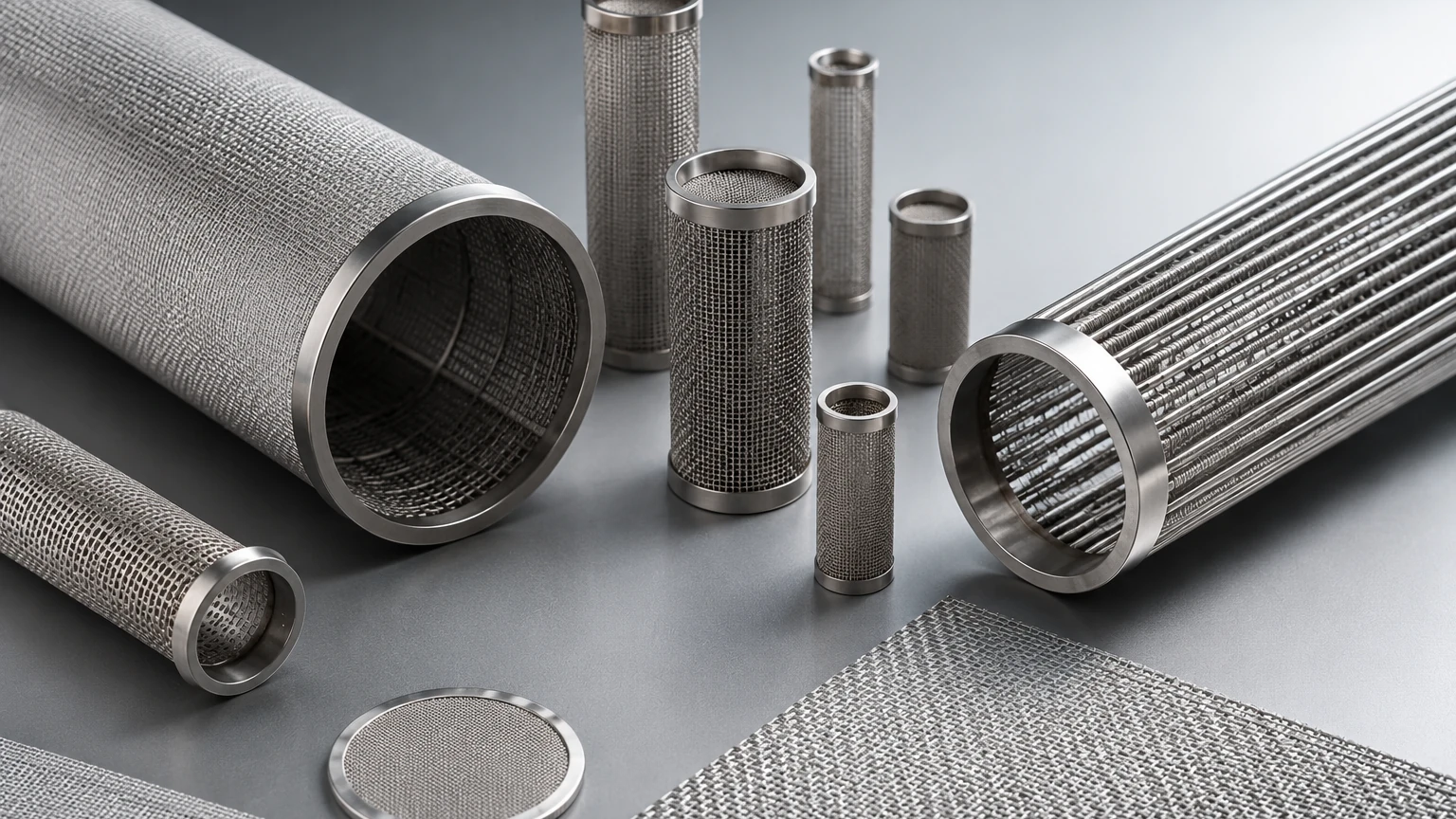
Stainless steel (304 or 316L) is the preferred material for applications involving high temperatures, high pressures, or corrosive chemicals. Wire mesh provides a predictable pore structure and high mechanical strength. It can be layered or pleated to increase the surface area, which directly impacts the coalescing efficiency.
Sintered Metal Media
For the most rigorous applications, sintered metal fiber or powder media offers exceptional performance. The sintering process bonds the metal particles or fibers together, creating a rigid structure that does not shed fibers—a critical requirement in pharmaceutical and food processing. This media can be cleaned and reused, significantly lowering the total cost of ownership compared to disposable cartridges.
Key Performance Metrics for Engineers
When evaluating a coalescer, technical professionals must look beyond the initial purchase price. The following metrics define the effectiveness of the unit:
* Beta Ratio and Efficiency: How effectively does the unit remove droplets of a specific micron size? High-efficiency coalescers can often achieve 99.9% removal of droplets down to 0.3 microns.
* Pressure Drop (ΔP): This is the resistance to flow. A high initial pressure drop indicates an undersized unit or overly restrictive media, which will lead to higher energy costs for pumps or compressors.
* Flux Rate: This refers to the flow rate per unit of surface area. Exceeding the recommended flux rate can lead to "re-entrainment," where the velocity of the fluid is so high that it breaks apart the coalesced droplets before they can drain, effectively undoing the work of the coalescer.
* Interfacial Tension (IFT): In liquid-liquid separation, the IFT of the two liquids dictates how easily they will coalesce. Low IFT fluids (often caused by surfactants) are much harder to separate and require specialized media treatments.
Selection Considerations: Beyond the Basics
Choosing the right coalescer involves a deep dive into the specific operating conditions of the facility. Engineers should confirm the following before finalizing a design:
Chemical Compatibility
Will the fluid react with the media or the housing? In the chemical processing industry, 316L stainless steel is often the baseline due to its resistance to pitting and crevice corrosion. For highly acidic or alkaline environments, more exotic alloys may be necessary.
Temperature and Pressure Fluctuations
Standard polymer-based coalescers may fail or deform under thermal cycling. Metallic coalescers maintain their structural integrity across a wide temperature range, ensuring that the filtration gap remains consistent and the seal stays tight.
Maintenance and Replacement Cycles
How often will the element need to be replaced or cleaned? In many industrial processes, downtime is more expensive than the hardware itself. Selecting a cleanable stainless steel element can extend the service life from weeks to years. For more information on custom metallic filtration components that meet these rigorous standards, you can visit the Main Page to review technical specifications.
Common Risks and Failure Modes
Understanding what can go wrong is just as important as knowing how to define coalescer success. There are three primary risks in coalescing systems:
1. Solid Contamination: Coalescers are not designed to be primary particulate filters. If the fluid contains high levels of solids, the coalescing media will plug rapidly. Engineers should always specify a pre-filter (often a 5-10 micron pleated metal element) to protect the coalescer.
2. Surfactant Poisoning: Surfactants (surface-active agents) reduce the interfacial tension between liquids. This makes droplets so stable that they refuse to merge. If surfactants are present, standard coalescing media may fail entirely, requiring specialized chemical treatment or different media surface properties.
3. Bypass: If the internal seals of the filter housing are compromised, or if the element is not seated correctly, the fluid will take the path of least resistance, bypassing the media entirely. This leads to immediate downstream contamination.
The Role of Customization in Industrial Filtration
Off-the-shelf coalescers often fail to meet the specific needs of niche industrial applications. Customization allows for the optimization of the media layers, the pleat density, and the end-cap configuration. For instance, a hydraulic system in a subsea environment requires vastly different housing and media specifications than a steam filtration system in a food processing plant.
By working with a manufacturer that specializes in stainless steel filtration, engineering teams can specify the exact wire diameter, mesh count, and alloy required for their specific fluid chemistry. This precision ensures that the coalescer performs reliably under the actual operating conditions of the plant, rather than just in a laboratory setting.
Conclusion
To define coalescer utility in a modern industrial context is to recognize it as a vital component for process efficiency and equipment longevity. Whether it is removing water from fuel or oil from compressed gas, the physics of coalescence remains a cornerstone of effective separation. By focusing on high-quality materials like stainless steel and understanding the engineering variables—such as flux rates, pressure drops, and chemical compatibility—purchasing teams and engineers can ensure they implement a solution that offers both high performance and a sustainable total cost of ownership.
When the application demands durability and precision, custom-engineered metal filtration components provide the reliability necessary for critical industrial paths. Evaluating the specific needs of your system today will prevent costly downstream failures tomorrow.
