


Disk Filters for Water
In industrial water treatment and process engineering, the selection of filtration media is a critical decision that impacts system longevity, operational costs, and product quality. Disk filters for water represent a specialized category of depth filtration technology designed to handle high solids loading while maintaining precise micron ratings. Unlike simple screen filters that provide surface filtration, disk filters utilize a stack of compressed rings to create a three-dimensional filtration matrix. For engineers and procurement teams, understanding the technical nuances of these components—particularly when moving from standard synthetic materials to high-performance stainless steel configurations—is essential for optimizing industrial water systems.
Understanding Disk Filtration Mechanics
The core of a disk filter system consists of a series of thin, circular disks stacked together on a central spine. Each disk is manufactured with microscopic grooves or channels etched into its surface. When these disks are compressed together, the grooves intersect to create a complex network of paths that trap particles as water flows from the exterior of the stack toward the center.
This mechanism provides "depth filtration," which is inherently different from the "surface filtration" offered by standard wire mesh or perforated plate filters. In a surface filter, particles larger than the opening are stopped at the barrier. In disk filters for water, the water must navigate a labyrinthine path. This allows the filter to capture a wider range of particle sizes and shapes, including organic matter and filamentous contaminants that might otherwise "blind" or pass through a standard screen.
For industrial applications, the compression force applied to the disk stack determines the tightness of the filtration. High-precision manufacturing ensures that the grooves remain consistent across the entire surface area, providing a reliable micron rating that remains stable even under fluctuating pressure conditions. At the Main Page of Kaifil’s technical resource center, engineers can find detailed specifications on how these precision metal components are engineered to meet specific flow and retention requirements.
Material Science: Stainless Steel vs. Synthetic Disks
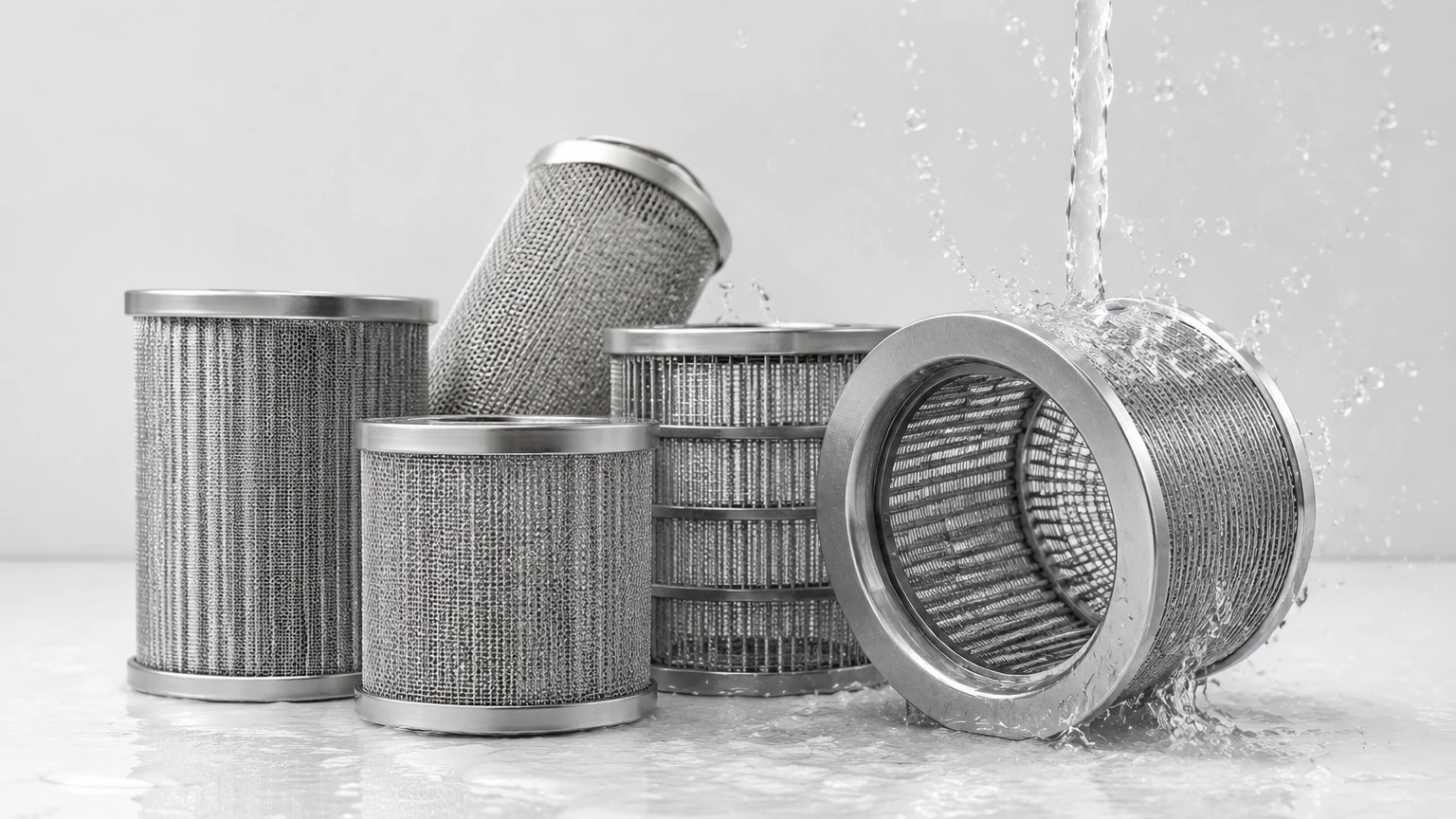
While plastic disk filters are common in agricultural irrigation and light commercial applications, industrial environments often demand the superior physical and chemical properties of metal. Stainless steel disk filters for water, typically constructed from 304 or 316L alloys, offer several distinct advantages for B2B applications:
Thermal Stability
Industrial processes often involve high-temperature water or steam cleaning cycles. Synthetic disks may warp or lose structural integrity at temperatures exceeding 60°C (140°F). Stainless steel components maintain their geometric precision and filtration accuracy at much higher temperatures, making them suitable for boiler feed water, hot process water, and pharmaceutical sterilization processes.
Chemical Compatibility
In chemical processing and wastewater treatment, the water being filtered may contain solvents, oils, or corrosive agents. Stainless steel provides excellent resistance to a broad spectrum of chemicals that would degrade polymer-based disks. This resistance prevents material leaching and ensures that the filter does not become a source of contamination itself.
Mechanical Strength and Pressure Tolerance
Industrial water systems often operate under high differential pressures. Metal disks can withstand significantly higher mechanical stress without deforming. This durability translates to a longer service life and a lower risk of catastrophic failure, which is a vital consideration for systems where downtime results in significant financial loss.
Key Performance Metrics for Industrial Water Systems
When evaluating disk filters for water, engineers must look beyond simple micron ratings. Several key performance indicators (KPIs) dictate the efficiency of the filtration unit within a larger industrial framework.
Micron Rating and Filtration Efficiency
Disk filters are categorized by their nominal micron rating, which indicates the size of particles the filter is designed to trap. However, in industrial contexts, the "Beta Ratio" or absolute vs. nominal efficiency is more critical. Precision-engineered metal disks provide a more consistent pore structure, ensuring that the efficiency remains high even as the filter cake builds up.
Flow Rate and Pressure Drop (ΔP)
The relationship between flow rate and pressure drop is a primary design constraint. A well-designed disk stack maximizes the effective surface area to allow for high flow rates with minimal initial pressure drop. As the filter captures debris, the pressure drop increases. Understanding the "clean ΔP" versus the "terminal ΔP" allows engineers to size pumps correctly and set appropriate backwash triggers.
Dirt Holding Capacity
Because disk filters utilize depth filtration, they generally offer a higher dirt holding capacity than equivalent surface filters. This means longer intervals between cleaning cycles, reducing the volume of backwash water required and minimizing the energy consumption of the overall system.
Applications Across Critical Industries
Disk filters for water are versatile components used across various sectors where water quality is paramount. Their ability to handle both inorganic sand/silt and organic algae/bio-matter makes them ideal for diverse environments.
Cooling Tower Filtration
In HVAC and industrial cooling systems, water is constantly recirculated. Over time, it accumulates atmospheric dust, scale, and biological growth. Disk filters are used in side-stream filtration loops to continuously remove these solids, preventing them from settling in heat exchangers where they would reduce thermal efficiency and promote under-deposit corrosion.
Pre-filtration for Membrane Systems
Reverse Osmosis (RO) and Ultrafiltration (UF) membranes are highly sensitive to particulate fouling. Using disk filters for water as a pre-filtration stage protects these expensive membranes from premature failure. The depth filtration capability of disks is particularly effective at removing the fine silts and organic colloids that often bypass simpler pre-filters.
Food and Beverage Processing
Water used as an ingredient or for cleaning in the food industry must meet stringent purity standards. Stainless steel disk filters are preferred here due to their hygienic properties and ability to withstand Clean-in-Place (CIP) procedures involving caustic chemicals and high-temperature water.
Industrial Process Water
From textile manufacturing to pulp and paper production, process water must be free of debris that could clog nozzles or stain products. The robust nature of metal disk filters ensures they can handle the heavy-duty cycles required in these large-scale manufacturing environments.
Maintenance, Backwashing, and Operational Efficiency
One of the most significant advantages of disk filters for water is their ability to be cleaned and reused. In most industrial installations, this is achieved through a process known as backwashing.
The Backwash Cycle
When the differential pressure across the disk stack reaches a pre-set limit, the system triggers a backwash cycle. In many designs, the compression on the disk stack is released, allowing the individual disks to separate slightly. High-pressure water is then sprayed from the center of the spine outward, spinning the disks and flushing trapped particles out of the grooves.
Manual vs. Automated Systems
While manual cleaning is possible for small-scale applications, industrial B2B operations almost exclusively use automated backwash systems. These systems monitor pressure transducers and can clean individual filter modules sequentially, ensuring that the total flow of process water is never interrupted.
Total Cost of Ownership (TCO)
When calculating the TCO of filtration, engineers must consider the initial purchase price, the cost of replacement media, and the cost of waste disposal. Stainless steel disk filters for water often have a higher upfront cost than disposable cartridges or plastic disks, but their multi-year lifespan and low maintenance requirements typically result in a lower TCO over the life of the project. There is no spent media to dispose of, and the durability of the metal components reduces the frequency of spare parts procurement.
Customization and OEM Engineering Support
No two industrial water applications are identical. Factors such as specific gravity of contaminants, water chemistry, and spatial constraints in the plant require a tailored approach to filtration. This is where the expertise of a manufacturer like Kaifil becomes invaluable.
Customization options for disk filters and related stainless steel filtration components include:
* Alloy Selection: Choosing between 304, 316L, or specialty alloys for extreme environments.
* Custom Micron Ratings: Engineering specific groove patterns to target precise particle sizes.
* Housing Integration: Designing the filter stack to fit into existing pressure vessels or specialized machinery.
* Structural Reinforcement: Enhancing the spine and compression mechanism for high-vibration or high-pressure surge environments.
By working closely with an OEM partner, engineering teams can ensure that the filtration solution is not just a "catalog part" but a precision-engineered component optimized for their specific operational parameters. This collaboration helps in avoiding common pitfalls such as undersizing the filter, which leads to excessive backwashing, or oversizing, which increases capital expenditure unnecessarily.
Conclusion: Selecting the Right Solution
Disk filters for water represent a sophisticated balance between filtration precision and operational robustness. For the B2B sector, the move toward stainless steel disk components reflects a broader trend toward sustainability and long-term reliability. By providing a three-dimensional filtration path, these systems offer superior protection for downstream equipment and maintain consistent water quality even in challenging conditions.
When planning a new water treatment system or upgrading an existing one, engineers should confirm the chemical compatibility of the filter materials, the expected solids loading, and the available backwash pressure. For those seeking reliable, high-performance filtration components, visiting the Main Page provides access to a wealth of technical data and customization services tailored to the demanding needs of modern industry. Investing in the right disk filtration technology today ensures a more efficient, cost-effective, and resilient industrial water process for the future.
