


Disk Filtration
In industrial processing, the efficiency of liquid and gas separation systems directly impacts product quality, equipment longevity, and operational costs. Disk filtration has emerged as a critical technology for high-performance separation, particularly in environments where durability and precision are non-negotiable. Unlike standard bag or simple cartridge filters, disk filtration utilizes a stacked arrangement of filter media to provide a high surface area within a compact footprint. For engineers and procurement specialists, understanding the technical nuances of disk design, material selection, and flow dynamics is essential for optimizing industrial filtration stages.
Principles of Disk Filtration Systems
Disk filtration operates on the principle of surface or depth filtration, depending on the specific media used. In its most common industrial configuration, a series of individual filter disks are stacked onto a central perforated core or held within a specialized housing. The fluid to be filtered is forced through the stack, where the filter media captures contaminants.
There are two primary mechanical approaches to disk filtration in B2B applications:
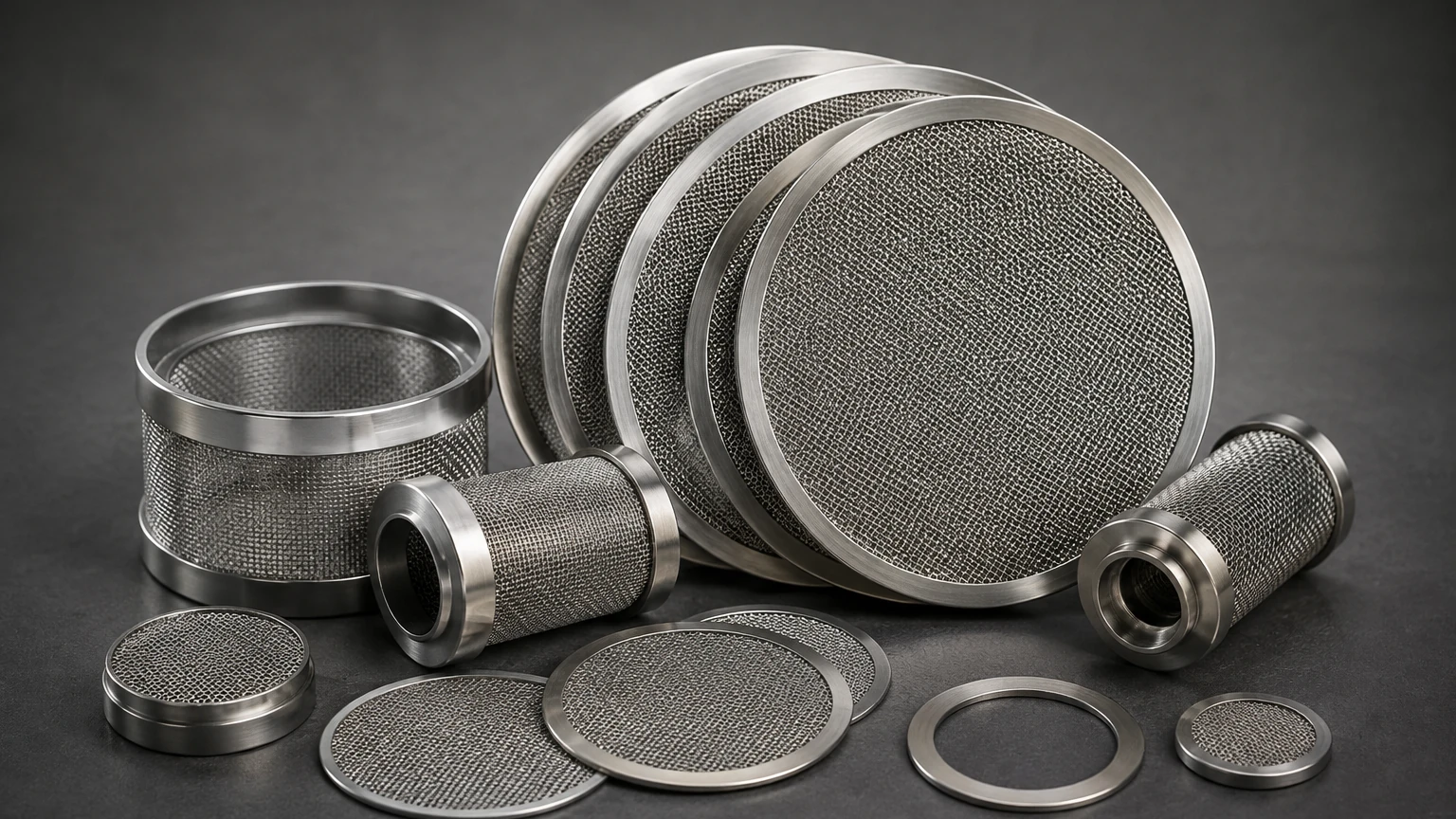
1. Stacked Mesh Disks: These utilize layers of stainless steel wire mesh or sintered metal. The filtration occurs primarily on the surface or within the thin layers of the mesh. These are highly valued in the chemical and pharmaceutical industries for their precise micron ratings and ease of cleaning.
2. Grooved Plastic Disks: Often used in water treatment, these consist of plastic rings with grooves of specific depths. When compressed, the grooves create a matrix that provides depth filtration. However, for high-temperature or chemically aggressive environments, metal-based disk filtration is the standard.
For industrial-grade applications, Kaifil specializes in custom stainless steel filtration solutions that leverage the structural integrity of metal. By stacking precision-engineered metal disks, operators can achieve high flow rates while maintaining a strict barrier against particulate matter.
Material Engineering: The Role of Stainless Steel
The choice of material is the most significant factor in the performance of a disk filtration system. In industrial sectors such as oil and gas, chemical processing, and food production, stainless steel is the preferred medium. The use of 304, 316, or 316L stainless steel provides several engineering advantages:
* Corrosion Resistance: Stainless steel 316L, with its addition of molybdenum, offers superior resistance to chlorides and acidic environments, making it ideal for marine or chemical applications.
* Thermal Stability: Unlike polymer-based filters, metal disk filters can operate at extreme temperatures, often exceeding 300°C, without losing structural integrity or filtration accuracy.
* Mechanical Strength: High-pressure hydraulic systems require filter media that can withstand significant differential pressure ($ΔP$) without collapsing. Stainless steel wire mesh disks are engineered to resist deformation under high stress.
* Hygienic Properties: For food, beverage, and pharmaceutical applications, the non-leaching and easy-to-sanitize nature of stainless steel ensures compliance with strict safety standards.
Key Performance Metrics for Engineers
When specifying disk filtration components, engineers must evaluate several performance metrics to ensure the system meets the application's requirements. These metrics determine the total cost of ownership (TCO) and the frequency of maintenance cycles.
Filtration Accuracy and Micron Rating
Filtration accuracy is defined by the size of the particles the disk can successfully intercept. This is usually measured in microns (μ). It is important to distinguish between "nominal" and "absolute" ratings. An absolute rating implies that 99.9% of particles of a certain size are captured, which is critical for precision applications like protecting sensitive nozzles or high-pressure pumps.
Effective Filtration Area (EFA)
The primary advantage of the disk design is the maximization of the Effective Filtration Area. By stacking multiple disks, the total surface area available for filtration is significantly increased compared to a standard cylindrical filter of the same volume. A higher EFA results in lower flux (flow per unit area), which reduces the rate of pressure buildup and extends the time between cleaning cycles.
Pressure Drop and Flow Capacity
Every filter introduces a pressure drop into the system. Engineers must calculate the clean pressure drop to ensure the pump capacity is sufficient. In disk filtration, the geometry of the stack and the porosity of the mesh determine the resistance to flow. As the filter cake builds up on the disk surface, the differential pressure increases. Monitoring this $ΔP$ is the standard method for determining when a disk stack requires cleaning or replacement.
Industrial Applications and Compatibility
Disk filtration is a versatile solution employed across diverse sectors. Its ability to be customized for specific chemical and physical environments makes it a staple in modern manufacturing.
Chemical and Petrochemical Processing
In chemical plants, filtration systems must handle aggressive solvents and high-viscosity fluids. Stainless steel disk filters are used to remove catalysts, protect downstream reactors, and ensure the purity of final chemical products. Their resistance to chemical degradation ensures that the filter media does not introduce impurities into the process stream.
Hydraulic and Lubrication Systems
Precision hydraulic components are highly sensitive to particulate contamination. Even microscopic metal shavings or dust can cause catastrophic failure of valves and pumps. Metal disk filters are integrated into hydraulic circuits to provide continuous protection, often in compact spaces where traditional cartridges would be too bulky.
Food and Beverage Industry
From filtering cooking oils to clarifying beverages, disk filtration provides a robust solution that can be steam-cleaned or chemically sterilized. The durability of stainless steel mesh disks allows them to be used in continuous production lines where downtime for filter changes must be minimized.
Maintenance, Cleaning, and Total Cost of Ownership
One of the most compelling arguments for adopting stainless steel disk filtration is the transition from a consumable-based model to a reusable-asset model. While the initial capital expenditure for a stainless steel disk stack is higher than for disposable paper or polymer filters, the long-term TCO is often significantly lower.
Cleaning Methodologies
Unlike disposable filters, metal disks are designed to be cleaned and returned to service. Common cleaning methods include:
* Backwashing: Reversing the flow of the fluid to dislodge the filter cake from the surface of the disks. This can often be automated for continuous operation.
* Ultrasonic Cleaning: Using high-frequency sound waves in a cleaning solvent to remove fine particles embedded deep within the wire mesh.
* Chemical Cleaning: Using specialized surfactants or acids to dissolve organic or mineral scaling, restoring the disk's original porosity.
Longevity and Sustainability
A well-maintained stainless steel disk stack can last for years. This reduces the waste stream associated with used filter cartridges and lowers the logistical burden of maintaining a large inventory of replacement parts. For companies focusing on sustainability and waste reduction, disk filtration is an ideal choice.
Specifying Custom Disk Filtration Solutions
Because every industrial process has unique requirements regarding flow rate, pressure, and contaminant load, a "one-size-fits-all" approach to filtration often leads to inefficiency. Customization is the hallmark of effective filtration engineering. When working with a manufacturer like Kaifil, engineers should be prepared to confirm several technical details before production:
1. Fluid Characteristics: Viscosity, temperature, and chemical composition.
2. Contaminant Profile: The nature of the solids being removed (hard vs. soft, particle size distribution).
3. Housing Constraints: The physical dimensions available for the filter assembly.
4. Operational Flow Rate: The required volume of fluid to be processed per hour.
By providing these specifications, technical teams can receive a tailored disk filtration solution that optimizes performance and minimizes operational risks. For those looking to explore specific product options or seeking application support for their filtration challenges, visiting the Main Page provides access to technical resources and engineering expertise.
Conclusion
Disk filtration represents a sophisticated balance between high-capacity surface area and rugged mechanical design. For B2B applications where process reliability is paramount, the transition to stainless steel disk systems offers a path toward greater efficiency and reduced long-term costs. By focusing on material quality, precise micron ratings, and maintainability, industrial operators can ensure their filtration stages contribute positively to the overall success of their manufacturing processes. Whether protecting sensitive equipment or ensuring the purity of a final product, the engineering behind disk filtration remains a cornerstone of modern industrial separation technology.
