


Dust Collector Cage Manufacturers
In industrial air filtration systems, the dust collector cage serves as the structural backbone of the filter bag. While often viewed as a simple metal frame, the engineering precision of these components directly influences the efficiency, lifespan, and maintenance requirements of a pulse-jet baghouse. For engineers and procurement professionals, identifying competent dust collector cage manufacturers involves more than comparing price points; it requires a deep dive into material science, welding integrity, and geometric tolerances.
Industrial filtration environments—ranging from chemical processing and cement production to food manufacturing and pharmaceutical labs—demand support structures that can withstand high temperatures, corrosive gases, and mechanical stress. This article examines the technical criteria for evaluating manufacturers and the engineering considerations necessary for optimizing filtration performance.
The Engineering Role of the Dust Collector Cage
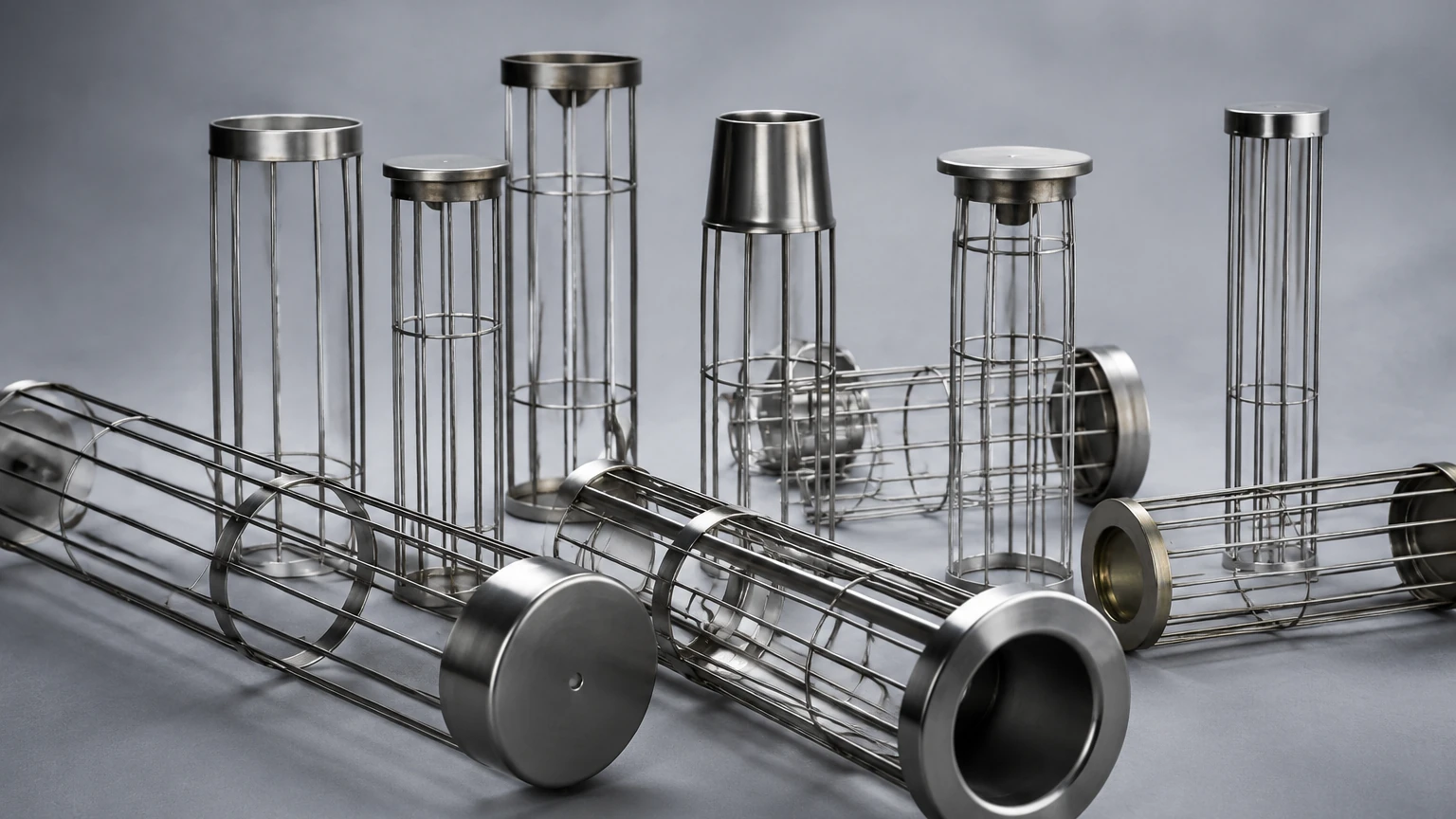
The primary function of a dust collector cage is to provide internal support to the filter bag, preventing it from collapsing during the filtration cycle when air is drawn through the media. During the cleaning cycle, typically a pulse of compressed air, the cage must allow the bag to expand and then return to its original shape without causing mechanical wear.
Reliable dust collector cage manufacturers focus on three critical design elements:
1. Structural Rigidity: The cage must resist the pressure drop across the filter media without deforming.
2. Surface Smoothness: Any burrs, sharp edges, or weld spatters can cause premature bag failure through abrasion or puncturing.
3. Alignment: Vertical wires must be perfectly parallel to ensure uniform support and to prevent "pinching" of the filter media.
For organizations looking to integrate these components into a broader filtration strategy, visiting the Main Page of a specialized manufacturer like Kaifil provides insight into how custom metal components are engineered for demanding industrial applications.
Technical Specifications and Material Selection
Material selection is the most significant factor in determining the longevity of a filter cage. Manufacturers typically offer a range of alloys and finishes to match specific gas stream chemistries and operating temperatures.
Carbon Steel and Galvanized Options
For standard industrial applications where moisture and corrosion are minimal, low-carbon steel is the baseline. To prevent rust during storage or in environments with intermittent humidity, manufacturers apply a galvanized finish or an epoxy coating. However, in high-temperature or chemically aggressive environments, these coatings may degrade, leading to rust that can bond the filter bag to the cage, making replacement difficult and potentially damaging the baghouse housing.
Stainless Steel Solutions
In the chemical, pharmaceutical, and food and beverage industries, stainless steel (SS304, SS316, or SS316L) is the preferred material. Stainless steel cages offer superior corrosion resistance and can withstand frequent wash-downs or exposure to acidic and alkaline gases. As a specialist in stainless steel filtration solutions, Kaifil emphasizes the use of high-grade alloys to ensure that the support structure does not become a point of failure in a high-purity process.
Specialty Alloys
For extreme environments, such as those found in waste-to-energy plants or specialized chemical reactors, manufacturers may utilize Hastelloy or other nickel-based alloys. These materials are selected specifically for their resistance to stress-corrosion cracking and high-temperature oxidation.
Manufacturing Techniques and Quality Control
The quality of a dust collector cage is defined by its welding and finishing processes. Leading dust collector cage manufacturers utilize automated CNC welding lines to ensure consistency across thousands of units.
Welding Integrity
Most cages are constructed using resistance welding (spot welding). The strength of the bond between the vertical wires and the horizontal support rings is paramount. A weak weld can snap under the vibration of pulse-jet cleaning, leading to a sharp wire end that will quickly tear the filter bag. Engineers should look for manufacturers that perform pull tests and visual inspections of weld penetration.
Wire Configuration
The number of vertical wires is a key specification. Standard cages typically feature 8, 10, 12, or 20 vertical wires. A higher wire count provides better support for the filter bag, reducing the amount of "flex" the fabric undergoes during cleaning. This is particularly important for heavy felt media or when using membrane-coated fabrics (like PTFE), where excessive movement can damage the delicate membrane.
Top and Bottom Configurations
Cages must interface seamlessly with the baghouse tube sheet. Manufacturers offer various top styles, including:
* Rolled Flange: For top-load baghouses.
* Split Collars: For easy installation in tight spaces.
* Venturi Integration: Some manufacturers weld a venturi directly to the top of the cage to optimize the pulse-jet airflow, improving cleaning efficiency and reducing compressed air consumption.
Evaluating Dust Collector Cage Manufacturers
When sourcing components for an industrial filtration system, the evaluation process should go beyond a simple RFQ. Technical professionals should confirm several operational capabilities to ensure long-term reliability.
Customization and OEM Capabilities
No two industrial plants are identical. Often, legacy baghouses require cages with non-standard diameters or lengths. Competent manufacturers should offer customization in terms of wire gauge, ring spacing, and overall geometry. The ability to produce OEM-spec components ensures that replacement parts fit perfectly without requiring modifications to the existing housing.
Quality Assurance Documentation
For industries like pharmaceuticals or food processing, material traceability is essential. Manufacturers should be able to provide Mill Test Reports (MTRs) for the wire used and certificates of compliance for surface treatments. This documentation ensures that the cages meet the required safety and performance standards.
Production Capacity and Lead Times
In many industrial settings, baghouse maintenance is performed during scheduled shutdowns. A delay in the delivery of filter cages can result in costly downtime. Evaluating a manufacturer’s production capacity and their ability to meet tight deadlines is as important as evaluating the product itself.
Total Cost of Ownership (TCO) in Filtration
While the initial purchase price of a dust collector cage is a factor, the Total Cost of Ownership (TCO) is a more accurate metric for engineering decisions. A low-quality cage that causes premature bag failure or requires frequent replacement due to corrosion will ultimately cost significantly more than a high-quality stainless steel or precision-engineered alternative.
Factors that contribute to TCO include:
* Filter Bag Lifespan: Smooth, well-supported cages extend the life of expensive filter bags.
* Labor Costs: Reducing the frequency of bag and cage changes lowers maintenance labor requirements.
* Energy Consumption: Cages that incorporate efficient venturi designs can reduce the pressure required for pulse-jet cleaning, leading to energy savings over time.
* System Downtime: Durable components minimize the risk of unplanned outages caused by filtration failure.
By partnering with manufacturers who understand these variables, such as the technical team at https://www.kaifil.com/, industrial operators can optimize their systems for both performance and cost-efficiency.
Integration with Modern Filtration Systems
As industrial regulations regarding air quality and emissions become more stringent, the role of the dust collector cage is evolving. Modern systems often require finer filtration, which in turn requires more sophisticated support structures. For example, pleated filter elements—which combine the bag and cage into a single unit—are becoming more common in applications with limited space. However, for the majority of high-volume industrial baghouses, the traditional wire cage remains the most versatile and cost-effective solution.
Manufacturers are also exploring advanced coatings, such as PTFE-based finishes, to further reduce friction between the bag and the cage. These innovations are particularly useful in "sticky" dust applications where dust cake release is a challenge.
Conclusion
Selecting from the available dust collector cage manufacturers requires a technical understanding of how these components interact with the filter media and the pulse-jet cleaning system. By prioritizing material quality, welding precision, and customization capabilities, engineers can ensure their filtration systems operate at peak efficiency. Whether the application involves high-temperature flue gas or high-purity food processing, the integrity of the cage is a fundamental requirement for industrial air quality compliance and operational reliability. Focusing on long-term performance rather than short-term savings will consistently yield the best results for complex industrial filtration environments.
