


Dust Collector Filter Cartridge Supplier
In industrial environments, air quality and particulate control are not merely matters of housekeeping; they are critical components of operational safety, equipment longevity, and regulatory compliance. Selecting a dust collector filter cartridge supplier requires more than a cursory glance at a catalog. For engineers and procurement specialists in the chemical, pharmaceutical, and food processing sectors, the choice of a supplier directly impacts the efficiency of the dust collection system, the frequency of maintenance intervals, and the total cost of ownership.
Industrial dust collection systems rely on high-performance cartridges to capture airborne contaminants. While many standard solutions exist, demanding applications often require specialized materials, such as stainless steel wire mesh or precision-engineered metal components, to withstand high temperatures, corrosive gases, or abrasive particles. This guide examines the technical criteria for evaluating a supplier and the engineering considerations necessary for optimizing filtration performance.
The Role of the Supplier in Industrial Air Filtration
A professional dust collector filter cartridge supplier acts as a technical partner rather than a simple commodity vendor. In complex industrial setups, the "one size fits all" approach often leads to premature filter failure or inefficient energy consumption. A supplier with deep manufacturing expertise understands the nuances of airflow dynamics and particle behavior.
When evaluating potential partners, it is essential to look for those who provide comprehensive technical data. This includes fractional efficiency curves, pressure drop characteristics, and material compatibility charts. For instance, Kaifil specializes in custom stainless steel filtration solutions, offering the technical depth required to address niche applications where standard cellulose or polyester media might fail. By visiting the Main Page of a specialized manufacturer, engineers can better understand the breadth of customization available for high-durability filtration components.
Engineering Considerations for Filter Cartridge Selection
To ensure a dust collection system operates at peak efficiency, several engineering parameters must be analyzed during the selection process. A reputable supplier should be able to discuss these factors in detail:
1. Media Selection and Material Integrity
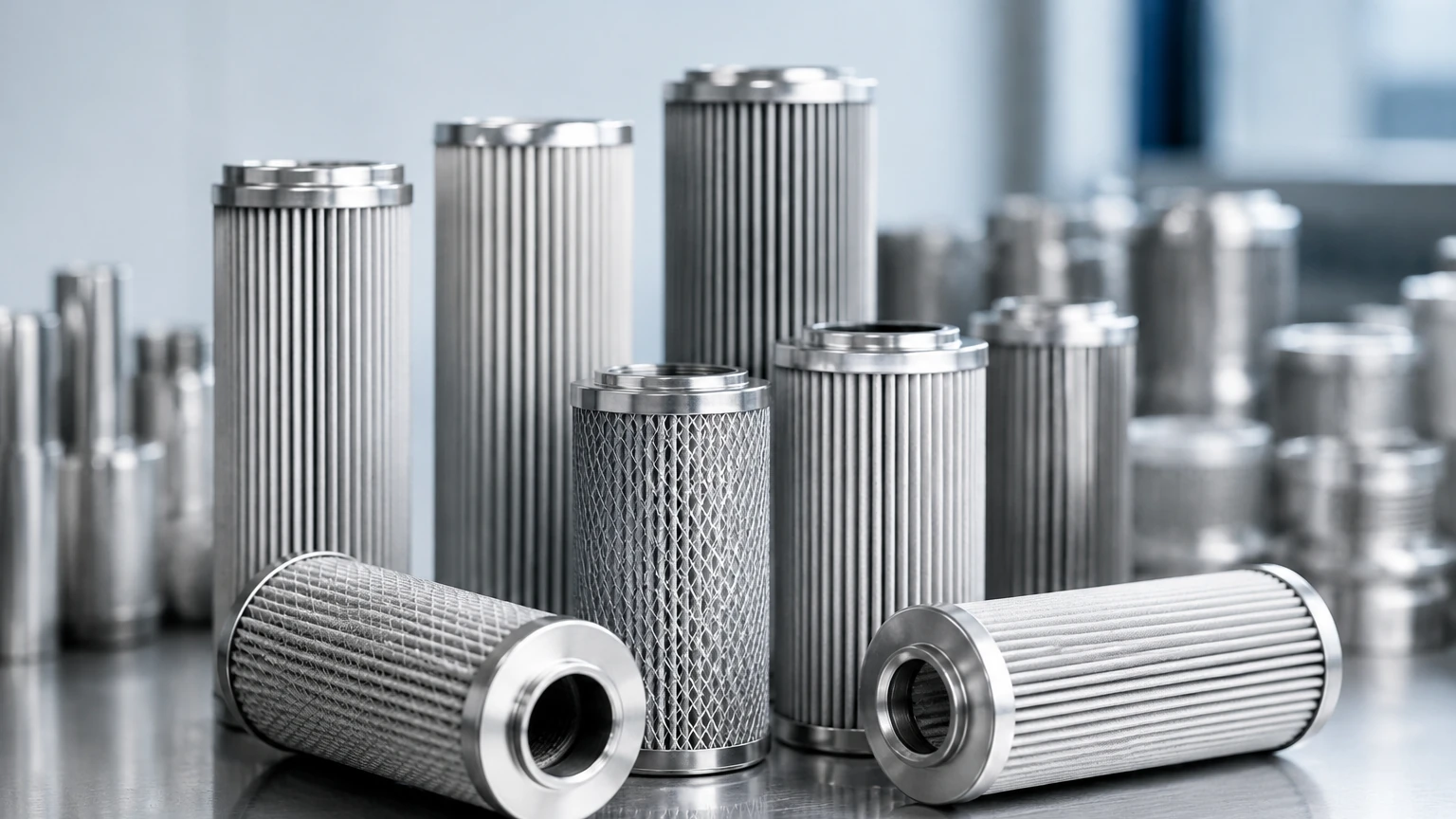
While many dust collectors use paper or synthetic blends, industrial processes involving high temperatures or moisture require more robust materials. Stainless steel wire mesh and sintered metal fibers provide exceptional mechanical strength and thermal resistance. These materials are particularly valuable in applications where the filter must be cleaned and reused or where the risk of spark-induced fire is a concern.
2. Pleat Geometry and Surface Area
The efficiency of a cartridge is largely determined by its effective filtration area. However, simply increasing the number of pleats is not always beneficial. If pleats are packed too tightly, the "bridge" effect occurs, where dust becomes trapped between the pleats and cannot be dislodged by pulse-jet cleaning. An experienced supplier will calculate the optimal pleat spacing based on the specific dust load and particle size distribution of the application.
3. Structural Support (Inner and Outer Cores)
Under high differential pressure, a filter cartridge can collapse if its structural core is insufficient. Suppliers should offer heavy-duty galvanized or stainless steel perforated cores. In high-vibration environments or systems with high-pressure pulse cleaning, the integrity of these cores prevents media deformation and bypass leaks.
Evaluating Manufacturing Capabilities and Quality Control
A reliable dust collector filter cartridge supplier must demonstrate rigorous quality control (QC) protocols. In B2B procurement, the cost of a single batch of defective filters can manifest in thousands of dollars of lost production time.
Key manufacturing benchmarks to look for include:
* ISO Certification: Adherence to international quality management standards ensures consistency across production runs.
* Testing Procedures: Does the supplier perform leak tests, bubble point tests, or structural integrity tests? For stainless steel filters, ensuring the precision of the wire mesh weave is paramount to maintaining the rated micron level.
* Customization Flexibility: Many industrial systems are legacy models or custom-built. A supplier that can manufacture bespoke sizes, end-cap configurations (such as flange, bolt-hole, or twist-lock), and gasket materials (EPDM, Silicone, Viton) is invaluable.
Kaifil’s focus on precision metal filter components highlights the importance of manufacturing control. When dealing with stainless steel, the welding techniques used—such as TIG or plasma welding—must be precise to ensure no contaminants bypass the filter media through weak seams.
Performance Metrics: Beyond the Micron Rating
While the micron rating is the most commonly cited specification, it is often misunderstood. A professional supplier will distinguish between nominal and absolute filtration ratings.
Air-to-Cloth Ratio
The air-to-cloth (A/C) ratio is the volume of air passing through one square foot of filter media per minute. A supplier should help you determine if your system is running at an appropriate A/C ratio. If the ratio is too high, particles are driven deep into the media (depth loading), making cleaning difficult and increasing the pressure drop. A lower A/C ratio generally extends filter life but requires a larger housing or more cartridges.
Differential Pressure (DP)
Monitoring the pressure drop across the filter is the most effective way to gauge performance. A high-quality cartridge will maintain a low initial DP and a stable operating DP over time. Suppliers who provide cartridges with optimized airflow paths help reduce the energy required by the system’s fan, leading to significant long-term utility savings.
Total Cost of Ownership and Replacement Cycles
In the procurement process, the initial purchase price is often the least significant factor in the total cost of ownership (TCO). A cheap filter that requires replacement every three months is far more expensive than a premium stainless steel cartridge that lasts two years and can be ultrasonically cleaned.
When discussing TCO with a dust collector filter cartridge supplier, consider the following:
1. Energy Consumption: High-efficiency filters with low resistance reduce the load on the blower.
2. Labor Costs: Frequent filter changes involve significant man-hours and potential exposure to hazardous dust for maintenance crews.
3. Disposal Costs: Synthetic filters are often single-use and must be landfilled. In contrast, stainless steel filters can often be cleaned and returned to service, aligning with corporate sustainability goals and reducing waste streams.
4. Production Downtime: Every hour the dust collector is offline for a filter change is an hour of lost production.
Common Risks in Supplier Selection
Choosing the wrong supplier can introduce several risks into an industrial operation. One common issue is the use of inferior gaskets or adhesives. If the potting compound used to secure the media to the end caps fails under chemical exposure or heat, the filter becomes useless.
Another risk is "media migration," where fibers from the filter itself break off and enter the clean air stream. This is a critical failure in pharmaceutical or food-grade applications. Suppliers specializing in stainless steel wire mesh filtration, like Kaifil, mitigate this risk because the metallic structure is inherently stable and does not shed fibers.
Furthermore, engineers must be wary of suppliers who cannot provide material certifications (MTRs). In highly regulated industries, knowing the exact grade of steel (e.g., 304, 316L, or 904L) is necessary to ensure corrosion resistance against specific process chemicals.
Technical Support and Application Guidance
The relationship with a dust collector filter cartridge supplier should extend into post-purchase support. Industrial processes change; a shift in raw materials can change the characteristics of the dust, potentially clogging existing filters. A technical supplier can analyze used filters to diagnose the cause of premature failure—whether it be moisture blinding, chemical attack, or excessive thermal load—and recommend a more suitable media or coating.
For those looking to optimize their current filtration setup or develop a new system, reviewing the technical resources on the Main Page can provide insights into how specialized metal filtration components solve the most stubborn industrial air quality challenges.
Conclusion: Making an Informed Decision
Selecting a dust collector filter cartridge supplier is a strategic engineering decision. By focusing on material integrity, structural design, and long-term TCO, purchasing teams can ensure their systems operate reliably and efficiently. Whether the application involves high-temperature flue gases in a chemical plant or fine powder recovery in a pharmaceutical facility, the quality of the filter cartridge is the primary defense against system failure.
Before finalizing a supplier, confirm their ability to provide custom designs, their adherence to strict QC standards, and their willingness to provide the technical documentation necessary for your specific application. A supplier like Kaifil, with its expertise in stainless steel and precision metal filtration, offers the durability and performance required for the most demanding industrial environments.
