


Dust Filter Bags Suppliers
In industrial air pollution control, the selection of dust filter bags is a critical engineering decision that directly impacts the efficiency of baghouse systems, the longevity of equipment, and compliance with environmental regulations. Dust filter bags act as the primary interface between contaminated process gas and the clean air exhaust. Consequently, identifying and vetting competent dust filter bags suppliers requires a deep understanding of material science, mechanical design, and the specific thermodynamic conditions of the application.
For engineers and procurement professionals, the goal is not merely to source a consumable component but to ensure that the filter media can withstand the chemical, thermal, and mechanical stresses of the operating environment. This article provides a technical framework for evaluating suppliers and selecting the appropriate filtration solutions for demanding industrial sectors.
Material Science in Dust Filtration
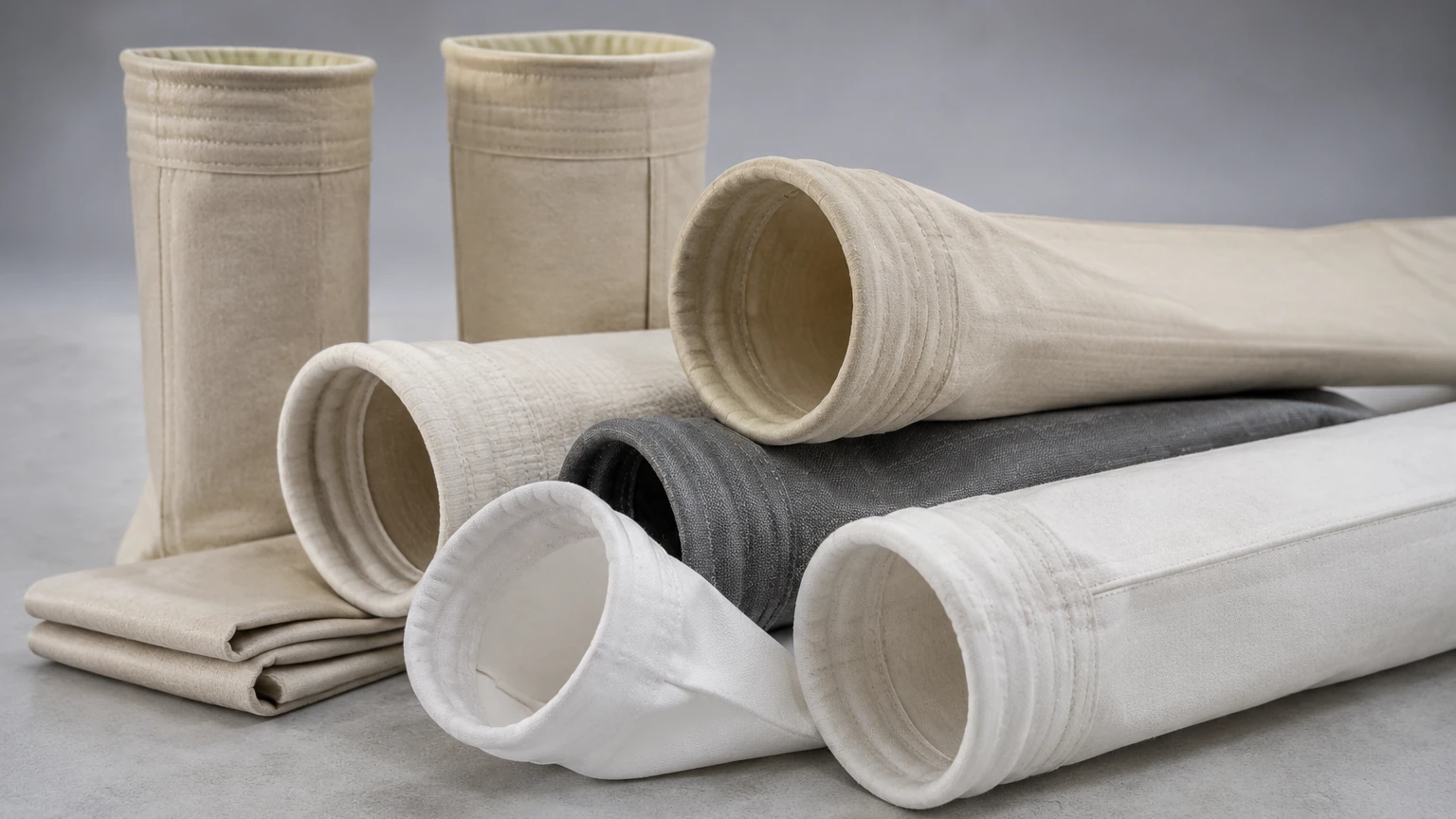
The performance of a baghouse is fundamentally limited by the properties of the filter media. Professional dust filter bags suppliers should offer a range of synthetic and natural fibers, each suited to specific gas chemistries and temperature ranges. Understanding these materials is the first step in technical procurement.
Polyester (PE)
Polyester is the most common media used in industrial dust collection due to its balance of cost and performance. It offers excellent abrasion resistance and is suitable for dry heat applications up to 135°C (275°F). However, polyester is susceptible to hydrolysis; in the presence of moisture and high temperatures, the fibers can break down, leading to premature bag failure.
Polyphenylene Sulfide (PPS)
PPS is a high-performance fiber frequently used in coal-fired boilers and incinerators. It provides excellent resistance to acids and alkalis and can operate continuously at temperatures up to 190°C (375°F). Its primary advantage is its ability to maintain mechanical integrity in chemically aggressive environments where polyester would fail.
Aramid (Nomex)
Aramid fibers are preferred for high-temperature applications where chemical resistance is less of a concern than thermal stability. Capable of handling continuous temperatures up to 200°C (400°F), Aramid is commonly used in the cement and asphalt industries. It is highly resistant to abrasion but can be degraded by high concentrations of moisture and acidic gases.
PTFE (Teflon)
PTFE represents the pinnacle of chemical resistance and thermal stability. It can operate at 260°C (500°F) and is virtually inert to all chemicals. Suppliers often provide PTFE as a membrane laminated onto other substrates (like fiberglass or polyester) to enhance surface filtration and dust cake release, or as a 100% felt for the most extreme conditions.
Key Evaluation Criteria for Dust Filter Bags Suppliers
When evaluating potential dust filter bags suppliers, technical teams must look beyond the unit price. A supplier’s ability to provide engineering support and quality assurance is paramount to system reliability.
Manufacturing Standards and Quality Control
Reliable suppliers should adhere to recognized international standards for textile manufacturing and filtration testing. This includes consistency in felt weight (expressed in ounces per square yard or grams per square meter), permeability testing, and tensile strength verification. Inconsistent felt density leads to uneven airflow, which causes localized high-velocity zones that can abrade the media or allow fine particles to "bleed through."
Customization and Technical Design
Industrial baghouses come in various configurations, including pulse-jet, shaker, and reverse-air systems. A competent supplier must be able to customize the bag construction to match these designs. Key technical specifications to confirm include:
* Top and Bottom Configurations: Whether the system requires a snap band, flange top, raw edge, or reinforced cord.
* Seam Construction: For high-efficiency applications, triple-stitched or thermally welded seams are necessary to prevent dust leakage through needle holes.
* Grounding and Anti-static Features: In environments with explosive dust (e.g., grain, sugar, or wood), suppliers must provide bags with epitaxial or stainless steel fibers woven into the media to dissipate static charges.
Engineering Considerations: Air-to-Cloth Ratio
One of the most frequent causes of filter failure is an incorrect Air-to-Cloth (A/C) ratio, which is the volume of gas passing through the filter media per unit of time divided by the total area of the media. Dust filter bags suppliers should be consulted during the design phase to ensure the media selected can handle the intended A/C ratio.
If the A/C ratio is too high, the velocity of the dust particles hitting the bags (interstitial velocity) increases, leading to deep-seated blinding where particles become embedded in the fiber matrix. This results in a high pressure drop across the system, increasing energy consumption for the main fan and reducing the effectiveness of the pulse-cleaning cycle. A professional supplier will analyze the particle size distribution and gas volume to recommend a media that maintains a stable pressure drop over its service life.
The Relationship Between Bags and Metal Support Components
The performance of a dust filter bag is inextricably linked to the hardware that supports it. In pulse-jet systems, the filter bag is pulled over a metal support cage. If the cage has fewer than the recommended number of vertical wires, or if the wires are corroded, the bag will flex excessively during the cleaning pulse, leading to mechanical fatigue and holes.
In many high-temperature or high-pressure industrial processes, traditional fabric bags may reach their physical limits. In these instances, engineers often transition to rigid filtration elements. For those exploring advanced metal-based filtration solutions that offer higher durability and precision than standard fabric, the Main Page of specialized manufacturers like Kaifil provides insights into stainless steel wire mesh and sintered metal cartridges. These components are often used in conjunction with or as replacements for traditional bags in the most demanding chemical and hydraulic applications.
Common Risks in Procurement and Mitigation
Procuring from unverified dust filter bags suppliers introduces several operational risks that can lead to unplanned downtime or environmental fines.
Premature Blinding
Blinding occurs when the pores of the filter media become permanently blocked. This is often caused by a supplier providing a media with the wrong surface treatment for the dust type. For example, sticky or oily dust requires an oleophobic or hydrophobic treatment (Singeing or Glazing) to ensure the dust cake releases during the cleaning cycle. Without these treatments, the bags will blind within weeks of installation.
Chemical Degradation
If a supplier is not fully informed of the gas stream's chemical composition—including trace elements like NOx, SOx, or moisture levels—they may provide a material that undergoes chemical attack. For instance, using polyester in a gas stream with high humidity and acidic bypass gases will lead to rapid fiber weakening. Mitigation involves providing the supplier with a full gas analysis during the quoting process.
Dimensional Instability
Low-quality filter bags may shrink or stretch when exposed to operating temperatures. If a bag shrinks, it can pull tight against the cage, making it impossible for the cleaning pulse to flex the fabric and shed the dust cake. If it stretches, the bag may rub against adjacent bags or the baghouse wall, causing abrasive wear. Suppliers should provide data on the thermal shrinkage rates of their media.
Total Cost of Ownership (TCO) and Maintenance
The true cost of a dust filter bag is not the purchase price, but the TCO over its functional life. This includes:
1. Energy Costs: High-quality media with low resistance to airflow reduces the load on the system's fan, leading to significant electrical savings.
2. Compressed Air Usage: Bags that release dust easily require less frequent and lower-pressure cleaning pulses, saving on compressed air costs and reducing wear on the pulse valves.
3. Labor and Downtime: The cost of labor to change out several thousand bags can exceed the cost of the bags themselves. Choosing a more expensive, durable fiber (like PPS or PTFE) that lasts three years instead of one is often the more economical choice.
Suppliers should assist in establishing a maintenance schedule, which typically involves monitoring the differential pressure (ΔP). A sudden drop in ΔP may indicate a torn bag, while a steady, irreversible rise indicates the end of the bags' useful life.
Technical Support and Post-Sale Service
Final selection of dust filter bags suppliers should be based on their ability to provide post-installation support. This includes bag failure analysis, where the supplier examines used bags to determine the cause of failure (e.g., thermal surge, chemical attack, or mechanical abrasion). This forensic approach allows for the optimization of the next set of filters, ensuring continuous improvement in filtration efficiency.
In conclusion, the partnership between an industrial facility and its filtration supplier is fundamental to operational success. By focusing on material compatibility, engineering parameters like the A/C ratio, and the integration of high-quality metal support structures, companies can ensure their dust collection systems operate at peak performance while minimizing environmental impact and operational costs.
