


Exhaust Pneumatic
In the landscape of industrial automation and fluid power, pneumatic systems are foundational. They provide the necessary force for actuation, movement, and control across diverse sectors ranging from automotive assembly to pharmaceutical packaging. However, a critical yet often overlooked phase of the pneumatic cycle is the management of exhaust air. The term "exhaust pneumatic" refers to the process and the components involved in venting compressed air from a system once it has performed its mechanical work.
Effectively managing this exhaust is not merely a matter of venting air into the atmosphere; it involves complex engineering considerations regarding noise reduction, safety, filtration of contaminants, and the maintenance of system efficiency. For engineers and procurement professionals, selecting the right components for exhaust pneumatic applications is essential for ensuring long-term operational reliability and compliance with workplace safety standards.
The Mechanics and Challenges of Pneumatic Exhaust
Pneumatic systems operate by converting the energy of compressed air into mechanical motion. Once a cylinder has extended or a rotary actuator has turned, the pressurized air within the chamber must be evacuated to allow the return stroke or the next cycle. This rapid release of air creates several physical challenges that must be addressed through specialized filtration and silencing components.
Noise Generation and Turbulence
When compressed air is released into the atmosphere, it undergoes a rapid expansion. This transition from high pressure (often between 60 to 100 PSI) to ambient atmospheric pressure creates significant turbulence. This turbulence manifests as high-frequency noise, which can easily exceed 100 decibels (dB) in an industrial setting. Prolonged exposure to such noise levels is hazardous to personnel and often violates OSHA (Occupational Safety and Health Administration) regulations or equivalent international standards.
Backpressure and System Performance
A significant engineering challenge in exhaust pneumatic design is the management of backpressure. While silencers and filters are necessary to reduce noise and trap contaminants, they inherently create a restriction in the airflow. If the exhaust component is too restrictive, it creates backpressure that resists the movement of the pneumatic actuator. This can lead to sluggish cycle times, reduced force output, and increased energy consumption. Engineers must balance the need for noise attenuation with the requirement for high flow rates to maintain machine throughput.
The Role of Stainless Steel Filtration in Exhaust Systems
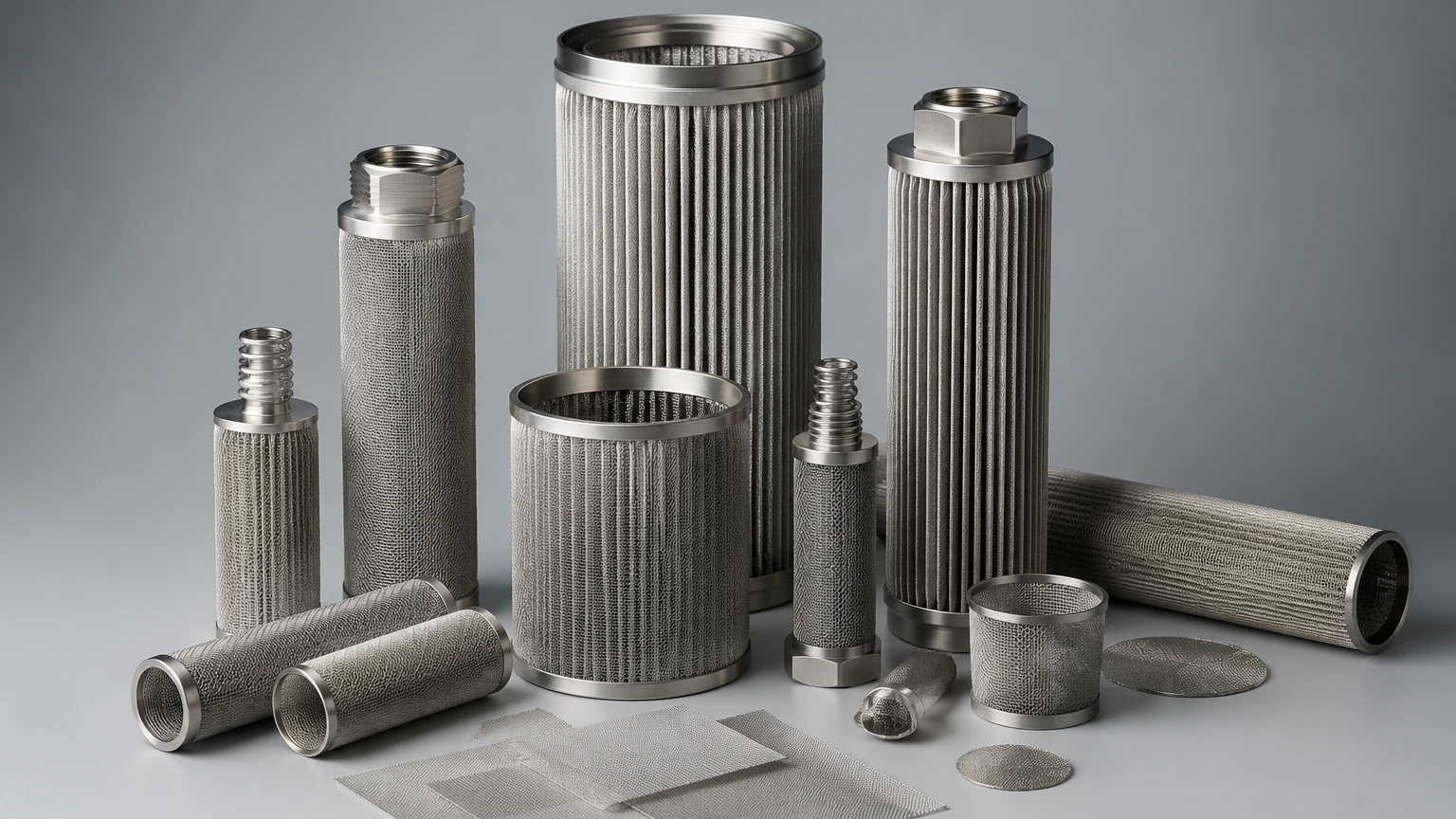
Kaifil specializes in the manufacture of high-performance stainless steel filtration solutions that are specifically designed to handle the rigors of industrial exhaust pneumatic environments. Unlike plastic or low-grade brass alternatives, stainless steel components offer superior durability and filtration precision.
Sintered Metal and Wire Mesh Structures
Exhaust pneumatic silencers and mufflers often utilize sintered metal or multi-layer wire mesh as the primary functional media. These materials are engineered with a specific porosity that allows air to pass through while breaking up the sound waves. The tortuous path created by the porous metal structure diffuses the air stream, significantly reducing the velocity and, consequently, the noise level.
Stainless steel wire mesh is particularly valued for its consistent pore size and mechanical strength. In applications where the exhaust pneumatic stream may contain particulate matter or oil aerosols—common in systems that use lubricated air—the mesh acts as a final stage filter, preventing these contaminants from entering the work environment. For more information on our full range of filtration capabilities, please visit our Main Page.
Contaminant Capture and Environmental Safety
In many industrial processes, compressed air is not entirely clean. It may carry trace amounts of compressor oil, moisture, or fine metal particles from internal component wear. When this air is exhausted, these contaminants can create a slip hazard on factory floors or contaminate sensitive products in food and beverage or pharmaceutical environments. High-quality stainless steel exhaust filters are designed to coalesce oil mists and trap particulates, ensuring that the vented air meets environmental and safety requirements.
Technical Evaluation Criteria for Exhaust Components
When specifying components for an exhaust pneumatic system, engineers must look beyond simple thread sizes. A comprehensive evaluation involves several key technical metrics to ensure the component is fit for the specific application.
1. Noise Reduction Rating (dB)
The primary function of a pneumatic silencer is to lower the noise level. A high-quality stainless steel silencer can typically reduce exhaust noise by 20 to 35 dB. It is important to confirm that the chosen component brings the total system noise within the limits required by local safety regulations.
2. Flow Coefficient (Cv)
The Flow Coefficient, or Cv, is a measure of the component's capacity to allow air to pass through. A higher Cv indicates less resistance to flow. When selecting an exhaust pneumatic muffler, the Cv rating should be matched to the valve's flow capacity to ensure that the muffler does not become a bottleneck in the system.
3. Micron Rating and Filtration Efficiency
If the exhaust component is also serving as a filter, the micron rating is critical. For general industrial applications, a rating of 40 to 50 microns may be sufficient. However, in cleanroom environments or sensitive processing areas, finer filtration (down to 5 or 10 microns) may be necessary to capture smaller aerosols and particles.
4. Operating Pressure and Temperature
Stainless steel components excel in high-temperature environments where plastic mufflers would fail. Engineers should confirm the maximum operating temperature and the peak pressure pulses the component will encounter. Stainless steel 304 and 316L are standard materials that provide excellent resistance to thermal stress and mechanical fatigue.
Material Selection for Harsh Industrial Environments
The environment in which the pneumatic system operates heavily dictates the material requirements for exhaust components. While plastic silencers are cost-effective for light-duty, indoor applications, they are prone to cracking under high-pressure pulses and can degrade when exposed to certain chemicals or UV light.
Corrosion Resistance
In chemical processing, marine environments, or food production facilities that undergo frequent wash-downs with caustic agents, corrosion resistance is paramount. Stainless steel 316L is the preferred material due to its high molybdenum content, which provides superior resistance to pitting and crevice corrosion. Kaifil’s stainless steel wire mesh filters are designed to withstand these harsh conditions without losing structural integrity or filtration efficiency.
Mechanical Durability
Pneumatic exhaust is often characterized by rapid, high-velocity pulses. These pulses can cause vibration and mechanical stress. Sintered stainless steel and robust wire mesh constructions are less likely to experience "blow-outs"—a common failure mode in lower-quality mufflers where the filtration media is dislodged by the force of the air.
Maintenance and Performance Optimization
To maintain the efficiency of an exhaust pneumatic system, a regular maintenance schedule is required. Over time, the porous structure of a silencer or filter will inevitably become clogged with oil residues and airborne dust.
Identifying Clogged Exhaust Components
A clogged exhaust muffler is often the root cause of mysterious pneumatic system failures. Symptoms include:
* Increased Cycle Times: Actuators take longer to return to their home position.
* Erratic Movement: The backpressure causes the piston to move unevenly.
* Increased Noise: In some cases, if the media is damaged by pressure, noise levels may actually increase.
Cleaning and Replacement Cycles
One of the primary advantages of stainless steel exhaust pneumatic components is their cleanability. Unlike disposable plastic units, stainless steel mesh can often be cleaned using ultrasonic baths or solvent degreasing, extending its service life and reducing the total cost of ownership. However, in applications where the contaminants are particularly adhesive or where the mesh has been physically deformed, replacement is necessary to protect the upstream valves and actuators.
Customization and Engineering Support for OEM Applications
Every industrial system has unique requirements, and off-the-shelf components may not always provide the optimal balance of noise reduction and flow. Customization is a core strength of Kaifil’s manufacturing process.
Specialized Threading and Form Factors
Exhaust pneumatic components must integrate seamlessly into existing manifolds and valve blocks. This requires a variety of threading options, including NPT, BSPP, and BSPT. Furthermore, the physical space available for the exhaust port may be limited, necessitating compact designs, flat-profile mufflers, or extended cylindrical shapes to maximize surface area within a confined footprint.
Tailored Porosity for Specific Flow Rates
By adjusting the density of the sintered metal or the weave of the wire mesh, manufacturers can fine-tune the filtration and attenuation properties. This allows engineers to specify a component that meets a very specific backpressure target, ensuring that the pneumatic system operates at peak efficiency while still meeting noise and environmental goals.
Engineering Summary
The management of exhaust pneumatic discharge is a vital component of modern industrial engineering. By selecting high-quality stainless steel filtration and silencing components, companies can protect their personnel from noise hazards, ensure the longevity of their pneumatic actuators, and maintain a clean working environment. The choice of material, understanding of flow dynamics, and a commitment to regular maintenance are the keys to optimizing pneumatic performance. For technical specifications and to explore our range of custom filtration solutions, please refer to our Main Page.
