


Fabricated Basket Strainers
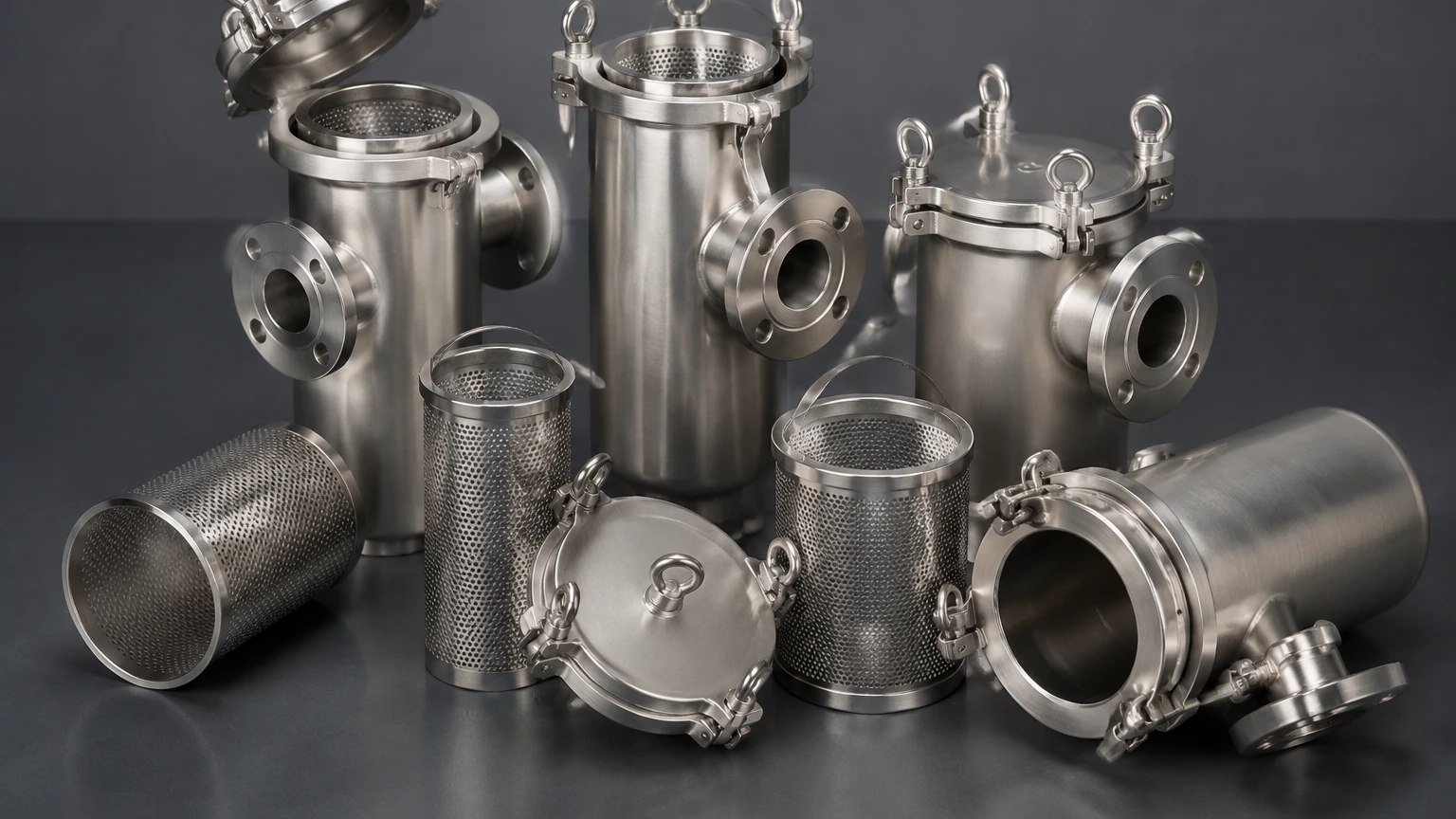
In industrial fluid handling systems, the protection of downstream equipment—such as pumps, valves, heat exchangers, and flow meters—is a critical engineering priority. Fabricated basket strainers serve as a primary defense mechanism, utilizing a removable basket-shaped screen to capture and retain solid contaminants from liquid or gas streams. Unlike standard cast strainers, fabricated units offer significant design flexibility, allowing engineers to specify dimensions, material grades, and nozzle configurations that meet precise application requirements.
For technical professionals and procurement teams, understanding the nuances of fabricated basket strainers is essential for optimizing system performance and ensuring long-term reliability. This guide examines the engineering fundamentals, material considerations, and performance criteria necessary for selecting and implementing these components in demanding industrial environments.
Engineering Fundamentals of Fabricated Basket Strainers
Fabricated basket strainers are distinguished by their manufacturing process. While cast strainers are produced using molds—limiting them to standard sizes and materials—fabricated strainers are constructed from plate and pipe through welding and machining. This "built-to-order" approach allows for a high degree of customization regarding pressure ratings, connection types, and overall vessel geometry.
Structural Integrity and Pressure Ratings
One of the primary advantages of fabrication is the ability to design vessels that adhere to specific pressure vessel codes, such as ASME Section VIII, Division 1. Engineers can specify wall thicknesses and welding procedures that accommodate high-pressure environments or vacuum conditions that standard cast units might not support. The use of high-quality stainless steel, such as SS304 or SS316L, ensures that the vessel can withstand both internal mechanical stresses and external environmental factors.
Flow Dynamics and Internal Volume
The internal volume of a fabricated basket strainer is typically larger than that of a Y-strainer or a standard cast basket strainer. This increased volume allows for a larger filtration surface area, which directly correlates to a lower initial pressure drop and a higher dirt-holding capacity. By optimizing the ratio between the inlet/outlet area and the screen area (often referred to as the Open Area Ratio), engineers can minimize turbulence and ensure laminar flow through the filtration media.
Design and Construction Considerations
When specifying fabricated basket strainers, several design variables must be evaluated to ensure compatibility with the existing piping infrastructure and the process fluid.
Nozzle Configurations and Connections
Fabrication allows for various nozzle arrangements, including inline, offset, or right-angle configurations. This flexibility is particularly valuable in retrofit projects where space is limited and piping cannot be easily rerouted. Connection types can range from standard RF (Raised Face) or RTJ (Ring Type Joint) flanges to NPT threads or socket-weld ends, depending on the system's pressure and leak-tightness requirements.
Cover Types and Accessibility
The method used to secure the strainer cover significantly impacts maintenance efficiency. Common options include:
* Bolted Covers: The most standard and cost-effective option for high-pressure applications where the strainer does not require frequent cleaning.
* Quick-Opening Covers: Utilizing swing bolts or T-bolts, these covers allow for tool-free access to the basket, reducing downtime during maintenance cycles.
* Davit Arms: For larger fabricated strainers where the cover weight is substantial, a davit arm can be integrated to assist in lifting and swinging the cover away from the vessel opening safely.
Vent and Drain Ports
Standard fabricated designs include NPT or flanged vent and drain ports. The vent port allows for the safe release of air or gas before startup, while the drain port facilitates the removal of liquid and sludge before the basket is extracted for cleaning. Engineers should confirm the size and location of these ports to ensure they align with the facility’s drainage and safety protocols.
Filtration Media Selection
The performance of fabricated basket strainers is ultimately determined by the basket itself. As a manufacturer specializing in custom stainless steel filtration solutions, Kaifil provides various media options to achieve specific filtration accuracies.
Perforated Metal vs. Wire Mesh
* Perforated Metal: Typically used for coarse filtration or as a support structure for finer mesh. Perforated baskets are robust and resistant to high differential pressures. Common hole sizes range from 1/32" to 1/2".
* Wire Mesh: For finer filtration requirements (down to 5 microns), stainless steel wire mesh is layered over a perforated support basket. The mesh count and weave type (plain, twill, or dutch weave) are selected based on the particle size distribution of the contaminants.
Open Area Ratio (OAR)
The OAR is the ratio of the net free area through the strainer screen to the internal cross-sectional area of the inlet pipe. A high OAR (typically 6:1 or 8:1) is desirable in fabricated basket strainers to ensure that the strainer does not become a bottleneck in the system. A larger OAR extends the time between cleaning cycles, as more surface area is available to trap debris before the pressure drop becomes critical.
Performance Evaluation and Sizing
Correct sizing is the most critical step in the procurement of fabricated basket strainers. Over-sizing leads to unnecessary costs and space requirements, while under-sizing results in excessive pressure drops and frequent maintenance.
Pressure Drop (Delta P) Calculations
Engineers must calculate both the clean pressure drop and the maximum allowable dirty pressure drop. Factors influencing Delta P include:
* Fluid Viscosity: Highly viscous fluids (such as oils or polymers) require larger surface areas and coarser media to maintain flow.
* Specific Gravity: The density of the fluid affects the velocity and the resulting kinetic energy loss across the screen.
* Flow Rate: Pressure drop increases exponentially with the square of the flow rate.
Velocity Limits
To prevent erosion of the strainer internals and to ensure effective particle capture, flow velocities through the inlet nozzle should generally be kept within industry-standard limits (typically 5–10 ft/s for liquids). High-velocity streams can cause "particle bypass" or mechanical fatigue of the wire mesh media.
Application-Specific Customization
Fabricated basket strainers are employed across a wide range of industries, each with unique technical demands. Customization allows these units to perform reliably in specialized environments.
Chemical and Petrochemical Processing
In these sectors, corrosion resistance is paramount. Fabricated strainers can be constructed from specialty alloys like Hastelloy, Monel, or Duplex Stainless Steel. Additionally, internal coatings or linings (such as PTFE or EPDM) can be applied to carbon steel vessels to provide a cost-effective alternative to high-alloy constructions.
Food and Beverage Industry
For sanitary applications, fabricated strainers must feature smooth internal surfaces (often polished to a specific Ra value) and be free of crevices where bacteria can accumulate. Tri-clamp connections and 316L stainless steel are standard requirements to meet FDA or 3A sanitary standards.
Heat Transfer and Cooling Systems
In large-scale cooling water systems, fabricated basket strainers are often used to remove scale, sand, and biological growth. In these applications, the ability to fabricate large-diameter vessels (up to 48" or more) is a distinct advantage over cast alternatives.
Maintenance and Total Cost of Ownership (TCO)
While the initial purchase price is a factor, the total cost of ownership of a fabricated basket strainer is heavily influenced by its maintenance requirements and durability.
Monitoring Differential Pressure
The most effective way to manage a strainer is through the installation of differential pressure (DP) gauges. By monitoring the pressure difference between the inlet and outlet, operators can determine exactly when the basket requires cleaning. This prevents "blind cleaning" (cleaning too often) and protects the basket from collapsing due to excessive pressure buildup.
Replacement Cycles
High-quality stainless steel baskets are designed for repeated cleaning and reuse. However, the mechanical stress of cleaning and the potential for chemical attack means that baskets should be inspected regularly for broken wires or deformed perforated metal. Keeping spare baskets on-site is a recommended practice to minimize downtime during the cleaning process.
Gasket and Seal Selection
The choice of gasket material (Viton, EPDM, PTFE, or Spiral Wound) must be compatible with the process fluid and the operating temperature. A failure in the cover seal can lead to hazardous leaks and system depressurization.
Procurement Checklist: Confirming Technical Specifications
Before finalizing a purchase order for fabricated basket strainers, engineering and purchasing teams should confirm the following data points with the manufacturer:
1. Process Fluid Characteristics: Name, viscosity, specific gravity, and chemical compatibility.
2. Operating Conditions: Normal and maximum operating pressure, temperature, and flow rate.
3. Filtration Requirements: Target particle size (microns or mesh) and required Open Area Ratio.
4. Material Specifications: Vessel material, basket material, and seal material.
5. Connection Details: Size, type, and orientation (e.g., 6" Flanged RF, Inline).
6. Design Codes: Requirement for ASME U-Stamp, PED, or other regional certifications.
7. Optional Features: Need for davit arms, differential pressure taps, or support legs.
By providing detailed specifications, engineers ensure that the fabricated solution will integrate seamlessly into their process and provide the necessary protection for their high-value equipment.
Conclusion
Fabricated basket strainers represent a versatile and robust solution for industrial filtration challenges. Their ability to be tailored to specific flow rates, pressure ratings, and chemical environments makes them indispensable in modern processing plants. By focusing on high-quality materials and precise engineering standards, manufacturers like Kaifil enable industries to maintain high operational efficiency and protect their critical infrastructure from the damaging effects of particulate contamination. For more information on custom filtration components and engineering support, please visit our Main Page to explore our full range of stainless steel filtration solutions.}
