


Fabricated Duplex Strainer
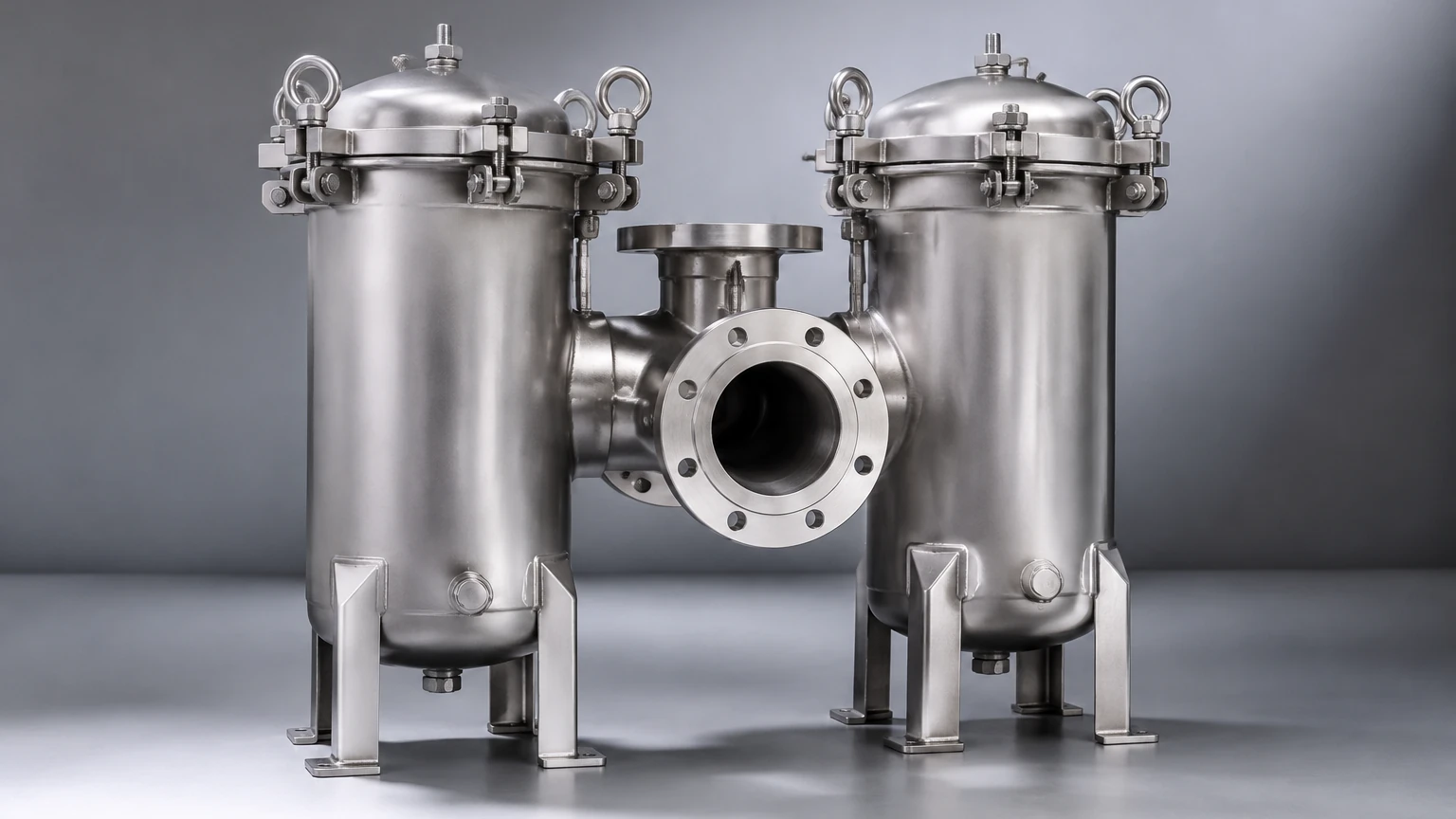
In industrial fluid handling, maintaining continuous flow while protecting downstream equipment from particulate contamination is a critical operational requirement. The fabricated duplex strainer serves as a primary solution for applications where system shutdown for filter maintenance is not an option. Unlike simplex strainers, which require the flow to be halted to clean or replace the basket, a duplex system utilizes two separate chambers connected by a diverter valve. This design allows one chamber to remain in operation while the other is serviced.
For engineers and procurement teams, understanding the technical nuances of a fabricated duplex strainer—ranging from material selection to pressure drop calculations—is essential for ensuring system reliability and longevity. As a specialized manufacturer of stainless steel filtration components, Kaifil emphasizes the importance of precision engineering in these systems to meet the rigorous demands of chemical, pharmaceutical, and hydraulic industries.
The Engineering Logic of Fabricated vs. Cast Strainers
When selecting a duplex strainer, the first major technical decision involves choosing between a cast and a fabricated design. While cast strainers are suitable for standardized, high-volume applications with fixed dimensions, the fabricated duplex strainer offers significant advantages in custom industrial environments.
Fabricated strainers are constructed from pipe, plate, and forged components through advanced welding processes. This method allows for a high degree of customization that casting cannot match. Engineers can specify exact nozzle orientations, custom face-to-face dimensions, and specific material grades such as 304, 316L, or even duplex stainless steels for highly corrosive environments. Furthermore, fabrication allows for the integration of larger filtration areas within a smaller footprint, optimizing the unit for specific flow rates and space constraints.
From a quality assurance perspective, fabricated units are often preferred in high-pressure or high-temperature applications because the base materials (plate and pipe) have more predictable mechanical properties than cast metal, which may harbor internal porosities. Fabricated units also facilitate easier Non-Destructive Testing (NDT), such as X-ray or ultrasonic testing of weld joints, ensuring compliance with ASME Section VIII or other international pressure vessel codes.
Critical Components and Diverter Valve Mechanisms
The heart of any fabricated duplex strainer is the diverter valve mechanism. This component determines how the flow is transitioned between the two filter chambers. There are several common valve configurations used in industrial designs:
1. Dual Ball Valves: Linked by a common handle or actuator, these provide a positive bubble-tight shut-off. They are ideal for high-pressure systems where leakage between chambers must be eliminated.
2. Plug Valves: These utilize a tapered or cylindrical plug to redirect flow. They are robust and simple, though they may require higher torque to operate in larger sizes.
3. Sliding Gate or Butterfly Valves: Often used in larger fabricated systems (above 8 inches), these valves manage high flow volumes with minimal pressure loss.
The transition between chambers must be smooth to prevent hydraulic shock or "water hammer," which can damage sensitive downstream instrumentation. High-quality fabricated systems often include a pressure equalization line, allowing the standby chamber to be pressurized before the flow is diverted, ensuring a seamless transition.
Filtration Media: The Role of Stainless Steel Wire Mesh
The efficiency of a fabricated duplex strainer is ultimately defined by the internal filter basket. As a manufacturer specializing in custom stainless steel filtration, Kaifil focuses on the structural integrity and micron precision of these baskets.
In most industrial applications, the basket consists of a perforated metal support cage lined with a precision-woven stainless steel wire mesh. The choice of mesh weave—such as plain, twilled, or Dutch weave—depends on the required filtration fineness and the nature of the contaminants.
* Micron Rating: This defines the size of particles the strainer will capture. For coarse protection, 1/8" perforations might suffice, whereas fine chemical processing might require mesh capable of 20-micron filtration.
* Open Area Ratio: A critical engineering metric is the ratio of the basket's open area to the internal pipe cross-sectional area. A higher ratio (typically 6:1 or higher) results in a lower initial pressure drop and longer intervals between cleaning cycles.
* Durability: Stainless steel (SS316L) is the industry standard for fabricated baskets due to its resistance to oxidation and chemical attack. In high-viscosity applications, the baskets must be reinforced to withstand the high differential pressures that occur as the mesh becomes loaded with debris.
Selection Criteria for Industrial Applications
When specifying a fabricated duplex strainer, engineers must evaluate several variables to ensure the unit performs reliably under field conditions.
Flow Rate and Pressure Drop (ΔP)
Every strainer introduces a degree of resistance to the flow. The "clean pressure drop" should be calculated based on the fluid's viscosity, specific gravity, and the desired flow rate. If the initial pressure drop is too high, the system will reach its "terminal pressure drop" (the point where cleaning is required) too quickly, leading to excessive maintenance labor. For more information on calculating these parameters for specific industrial setups, engineers can refer to the technical resources available on the manufacturer's Main Page.
Viscosity Considerations
Fluid viscosity significantly impacts strainer sizing. High-viscosity fluids (such as heavy oils or polymers) require larger filtration areas and coarser mesh to maintain acceptable flow rates. In some cases, a fabricated duplex strainer may need to be steam-jacketed to maintain the fluid's temperature and reduce its viscosity during the filtration process.
Particle Loading
The nature and concentration of the solids being removed dictate the size of the strainer chambers. If the process fluid has a high dirt load, larger baskets are necessary to prevent the diverter valve from being cycled too frequently. Engineers should also consider whether the particles are rigid (like pipe scale) or deformable (like organic matter), as this affects how the particles bridge the mesh openings.
Operational Safety and Maintenance
The primary advantage of the duplex design is the ability to service the unit without stopping the process. However, this requires strict adherence to safety protocols. A fabricated duplex strainer should be equipped with:
* Vent Valves: To release trapped air from the standby chamber before it is brought online.
* Drain Ports: To safely remove the fluid from the isolated chamber before opening the cover.
* Cover Interlocks: To prevent the operator from opening the pressurized chamber accidentally.
* Differential Pressure Gauges: To provide a visual or electronic signal when the active basket is clogged and needs to be switched.
During maintenance, the isolated basket is removed, cleaned (often via ultrasonic bath or high-pressure spray), and inspected for signs of mesh fatigue or bypass. Because these systems are fabricated, the covers can be designed as quick-opening (hinged with swing bolts) to minimize the time required for basket changes.
Customization and OEM Capabilities
In many B2B procurement scenarios, a standard off-the-shelf strainer will not suffice. This is where the flexibility of a fabricated duplex strainer becomes a competitive advantage. Manufacturers like Kaifil provide OEM services that allow for the integration of specific features:
* Specialty Coatings: For highly aggressive chemicals, the internal surfaces of the fabricated carbon steel or stainless steel body can be lined with PTFE or Ebonite.
* Automated Switching: For remote or unmanned facilities, the diverter valve can be fitted with pneumatic or electric actuators that trigger a switch based on differential pressure sensors.
* High-Pressure Ratings: While cast units are often limited to standard classes (e.g., ANSI 150 or 300), fabricated units can be engineered to withstand much higher pressures by increasing wall thicknesses and using specialized flange ratings.
Total Cost of Ownership (TCO)
While the initial capital expenditure for a fabricated duplex strainer may be higher than that of a simplex or a cast unit, the Total Cost of Ownership is often lower in the long run. The elimination of downtime during cleaning cycles can save thousands of dollars in lost production. Furthermore, the durability of a custom-engineered stainless steel unit reduces the frequency of replacement parts and repairs.
When evaluating suppliers, it is important to confirm their ability to provide replacement baskets that meet the original specifications. Using inferior third-party baskets can lead to bypass—where unfiltered fluid leaks around the basket frame—potentially damaging expensive downstream pumps, heat exchangers, or spray nozzles.
Conclusion
The fabricated duplex strainer is a vital component in modern industrial infrastructure, providing a robust and flexible solution for continuous filtration. By focusing on high-quality materials, precision-woven wire mesh, and custom-engineered designs, manufacturers ensure that these systems can handle the most demanding fluid environments. For engineers looking to optimize their filtration processes or seeking custom OEM solutions, reviewing the technical capabilities and product ranges on the Main Page is a recommended step in the procurement process. Proper selection, grounded in factual engineering data, ensures that the chosen strainer will provide reliable protection and operational efficiency for years to come.
