


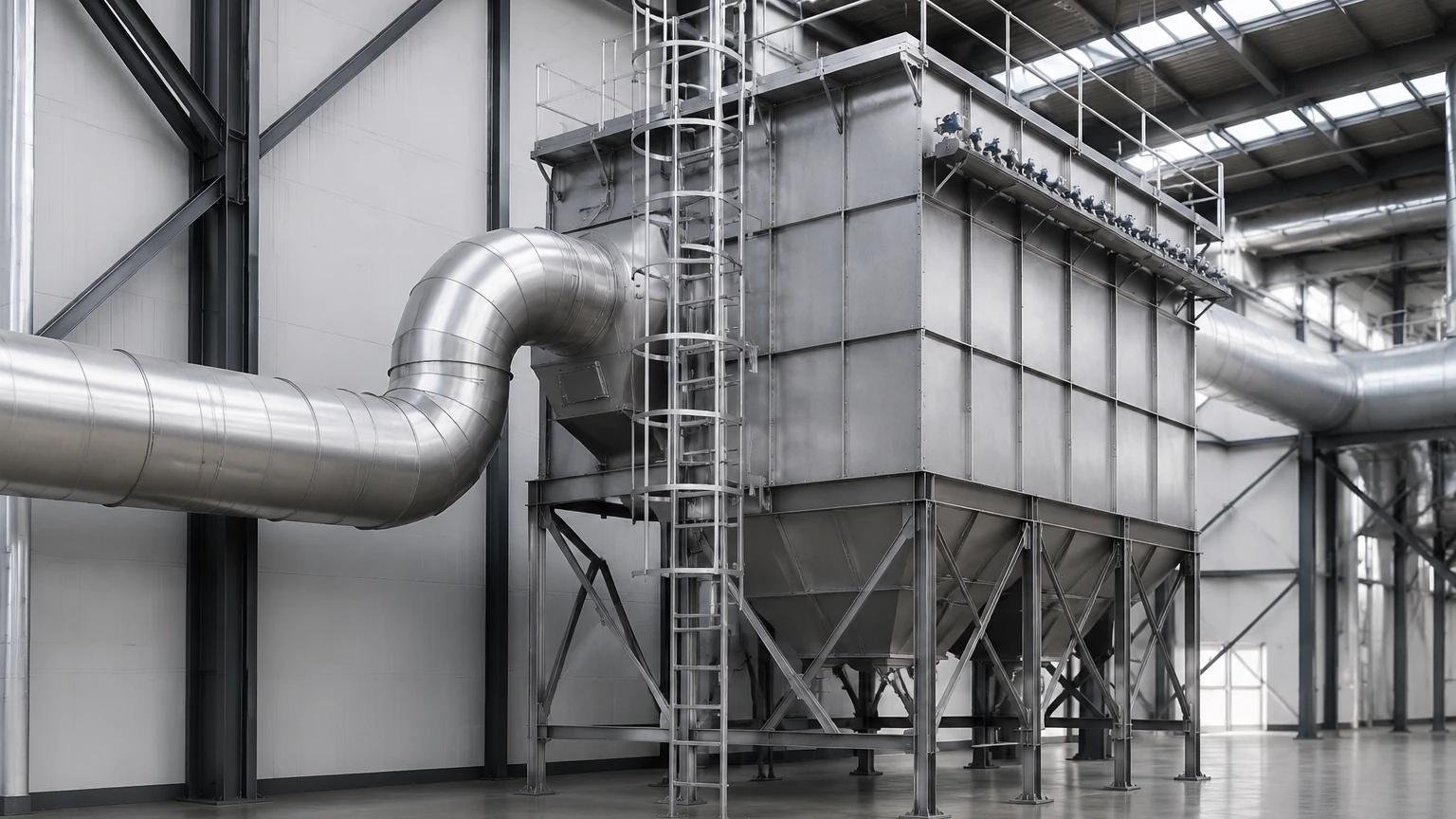
Factory Dust Collector
In modern industrial manufacturing, a factory dust collector is not merely a piece of peripheral equipment; it is a critical component of the facility’s infrastructure. These systems are engineered to improve air quality by removing particulate matter from the air or gas streams generated during various production processes. For engineers and facility managers, selecting the right dust collection strategy involves a deep understanding of filtration mechanics, material compatibility, and the specific demands of the industrial environment.
As a specialist in custom stainless steel filtration solutions, Kaifil provides the high-precision components that allow these systems to operate under extreme conditions. Whether dealing with high temperatures, corrosive chemicals, or stringent hygiene requirements, the effectiveness of a factory dust collector often depends on the quality and design of its internal filter cartridges and mesh components.
The Role of Factory Dust Collectors in Industrial Operations
The primary function of a factory dust collector is to capture and separate dust and other particulates from the air to maintain a safe and efficient workspace. This process is vital for several reasons:
1. Regulatory Compliance: Organizations such as OSHA and the EPA mandate specific air quality standards to protect workers from respiratory hazards and to limit environmental emissions.
2. Product Quality: In industries like electronics or pharmaceutical manufacturing, airborne contaminants can compromise the integrity of the product.
3. Equipment Longevity: Dust accumulation on sensitive machinery can lead to premature wear, overheating, and increased maintenance costs.
4. Safety: Certain types of industrial dust are combustible. A properly designed dust collection system reduces the risk of dust explosions by maintaining concentrations below the lower explosive limit (LEL).
To achieve these goals, engineers must look beyond the external housing of the unit and focus on the filtration media. While standard fabric or paper filters suffice for some applications, demanding environments require the durability and precision of stainless steel filtration components.
Types of Dust Collection Systems and Filtration Mechanics
Understanding the different types of factory dust collector systems is essential for determining which filtration components are required. Each system utilizes different physical principles to separate particles from the air stream.
Baghouse Collectors
Baghouses are among the most common types of large-scale dust collectors. They utilize long fabric bags (or sometimes pleated metal-supported filters) to capture dust. As air passes through the media, dust accumulates on the surface, forming a "dust cake" that actually aids in further filtration until it is cleaned via mechanical shaking or pulse-jet air blasts.
Cartridge Collectors
Cartridge collectors are preferred for applications where space is limited and high filtration efficiency is required for fine dust. These systems use pleated filter media to maximize the surface area within a compact footprint. For specialized industrial applications, stainless steel filter cartridges from manufacturers like Kaifil offer superior resistance to collapse and chemical degradation compared to synthetic alternatives.
Cyclone Separators
Cyclones use centrifugal force to separate large, heavy particles from the air stream. While often used as pre-separators to reduce the load on secondary filters, they are highly effective in woodworking and metal grinding operations. However, for fine particulate capture, a secondary high-efficiency filter is usually necessary.
Wet Scrubbers
Wet scrubbers pass the dust-laden air through a liquid (usually water) to trap particles. These are ideal for handling explosive or very hot dust, though they introduce the challenge of wastewater management.
Engineering Considerations for Filter Media Selection
When specifying components for a factory dust collector, engineers must evaluate several technical parameters to ensure the system meets performance expectations. At the heart of this evaluation is the filter media itself.
Filtration Accuracy and Efficiency
Filtration efficiency is typically measured by the size of particles the media can capture, often expressed in microns. In industrial settings, achieving the correct balance between filtration fineness and airflow is critical. Stainless steel wire mesh filters can be manufactured with precise aperture sizes, ensuring consistent performance even in high-pressure environments.
Air-to-Cloth Ratio
The air-to-cloth (A/C) ratio is the measurement of the volume of air passing through one square foot of filter media. A ratio that is too high can lead to excessive pressure drop and shortened filter life. Utilizing pleated stainless steel cartridges can significantly increase the available surface area, thereby lowering the A/C ratio without increasing the overall size of the dust collector unit.
Pressure Drop (Delta P)
Pressure drop is the difference in air pressure between the upstream and downstream sides of the filter. A high pressure drop indicates that the filter is clogged or that the media is too restrictive, requiring the fan to work harder and consume more energy. Selecting a filter with high porosity and optimized structural design is essential for maintaining a low total cost of ownership.
The Advantages of Stainless Steel Filtration Components
In many B2B industrial sectors, standard filter materials fail due to temperature, moisture, or chemical exposure. This is where stainless steel filtration solutions become indispensable for a factory dust collector.
High Temperature Resistance
In industries like metal smelting, glass manufacturing, or chemical processing, exhaust gases can reach temperatures well above the melting point of synthetic fibers. Stainless steel (such as Grade 304 or 316L) can withstand continuous operation at elevated temperatures without losing structural integrity or filtration efficiency.
Chemical Compatibility and Corrosion Resistance
Factory dust collectors in chemical plants or pharmaceutical labs often encounter corrosive vapors. Stainless steel wire mesh and sintered metal components are resistant to a wide range of acids, bases, and organic solvents, preventing the filter media from dissolving or becoming brittle over time.
Cleanability and Reusability
Unlike disposable paper or fabric filters, stainless steel filter cartridges are cleanable. They can be back-pulsed with air, ultrasonically cleaned, or chemically washed, allowing them to be reused multiple times. This significantly reduces the long-term waste and replacement costs associated with industrial dust collection.
Customization: Tailoring Solutions to Specific Applications
No two industrial environments are exactly alike. A factory dust collector in a food processing plant has vastly different requirements than one in a heavy machinery workshop. Customization is a core strength of Kaifil’s manufacturing process.
* Food and Beverage: Filters must be made from FDA-compliant materials and feature hygienic designs that prevent bacterial growth. Stainless steel’s smooth surface and resistance to sanitizing chemicals make it the ideal choice.
* Pharmaceuticals: These applications require extremely high filtration accuracy to capture potent active pharmaceutical ingredients (APIs). Precision-engineered metal mesh can provide the necessary HEPA-level performance.
* Hydraulic and Industrial Equipment: In systems where dust collection is integrated into machinery, custom-sized metal filter components are often required to fit within specific housing dimensions while maintaining high flow rates.
For more information on how custom filtration components can enhance your system, you may visit our Main Page to review product options and application support.
Maintenance and Total Cost of Ownership (TCO)
While the initial investment in high-quality stainless steel filtration for a factory dust collector may be higher than for disposable media, the Total Cost of Ownership (TCO) is often much lower. Engineers should consider the following when calculating the long-term value:
* Replacement Frequency: How often does the system need to be shut down for filter changes? Stainless steel’s durability extends the intervals between replacements.
* Energy Consumption: Filters that maintain a lower pressure drop over their lifespan reduce the energy demand on the system’s primary blower.
* Disposal Costs: Reducing the volume of contaminated filter waste can lead to significant savings, especially if the dust being collected is classified as hazardous waste.
Regular monitoring of the differential pressure and scheduled visual inspections of the filter seals are essential maintenance practices. If a stainless steel filter shows signs of blinding (permanent clogging), professional ultrasonic cleaning can often restore it to near-original performance levels.
Conclusion: Making Informed Purchasing Decisions
Selecting a factory dust collector and its associated filtration components requires a technical approach that prioritizes durability and precision. For engineers, the goal is to create a system that is not only compliant with safety regulations but also optimized for operational efficiency.
By choosing stainless steel filtration solutions, manufacturers can address the most demanding industrial challenges—from extreme heat to corrosive environments—while benefiting from the longevity and reusability of metal media. When evaluating your next filtration project, confirm the material grades, filtration accuracy, and mechanical requirements with a specialist manufacturer to ensure the component is perfectly suited for your specific application.
For technical specifications and to explore our range of custom stainless steel filter cartridges and wire mesh solutions, please refer to the Main Page for detailed engineering support and product catalogs.
