


Farr Dust Collectors
In the landscape of industrial air quality and particulate management, Farr dust collectors represent a significant segment of the market, particularly for high-volume air filtration and heavy-duty dust extraction. For engineers and facility managers, selecting the right filtration components for these systems is not merely a matter of maintenance but a critical decision affecting operational efficiency, regulatory compliance, and equipment longevity. While the primary housings and systems are well-established, the performance of any dust collection unit is ultimately dictated by the quality and specifications of the internal filter media.
Industrial filtration requires a deep understanding of fluid dynamics, material science, and the specific chemical properties of the particulates being captured. Whether dealing with combustible dust, corrosive chemical fumes, or abrasive metal shavings, the choice of filter—often moving beyond standard disposable options into custom stainless steel solutions—can significantly alter the total cost of ownership (TCO) and system reliability.
Technical Overview of Farr Dust Collectors and Filtration Mechanics
Farr dust collectors typically utilize cartridge-style filtration or baghouse configurations to separate airborne particulates from industrial exhaust streams. These systems operate on principles of impingement, interception, and diffusion. In a standard cycle, dust-laden air enters the collector, where heavier particles drop out of the airstream due to a reduction in velocity, while finer particles are trapped by the filter media.
For technical professionals, the primary concern is the "Air-to-Cloth" ratio, which defines the volume of air passing through a square foot of filter media. A properly balanced ratio ensures that the velocity of the air is low enough to allow for effective particle capture without prematurely blinding the filter. When maintaining or upgrading these systems, understanding the original equipment manufacturer (OEM) specifications is essential, but evaluating custom filtration components can often solve persistent issues such as premature clogging or structural failure under high differential pressure.
Material Selection: The Shift Toward Stainless Steel Filtration
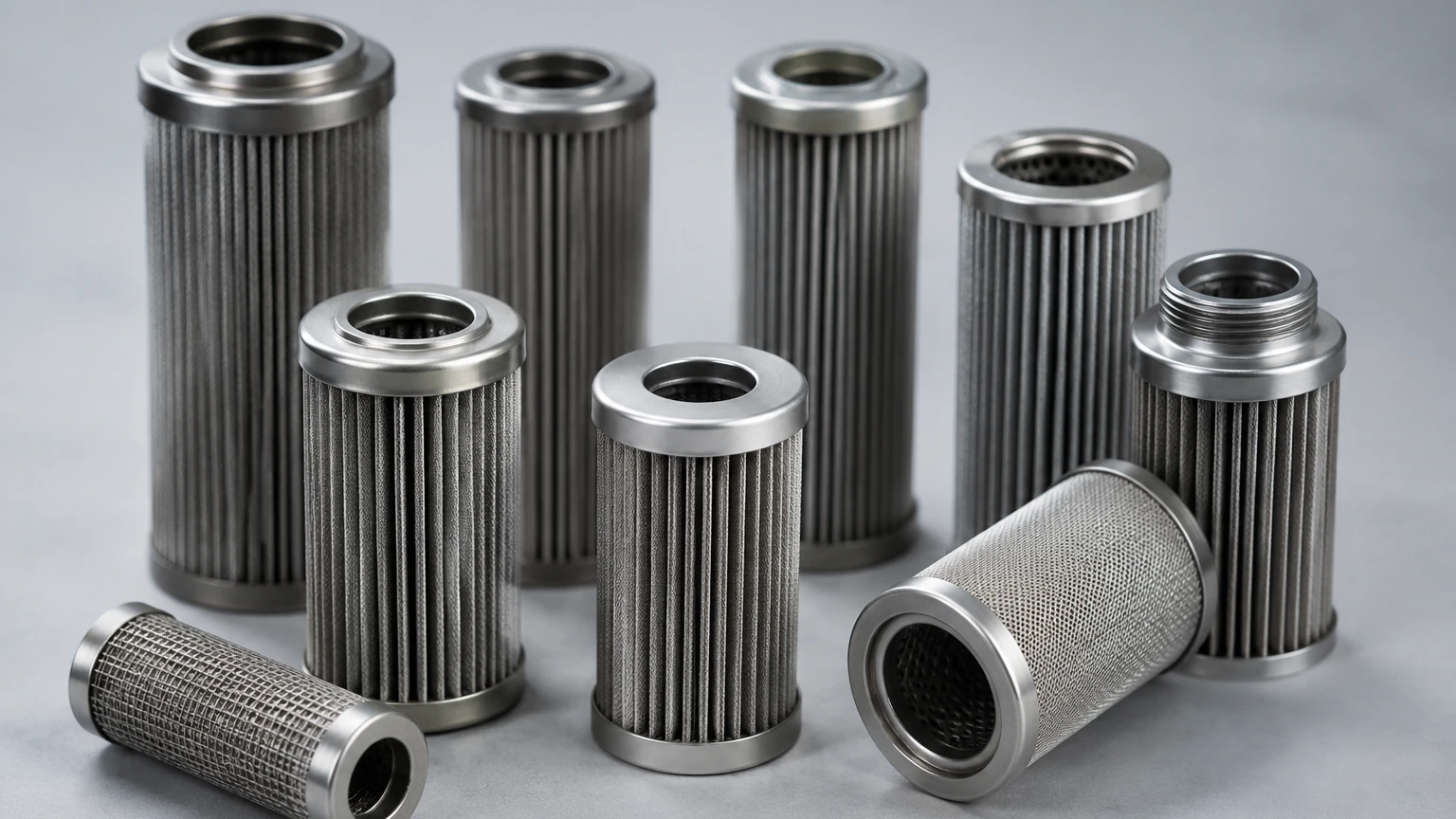
While many standard farr dust collectors utilize cellulose or synthetic blended media, demanding industrial environments often require more robust materials. Stainless steel filtration components, such as those manufactured by Kaifil, provide distinct advantages in applications where temperature, moisture, or chemical reactivity are factors.
High-Temperature Resistance
In industries like metalworking or chemical processing, exhaust gases can reach temperatures that exceed the melting point of standard polymer-based filters. Stainless steel wire mesh and sintered metal filters maintain structural integrity at temperatures up to 500°C (and higher with specific alloys), ensuring that the dust collector remains operational without the risk of media fire or thermal degradation.
Corrosion and Chemical Compatibility
In pharmaceutical and food processing applications, the presence of caustic cleaning agents or acidic particulates can rapidly degrade standard filter media. Using 304 or 316L stainless steel filter cartridges ensures that the filtration system does not introduce contaminants into the process and resists pitting and stress corrosion cracking. This is a vital consideration for engineers looking to optimize their Main Page of filtration strategy for long-term durability.
Engineering Considerations for Filter Cartridge Design
When specifying replacement or custom filters for farr dust collectors, several engineering parameters must be evaluated to ensure compatibility and performance. It is not enough for a filter to "fit" the housing; it must perform under the specific load conditions of the facility.
1. Pleat Geometry and Spacing: The surface area of a cartridge filter is maximized through pleating. However, if pleats are too tight, "bridging" occurs, where dust becomes trapped between pleats and cannot be dislodged by pulse-jet cleaning. Custom stainless steel filters allow for precision-engineered pleat spacing that balances surface area with cleanability.
2. Structural Integrity: Under high-pressure drops, standard filters may collapse. Stainless steel inner cores and outer cages provide the necessary mechanical strength to withstand high differential pressure (ΔP) without deformation.
3. Filtration Accuracy (Micron Rating): The selection of wire mesh weave—such as plain weave, twilled weave, or Dutch weave—determines the absolute and nominal filtration ratings. For farr dust collectors, achieving the correct balance between fine particle capture and airflow permeability is the primary engineering challenge.
Efficiency vs. Pressure Drop: Optimizing Performance
A common challenge in industrial dust collection is the trade-off between filtration efficiency and pressure drop. A higher-efficiency filter (lower micron rating) typically results in a higher initial pressure drop, which requires more fan energy to maintain the required airflow.
Engineers must calculate the "System Effect" to understand how the dust collector interacts with the rest of the ventilation ductwork. By utilizing precision-engineered metal mesh filters, it is possible to achieve high capture rates for sub-micron particles while maintaining a more consistent permeability profile over the filter's life. Unlike fiber-based media, which can shed fibers or become deeply embedded with dust (depth loading), stainless steel mesh primarily utilizes surface filtration, making the pulse-jet cleaning cycles more effective and reducing the average operating pressure drop.
Customization and OEM Solutions for Specialized Applications
Many industrial processes do not fit the "standard" template of off-the-shelf dust collection systems. In these instances, custom-designed filtration components are necessary. Customization can involve non-standard dimensions to fit modified farr dust collectors, specialized gasket materials (such as Viton or PTFE) for chemical resistance, or unique end-cap configurations for specific mounting requirements.
For purchasing teams and engineers, working with a manufacturer that offers OEM capabilities allows for the development of filtration solutions that are tailor-made for the specific particulate profile of their plant. This includes selecting the optimal alloy and weave pattern to handle abrasive dust that would otherwise erode standard synthetic media. For more information on specialized designs, professionals can Review product options and application support to find solutions that align with their specific technical requirements.
Maintenance Protocols and Lifecycle Analysis
The longevity of filters in farr dust collectors is a major driver of maintenance costs. Standard disposable filters require frequent replacement, leading to downtime and disposal costs. In contrast, stainless steel filter cartridges are often cleanable and reusable.
Cleaning Methods
* Pulse-Jet Cleaning: The most common method, using a burst of compressed air to dislodge the dust cake. Metal filters respond more predictably to pulse-jetting due to their rigid structure.
* Ultrasonic Cleaning: For metal filters that have become fouled with sticky or oily particulates, ultrasonic baths can restore the media to near-original permeability, extending the service life to several years.
* Backwashing: In certain liquid-solid separation applications related to industrial processing, backwashing can be employed to clear the filter surface.
Total Cost of Ownership (TCO)
While the initial capital expenditure for a stainless steel filter is higher than a disposable cellulose filter, the TCO is often lower. When factoring in the cost of replacement filters, labor for installation, hazardous waste disposal fees for used filters, and the energy costs associated with high ΔP, high-performance metal filtration emerges as the more cost-effective solution for permanent industrial installations.
Selection Criteria for Engineers and Purchasing Teams
Before finalizing a purchase or specification for farr dust collectors' components, technical teams should confirm the following data points:
* Particle Size Distribution (PSD): Understanding the range of particle sizes ensures the correct micron rating is selected to prevent bypass or rapid blinding.
* Gas Stream Chemistry: Identify any corrosive elements or moisture content that could necessitate the use of 316L stainless steel over 304.
* Operating Temperature: Confirm both the continuous and peak excursion temperatures.
* Regulatory Requirements: Ensure the filtration efficiency meets local EPA or OSHA standards for indoor air quality and emissions.
By focusing on these factual engineering boundaries, facilities can ensure that their dust collection systems operate at peak efficiency. The integration of high-quality stainless steel components into established systems like farr dust collectors provides a pathway to more sustainable and reliable industrial operations. For those seeking to optimize their filtration hardware, exploring the technical capabilities of specialized manufacturers is the next logical step in ensuring plant safety and efficiency.
