


Filt Cart
In the landscape of industrial processing, the efficiency of a filtration system is often dictated by the quality and specification of its internal components. The term "filt cart," a common industry shorthand for filter cartridges, refers to the replaceable, modular filtration elements used to remove contaminants from liquid or gaseous streams. For engineers and procurement professionals, selecting the correct stainless steel filt cart is not merely a matter of dimensions; it involves a complex evaluation of material science, fluid dynamics, and mechanical durability.
As a specialized manufacturer, Kaifil focuses on providing high-performance stainless steel filtration solutions designed to withstand conditions where polymer-based filters fail. This article examines the technical parameters, selection criteria, and engineering considerations essential for integrating industrial filter cartridges into demanding B2B applications.
Understanding the Engineering Behind Industrial Filter Cartridges
Industrial filtration requires a balance between particle retention and flow efficiency. A stainless steel filt cart is engineered to serve as either a surface filter or a depth filter, depending on its construction. Unlike disposable paper or plastic cartridges, metal cartridges offer the advantage of being cleanable and reusable, which significantly alters the long-term operational costs of a facility.
When evaluating a filt cart for a specific process, engineers must consider the mechanical stress the component will face. High-pressure differentials, thermal expansion, and the abrasive nature of certain particulates can cause structural failure in sub-standard components. High-quality stainless steel cartridges utilize advanced welding techniques, such as TIG (Tungsten Inert Gas) or plasma welding, to ensure that the longitudinal seams and end cap attachments remain integral under pressure. This robust construction is a hallmark of the products found on the Main Page of specialized manufacturers like Kaifil.
Material Selection for Demanding Environments
The most critical decision in specifying a filt cart is the choice of material. Stainless steel is the industry standard due to its corrosion resistance and mechanical strength, but the specific grade must match the chemical profile of the process fluid.
304 Stainless Steel
This is the most common grade used for general industrial applications. It provides excellent strength and good corrosion resistance for water treatment and mild chemical processes. However, it is susceptible to chloride-induced pitting, making it less suitable for marine or high-salt environments.
316 and 316L Stainless Steel
For applications involving aggressive chemicals, pharmaceuticals, or food and beverage processing, 316L is typically preferred. The addition of molybdenum enhances resistance to pitting and crevice corrosion. The "L" denotes low carbon content, which is crucial for preventing carbide precipitation during welding, thereby maintaining the integrity of the filter's structure in corrosive environments.
Specialized Alloys
In extreme cases involving highly acidic or high-temperature environments (exceeding 500°C), specialized alloys like Inconel or Monel may be used. These materials ensure that the filt cart does not leach metallic ions into the process stream, preserving the purity of the final product.
Structural Variations: Pleated vs. Cylindrical Filt Cart Designs
The geometry of the filter medium determines the surface area available for filtration, which directly impacts the service life and flow rate of the system.
Pleated Filter Cartridges
Pleating the wire mesh or sintered fiber felt significantly increases the effective filtration area within a fixed diameter. For a standard 10-inch filt cart, a pleated design can offer several times the surface area of a cylindrical version. This results in a lower clean pressure drop, higher dirt-holding capacity, and longer intervals between cleaning cycles. Pleated cartridges are ideal for high-flow applications where downtime for maintenance must be minimized.
Cylindrical (Plain) Filter Cartridges
Cylindrical cartridges consist of a single or multi-layer mesh tube. While they have less surface area than pleated designs, they are easier to clean, especially when dealing with sticky or gelatinous contaminants that might become trapped in the folds of a pleated filter. They are often used as pre-filters or in applications with lower flow requirements.
Key Performance Metrics: Micron Rating and Flow Capacity
To ensure a filt cart meets the requirements of a specific application, engineers must define the filtration accuracy and the required flow rate.
Micron Rating: Nominal vs. Absolute
* Nominal Rating: This indicates the ability of the filter to retain a majority of particles of a specific size (usually 60% to 90%). It is a helpful guide but does not guarantee 100% removal.
* Absolute Rating: This represents the diameter of the largest hard spherical particle that will pass through the filter under specified test conditions. In critical applications like pharmaceutical manufacturing or fine chemical processing, an absolute-rated filt cart is necessary to ensure process consistency.
Pressure Drop ($ΔP$)
The pressure drop is the difference in pressure between the upstream and downstream sides of the filter. A high initial pressure drop indicates that the filter is either too restrictive for the flow rate or that the micron rating is too fine for the application. Monitoring the increase in $ΔP$ over time is the standard method for determining when a filt cart requires cleaning or replacement.
Application-Specific Considerations in Industrial Filtration
Different industries impose unique demands on filtration hardware. A filt cart designed for hydraulic oil will have different structural requirements than one designed for steam filtration in a food processing plant.
Chemical Processing
In the chemical industry, compatibility is the primary concern. The filt cart must resist degradation from solvents, acids, and bases. Furthermore, in hazardous environments, the filter must be grounded to prevent the buildup of static electricity, which could lead to ignition.
Food and Beverage
Filters used in this sector must comply with stringent hygienic standards. This involves using FDA-approved materials and ensuring that the filt cart design eliminates "dead zones" where bacteria could proliferate. Stainless steel wire mesh is preferred here because it can withstand CIP (Clean-In-Place) and SIP (Steam-In-Place) sterilization processes.
Hydraulic and Lubrication Systems
In these systems, the filt cart is used to protect sensitive components like valves and pumps from wear-causing particles. These filters must handle high-viscosity fluids and rapid pressure fluctuations without collapsing.
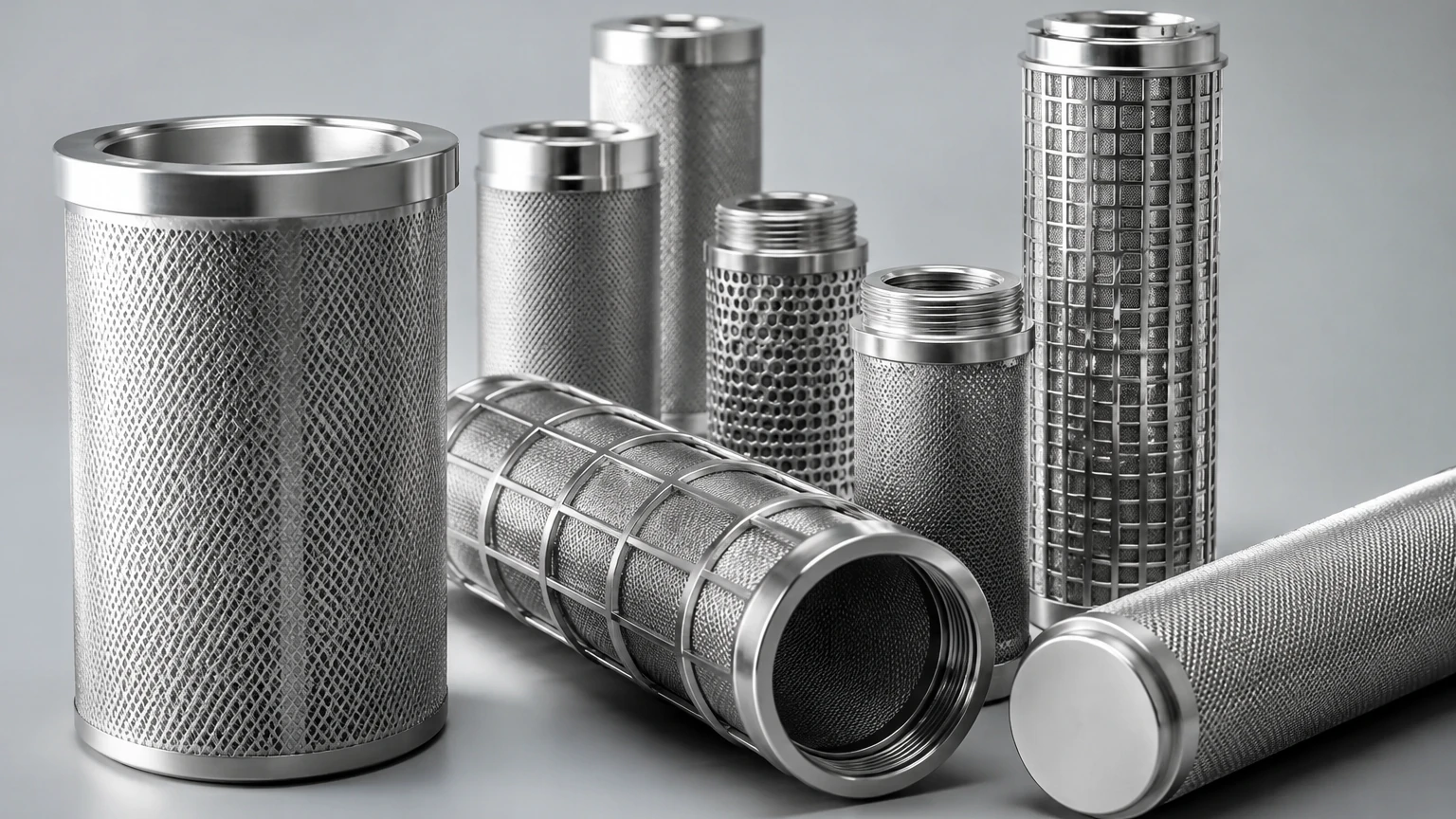
Customization and OEM Manufacturing Capabilities
Many industrial systems require non-standard filtration components. This is where the expertise of a manufacturer like Kaifil becomes invaluable. Customization options for a filt cart include:
* End Cap Configurations: Standard options include Double Open End (DOE), Single Open End (SOE) with various O-ring configurations (e.g., 222, 226), and threaded connections.
* Reinforcement: For high-pressure applications, internal support cores or external cages can be added to prevent media migration or structural collapse.
* Layering: Combining different mesh counts in a single filt cart allows for multi-stage filtration within a single element, capturing larger particles on the outer layers and finer particles on the inner layers.
By working with an OEM provider, engineering teams can receive tailored solutions that integrate seamlessly into existing housings, optimizing performance without requiring expensive system overhauls. Detailed technical support for these custom projects is available through the Main Page of the Kaifil website.
Maintenance and Cleaning Procedures for Stainless Steel Filters
One of the primary advantages of a stainless steel filt cart is its cleanability. Proper maintenance extends the life of the cartridge and maintains process efficiency. Common cleaning methods include:
1. Backwashing: Reversing the flow of the fluid to dislodge particles from the surface of the mesh.
2. Ultrasonic Cleaning: Using high-frequency sound waves in a cleaning solution to remove fine particles trapped deep within the mesh or sintered structure.
3. Chemical Cleaning: Soaking the filt cart in compatible solvents or acids to dissolve organic or inorganic scaling.
4. Burn-off/Pyrolysis: For polymer or organic buildup, controlled heating can be used to carbonize the contaminants, which are then removed through ultrasonic cleaning.
It is vital to verify that the cleaning method does not damage the micron-rated mesh. For instance, aggressive mechanical scrubbing can displace the wires in a fine mesh, altering the filtration rating.
Evaluating the Total Cost of Ownership
When purchasing a filt cart, the initial price is only one component of the total cost. Procurement teams should perform a Total Cost of Ownership (TCO) analysis, which includes:
* Initial Purchase Price: The cost of the stainless steel element vs. disposable alternatives.
* Service Life: How many cleaning cycles can the filt cart withstand before the mesh integrity is compromised?
* Operational Costs: The energy cost associated with the pressure drop. A more efficient filter design reduces the load on pumps.
* Downtime Costs: The time required to change or clean filters. Higher dirt-holding capacity reduces the frequency of these events.
* Waste Disposal: Unlike disposable filters, which contribute to landfill or require hazardous waste incineration, stainless steel cartridges are recyclable at the end of their long service life.
In many high-volume or high-temperature industrial processes, the higher initial investment in a quality stainless steel filt cart is recouped within months through reduced replacement costs and improved process uptime.
Conclusion
Selecting the right filt cart is a technical process that requires a deep understanding of the operating environment and the physical properties of the contaminants. By focusing on material integrity, structural design, and precise micron ratings, engineers can ensure that their filtration systems provide reliable protection for downstream equipment and maintain the purity of the final product.
For those seeking specialized guidance or custom-engineered filtration components, reviewing the technical specifications and manufacturing capabilities on the Main Page of an experienced manufacturer is the first step toward optimizing industrial filtration performance. Whether the application involves aggressive chemicals, high-pressure hydraulics, or food-grade processing, the right stainless steel filter cartridge remains a cornerstone of industrial efficiency.
