


Filter Coalescer Elements
In industrial processing, the separation of immiscible liquids or the removal of liquid aerosols from gas streams is a critical requirement for protecting downstream equipment and ensuring product purity. Filter coalescer elements serve as the primary technical solution for these challenges. Unlike standard particulate filters that simply trap solid contaminants, coalescer elements are engineered to merge small droplets into larger ones, allowing for efficient separation based on density differences. For engineers and procurement teams, understanding the technical nuances of these components is essential for optimizing system performance and reducing long-term operational costs.
Understanding the Function of Filter Coalescer Elements
Filter coalescer elements are specialized filtration components designed to perform two simultaneous functions: the removal of solid particulate matter and the separation of two different phases—typically liquid-from-liquid or liquid-from-gas. In a liquid-liquid application, such as removing water from diesel fuel or oil from water, the coalescer forces tiny, emulsified droplets to collide and form larger globules. These larger droplets eventually reach a size where gravity or centrifugal force causes them to settle out of the continuous phase.
In gas-liquid applications, such as removing oil mist from compressed air or liquid hydrocarbons from natural gas, the filter coalescer elements capture sub-micron aerosols. These aerosols accumulate on the filter media fibers, migrate through the depth of the media, and drain away as a liquid bulk. For high-stakes industrial environments, the efficiency of this process determines the lifespan of turbines, compressors, and high-precision nozzles.
To explore specific configurations and technical support for these systems, professionals often consult the Main Page of specialized manufacturers to align component specifications with industrial standards.
The Mechanics of Coalescing Filtration
The effectiveness of filter coalescer elements relies on three distinct physical mechanisms: direct impact, interception, and Brownian motion.
1. Direct Impact: Larger droplets (typically those greater than 10 microns) possess enough momentum to travel in a straight line even as the fluid stream deviates around the filter fibers. These droplets strike the fibers directly and attach to the surface.
2. Interception: Mid-sized droplets follow the fluid streamlines but come close enough to a fiber to be captured by its surface. This is a function of the proximity between the droplet diameter and the pore size of the media.
3. Brownian Motion: For extremely small droplets (sub-micron), the random movement caused by molecular collisions increases the probability that the droplet will contact a fiber and adhere to it.
Once captured, the droplets move along the fibers and accumulate at the intersections of the media. As more droplets arrive, they coalesce—merging into larger masses. The design of the filter media must balance the need for high surface area (to capture droplets) with sufficient permeability (to allow the coalesced liquid to drain without causing an excessive pressure drop).
Material Engineering and Selection Criteria
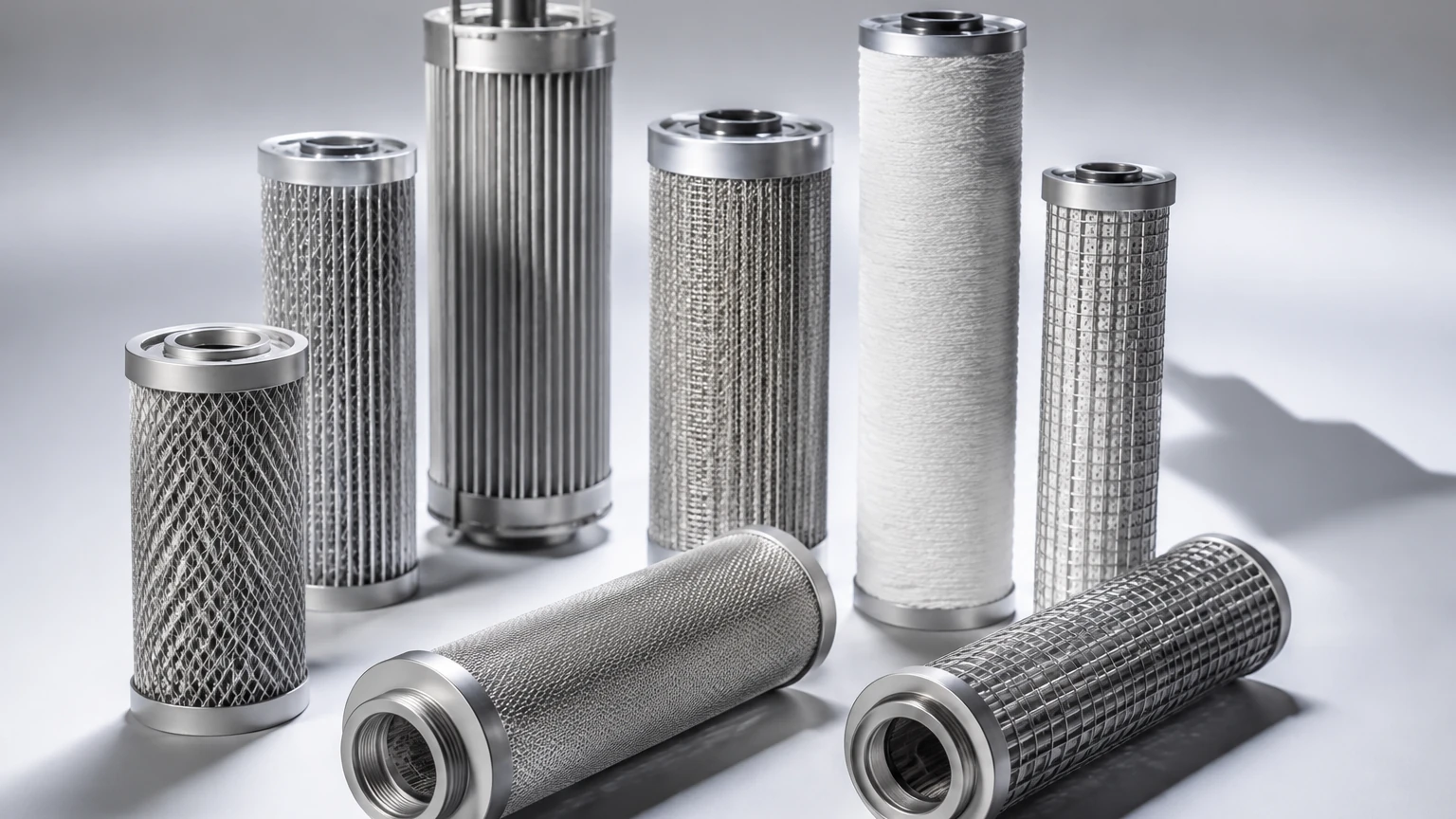
The choice of material for filter coalescer elements is dictated by the chemical nature of the fluids, the operating temperature, and the required filtration fineness. While traditional coalescers often used fiberglass or cellulose, modern industrial applications increasingly demand the durability and precision of stainless steel and specialized metal alloys.
Stainless Steel and Metal Media
Stainless steel wire mesh and sintered metal fibers are preferred in aggressive chemical environments or high-temperature applications where synthetic media would degrade. Metal filter coalescer elements offer superior structural integrity, resisting collapse under high differential pressure. Furthermore, stainless steel components are often cleanable and reusable, which significantly alters the total cost of ownership compared to disposable synthetic elements.
Surface Tension and Phobicity
For a coalescer to function, the media must have specific wetting characteristics. In water-from-fuel applications, the media is often treated to be hydrophobic (water-repelling). This ensures that while the fuel passes through, the water droplets are held back and encouraged to coalesce. Conversely, in oil-from-air applications, oleophilic (oil-attracting) properties may be utilized within the depth of the media to facilitate the capture of fine mists.
Key Performance Indicators for Industrial Coalescers
When evaluating filter coalescer elements for a specific project, engineers must look beyond simple micron ratings. Several key performance indicators (KPIs) define the success of the separation process:
* Separation Efficiency: This is often expressed as the percentage of the dispersed phase removed from the continuous phase. For high-purity applications, efficiency ratings of 99.9% or higher are common.
* Pressure Drop (Delta P): Every filter element introduces resistance to flow. A high-quality coalescer is designed to maintain a low initial pressure drop. As the filter becomes saturated with liquid or solids, the pressure drop increases. Monitoring this is essential for determining the replacement cycle.
* Liquid Loading Capacity: This refers to the volume of liquid the element can handle per unit of time while maintaining separation efficiency. If the flow rate exceeds the element’s design capacity, "re-entrainment" can occur, where the high-velocity fluid strips coalesced droplets off the back side of the filter and carries them downstream.
* Compatibility: The seals, end caps, and bonding agents used in the construction of the element must be compatible with the process fluid. For instance, in pharmaceutical or food-grade applications, the materials must meet strict regulatory standards for non-leaching and cleanliness.
Industrial Applications and System Integration
Filter coalescer elements are integrated into complex systems across various sectors, each with unique operational demands.
Chemical and Petrochemical Processing
In refineries, coalescers are used to separate water from hydrocarbons to prevent corrosion in pipelines and protect catalysts in downstream reactors. The presence of surfactants in these fluids can often interfere with coalescence, requiring specialized media designs that can overcome reduced interfacial tension.
Hydraulic and Lubrication Systems
Water is a primary contaminant in hydraulic oils, leading to oxidation, additive depletion, and component wear. Coalescing elements are used in kidney-loop filtration systems to continuously remove moisture, extending the life of the oil and the hydraulic pumps.
Compressed Air and Gas
In the production of electronics or during food packaging, compressed air must be free of oil aerosols. Filter coalescer elements are placed after the compressor to ensure the air meets ISO 8573.1 quality classes. Similarly, in the natural gas industry, these elements protect turbines by removing liquid slugs and fine mists that could cause catastrophic blade damage.
Maintenance, Lifecycle, and Procurement Considerations
The procurement of filter coalescer elements should be treated as a technical partnership rather than a simple commodity purchase. Because these elements are often the last line of defense for expensive machinery, verifying the manufacturer's quality control processes is vital.
Customization and OEM Requirements
Many industrial systems require custom-sized elements or specific end-cap configurations (such as threaded, bolt-on, or double open-ended) to fit existing housings. Working with a manufacturer that offers OEM capabilities allows for the development of bespoke filtration solutions that match the exact flow dynamics and chemical constraints of a specific plant.
Total Cost of Ownership (TCO)
While the initial purchase price of a filter coalescer element is a factor, the TCO includes the cost of downtime, the frequency of replacement, and the energy costs associated with pressure drop. A more expensive, high-efficiency stainless steel element may prove more cost-effective over a three-year period than a cheaper synthetic alternative that requires monthly replacement and causes higher energy consumption due to restricted flow.
Technical Confirmation Before Purchase
Before finalizing a specification, technical teams should confirm:
* The specific gravity and viscosity of both the continuous and dispersed phases.
* The expected concentration of solids (to determine if a pre-filter is necessary).
* The minimum and maximum operating temperatures and pressures.
* The desired effluent quality (e.g., "less than 10 ppm of water").
By addressing these variables during the design phase, engineers can ensure that the selected filter coalescer elements provide reliable, long-term service in demanding industrial environments. For further technical specifications on precision-engineered metal filtration components, visiting the Main Page provides access to detailed product data and application-specific guidance.
