


Filter Press Food Industry
In the modern landscape of industrial food processing, the efficiency of solid-liquid separation is a critical factor in determining product quality, yield, and safety. The use of a filter press in the food industry is a well-established practice, serving as a cornerstone for applications ranging from beverage clarification to the refining of edible oils. For engineers and procurement specialists, understanding the technical nuances of these systems—and the precision components that drive them—is essential for optimizing production lines and maintaining compliance with stringent regulatory standards.
As a specialized manufacturer of stainless steel filtration solutions, Kaifil provides the technical expertise and high-performance components required to meet the demanding needs of the food sector. Whether you are designing a new system or upgrading an existing installation, exploring our Main Page will provide insights into the customized filtration technologies available to support your operations.
The Role of Filtration in Modern Food Processing
The filter press food industry segment relies on mechanical pressure to separate solids from liquids. This process is not merely about removal; it is about achieving a specific level of clarity or recovering valuable solids. In food production, the slurry (a mixture of liquid and solid particles) is pumped into the filter press under pressure. As the liquid passes through the filter media, the solids are trapped within the chambers, forming a "filter cake."
The technical success of this operation depends on several variables:
* Filtration Flux: The rate at which liquid passes through the media.
* Cake Dryness: The efficiency of liquid removal from the solids, which is critical for waste reduction or byproduct recovery.
* Clarity: The removal of microscopic particles to achieve the desired visual and chemical profile of the filtrate.
In the context of the food industry, these technical goals must be balanced with hygiene. Unlike general industrial applications, food-grade filtration must prevent bacterial growth, resist corrosion from acidic or alkaline cleaning agents, and ensure that no contaminants are introduced into the product stream.
Engineering Requirements for Food-Grade Filter Presses
When evaluating a filter press for food applications, engineers must look beyond basic mechanical function. The design must facilitate thorough cleaning and meet specific sanitary standards.
Sanitary Design Principles
In the food industry, "dead zones"—areas where liquid can stagnate and bacteria can proliferate—must be eliminated. This requires precision engineering of the filter plates and the internal manifold. Stainless steel components are preferred due to their non-porous surfaces and ability to withstand high temperatures during sterilization.
Pressure and Temperature Resilience
Many food processes, such as the extraction of fats or the filtration of hot syrups, operate at elevated temperatures. The filter media and the supporting structure must maintain dimensional stability under these conditions. High-pressure cycles are often used to maximize juice extraction or oil recovery, necessitating components that can withstand significant mechanical stress without deforming or bypassing.
Material Selection: Why Stainless Steel is Essential
Material compatibility is a primary concern in the filter press food industry. While some industrial applications use plastic or cast iron components, the food and beverage sector overwhelmingly favors stainless steel, specifically grades 304 and 316L.
Corrosion Resistance
Food products often contain organic acids (such as citric or acetic acid) or salts that can be highly corrosive to standard metals. 316L stainless steel, with its molybdenum content, offers superior resistance to pitting and crevice corrosion, making it the standard for high-salinity or high-acidity environments.
Durability and Longevity
Stainless steel filter cartridges and wire mesh components provided by Kaifil are designed for longevity. Unlike synthetic cloths that may fray or tear over time—potentially shedding fibers into the food product—stainless steel mesh provides a rigid, permanent filtration surface. This durability reduces the risk of batch contamination and lowers the total cost of ownership by extending replacement cycles.
Regulatory Compliance
Materials used in food filtration must comply with international standards such as the FDA (Food and Drug Administration) in the United States and EU Regulation 1935/2004. Using certified stainless steel ensures that the filtration media does not migrate substances into the food in quantities that could endanger human health.
Optimizing Filtration Performance with Precision Wire Mesh
The heart of any filter press is the media that performs the separation. While traditional filter cloths are common, many high-end food applications are shifting toward integrated stainless steel wire mesh solutions for enhanced precision.
Micron Rating and Filtration Accuracy
Precision-woven wire mesh allows for exact control over the micron rating. In applications like wine or beer clarification, where removing yeast or fine sediment is critical, the consistency of the pore size is paramount. Kaifil’s custom wire mesh filters provide a stable pore structure that does not expand under pressure, ensuring consistent filtration accuracy from the beginning to the end of the production cycle.
Ease of Cleaning (CIP Compatibility)
Clean-in-Place (CIP) systems are standard in the food industry to minimize downtime and ensure hygiene. Stainless steel filter media are exceptionally well-suited for CIP. They can withstand the aggressive chemical washes and high-pressure backpulsing required to remove stubborn organic residues without compromising the integrity of the filter.
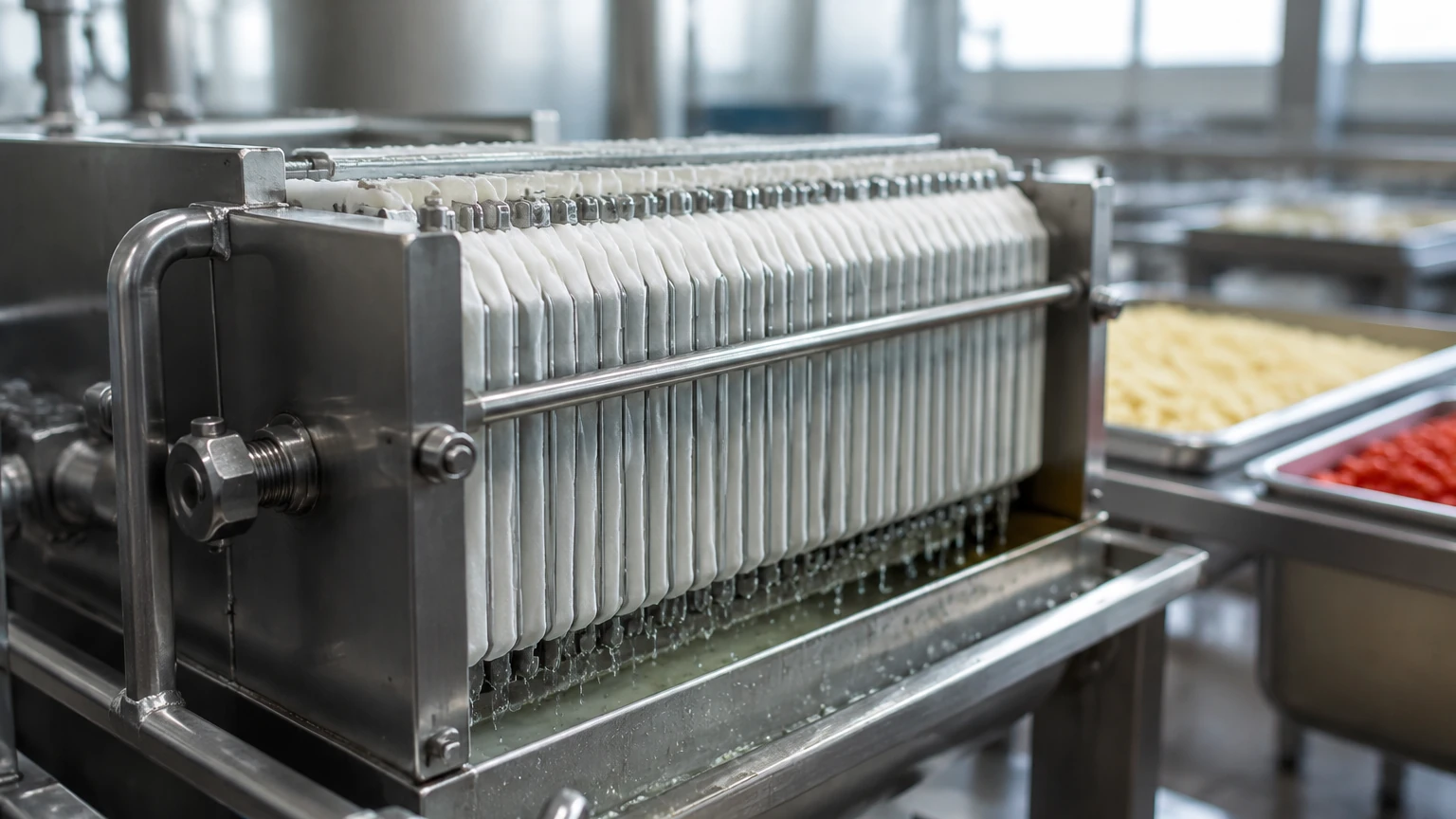
Common Applications Within the Food and Beverage Sector
The versatility of the filter press allows it to be adapted for a wide variety of food-related tasks. Each application requires specific engineering considerations regarding flow rate and solids loading.
Edible Oil Refining
In the production of vegetable oils, filter presses are used during the bleaching and winterization stages. The press removes bleaching earth (clay) and waxes. Because these oils are often processed at high temperatures, the thermal stability of stainless steel filtration components is a significant advantage.
Sugar and Syrups
Sugar refineries use filter presses to clarify raw juice and carbonation slurries. The high viscosity of sugar syrups requires a filtration system that can handle high differential pressures while maintaining a high flow rate. Precision metal filter components help prevent the "blinding" of the filter media, which is a common issue with sticky, high-sugar substances.
Beverage Clarification
For juices, cider, and spirits, achieving a "brilliant" clarity is a key quality metric. Filter presses equipped with fine-mesh stainless steel elements can remove colloidal particles and proteins that cause haze, ensuring a shelf-stable and visually appealing product.
Maintenance, Cleaning, and Replacement Cycles
To maintain the efficiency of a filter press food industry installation, a rigorous maintenance schedule is required. Engineers should monitor the differential pressure across the filter; a rapid increase often indicates that the media is becoming fouled or that the filter cake has reached maximum capacity.
Evaluating Replacement Cycles
While stainless steel filters are durable, they are not indestructible. Mechanical wear or accidental damage can occur. Regular inspection of the mesh for signs of deformation or "pinholing" is necessary. Because Kaifil specializes in custom dimensions, replacing specific filter cartridges or mesh panels can be done with minimal disruption to the overall system, ensuring that the plant returns to full capacity quickly.
Total Cost Considerations
When calculating the cost of filtration, it is important to look beyond the initial purchase price. Factors such as labor costs for manual cleaning, the cost of replacement media, and the value of lost product due to inefficient separation all contribute to the total cost. Investing in high-quality stainless steel filtration solutions often results in a lower long-term cost due to reduced downtime and higher product recovery rates.
Selecting a Partner for Custom Filtration Solutions
Choosing the right filtration components requires a deep understanding of both the mechanical process and the chemical properties of the food product. At Kaifil, we work closely with engineering teams to develop customized solutions that address specific challenges, such as high-viscosity fluids, abrasive solids, or ultra-fine filtration requirements.
Our manufacturing capabilities include:
* Custom Wire Mesh Filters: Tailored to specific micron ratings and flow requirements.
* Stainless Steel Filter Cartridges: Designed for high-pressure and high-temperature food processing environments.
* Precision Metal Components: Ensuring a perfect fit within existing filter press frames and housings.
By focusing on quality manufacturing and technical expertise, Kaifil helps food processors achieve reliable, repeatable results. For detailed product specifications and to explore how our engineering team can support your next project, we invite you to visit our Main Page.
In conclusion, the filter press food industry demands a balance of mechanical strength, filtration precision, and uncompromising hygiene. By selecting the appropriate stainless steel materials and precision-engineered components, food manufacturers can optimize their separation processes, ensure regulatory compliance, and deliver superior products to the market. Understanding the technical boundaries of your filtration system is the first step toward achieving operational excellence in food processing.
