


Filtration Socks
In the landscape of industrial liquid processing, filtration socks—often referred to as filter bags—represent one of the most versatile and cost-effective methods for removing particulate matter from fluid streams. These components are utilized across a vast spectrum of industries, from chemical processing and water treatment to food and beverage production. While the concept of a "sock" suggests simplicity, the engineering behind material selection, micron ratings, and structural integrity is complex. For engineers and procurement professionals, selecting the right filtration sock requires a deep understanding of fluid dynamics, chemical compatibility, and the specific requirements of the downstream process.
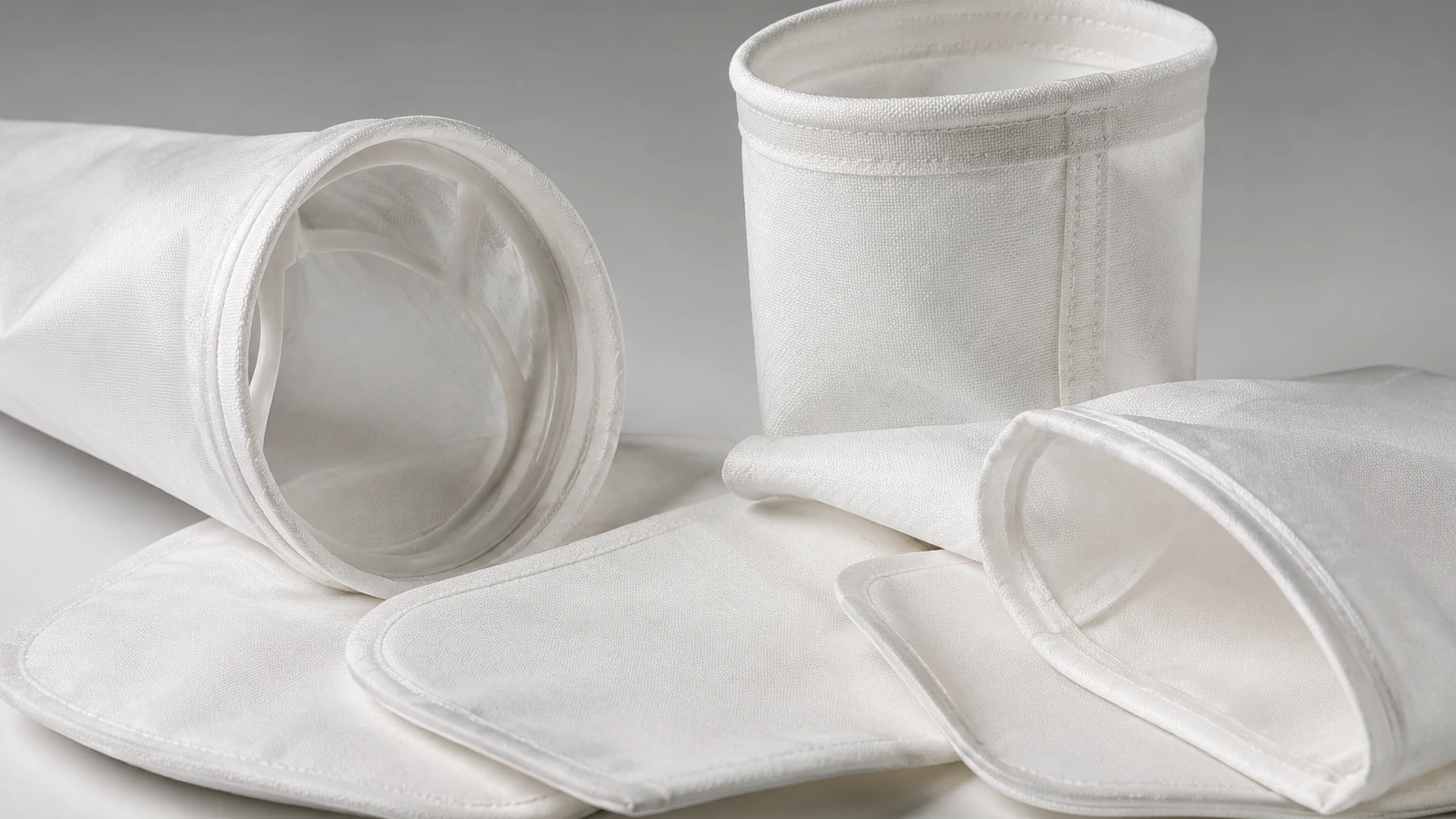
At its core, a filtration sock is a fabric or mesh vessel designed to trap solids while allowing liquid to pass through. They are typically housed within a pressure vessel (a bag filter housing) where the fluid enters the top or side, passes through the sock, and exits through the bottom or side. This guide examines the technical nuances of filtration socks, providing the necessary framework for making informed industrial purchasing decisions.
Understanding Filtration Socks in Industrial Applications
Filtration socks function as either depth filters or surface filters, depending on the material construction. Understanding this distinction is critical for predicting how a filter will behave under specific load conditions.
Depth Filtration vs. Surface Filtration
Depth filtration typically employs felted materials, such as needle-felted polypropylene or polyester. In these socks, particles are trapped within the tortuous path of the fiber matrix. This allows for a higher dirt-holding capacity because the entire thickness of the material is utilized for particle retention. Depth filtration is ideal for removing deformable or gelatinous particles that might otherwise blind a surface filter.
Surface filtration, conversely, utilizes woven mesh materials. These are often made from nylon monofilament or stainless steel wire mesh. In this configuration, the filtration occurs on a single plane. Particles larger than the mesh opening are blocked at the surface. Surface filtration is preferred when precise particle size exclusion is required or when the filter needs to be cleaned and reused, a common requirement in high-temperature or chemically aggressive environments.
Engineering Considerations for Selecting Filtration Socks
When specifying filtration socks for an industrial system, engineers must look beyond the initial price point and focus on performance metrics that impact the total cost of operation.
Micron Ratings: Nominal vs. Absolute
One of the most frequent points of confusion in filtration procurement is the difference between nominal and absolute micron ratings. A nominal rating indicates that the filter will trap a high percentage (typically 60% to 80%) of particles at that specific micron size. An absolute rating, however, implies a 99.9% efficiency (Beta ratio of 1000) at the stated size.
For non-critical pre-filtration, nominal felt socks are usually sufficient and more economical. However, for final polishing or protecting sensitive downstream equipment like high-pressure pumps or spray nozzles, absolute-rated socks or precision-woven stainless steel mesh components are necessary. You can Review product options and application support to determine which rating aligns with your specific purity requirements.
Flow Rates and Differential Pressure
The flow rate through a filtration sock is governed by the surface area of the media and the viscosity of the fluid. As particles accumulate, the "differential pressure" (the difference in pressure between the inlet and outlet) increases.
Engineers should design systems so that the initial clean pressure drop is less than 2 PSI. A common mistake is sizing the filter too small, which leads to rapid blinding and frequent downtime for replacements. In high-viscosity applications, such as oils or resins, the flow rate per square foot of media must be significantly reduced to prevent premature structural failure of the sock.
Material Compatibility and Environmental Factors
The chemical and thermal environment of the application dictates the material of the filtration sock. Using an incompatible material can lead to fiber migration (where filter fibers break off into the filtrate) or complete structural collapse.
1. Polypropylene: The most common material due to its broad chemical resistance and low cost. It is excellent for acids and bases but is limited to temperatures below 200°F (93°C).
2. Polyester: Offers higher temperature resistance than polypropylene (up to 300°F/149°C) and is resistant to many solvents, though it is susceptible to hydrolysis in the presence of steam or strong acids.
3. Nylon: Primarily used in monofilament mesh socks. It is very strong and resistant to many solvents but should be avoided in high-concentration acid environments.
4. Stainless Steel Mesh: For extreme environments involving high temperatures (above 500°F), high pressures, or aggressive chemicals, stainless steel wire mesh is the gold standard. Unlike synthetic fibers, stainless steel mesh does not shed fibers and maintains its pore geometry under high differential pressure.
Comparing Reusable Stainless Steel Mesh vs. Disposable Synthetic Socks
A critical decision for many facility managers is whether to use disposable synthetic socks or invest in reusable stainless steel mesh filtration components. This decision is usually driven by the total cost of ownership (TCO) and waste management policies.
Disposable Socks
Disposable felt or mesh socks have a low initial purchase price. They are easy to handle and require no cleaning process—once the terminal differential pressure is reached (typically 15-25 PSI), the sock is removed and discarded. However, in high-solids applications, the cost of replacement socks and the labor required for frequent changes can become significant. Furthermore, the environmental impact of disposing of contaminated filter media must be considered.
Reusable Stainless Steel Components
Stainless steel filtration components, such as those manufactured by Kaifil, represent a higher initial investment but offer long-term savings. These components are cleanable via backwashing, ultrasonic cleaning, or chemical baths. They are particularly advantageous in:
* High-Value Fluids: Where the loss of fluid absorbed by a felt sock is expensive.
* Hazardous Materials: Where disposing of contaminated synthetic socks is difficult or costly.
* High-Temperature Processes: Where polymers would melt or degrade.
By integrating durable metal filtration elements, plants can achieve more consistent flow characteristics and eliminate the risk of bypass caused by the stretching or tearing of synthetic fabrics.
Installation and Maintenance Best Practices
Even the highest quality filtration sock will fail if it is not installed correctly. The most common point of failure is the seal between the sock and the housing.
Sealing Mechanisms
Filtration socks are usually equipped with a ring or flange at the top. Common types include:
* Plastic Flanges: These feature a molded-in handle and are designed to create a bypass-free seal when compressed by the housing lid.
* Steel Snap-Bands: These use a circular spring steel ring sewn into the top of the sock that "snaps" into a groove in the housing.
* Drawstrings: Generally used in low-pressure, gravity-fed applications; these are rarely suitable for pressurized industrial systems due to the high risk of bypass.
Replacement Cycles
Monitoring the differential pressure is the only reliable way to determine when a filtration sock needs to be changed. Relying on a fixed time interval is inefficient; if the incoming fluid has a sudden spike in solids, the filter could blind prematurely, causing a system shutdown or damaging the housing. Most industrial systems include a pressure gauge on both the inlet and outlet to allow for real-time monitoring.
Common Risks and Troubleshooting in Filtration Sock Systems
Identifying potential issues before they lead to system failure is a key responsibility for maintenance engineers.
* Bypass: This occurs when fluid escapes around the seal rather than passing through the media. If you find large particles in the filtrate that should have been captured, the seal is likely compromised or the sock was incorrectly seated.
* Fiber Migration: In low-quality felt socks, the fibers can break loose and contaminate the clean fluid. This is a major concern in the pharmaceutical and food industries. Using "singed" or "glazed" felt can mitigate this, but switching to a monofilament mesh or a stainless steel element eliminates the risk entirely.
* Blinding: This is the rapid clogging of the filter surface. If blinding occurs too quickly, it may indicate that the micron rating is too fine for the application or that a pre-filter is needed to remove larger debris before it reaches the sock.
Key Information to Confirm Before Procurement
Before contacting a manufacturer for custom filtration solutions or ordering bulk replacements, ensure you have confirmed the following technical parameters:
1. Fluid Properties: What is the chemical composition, temperature, and viscosity of the fluid?
2. Contaminant Characteristics: What is the particle size distribution? Are the particles hard, soft, or fibrous?
3. Flow Requirements: What is the maximum and average flow rate (GPM or m³/h)?
4. Housing Compatibility: What are the physical dimensions of the existing housing? (e.g., Industry Standard Size #1, #2, #3, or #4).
5. Target Efficiency: Do you require nominal or absolute filtration?
By providing these details, you enable manufacturers to recommend a solution that balances filtration efficiency with operational longevity. For specialized applications requiring high-precision metal components or custom-engineered wire mesh, visiting the Main Page of a dedicated manufacturer can provide additional technical insights into material grades and weave patterns.
Conclusion
Filtration socks are a fundamental component of industrial fluid management, offering a scalable and adaptable solution for particulate removal. While synthetic disposables are the standard for many general-purpose applications, the move toward more demanding industrial environments often necessitates the use of precision-engineered metal filtration media. By focusing on material compatibility, accurate micron sizing, and robust sealing mechanisms, engineers can ensure their filtration systems operate at peak efficiency with minimal downtime. Whether you are managing a water treatment facility or a complex chemical refinery, the selection of the correct filtration sock is a critical step in maintaining product quality and protecting your infrastructure.
