


Filter Separator Manufacturers
In industrial fluid and gas management, the ability to remove both solid contaminants and liquid aerosols is critical for protecting downstream equipment and ensuring process integrity. Filter separators serve this dual purpose, combining the mechanisms of mechanical filtration and liquid-liquid or liquid-gas coalescing. For engineers and procurement professionals in sectors such as chemical processing, oil and gas, and power generation, selecting the right filter separator manufacturers is a strategic decision that impacts the reliability, safety, and total cost of ownership of their systems.
Industrial filter separators are engineered to handle complex separation tasks where standard filters might fail. Whether it is removing water from aviation fuel, oil from compressed air, or solids from natural gas pipelines, the design of the filtration media and the vessel housing must be precisely matched to the application’s flow rate, pressure, and chemical environment. This article provides a technical overview of the engineering considerations, selection criteria, and manufacturing standards that define high-quality filtration solutions.
Technical Principles of Industrial Filter Separators
Filter separators operate on a multi-stage principle. Unlike a standard particulate filter that only captures solids, a filter separator is designed to handle "wet" streams. The process typically involves two primary stages:
1. Particulate Filtration: The first stage utilizes a high-efficiency filter medium—often stainless steel wire mesh or pleated fiber elements—to remove solid particles. This stage is crucial because solids can interfere with the coalescing process in the second stage by clogging the media or causing channel flow.
2. Coalescing and Separation: In the second stage, the fluid passes through a coalescing medium. Small droplets of the dispersed phase (e.g., water in oil) are forced to collide and merge into larger droplets. Due to the difference in density and the reduction in velocity, these larger droplets settle out of the continuous phase and collect in a sump for removal.
Professional filter separator manufacturers must understand the nuances of surface tension and interfacial tension between liquids. For instance, in hydraulic systems, the presence of surfactants can hinder the coalescing process, requiring specialized media treatments or specific stainless steel mesh configurations to achieve the desired separation efficiency.
Engineering Considerations for Material Selection
Material compatibility is perhaps the most critical factor in filter separator design. Industrial environments often involve corrosive chemicals, high temperatures, and extreme pressures. Manufacturers like Kaifil emphasize the use of stainless steel due to its inherent durability and resistance to chemical attack.
* Stainless Steel 304 vs. 316L: While 304 stainless steel is suitable for many general industrial applications, 316L is preferred in pharmaceutical, food and beverage, and marine environments due to its superior resistance to chlorides and pitting corrosion.
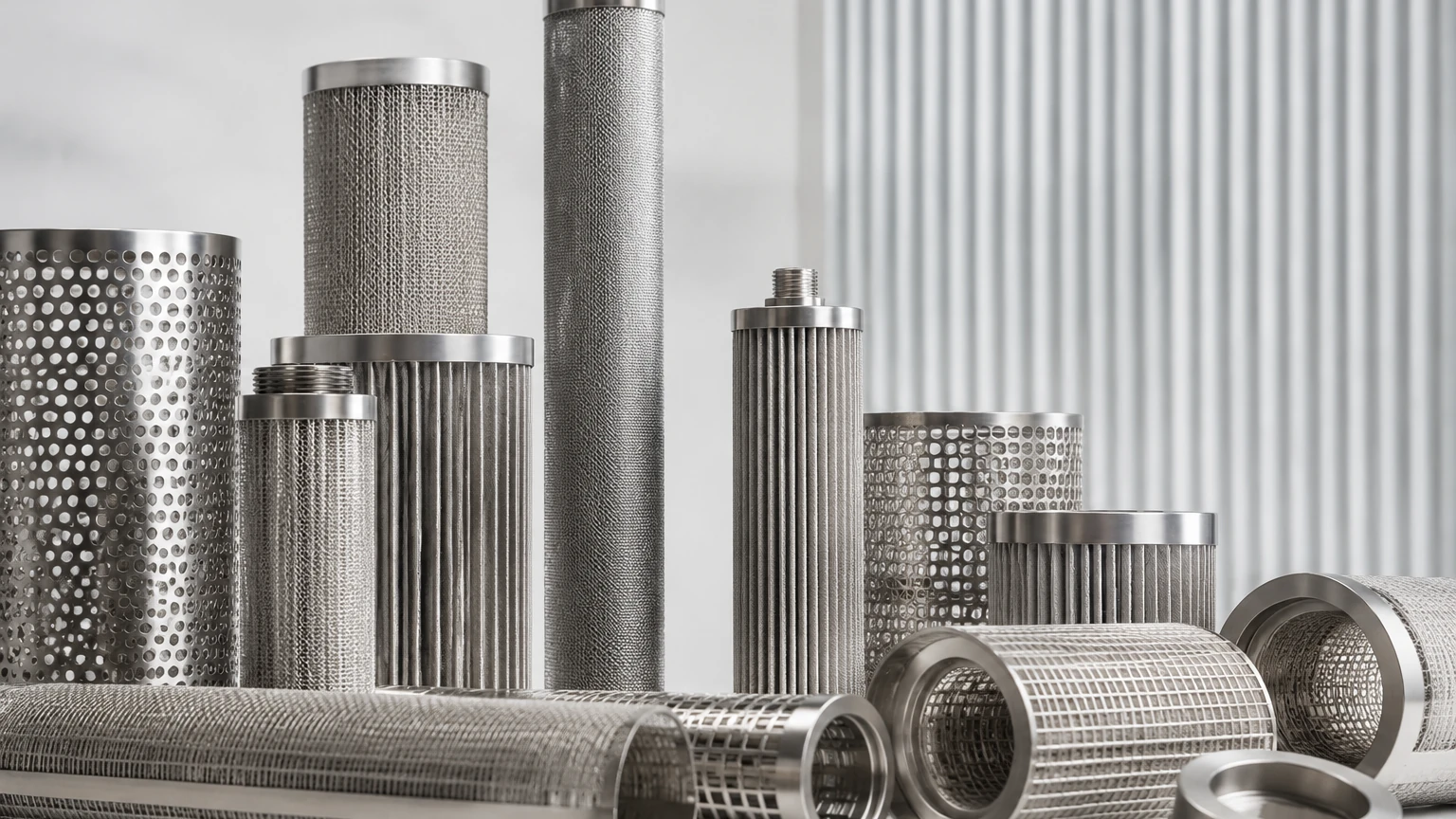
* Wire Mesh and Sintered Metal: For high-pressure or high-temperature applications, sintered metal fiber or multi-layer wire mesh laminates provide structural integrity that polymer-based media cannot match. These materials allow for precise micron ratings while maintaining low pressure drops.
* Sealing Materials: The choice of O-rings and gaskets (Viton, EPDM, PTFE) must be validated against the process fluid to prevent swelling or degradation, which could lead to bypass—a condition where unfiltered fluid escapes through the seals.
When evaluating filter separator manufacturers, engineers should request material certifications and verify that the manufacturer can provide customized alloy options if the process fluid requires specialized metallurgy, such as Monel or Hastelloy.
Evaluating Manufacturer Capabilities and Customization
Standard "off-the-shelf" filtration units rarely meet the specific needs of complex industrial processes. Therefore, the ability of a manufacturer to provide custom engineering is a key differentiator. A professional manufacturer should be viewed as a technical partner rather than a mere parts supplier.
Customization begins with a thorough analysis of the application parameters. Engineers must confirm the following with potential manufacturers:
* Flow Dynamics: Is the vessel sized to prevent re-entrainment of separated liquids? High-velocity areas within the separator can strip droplets back into the gas or fluid stream.
* Micron Rating and Efficiency: Manufacturers should provide Beta ratios or efficiency percentages at specific micron sizes. A "10-micron filter" is a vague term; a "10-micron filter with a Beta 1000 rating" provides a clear performance expectation (99.9% efficiency).
* OEM Integration: For equipment builders, the ability of filter separator manufacturers to produce components that fit within specific spatial constraints or integrate with existing control systems is vital.
Kaifil, for example, focuses on providing reliable OEM and customized filtration solutions, working closely with global customers to develop components that meet specific operational requirements. This collaborative approach ensures that the final product is optimized for the actual working conditions rather than a theoretical model.
Common Risks in Filter Separator Procurement
The procurement of industrial filtration components carries inherent risks that can lead to costly downtime or equipment failure. Understanding these risks allows purchasing teams to vet manufacturers more effectively.
One common risk is Media Migration. In lower-quality filters, the filtration media itself can break down and release fibers or particles into the downstream flow. This is particularly dangerous in hydraulic and pharmaceutical applications. High-quality manufacturers prevent this by using robust stainless steel mesh or sintered structures that are physically stable.
Another significant risk is Improper Sizing. If a filter separator is undersized to save on initial costs, the differential pressure (Delta P) will increase rapidly, leading to frequent element replacements and high energy consumption by pumps or compressors. Conversely, oversizing can lead to insufficient velocity for effective coalescing in some designs. Manufacturers should provide pressure drop curves based on the specific viscosity and density of the process fluid.
Finally, Bypass Issues must be addressed. If the internal support structure of the filter element is weak, it may collapse under high differential pressure, allowing contaminated fluid to bypass the media entirely. Robust engineering of the internal core and end caps is a hallmark of experienced filter separator manufacturers.
Performance Evaluation and Selection Criteria
When comparing different filter separator manufacturers, engineers should look beyond the purchase price and evaluate the technical performance metrics. The following criteria are essential for an informed selection:
* Dirt-Holding Capacity: This determines the service life of the filter element. A higher dirt-holding capacity means fewer change-outs and lower maintenance costs.
* Separation Efficiency: For separators, this is usually expressed as the concentration of the dispersed phase remaining in the effluent (e.g., less than 5 ppm of water in fuel).
* Structural Integrity: The burst pressure and collapse pressure ratings should exceed the maximum possible system pressure to ensure safety in the event of a blockage.
* Ease of Maintenance: Features such as quick-opening closures, swing bolts, and accessible sumps significantly reduce the time required for maintenance cycles.
By focusing on these technical benchmarks, procurement teams can ensure they are investing in a solution that provides long-term value. For more detailed technical specifications and to Review product options and application support, visiting the manufacturer's Main Page is often the best starting point for gathering authoritative data.
Total Cost of Ownership and Maintenance Cycles
The total cost of ownership (TCO) for a filter separator includes the initial capital expenditure, the cost of replacement elements, the labor for maintenance, and the energy costs associated with pressure drop. While stainless steel filter elements may have a higher upfront cost than disposable polymer filters, their ability to be cleaned and reused often results in a lower TCO over the life of the system.
Maintenance cycles should be determined by monitoring the differential pressure across the unit. A well-designed system will include pressure gauges or transducers that alert operators when the Delta P reaches a pre-set limit. Filter separator manufacturers should provide clear guidelines on cleaning procedures—such as ultrasonic cleaning or backwashing—to ensure that the media is not damaged during the maintenance process.
In demanding industrial environments, the durability of the filtration component is paramount. By choosing a manufacturer with advanced manufacturing capabilities and extensive experience in industrial filtration, companies can achieve efficient, durable, and cost-effective performance. Whether the application is in chemical processing, food and beverage, or water treatment, the right filtration partner will provide the engineering expertise necessary to navigate the complexities of fluid separation.
For engineers seeking to optimize their filtration processes, the focus should remain on technical precision, material quality, and the manufacturer's ability to support the specific needs of the application. For further information on custom stainless steel filtration solutions, you may visit the Main Page to explore professional product information and selection advice.
