


Filtration Solution for Turbine
Turbines are the primary drivers of modern power generation and heavy industrial propulsion. Whether operating as gas turbines, steam turbines, or hydraulic turbines, these machines rely on high-speed rotating components that operate under extreme thermal and mechanical stress. The reliability of these systems is inextricably linked to the purity of the fluids—lubricating oils, control fluids, and fuels—that circulate through them. A precision-engineered filtration solution for turbine systems is not merely a maintenance component; it is a critical safeguard against catastrophic mechanical failure, unplanned downtime, and degraded thermal efficiency.
In industrial environments, the cost of turbine failure can reach millions of dollars in lost production and repair expenses. Consequently, engineers must prioritize filtration systems that can withstand high pressures, resist chemical corrosion, and provide consistent particulate capture over long service intervals. Stainless steel filtration components have emerged as the industry standard for these demanding applications due to their structural integrity and predictable performance in harsh environments.
The Critical Role of Fluid Purity in Turbine Systems
Turbines utilize sophisticated fluid systems for lubrication, cooling, and hydraulic control. In a gas or steam turbine, the main bearings support rotors weighing several tons, spinning at thousands of revolutions per minute. These bearings rely on a thin film of oil to prevent metal-to-metal contact. Even microscopic particulate matter—often invisible to the naked eye—can breach this oil film, leading to abrasive wear, pitting, and eventual bearing seizure.
Furthermore, modern turbines often use high-pressure hydraulic control systems to manage valve actuators and variable geometry components. These systems are highly sensitive to silt-sized particles (typically in the 1-5 micron range) that can cause valve sticking or "stiction." An effective filtration solution for turbine operations must address these contaminants while managing the flow rates required for continuous operation.
For engineers evaluating their current systems, reviewing a wide range of specialized components is essential. For more information on specific industrial filter designs, technical professionals can visit the Kaifil Main Page to explore high-performance stainless steel options tailored for energy and heavy industry applications.
Engineering Challenges in Turbine Filtration
Designing or selecting a filtration solution for turbine environments requires a deep understanding of several engineering variables. Unlike standard industrial filtration, turbine systems present unique challenges related to fluid dynamics and environmental conditions.
1. High-Temperature Stability
Steam and gas turbines operate at elevated temperatures. Lubricating oils can reach temperatures where standard polymer-based filter media would degrade or lose structural integrity. Stainless steel wire mesh and sintered metal fibers are preferred in these scenarios because they maintain their pore geometry and mechanical strength across a broad temperature spectrum, typically ranging from cryogenic levels to over 500°C.
2. Pressure Drop (ΔP) Management
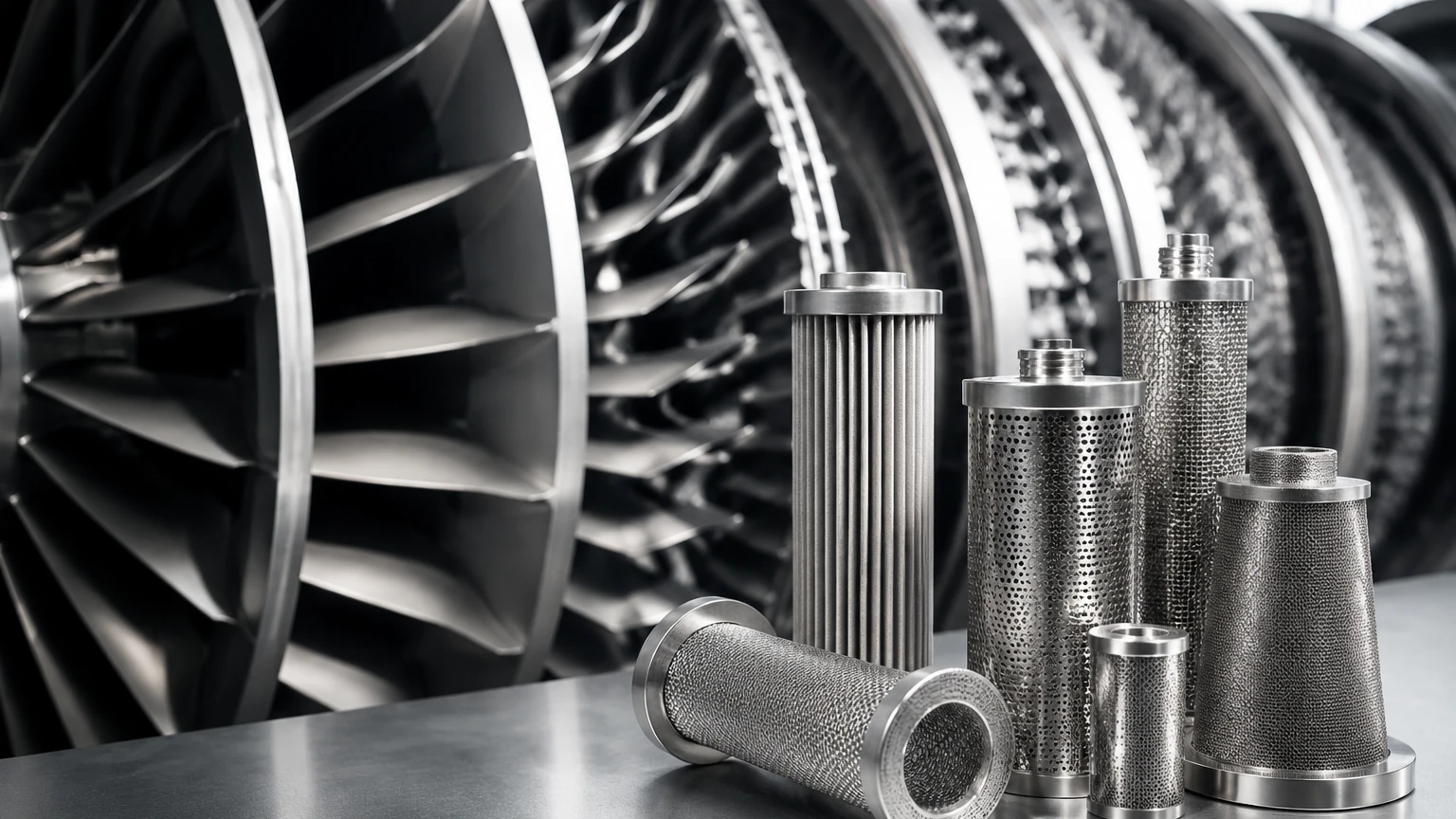
In high-flow turbine lubrication systems, the pressure drop across the filter element is a critical metric. A high initial pressure drop reduces the efficiency of the pump and can trigger bypass valves prematurely, allowing unfiltered oil to reach sensitive components. A well-designed filtration solution for turbine use utilizes pleated stainless steel mesh to maximize the effective filtration area, thereby minimizing resistance to flow while maintaining high dirt-holding capacity.
3. Chemical Compatibility and Varnish Control
Modern turbine oils often contain complex additive packages. Over time, thermal degradation and oxidation can lead to the formation of "varnish"—a soft, resinous contaminant that coats internal surfaces. While traditional filters may struggle with varnish, specialized stainless steel filter cartridges can be integrated into systems designed for varnish removal, ensuring that neither the oil nor the filter media reacts negatively with the fluid chemistry.
Technical Specifications for Turbine Filter Elements
When specifying a filtration solution for turbine systems, engineers must look beyond simple micron ratings. The performance of a filter is defined by several technical parameters that determine its suitability for critical power generation assets.
Micron Rating and Beta Ratio
The micron rating indicates the size of particles the filter can capture. However, the Beta Ratio (β) provides a more accurate picture of filtration efficiency. For turbine lubrication, a Beta ratio of βx(c) ≥ 1000 (indicating 99.9% efficiency at a given micron size) is often required for critical protection. Stainless steel wire mesh allows for precise control over pore size, ensuring that the filter meets these stringent efficiency requirements consistently throughout its life cycle.
Material Selection: 304 vs. 316L Stainless Steel
Material selection is paramount. While Grade 304 stainless steel is suitable for many general industrial applications, Grade 316L is often specified for turbine systems in coastal power plants or offshore platforms. The addition of molybdenum in 316L provides superior resistance to chloride-induced pitting and crevice corrosion, which is vital for maintaining the integrity of the filtration solution for turbine units in maritime environments.
Structural Integrity and Collapse Pressure
Turbine systems can experience sudden pressure spikes, particularly during startup or when fluid viscosity is high due to low temperatures. Filter elements must be engineered with reinforced inner cores and robust end caps to prevent structural collapse. High-quality stainless steel cartridges are typically rated for collapse pressures exceeding 20 bar (approx. 300 psi), providing a significant safety margin compared to disposable cellulose or synthetic elements.
Customization in Turbine Filtration Solutions
No two turbine installations are identical. Factors such as the age of the equipment, the specific fuel type, and the local environmental conditions necessitate a customized approach to filtration. OEM (Original Equipment Manufacturer) specifications provide a baseline, but field conditions often require adaptations to improve performance.
Customized filtration solutions for turbines may include:
- Variable Pleat Geometry: Adjusting the depth and density of pleats to optimize the balance between filtration surface area and fluid residence time.
- Specialized End Fittings: Custom-machined end caps (such as threaded, bayonet, or O-ring seals) to ensure a leak-proof fit in legacy housing units.
- Multi-Layer Media Construction: Combining different layers of wire mesh—such as a fine filtration layer protected by coarser support layers—to enhance mechanical strength and prevent media migration.
By working with a manufacturer capable of precision customization, plant engineers can replace obsolete filter elements with modern stainless steel equivalents that offer better flow characteristics and longer service lives.
Maintenance and Total Cost of Ownership (TCO)
While the initial purchase price of a stainless steel filtration solution for turbine applications may be higher than that of disposable glass fiber or paper filters, the Total Cost of Ownership (TCO) is frequently lower. This is primarily due to two factors: durability and cleanability.
Cleanability and Reuse
Unlike disposable filters, many stainless steel wire mesh elements can be cleaned and returned to service. Through ultrasonic cleaning or backwashing, accumulated contaminants can be removed without damaging the media. In large-scale turbine operations, the ability to reuse filter elements significantly reduces the volume of hazardous waste generated and lowers long-term procurement costs.
Extended Service Intervals
The high dirt-holding capacity of pleated stainless steel elements allows for longer intervals between maintenance shutdowns. In the power generation sector, where every hour of downtime translates to lost revenue, the ability to extend the time between filter changes is a major operational advantage.
Selecting a Filtration Partner for Turbine Applications
For procurement teams and lead engineers, selecting a filtration partner involves more than just comparing price lists. It requires a partner with the technical expertise to understand the nuances of turbine fluid dynamics. A reliable manufacturer should provide comprehensive documentation, including material certifications, pressure drop curves, and micron validation reports.
When evaluating a filtration solution for turbine systems, consider the following checklist:
1. Does the manufacturer offer custom design services? Standard off-the-shelf filters may not meet the specific flow requirements of a modified turbine system.
2. What are the quality control standards? Ensure the manufacturer adheres to international standards for mesh weaving and assembly welding (e.g., ISO 9001).
3. Is technical support available for troubleshooting? A partner should be able to assist in analyzing filter failure modes or suggesting upgrades for improved fluid cleanliness.
Conclusion
In the high-stakes world of turbine operation, filtration is the first line of defense against mechanical degradation. Implementing a robust filtration solution for turbine systems—centered on high-quality stainless steel components—ensures that lubrication and control fluids remain within specified cleanliness limits. By focusing on technical parameters such as Beta ratios, material grades, and structural integrity, engineers can significantly enhance the reliability and longevity of their turbine assets. Investing in precision-engineered filtration is not just a best practice; it is an essential strategy for operational excellence in modern industry.
