


Filtre Coalesceur Séparateur Hydrocarbure
In industrial fluid management, the efficiency of hydrocarbon processing often hinges on the ability to remove water and particulate contaminants. The filtre coalesceur séparateur hydrocarbure (hydrocarbon coalescer separator filter) represents a critical technology designed to achieve high-purity fluid standards by separating two immiscible phases—typically water from fuels, oils, or solvents. For engineers and procurement teams, understanding the mechanical principles, material requirements, and operational variables of these systems is essential for optimizing system longevity and process reliability.
Industrial applications ranging from chemical processing to hydraulic power generation require fluids to be free of emulsified and free water. Moisture in hydrocarbons can lead to microbial growth, corrosion of downstream components, and catastrophic failure in precision machinery. The use of a specialized coalescing and separating system provides a multi-stage approach to fluid purification that standard particulate filters cannot achieve alone.
The Principles of Coalescence in Hydrocarbon Separation
The operation of a filtre coalesceur séparateur hydrocarbure is based on the physical principle of coalescence, where small droplets of a discontinuous phase (water) are forced to merge into larger droplets that can be easily removed by gravity or a secondary barrier. This process generally occurs in two distinct stages within a single vessel or a series of housings.
Stage One: The Coalescing Element
In the first stage, the contaminated hydrocarbon passes through a coalescer element, often constructed from specialized media such as fiberglass or synthetic micro-fibers. As the fluid flows from the inside to the outside of the element, the microscopic water droplets are intercepted by the fibers. Due to the interfacial tension between the water and the media, these droplets cling to the fibers and merge with other droplets. As they grow in size and mass, they migrate to the outer surface of the element. Once the droplets reach a sufficient size, gravity pulls them down to a collection sump at the bottom of the filter housing.
Stage Two: The Separator Element
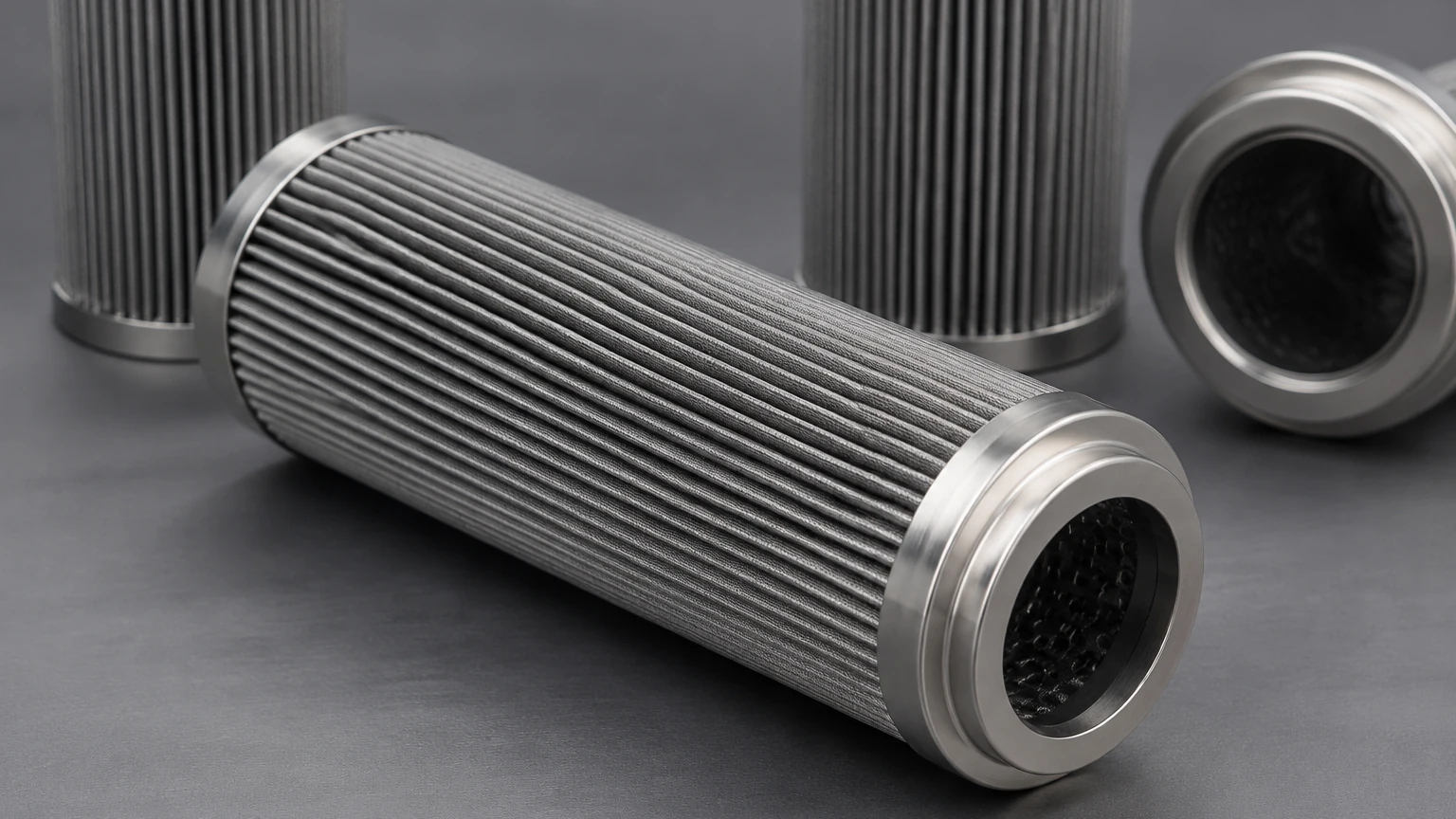
While the coalescer removes the majority of the water, some smaller droplets may remain entrained in the flow. The second stage utilizes a separator element, which is typically made of a hydrophobic material such as Teflon-coated stainless steel wire mesh or specialized synthetic screens. This hydrophobic barrier allows the hydrocarbon to pass through while repelling any remaining water droplets. These repelled droplets eventually settle into the sump, ensuring that only dry, clean hydrocarbon exits the system.
Technical Specifications and Material Selection
The performance of a filtre coalesceur séparateur hydrocarbure is heavily dependent on the materials used in its construction. In demanding industrial environments, stainless steel is the preferred material for both the housing and the internal structural components due to its chemical resistance and mechanical strength.
Stainless Steel Wire Mesh
For the separator stage, precision-woven stainless steel wire mesh is often employed. This material offers several advantages:
* Durability: Unlike synthetic media, stainless steel can withstand high differential pressures without deforming.
* Chemical Compatibility: It is resistant to a wide range of hydrocarbons, additives, and corrosive contaminants found in industrial fluids.
* Cleanability: Stainless steel separator screens can often be cleaned and reused, reducing the total cost of ownership compared to disposable elements.
Media Density and Porosity
The efficiency of the coalescing stage is determined by the porosity and density of the media. Engineers must balance the requirement for high water removal efficiency with the need to maintain a manageable pressure drop. High-density media can capture smaller droplets but may lead to higher energy consumption and more frequent element changes if the fluid has a high particulate load.
Key Engineering Parameters for Filter Selection
When specifying a filtre coalesceur séparateur hydrocarbure, several engineering parameters must be evaluated to ensure the system meets the specific needs of the application. For detailed technical support and to Review product options and application support, engineers should consult with manufacturers who specialize in custom filtration solutions.
Flow Rate and Flux
The flow rate, usually measured in liters per minute (LPM) or gallons per minute (GPM), determines the size of the filter housing and the number of elements required. Exceeding the rated flow of a coalescer can lead to "droplet shearing," where the velocity of the fluid breaks apart the coalesced water droplets before they can settle, significantly reducing separation efficiency.
Viscosity and Temperature
The viscosity of the hydrocarbon fluid significantly impacts the coalescence process. Higher viscosity fluids resist the movement of water droplets, requiring larger filter surfaces or lower flow velocities. Since viscosity is temperature-dependent, the operating temperature range of the system must be clearly defined during the design phase to ensure consistent performance.
Interfacial Tension (IFT)
Interfacial tension is a measure of the force at the boundary between the water and the hydrocarbon. Low IFT, often caused by the presence of surfactants or additives, makes it difficult for water droplets to coalesce. In such cases, specialized media treatments or multi-stage separation strategies may be required to achieve the desired purity levels.
Applications Across Industrial Sectors
The versatility of the filtre coalesceur séparateur hydrocarbure makes it indispensable across various sectors where fluid purity is a non-negotiable requirement.
Aviation and Transportation Fuel
In the aviation industry, water in jet fuel can freeze at high altitudes, leading to fuel line blockages. Coalescer-separators are used at refineries, fuel farms, and on refueling trucks to ensure that fuel delivered to aircraft meets stringent international standards for water content (typically less than 15 ppm).
Marine and Power Generation
Diesel engines used in marine vessels and power plants are highly sensitive to water contamination, which can cause injector damage and fuel pump failure. These systems utilize coalescing filters to protect the engine's fuel system from water ingress, particularly in environments where condensation in storage tanks is common.
Chemical and Petrochemical Processing
In chemical manufacturing, hydrocarbons are often used as feedstocks or solvents. Removing water is essential to prevent unwanted side reactions, protect catalysts, and ensure the quality of the final product. Stainless steel coalescers are preferred here due to the aggressive nature of the chemicals involved.
Maintenance and Operational Efficiency
To maintain the effectiveness of a filtre coalesceur séparateur hydrocarbure, a proactive maintenance schedule is required. The primary indicator of filter health is the differential pressure (ΔP) across the unit.
Monitoring Differential Pressure
As the coalescer elements capture solid particulates along with water, the resistance to flow increases. Most industrial systems are equipped with differential pressure gauges. A sudden rise in ΔP usually indicates heavy particulate loading, while a lack of pressure drop over time might suggest a ruptured element or "channeling," where the fluid bypasses the media entirely.
Water Discharge and Sump Maintenance
The water collected in the sump must be discharged regularly. Many modern systems feature automatic water drain valves triggered by level sensors. It is vital to ensure these sensors are calibrated correctly to prevent water from backing up into the main flow path, which would re-contaminate the effluent.
Element Replacement Cycles
Coalescer elements are typically consumable items with a finite lifespan. The replacement cycle depends on the fluid cleanliness and the volume processed. Using high-quality OEM or custom-engineered elements ensures that the internal structure of the filter remains intact under pressure, preventing media migration into the downstream process.
Customization and OEM Solutions
Standard off-the-shelf filtration units often fall short in specialized industrial environments where space is limited or fluid chemistry is unique. Customization of the filtre coalesceur séparateur hydrocarbure allows for optimized performance tailored to specific operational constraints.
Tailored Micron Ratings
Depending on the sensitivity of downstream equipment, the particulate filtration rating of the coalescer can be adjusted. While a standard 5-micron rating is common, precision applications may require 1-micron or even sub-micron filtration to protect high-pressure components.
Housing Design and Porting
Custom housing designs can accommodate specific inlet/outlet configurations, mounting requirements, and material grades (such as 316L stainless steel for marine or pharmaceutical environments). This level of customization ensures that the filtration system integrates seamlessly into existing infrastructure without the need for extensive piping modifications.
For organizations looking to optimize their filtration processes, partnering with a manufacturer that understands the nuances of stainless steel fabrication and fluid dynamics is critical. By focusing on the technical requirements of the filtre coalesceur séparateur hydrocarbure, engineers can ensure high-efficiency separation, reduced maintenance costs, and superior protection for their industrial assets. For more information on custom filtration components and engineering support, visit the Main Page.
