


Filtres Cycloniques
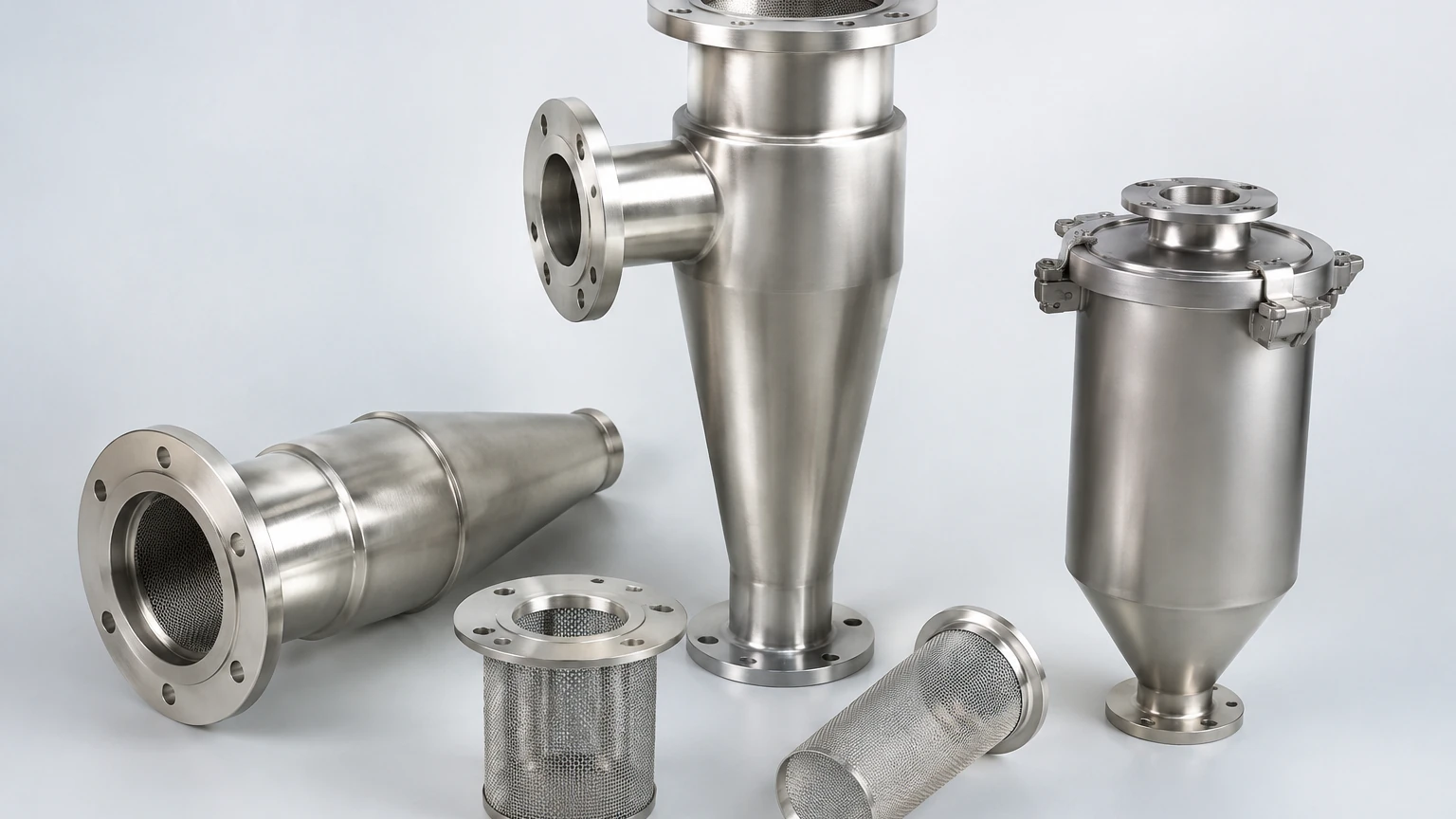
In the landscape of industrial liquid and gas separation, the efficiency of a filtration system often dictates the longevity of downstream equipment and the purity of the final product. Among the various technologies available to engineers, filtres cycloniques (cyclonic filters) stand out as a robust, low-maintenance solution for removing high concentrations of suspended solids. Unlike barrier-based filtration methods that rely on a physical medium to intercept particles, cyclonic separation utilizes centrifugal force to achieve separation. This article provides a technical exploration of cyclonic filtration principles, engineering selection criteria, and the critical role of material selection in demanding B2B industrial environments.
Understanding the Principles of Cyclonic Separation
The fundamental operation of filtres cycloniques is based on the principle of centrifugal sedimentation. When a fluid—whether liquid or gas—enters the cylindrical chamber of the filter at a high tangential velocity, it is forced into a downward spiral, creating a vortex. This rotational motion generates centrifugal forces that are many times greater than gravity.
As the fluid spins, denser particles are pushed outward toward the inner wall of the cyclone. Once they hit the wall, they lose kinetic energy and slide down the conical section of the housing into a collection chamber or "underflow." Meanwhile, the clarified fluid, which is less dense, moves toward the center of the vortex and is forced upward through a central "vortex finder" to the outlet.
For engineers, the efficiency of this process is governed by several variables, most notably the particle density, fluid viscosity, and the velocity of the inlet stream. Because there are no moving parts and no filter media to clog in the primary separation stage, filtres cycloniques are exceptionally reliable for pre-filtration tasks, protecting more sensitive components like the precision-engineered products found on our Main Page.
Engineering Parameters for Selecting Filtres Cycloniques
Selecting the correct cyclonic filter requires a deep dive into the specific rheological properties of the process fluid and the characteristics of the contaminants. Engineers must evaluate several key performance indicators (KPIs) to ensure the system meets operational requirements.
1. The Cut Point (d50)
The cut point is the particle size at which 50% of the particles are removed. In industrial applications, achieving a precise cut point is essential for balancing filtration efficiency with energy consumption. Smaller cyclone diameters generally produce higher centrifugal forces, leading to a finer cut point, but this often comes at the cost of higher pressure drops.
2. Pressure Drop (Delta P)
The pressure drop across a cyclonic filter is a critical factor in total cost of ownership (TCO). A higher inlet velocity increases separation efficiency but also increases the energy required to pump the fluid through the system. Engineers must optimize the inlet geometry and diameter to achieve the desired micron rating without exceeding the facility's pumping capacity.
3. Solids Loading Capacity
One of the primary advantages of filtres cycloniques is their ability to handle high concentrations of solids. While a standard wire mesh filter might require frequent backwashing or manual cleaning in high-load scenarios, a cyclone can continuously discharge separated solids. However, the design must account for the volume of the underflow to prevent "plugging" or re-entrainment of particles into the clean stream.
Material Science: Why Stainless Steel Dominates Industrial Filtration
In the chemical, pharmaceutical, and food and beverage industries, the material of construction for filtration components is non-negotiable. While plastic or cast iron cyclones may suffice for low-impact water applications, industrial-grade filtres cycloniques almost exclusively utilize stainless steel.
Corrosion and Erosion Resistance
Industrial fluids often contain corrosive chemicals or abrasive solids. Stainless steel 304 and 316L provide the necessary resistance to oxidation and chemical attack. In applications involving saline solutions or high-chloride environments, 316L is preferred due to its molybdenum content, which prevents pitting corrosion. Furthermore, because cyclonic separation involves high-velocity contact between particles and the filter wall, the material must resist erosion. High-quality stainless steel maintains its structural integrity and surface finish even under the constant bombardment of abrasive contaminants.
Hygienic Standards and Surface Finish
For the pharmaceutical and food sectors, the internal surface of the filter must meet strict Ra (Roughness Average) standards. A smooth, polished stainless steel interior prevents bacterial growth and facilitates Clean-in-Place (CIP) procedures. Kaifil’s expertise in custom stainless steel fabrication ensures that these internal geometries are not only mathematically accurate for separation but also compliant with stringent sanitary requirements.
Multi-Stage Filtration: Integrating Cyclones with Wire Mesh Systems
While filtres cycloniques are highly effective at removing the bulk of heavy solids, they are rarely used as the sole filtration stage when absolute purity is required. In a sophisticated industrial process, a cyclone typically serves as a pre-filter, followed by a secondary stage utilizing stainless steel wire mesh or filter cartridges.
Protecting Precision Components
By removing 90% or more of the heavy particulate matter, the cyclonic stage significantly extends the service life of the secondary wire mesh filter. This reduces the frequency of replacement cycles and minimizes downtime. For example, in a hydraulic system, a cyclone might remove large metal shavings, while a subsequent 10-micron stainless steel cartridge filter captures the remaining fine particles to protect sensitive valves.
System Configuration
Engineers often design these systems in a series configuration. The cyclone handles the "heavy lifting," while the precision metal filter provides the final polish. This synergy is central to modern filtration strategy, ensuring that the high-performance components detailed on our Main Page operate under optimal conditions, free from the risk of premature blinding or mechanical damage.
Maintenance and Operational Efficiency in High-Load Environments
One of the strongest arguments for the adoption of filtres cycloniques in a B2B context is the reduction in maintenance labor. Because there are no filter elements to replace in the cyclone itself, the primary maintenance task is the management of the solids collection chamber.
Automated Purging
Many modern industrial cyclones are equipped with automated purge valves. These valves can be set to open based on a timer or a pressure differential sensor, allowing the collected sludge to be flushed out without interrupting the main flow. This automation is vital for continuous processes where downtime is measured in thousands of dollars per hour.
Inspection and Replacement Cycles
Although cyclonic filters have no moving parts, the internal "vortex finder" and the conical walls should be inspected periodically for signs of erosion, especially in mining or heavy industrial applications. If the internal geometry is compromised by wear, the separation efficiency will drop. Utilizing high-grade stainless steel from a specialized manufacturer like Kaifil ensures that these replacement cycles are pushed as far apart as possible.
Custom OEM Solutions for Specialized Industrial Requirements
Every industrial facility has unique constraints, from floor space and piping layouts to specific flow rate requirements. Off-the-shelf filtration solutions often fail to meet these specific needs, leading to inefficiencies. Custom-designed filtres cycloniques offer a path to optimization.
Tailored Geometry
By adjusting the length of the conical section or the diameter of the inlet, manufacturers can tune a cyclone to target a specific particle density. This is particularly useful in the chemical processing industry, where the goal might be to recover a valuable catalyst or remove a specific byproduct of a reaction.
Integration and Mounting
Custom OEM solutions allow for the integration of the filter directly into existing machinery. This includes specialized flange connections, mounting brackets, and compact designs for mobile industrial equipment. When purchasing teams collaborate with engineers who understand both the physics of filtration and the capabilities of metal fabrication, the result is a system that is perfectly balanced for its intended application.
Conclusion: Making Informed Procurement Decisions
For engineers and purchasing managers, the decision to implement filtres cycloniques should be based on a clear understanding of the fluid dynamics at play and the long-term operational goals of the facility. While the initial capital expenditure for a high-quality stainless steel cyclonic system may be higher than simpler alternatives, the savings in maintenance, energy, and protected downstream equipment provide a compelling return on investment.
By focusing on material integrity, precise engineering of the vortex chamber, and the strategic integration of secondary filtration stages, industrial operations can achieve high levels of reliability and product purity. For those seeking to optimize their filtration processes with custom stainless steel solutions, exploring the technical resources and product capabilities available on our Main Page is the first step toward a more efficient industrial future.
