


Filtres À Manches
In the landscape of industrial liquid processing, the efficiency of a filtration system is often the determining factor in product quality and equipment longevity. Among the various technologies available, bag filters—frequently referred to in international procurement and engineering specifications as filtres à manches—stand out for their versatility, high flow capacity, and cost-effectiveness. For engineers and technical purchasing teams, selecting the right filtration solution requires a deep understanding of material compatibility, mechanical design, and the specific demands of the industrial environment.
Kaifil, as a specialist in custom stainless steel filtration solutions, provides the technical expertise necessary to navigate these complexities. Whether the application involves chemical processing, food and beverage production, or hydraulic systems, the integration of high-performance filtration components is essential for maintaining operational standards.
Understanding the Mechanism of Filtres À Manches
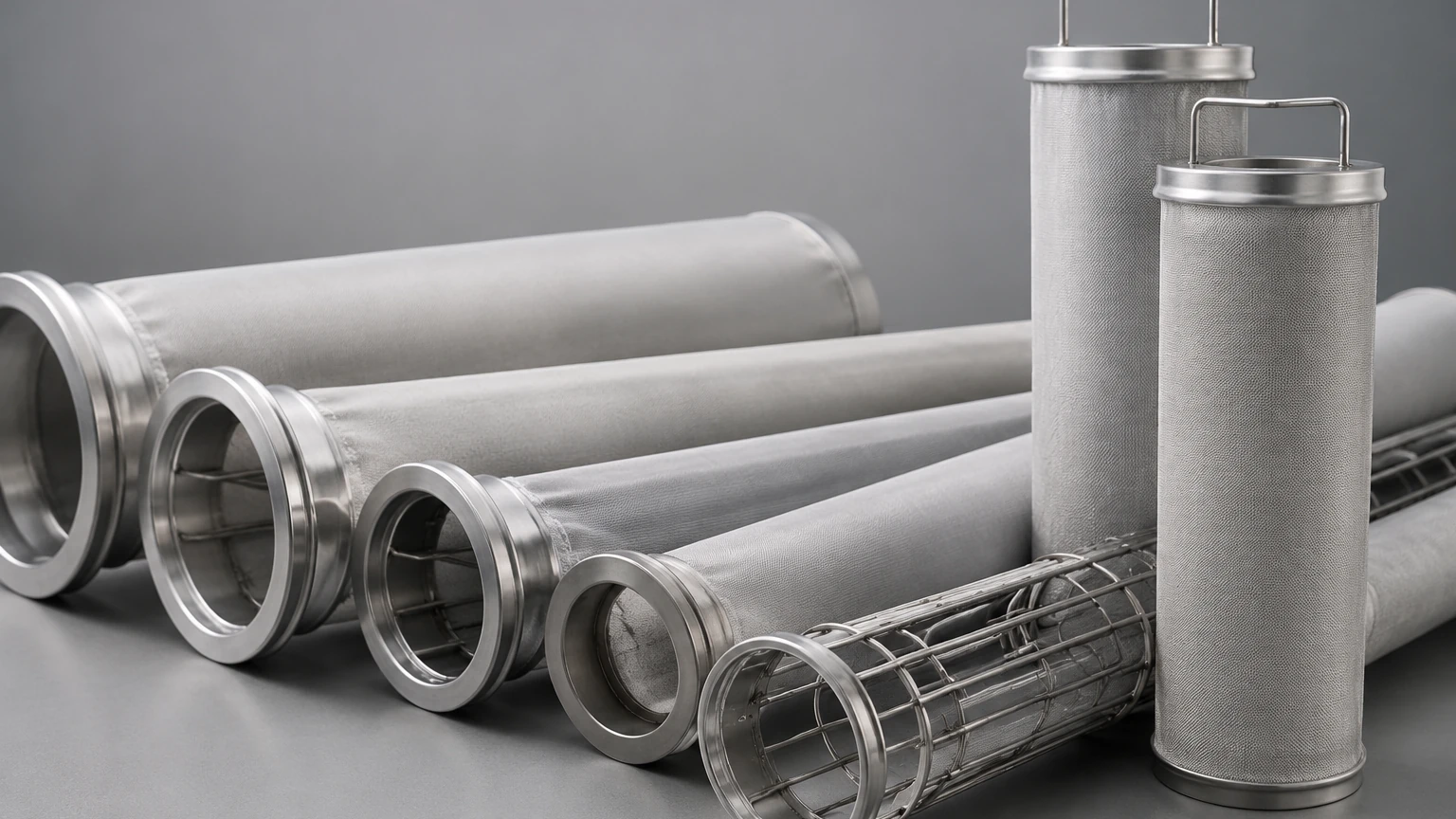
At its core, a bag filter system consists of three primary components: the filter housing, the internal support basket, and the filter bag (the manche). The process fluid enters the top or side of the housing, flows into the filter bag, and passes through the media from the inside out. Contaminants are trapped within the bag, while the clarified liquid exits through the outlet.
This "inside-out" flow pattern is critical for industrial hygiene and ease of maintenance. Because the solids are contained within the bag, the risk of downstream contamination during bag changes is significantly reduced. For high-precision applications, the structural integrity of the support basket is paramount. Kaifil specializes in manufacturing precision-engineered stainless steel baskets that prevent bag rupture under high differential pressure, ensuring that the filtres à manches perform reliably even in demanding conditions.
Engineering Considerations: Material Selection and Compatibility
One of the most frequent questions encountered by filtration engineers concerns material selection. The choice of media for filtres à manches depends heavily on the chemical nature of the fluid, the operating temperature, and the required filtration accuracy.
Stainless Steel Wire Mesh vs. Synthetic Media
While synthetic materials like polypropylene and polyester are common for disposable applications, stainless steel wire mesh offers distinct advantages in industrial B2B environments. Stainless steel (typically Grade 304 or 316L) provides superior thermal stability and chemical resistance.
1. Temperature Resistance: Synthetic bags often have a ceiling of 90°C to 110°C. In contrast, stainless steel components can operate in temperatures exceeding 250°C, making them indispensable for steam-jacketed processes or high-temperature chemical reactions.
2. Chemical Inertness: In pharmaceutical and food-grade applications, the risk of leaching from synthetic binders is a concern. Stainless steel is inert and can be passivated to enhance corrosion resistance against aggressive solvents or acidic cleaners.
3. Durability and Reusability: Unlike felt bags, which are generally single-use, stainless steel wire mesh filters can be cleaned and reused, reducing the long-term total cost of ownership and the environmental impact of waste disposal.
Filtration Accuracy and Flow Dynamics
Selecting the micron rating for filtres à manches involves a trade-off between clarity and flow rate. Engineers must distinguish between nominal and absolute filtration ratings. A nominal rating indicates the ability of the filter to retain a majority of particles at a specific size, whereas an absolute rating (often achieved through high-precision wire mesh) guarantees the retention of nearly all particles at that size.
Pressure Drop (Delta P)
As particles accumulate on the surface of the filter media, the differential pressure (the difference between the inlet and outlet pressure) increases. It is a standard engineering practice to design systems with a low initial pressure drop—typically less than 0.1 bar (1.5 psi). When the pressure drop reaches a predetermined threshold (usually 1.0 to 1.5 bar), the filter bag must be replaced or cleaned.
Kaifil’s focus on precision metal filter components ensures that the open area of the support structure is maximized. This engineering detail minimizes initial resistance and extends the service life of the filter bag by allowing for more uniform distribution of the cake layer.
Customization and OEM Capabilities in Filtration
Standard off-the-shelf filtration units often fall short in specialized industrial settings. Customization is where technical expertise becomes a competitive advantage. When sourcing filtres à manches, purchasing teams should confirm the manufacturer's ability to adapt designs to existing infrastructure.
Kaifil provides extensive OEM services, allowing for the customization of:
* Flange and Connection Types: Adapting to DIN, ANSI, or JIS standards to ensure seamless integration into global piping systems.
* Micron Ratings: Engineering specific weave patterns in stainless steel mesh to target precise particle distributions.
* Reinforced Structures: For high-viscosity fluids or high-pressure hydraulic applications, internal reinforcements prevent the deformation of the filtration element.
By working closely with an experienced manufacturer, engineers can Review product options and application support to find a solution that balances technical requirements with budgetary constraints.
Operational Maintenance and Replacement Cycles
Failure to maintain filtres à manches can lead to system downtime, pump damage, or product contamination. A proactive maintenance schedule is built on monitoring the differential pressure. However, engineers should also be aware of the "bypass" risk. If a bag is improperly seated or if the seal (O-ring or flange) is compromised, fluid will take the path of least resistance, bypassing the filter media entirely.
Signs of Filtration Failure:
* Sudden Drop in Differential Pressure: This often indicates a ruptured bag or a seal failure.
* Downstream Contamination: Presence of particulates in the final product despite a functioning pressure gauge.
* Frequent Clogging: May suggest that the micron rating is too fine for the current contaminant load or that the upstream process has changed.
For reusable stainless steel filters, cleaning protocols must be strictly followed. Ultrasonic cleaning or backwashing with compatible solvents can restore the permeability of the mesh, but the integrity of the weave must be inspected regularly to ensure no wires have shifted or broken.
Industry-Specific Applications
The versatility of filtres à manches makes them a staple across diverse sectors:
* Chemical Processing: Used for the removal of catalysts, carbon, or undissolved salts. The use of 316L stainless steel is often mandatory here to prevent pitting corrosion.
* Food and Beverage: Critical for clarifying syrups, oils, and juices. Components must meet stringent sanitary standards, often requiring electro-polished surfaces to prevent bacterial growth.
* Water Treatment: Acting as a pre-filter for Reverse Osmosis (RO) systems, bag filters remove larger silt and sand particles that would otherwise foul expensive membranes.
* Hydraulics and Lubrication: Protecting sensitive valves and actuators by removing metallic wear particles from circulating oils.
Total Cost of Ownership (TCO) Considerations
When evaluating filtration solutions, the initial purchase price is only one component of the TCO. Engineers must also account for:
1. Labor Costs: The time required for operators to change bags.
2. Disposal Costs: Especially relevant if the filtered waste is hazardous.
3. Product Loss: The volume of liquid retained in the bag during change-outs.
4. Energy Consumption: Higher pressure drops require more pump energy.
By investing in high-quality stainless steel components and precision-engineered filtres à manches, facilities can often achieve a lower TCO through extended service intervals and reduced waste. Kaifil’s commitment to durability and precise filtration performance ensures that each component contributes to the overall efficiency of the industrial process.
Conclusion: Making Informed Purchasing Decisions
Selecting the appropriate filtration system is a technical challenge that requires a balance of material science, fluid dynamics, and mechanical engineering. For those responsible for maintaining industrial standards, understanding the nuances of filtres à manches—from the micron rating of the mesh to the alloy of the housing—is essential.
As a professional manufacturer, Kaifil supports global customers by delivering reliable, customized filtration components designed for demanding environments. For technical specifications, material certifications, or custom design consultations, engineers are encouraged to visit the Main Page to explore the full range of stainless steel filtration solutions and OEM capabilities. By prioritizing quality and precision, industrial operations can ensure consistent performance and long-term reliability in their filtration processes.
