


Filtri Autopulenti Acqua
In industrial water treatment and process fluid management, the efficiency of a filtration system is often measured by its ability to maintain consistent flow rates and filtration accuracy without frequent manual intervention. For engineers and facility managers, the implementation of "filtri autopulenti acqua" (self-cleaning water filters) represents a strategic shift toward automated, high-uptime operations. These systems are designed to remove suspended solids, debris, and particulate matter from water streams while automatically cleaning the filter element when a specific pressure differential or time interval is reached.
As a professional manufacturer specializing in custom stainless steel filtration solutions, Kaifil understands that the core of any self-cleaning system is the internal filtration media. Whether using wedge wire, sintered mesh, or perforated metal, the selection of materials and the engineering of the cleaning mechanism are critical to the system's longevity and performance in demanding industrial environments.
Understanding the Mechanics of Self-Cleaning Water Filters
The primary advantage of filtri autopulenti acqua is the elimination of downtime during the cleaning cycle. Unlike traditional bag or cartridge filters that require the system to be shut down for manual replacement, self-cleaning filters utilize mechanical or hydraulic force to clear the accumulated "filter cake" from the screen. There are three primary cleaning technologies commonly employed in industrial settings:
1. Backwashing (Reverse Flow)
Backwashing involves reversing the flow of a portion of the filtered water (or an external clean water source) back through the filter element. This reverse pressure dislodges particles trapped on the surface of the mesh. In many designs, a rotating arm or valve system targets specific sections of the filter screen sequentially, allowing the rest of the filter to continue processing the main stream. This ensures a continuous supply of filtered water to the downstream process.
2. Mechanical Scraping
Mechanical scraping systems use a brush or a scraper blade (often made of high-performance polymers or stainless steel) that moves across the surface of the filter element. This is particularly effective for fluids with high concentrations of sticky or organic solids that might not easily dislodge with backwashing alone. The scrapers push the debris toward a collection chamber at the bottom of the housing, where it can be purged through a flush valve.
3. Suction Scanning
Suction scanning is a high-precision cleaning method where a nozzle or "scanner" moves in a spiral path across the interior of the filter screen. The nozzle creates a localized low-pressure zone that sucks the debris off the mesh and out through a waste line. This method is highly efficient in terms of water consumption, as it only uses a small fraction of the total flow for the cleaning process.
Material Integrity: The Role of Stainless Steel in Industrial Filtration
For industrial filtri autopulenti acqua, the choice of material for the filter element is non-negotiable. Stainless steel is the industry standard due to its mechanical strength, corrosion resistance, and ability to withstand high pressure differentials. At Kaifil, we focus on high-grade alloys to ensure that the filtration components can handle the rigors of continuous mechanical cleaning.
Stainless Steel 304 vs. 316L
While SS304 is suitable for many general water treatment applications, SS316L is preferred for environments involving high chloride concentrations, such as seawater filtration or chemical processing. The addition of molybdenum in 316L provides superior resistance to pitting and crevice corrosion, which is essential for the longevity of the fine wire mesh used in self-cleaning systems.
Wedge Wire vs. Sintered Mesh
* Wedge Wire: These elements are constructed by wrapping a V-shaped wire around longitudinal support rods. The resulting "slot" is narrower at the surface and widens inward, making it extremely resistant to clogging (plugging). Wedge wire is the preferred choice for heavy-duty self-cleaning filters due to its high structural integrity and ease of cleaning.
* Sintered Mesh: For applications requiring high filtration accuracy (down to 1-5 microns), multi-layer sintered wire mesh provides a stable and precise pore structure. Sintering fuses the layers of mesh together, ensuring that the pore size remains constant even under high-pressure backwashing cycles.
Engineering Selection Criteria for High-Volume Systems
Selecting the right filtri autopulenti acqua requires a deep dive into the specific parameters of the application. Engineers must look beyond simple micron ratings to ensure the system is optimized for the total cost of ownership (TCO).
Filtration Accuracy and Particle Distribution
Defining the required micron rating is the first step, but understanding the particle size distribution (PSD) is equally important. If a system is sized for 50 microns but the water contains a high volume of 60-micron particles, the cleaning cycle will trigger too frequently, leading to excessive water waste and mechanical wear. A balance must be struck between the desired water quality and the operational frequency of the cleaning mechanism.
Flow Rate and Velocity
The flow rate (m³/h or GPM) dictates the size of the filter housing and the surface area of the filter element. High-velocity flow can cause premature erosion of the mesh or force particles into the pores, making them harder to remove during the cleaning cycle. Designing for a lower flux rate (flow per unit of surface area) generally extends the life of the filter element and reduces maintenance requirements.
Pressure Differential (ΔP)
The cleaning cycle is typically triggered when the pressure drop across the filter reaches a pre-set limit (usually between 0.5 and 1.0 bar). Engineers must ensure that the system's pump capacity can handle both the operational pressure drop and the momentary drop that occurs during the backwash or flush cycle.
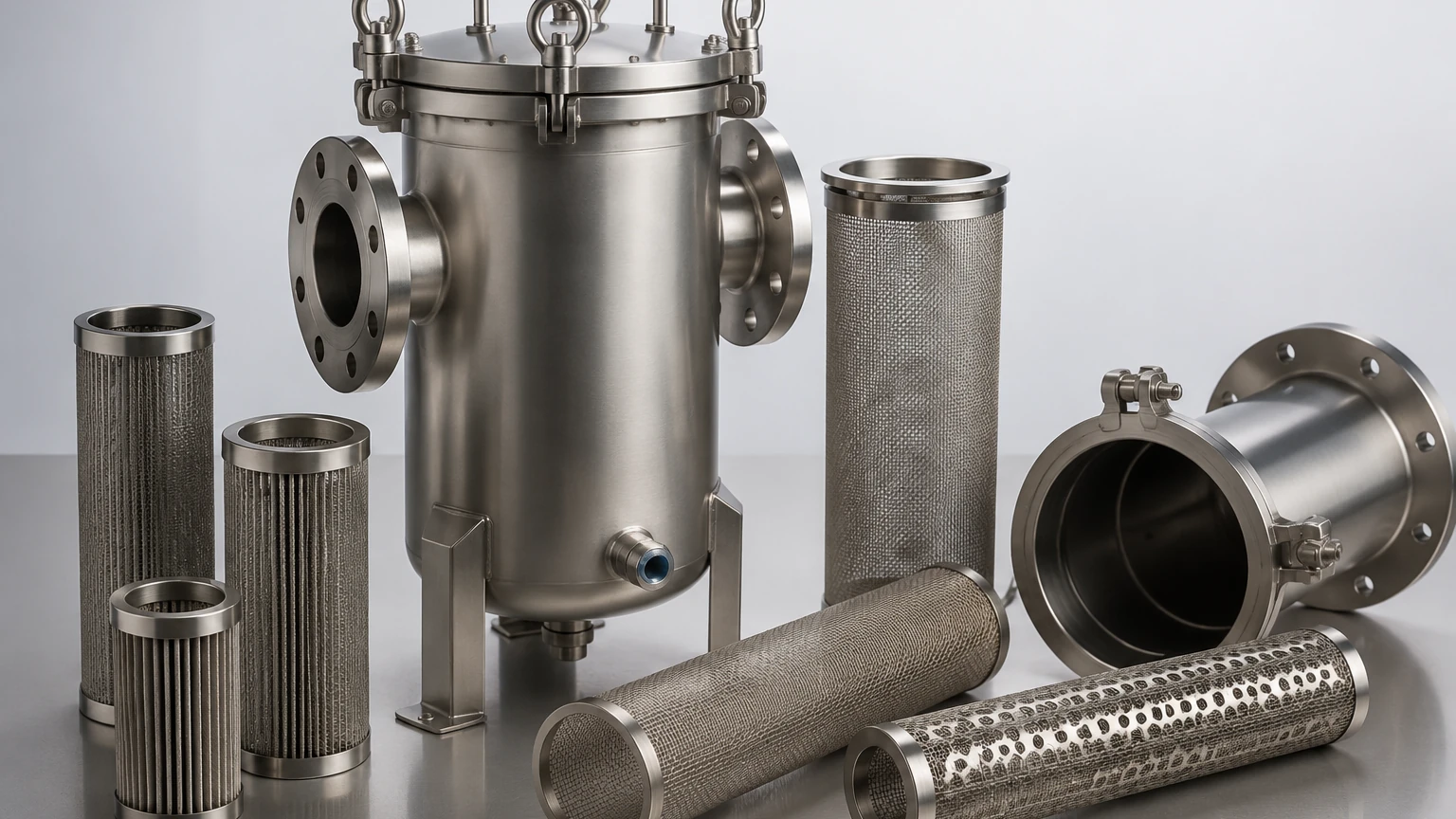
Customization Options for Specialized Industrial Processes
Standard off-the-shelf filtration units often fail to meet the specific spatial or chemical requirements of complex industrial plants. This is where custom manufacturing becomes a necessity. As a dedicated manufacturer, Kaifil provides OEM and customized filtration components that integrate seamlessly into existing filtri autopulenti acqua systems.
Tailored Filter Cartridges
We produce custom stainless steel filter cartridges and wire mesh elements designed to fit specific housing dimensions. This includes varying the length, diameter, and end-cap configurations (such as DOE, 222, or 226 fittings) to match the requirements of the original equipment manufacturer or the specific plant layout.
Specialized Coatings and Treatments
In some chemical or pharmaceutical applications, standard stainless steel may require additional surface treatments. Electropolishing can be used to create an ultra-smooth surface that reduces particle adhesion, further enhancing the efficiency of the self-cleaning mechanism. For highly abrasive solids, specialized hard-facing treatments can be applied to the filter surface to prevent erosion.
Maintenance, Durability, and Total Cost of Ownership
While filtri autopulenti acqua are designed to reduce manual labor, they are not "set and forget" systems. A proactive maintenance schedule is essential to prevent catastrophic failure and ensure consistent water quality.
Wear Parts and Inspection
The moving parts of a self-cleaning filter—such as seals, scrapers, and bearings—are subject to mechanical wear. Regular inspection of these components is necessary. For backwashing systems, the integrity of the mesh should be checked periodically for signs of fatigue or bypass. Using high-quality replacement components from a reliable manufacturer like Kaifil ensures that the system maintains its original performance specifications.
Waste Management
Every cleaning cycle generates a waste stream (the "flush"). Engineers must plan for the disposal or treatment of this concentrated waste. Optimizing the cleaning trigger settings can minimize the volume of water lost during this process, which is particularly important in regions with high water costs or strict discharge regulations.
Long-Term Value
The initial capital expenditure for a self-cleaning system is higher than that of a manual filter. However, the reduction in labor costs, the elimination of consumable filter bags/cartridges, and the prevention of process downtime usually result in a payback period of less than 18 to 24 months. By choosing durable stainless steel components, the service life of the system can extend for decades.
Optimizing Filtration Performance with Kaifil Solutions
Industrial filtration is a precise science that requires a balance of mechanical engineering and material expertise. Whether you are dealing with cooling water, process water, or wastewater recovery, the effectiveness of your filtri autopulenti acqua depends on the quality of the internal filter elements and the precision of their design.
Kaifil works closely with global customers to develop high-performance filter products that meet specific application requirements. From initial material selection to the final production of customized wire mesh filters and cartridges, our focus remains on providing reliable, durable, and precise filtration performance for the most demanding industrial environments.
For engineers and purchasing teams looking to optimize their filtration processes or source high-quality OEM components, reviewing technical specifications and performance data is the first step toward a more efficient system. You can explore our full range of capabilities and technical resources by visiting our Main Page.
Conclusion
Filtri autopulenti acqua are essential components in modern industrial water management, offering a robust solution to the challenges of particulate removal and process continuity. By understanding the different cleaning technologies, prioritizing high-grade stainless steel materials, and carefully evaluating application-specific parameters, industrial operators can achieve significant improvements in efficiency and reliability. As your partner in precision filtration, Kaifil is committed to delivering the custom engineering and manufacturing excellence required to support these critical systems. For more information on our stainless steel filtration solutions, please visit our Main Page.
