


Filtro Coalescente
In industrial fluid dynamics, the separation of liquid aerosols and fine droplets from gas streams or immiscible liquids is a critical process for protecting downstream equipment and ensuring product purity. The filtro coalescente, or coalescing filter, serves as the primary solution for this challenge. Unlike standard particulate filters that simply trap solid debris, a coalescing filter is engineered to merge small droplets into larger ones, allowing them to be removed by gravity. For engineers and procurement teams in the chemical, pharmaceutical, and hydraulic sectors, understanding the technical nuances of these components is essential for optimizing system performance and longevity.
As a specialized manufacturer of stainless steel filtration solutions, Kaifil provides high-performance components designed to withstand the rigorous demands of industrial environments. This guide explores the engineering principles, material considerations, and selection criteria for coalescing filtration systems.
The Physics of Coalescence: How It Works
The operation of a filtro coalescente relies on a multi-stage physical process. The goal is to take sub-micron liquid particles—often as small as 0.01 microns—and facilitate their growth into droplets heavy enough to fall out of the flow stream. This process typically occurs within a specialized filter media, often composed of borosilicate glass fibers or, in more demanding industrial applications, precision-engineered stainless steel wire mesh.
Three Stages of Separation
1. Direct Interception: Medium-sized particles that follow the fluid streamlines come into contact with the filter fibers and adhere to them due to surface tension.
2. Inertial Impaction: Larger particles, possessing greater mass and momentum, cannot navigate the tortuous path of the filter media. They collide directly with the fibers and are captured.
3. Brownian Diffusion: Extremely small particles (typically below 0.1 microns) move erratically due to molecular collisions. This random motion increases the probability that they will strike a fiber and begin the coalescing process.
Once these tiny droplets are captured on the fibers, they migrate to the intersections of the media. As more droplets arrive, they merge (coalesce) into larger drops. These larger drops eventually travel to the outer surface of the filter element (in out-to-in flow configurations) or the inner surface (in in-to-out configurations), where they become heavy enough to overcome the force of the fluid flow and drain into a collection sump.
Material Selection and Structural Integrity
In industrial settings, the choice of material for a filtro coalescente is dictated by the chemical compatibility of the fluid, the operating temperature, and the required structural strength. While disposable fiber elements are common in light-duty compressed air applications, heavy industrial processes often require the durability of stainless steel.
Stainless Steel vs. Synthetic Media
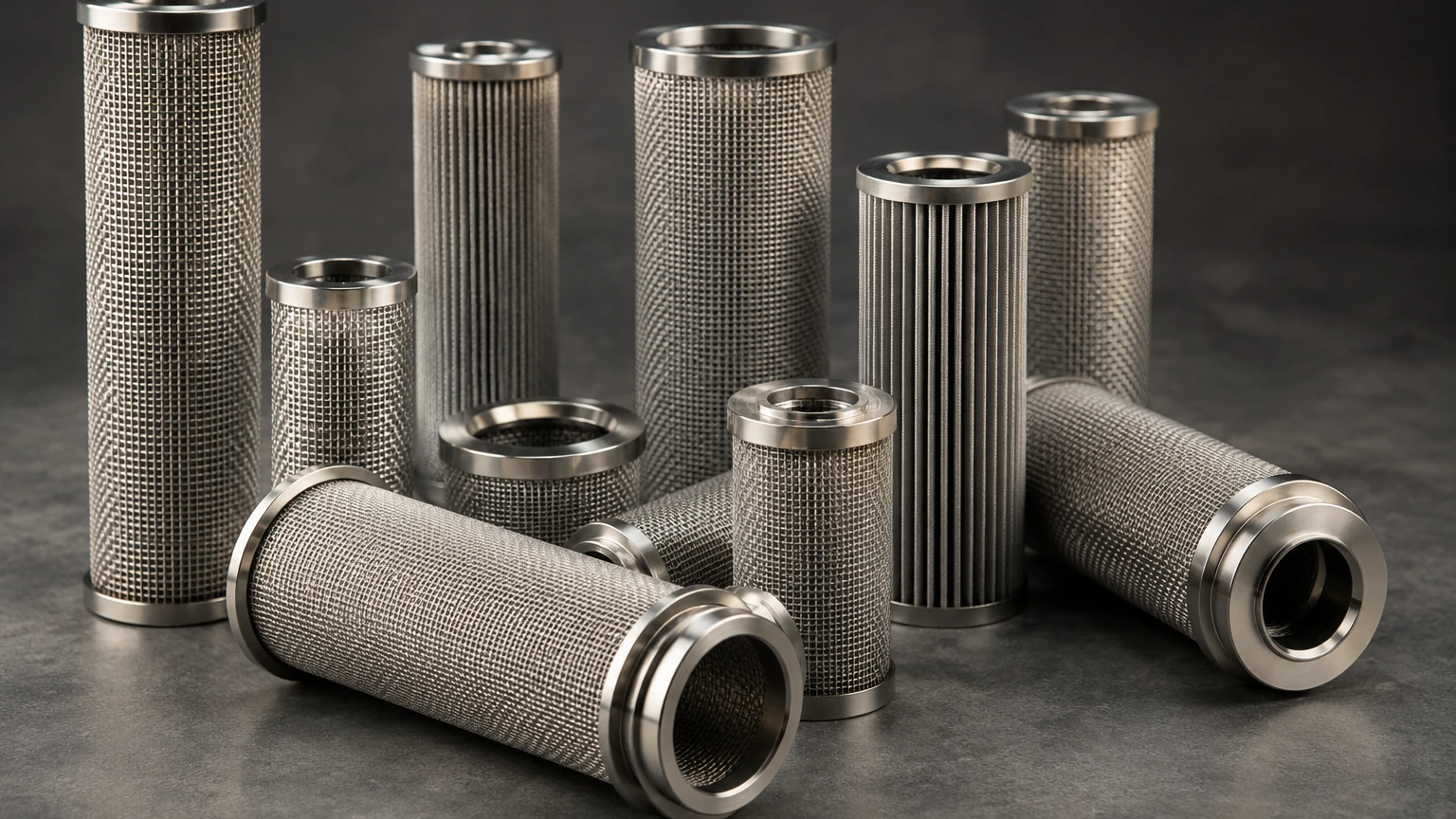
Kaifil specializes in custom stainless steel filtration solutions, including 304 and 316L grades. Stainless steel offers several advantages over synthetic media in coalescing applications:
* Thermal Resistance: Stainless steel components can operate in high-temperature environments where polymer-based filters would degrade or melt.
* Chemical Compatibility: For aggressive chemical processing or pharmaceutical applications, 316L stainless steel provides superior resistance to corrosion and chemical attack.
* Mechanical Strength: In high-pressure hydraulic or natural gas systems, the filter must resist collapse or bursting. Sintered metal mesh or perforated stainless steel cores provide the necessary rigidity to maintain filtration integrity under high differential pressure.
* Cleanability: Unlike many disposable coalescers, certain stainless steel mesh configurations can be cleaned and reused, reducing the long-term total cost of ownership (TCO).
Engineering Considerations for System Integration
When specifying a filtro coalescente, engineers must look beyond simple micron ratings. The efficiency of a coalescer is a function of the fluid velocity, the viscosity of the liquid being removed, and the surface tension of the media.
Flow Velocity and Re-entrainment
One of the most common failures in coalescing systems is "re-entrainment." This occurs when the fluid velocity through the filter media is too high, causing the newly formed large droplets to be stripped off the filter surface and carried downstream. To prevent this, the filter housing and element must be sized correctly to ensure a low "face velocity." Engineers must calculate the effective filtration area to maintain laminar flow, which encourages droplets to drain rather than be re-atomized.
Differential Pressure (ΔP)
Monitoring the pressure drop across the filtro coalescente is vital for operational efficiency. A clean coalescing filter will have an initial pressure drop (typically 1–3 psi). As the filter captures solid contaminants along with liquid aerosols, the ΔP will increase. In most industrial applications, the filter element should be replaced or cleaned once the differential pressure reaches a predetermined limit (often 8–10 psi) to prevent energy loss and potential media rupture.
Applications Across Industrial Sectors
The versatility of the filtro coalescente makes it indispensable in various sectors where fluid purity is non-negotiable.
Compressed Air Systems
In manufacturing plants, compressed air often contains oil aerosols from the compressor and water vapor from the atmosphere. A coalescing filter is used to remove these contaminants to protect pneumatic tools, sensitive instrumentation, and finished products from oil contamination.
Natural Gas Processing
In the oil and gas industry, coalescers are used to remove liquid hydrocarbons and water from natural gas streams. This prevents hydrate formation and protects downstream turbines and compressors from liquid slugging, which can cause catastrophic mechanical failure.
Chemical and Pharmaceutical Production
Precision is paramount in chemical synthesis and drug manufacturing. Stainless steel coalescing filters ensure that vent gases are free of liquid reagents and that process liquids are separated from immiscible contaminants. The use of 316L stainless steel ensures that the filtration process does not introduce impurities into the batch.
Hydraulic and Lube Oil Systems
Water is a primary enemy of hydraulic systems, leading to oxidation, loss of lubricity, and component wear. A liquid-liquid filtro coalescente can effectively remove free and emulsified water from hydraulic oils, extending the life of the fluid and the machinery.
Customization and OEM Solutions
Standard off-the-shelf filters often fall short in specialized industrial applications. Customization is frequently required to meet specific space constraints, connection types, or extreme operating conditions. Kaifil works closely with global customers to develop tailored filtration components that meet exact engineering specifications.
Custom Design Parameters
When ordering a customized filtro coalescente, technical teams should confirm the following parameters:
* Micron Rating: The required efficiency for aerosol removal (e.g., 99.9% at 0.3 microns).
* End Cap Configuration: Options include DOE (Double Open End), SOE (Single Open End) with various O-ring codes (e.g., Code 7, Code 2).
* Seal Materials: Compatibility of gaskets (Viton, EPDM, PTFE) with the process fluid.
* Housing Compatibility: Ensuring the element fits existing filter housings or designing a new housing to accommodate specific flow rates.
By focusing on these technical details, purchasing teams can avoid the risks of bypass or premature failure, ensuring the filtration system delivers consistent performance over its service life.
Evaluating Total Cost of Ownership (TCO)
While the initial purchase price of a high-quality stainless steel filtro coalescente may be higher than a standard disposable unit, the TCO is often lower when considering the entire lifecycle. Factors contributing to a lower TCO include:
* Reduced Downtime: High-durability filters require less frequent changes and are less prone to unexpected failure.
* Equipment Protection: By effectively removing 99.9% of liquid contaminants, coalescers prevent expensive repairs to downstream valves, sensors, and engines.
* Energy Efficiency: Maintaining a low differential pressure reduces the workload on pumps and compressors, leading to significant energy savings over time.
* Sustainability: Reusable stainless steel elements contribute to waste reduction goals by minimizing the volume of spent filter cartridges sent to landfills.
Conclusion: Selecting the Right Partner
Choosing the correct filtro coalescente is a technical decision that impacts the safety, efficiency, and reliability of an entire industrial process. Engineers must balance filtration efficiency with mechanical durability and chemical compatibility.
Kaifil’s expertise in manufacturing custom stainless steel filter cartridges and precision metal components allows us to support demanding applications with reliable, high-performance solutions. Whether you are designing a new system or looking to optimize an existing one, our team provides the technical guidance needed to achieve superior filtration results.
To explore our full range of custom filtration capabilities and to discuss your specific application requirements with our engineering team, please visit our Main Page. Review product options and application support to find the ideal filtration solution for your industrial needs.
