


Filtro Del Catalizador
In the landscape of industrial chemical processing, the efficiency of a reaction often depends on the presence and preservation of catalysts. These substances, which accelerate chemical reactions without being consumed, represent a significant capital investment for many facilities. Consequently, the implementation of a high-performance filtro del catalizador (catalyst filter) is not merely a matter of process hygiene but a critical economic and operational necessity. For engineers and procurement specialists, understanding the technical nuances of these filtration systems is essential for optimizing yield, protecting downstream equipment, and ensuring the longevity of the catalyst itself.
Industrial filtration solutions, particularly those involving stainless steel and specialized alloys, provide the mechanical strength and chemical resistance required to operate in the harsh environments typical of catalytic reactors. Whether the application involves precious metal recovery or the removal of fines from a slurry stream, the selection of the correct filtration medium determines the total cost of ownership and the reliability of the production line.
The Critical Role of Catalyst Filtration in Industrial Systems
The primary function of a catalyst filter is to separate solid catalyst particles from liquid or gaseous process streams. This process serves several vital roles in a B2B industrial context. First and foremost is catalyst recovery. Many industrial catalysts utilize expensive metals such as platinum, palladium, or nickel. Losing even a small percentage of these materials through the process stream can result in substantial financial losses. A precision-engineered filter ensures that these particles are retained and can be recycled back into the reactor.
Beyond recovery, the protection of downstream equipment is paramount. Catalyst fines—tiny particles created by the mechanical attrition of the catalyst—can migrate through the system, causing abrasion in pumps, clogging heat exchangers, and contaminating final products. By installing a robust filtration stage, engineers prevent these secondary issues, thereby reducing maintenance downtime and extending the service life of the entire plant infrastructure.
Furthermore, in many chemical and pharmaceutical processes, the purity of the final product is non-negotiable. Residual catalyst particles can act as impurities that affect the color, stability, or safety of the end product. High-efficiency filtration ensures that the output meets stringent regulatory and quality standards.
Engineering Specifications for Stainless Steel Filtration Media
When specifying a filtro del catalizador, material selection is the most critical decision an engineer will make. Because catalytic reactions often occur at high temperatures and under high pressure, or involve corrosive chemicals, standard filtration materials are often inadequate. Stainless steel, specifically grades 304 and 316L, is the industry standard for these applications due to its exceptional durability.
Material Compatibility and Durability
Stainless steel 316L is preferred in environments containing chlorides or acids due to its superior corrosion resistance. For extreme conditions, manufacturers like Kaifil may utilize high-performance alloys such as Inconel or Monel. These materials maintain their structural integrity at temperatures exceeding 500°C, where polymer-based filters would fail. The mechanical strength of metal filters also allows them to withstand high differential pressures, which is a common occurrence as the filter cake builds up.
Filtration Accuracy and Micron Ratings
Catalysts come in various forms, from large pellets to fine powders. The filtration media must be matched to the particle size distribution (PSD) of the catalyst. Sintered metal mesh and sintered fiber felt are common choices for fine catalyst recovery. These media offer precise micron ratings, often ranging from 0.5 to 200 microns. A common challenge for engineers is balancing the need for high filtration efficiency (capturing the smallest particles) with the need for low initial pressure drop to maintain flow rates.
Comparing Filtration Technologies: Sintered Metal vs. Wire Mesh
There are several structural designs for catalyst filters, each offering distinct advantages depending on the application’s flow dynamics and solid loading.
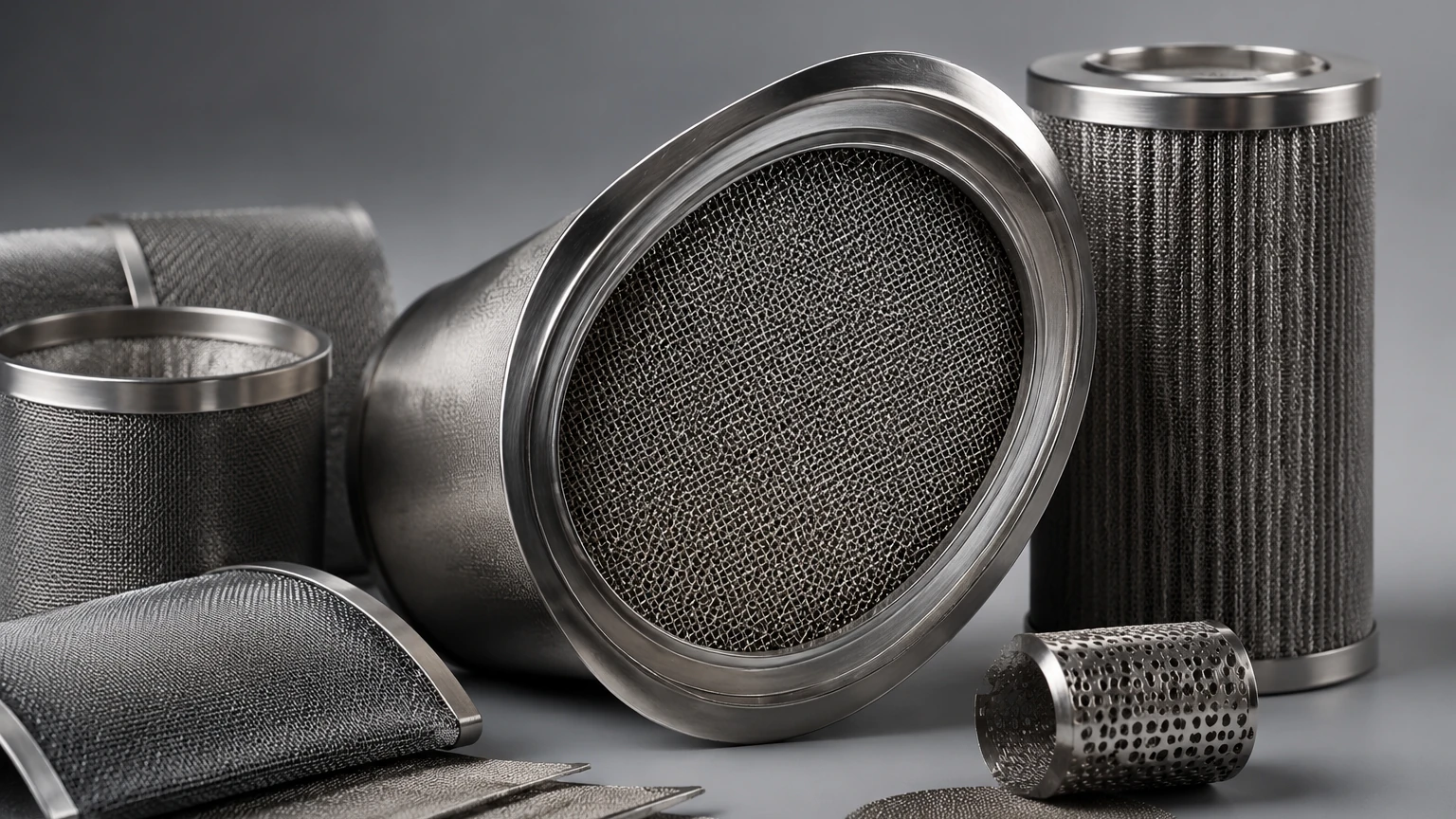
1. Sintered Wire Mesh: This involves multiple layers of stainless steel wire mesh that are bonded together through a high-temperature sintering process. This creates a rigid, stable structure that does not migrate under pressure. It is highly effective for surface filtration where the catalyst needs to be easily washed off or recovered from the filter surface.
2. Sintered Metal Fiber Felt: Composed of non-woven stainless steel fibers, this medium provides high porosity (up to 80%) and high dirt-holding capacity. It is ideal for applications with high flow rates and low allowable pressure drops. It provides depth filtration, which is excellent for capturing irregular catalyst fines.
3. Wedge Wire Screens: For larger catalyst pellets used in fixed-bed reactors, wedge wire or "V-wire" screens are often used as support grids or outlet collectors. Their non-clogging design ensures that the catalyst bed remains stable while allowing the fluid to pass through with minimal resistance.
To explore the full range of available materials and structural configurations, technical teams can consult the Kaifil Main Page for detailed product specifications and engineering data.
Operational Considerations: Pressure Drop and Cake Management
In a continuous or batch catalytic process, the performance of the filter changes over time as particles accumulate on the surface. This accumulation forms what is known as a "filter cake." In many catalyst recovery systems, the filter cake itself acts as an additional filtration layer, often improving the efficiency of the separation.
However, as the cake thickness increases, so does the differential pressure (ΔP). Engineers must monitor this pressure drop closely. If the ΔP becomes too high, it can lead to reduced flow rates or, in extreme cases, structural failure of the filter element. Most modern systems are designed for "backpulsing" or "backwashing," where a reverse flow of fluid or gas is used to dislodge the filter cake and restore the filter’s permeability. The ability of a stainless steel filter to withstand repeated backpulsing cycles without fatigue is a hallmark of high-quality manufacturing.
Maintenance Protocols and Cleaning Methods
Unlike disposable cartridge filters, stainless steel catalyst filters are designed for long-term reuse. This sustainability is a significant advantage in B2B operations, reducing both waste and long-term procurement costs. However, maintaining performance requires a disciplined cleaning regimen.
* In-situ Cleaning: This includes backwashing or backpulsing during the production cycle. It is effective for removing the bulk of the catalyst cake.
* Ex-situ Cleaning: When internal pores become blinded by sub-micron particles or chemical scaling, the filter elements may need to be removed for professional cleaning. Common methods include ultrasonic cleaning, which uses high-frequency sound waves to cavitate the cleaning fluid and pull contaminants out of the microscopic pores. Chemical cleaning (acid or alkali washing) is also used to dissolve specific chemical residues without damaging the stainless steel substrate.
Regular inspection for signs of mechanical wear, such as mesh deformation or weld cracks, is essential to prevent bypass—a situation where unfiltered process fluid leaks through the filter assembly.
Selection Criteria: What Engineers Must Confirm Before Purchase
Procuring a filtro del catalizador requires a detailed technical exchange between the engineering team and the manufacturer. To ensure the solution is fit for purpose, the following parameters must be confirmed:
1. Fluid Characteristics: What is the viscosity, density, and chemical composition of the fluid? This dictates the material of construction and the required surface area.
2. Catalyst Properties: What is the particle size, shape, and concentration? Is the catalyst abrasive? This determines the micron rating and the choice between surface or depth filtration.
3. Operating Conditions: What are the maximum and normal operating temperatures and pressures? What is the maximum allowable differential pressure before the system must be cleaned?
4. Flow Requirements: What is the required flow rate (GPM or m³/h)? This will determine the size of the filter housing and the number of elements required.
5. Cleaning Compatibility: Is the system designed for manual cleaning or automated backpulsing? The filter structure must be engineered to handle the specific stresses of the chosen cleaning method.
By addressing these factors early in the design phase, purchasing teams can avoid costly retrofits and ensure that the filtration system integrates seamlessly with the reactor design.
Conclusion: Optimizing Process Efficiency with Kaifil
The implementation of a specialized catalyst filter is a strategic investment in process stability and resource recovery. As industrial requirements become more demanding, the need for precision-engineered, durable, and cleanable filtration solutions continues to grow. Stainless steel filters provide the necessary balance of performance and longevity required for modern chemical processing, pharmaceutical manufacturing, and petrochemical refining.
Kaifil specializes in the design and manufacture of custom stainless steel filtration components tailored to these demanding environments. By combining advanced manufacturing techniques with deep engineering expertise, Kaifil helps global customers achieve optimal filtration performance and lower operational costs. For more information on custom OEM solutions and technical support, please visit the Main Page to review our product capabilities and connect with our engineering team.
