


Filtros Sinterizados
In the landscape of industrial filtration, the demand for components that can withstand extreme temperatures, corrosive environments, and high mechanical stress is constant. Among the various technologies available, filtros sinterizados (sintered filters) represent a pinnacle of engineering durability and precision. These porous metal elements are not merely consumables; they are critical engineered components that ensure the purity of fluids and the protection of downstream equipment in sectors ranging from chemical processing to aerospace.
For engineers and procurement professionals, understanding the technical nuances of sintered filtration is essential for optimizing system performance and reducing the total cost of ownership. This guide explores the manufacturing principles, material science, and application-specific considerations of sintered metal filters, providing a factual foundation for informed selection.
Understanding the Sintering Process in Filtration
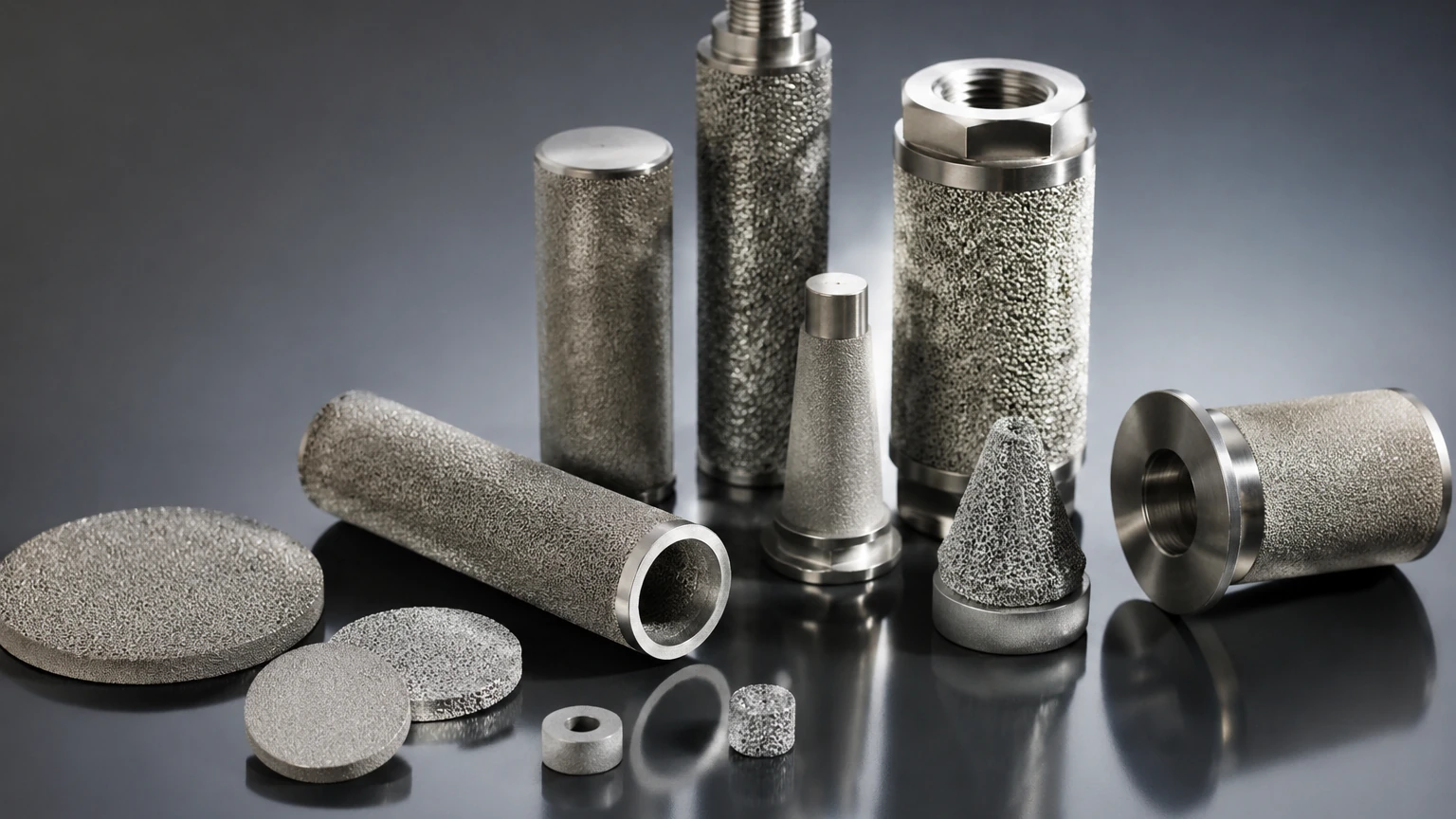
Sintering is a thermal process where metal particles or layers of wire mesh are bonded together at temperatures below their melting point. Through atomic diffusion, the contact points between the metal structures fuse, creating a rigid, porous matrix. Unlike traditional filters that rely on binders or adhesive resins, sintered filters are composed entirely of the base metal, typically stainless steel.
There are two primary forms of sintered media used in the production of industrial filters:
1. Sintered Metal Powder: Spherical or irregular metal powders are compacted and then sintered. The resulting structure features a labyrinth of interconnected pores. The porosity and filtration rating are controlled by the particle size of the powder and the compaction pressure.
2. Sintered Wire Mesh: Multiple layers of stainless steel wire mesh are laminated and sintered together. This process creates a media that combines the precise pore size of woven mesh with the mechanical strength and thickness of a plate. It is often the preferred choice for applications requiring high flow rates and easy cleanability.
By eliminating the need for internal support cores in many designs, these filters provide a high degree of structural integrity, ensuring that the pore geometry remains stable even under significant differential pressure.
Technical Specifications and Performance Metrics
When evaluating filtros sinterizados, several technical parameters define their suitability for a specific industrial process. Engineers must look beyond simple micron ratings to understand how the filter will behave under operational loads.
Filtration Rating: Absolute vs. Nominal
In industrial filtration, the distinction between absolute and nominal ratings is critical. Sintered metal filters typically offer an absolute filtration rating, meaning they are designed to capture 99.9% of particles at a specified micron size. This is achieved due to the rigid pore structure which, unlike fiber-based media, does not unload captured contaminants when pressure surges occur.
Porosity and Permeability
Porosity refers to the percentage of void space within the filter media, while permeability refers to the ease with which a fluid can pass through that media. Sintered powder filters generally offer lower porosity (30% to 50%) compared to sintered mesh, but they provide a deeper filtration path. High permeability is essential for minimizing pressure drop across the system, which directly impacts energy consumption and pump requirements.
Mechanical Strength and Pressure Resistance
One of the primary advantages of sintered stainless steel is its ability to withstand high collapse pressures. In hydraulic systems or high-pressure gas filtration, the filter must maintain its shape and pore distribution. Sintered elements can often handle differential pressures exceeding 200 bar, depending on the design and housing configuration.
Material Selection for Demanding Environments
The performance of filtros sinterizados is inextricably linked to the metallurgy of the media. While stainless steel is the industry standard, the specific grade must be matched to the chemical and thermal profile of the application.
* 316L Stainless Steel: The most common material for sintered filters due to its excellent corrosion resistance and mechanical properties. The "L" (low carbon) designation is crucial for components that undergo welding, as it prevents carbide precipitation and ensures the integrity of the filter assembly.
* 304 Stainless Steel: Suitable for less aggressive environments, offering a cost-effective solution for water treatment and general industrial air filtration.
* Specialty Alloys: For extreme conditions, materials such as Inconel, Monel, and Hastelloy are utilized. These alloys provide superior resistance to pitting, crevice corrosion, and high-temperature oxidation in environments involving hot gases or highly acidic chemicals.
At Kaifil, the focus remains on delivering high-quality stainless steel solutions that meet these rigorous material standards. For more information on material compatibility and custom configurations, you can visit our Main Page.
Key Applications Across Industrial Sectors
The versatility of sintered metal filters allows them to serve in diverse roles where polymer or paper filters would fail. Their high temperature resistance (often up to 600°C or higher depending on the alloy) makes them indispensable in several fields.
Chemical and Petrochemical Processing
In these industries, filters are exposed to aggressive solvents and high-temperature catalysts. Sintered elements are used for catalyst recovery, ensuring that expensive catalytic materials are captured from the process stream without degrading the filter media. They are also used in the filtration of polymers and resins where high viscosity requires significant pressure to drive the fluid through the media.
Food and Beverage Production
Sintered filters are widely used for steam filtration (culinary steam) and the carbonation of beverages. Because they are made of inert stainless steel, they do not impart flavors or odors to the product. Furthermore, their ability to withstand Clean-in-Place (CIP) procedures involving caustic chemicals and high-pressure steam is a major operational benefit.
Pharmaceutical Manufacturing
Precision is paramount in pharmaceutical applications. Sintered metal filters are used for sterile air filtration and the removal of impurities from active pharmaceutical ingredients (APIs). The smooth surface finish of sintered mesh filters prevents bacterial growth and allows for thorough sterilization via autoclaving or steaming.
Hydraulic and Aerospace Systems
Protecting sensitive valves and actuators from particulate contamination is vital for system reliability. Sintered filters provide the necessary robustness to handle high-frequency pressure pulsations and vibration without shedding fibers or bypassing contaminants.
Maintenance, Cleaning, and Longevity
One of the strongest arguments for the adoption of filtros sinterizados in a B2B context is their cleanability. Unlike disposable cartridges, sintered metal elements can be cleaned and reused multiple times, significantly reducing the long-term waste and replacement costs.
Cleaning Methodologies
Effective cleaning restores the filter’s original pressure drop and extends its service life. Common methods include:
* Backwashing/Backpulsing: Reversing the flow of fluid through the filter to dislodge surface cake and trapped particles. This is often automated in continuous process systems.
* Ultrasonic Cleaning: Using high-frequency sound waves in a cleaning solvent to create cavitation, which pulls contaminants out of the deep pore structure.
* Chemical Cleaning: Soaking the filter in acids, alkalis, or solvents to dissolve specific types of contaminants, such as organic polymers or mineral scales.
* Thermal Cleaning (Burn-off): In cases where organic materials have hardened within the pores, controlled heating can carbonize and remove the residue.
Replacement Cycles
While sintered filters are durable, they are not infinite. The replacement cycle is typically determined by the "terminal pressure drop"—the point at which the filter can no longer be effectively cleaned to an acceptable baseline. Monitoring the pressure drop over time is the best way for maintenance teams to predict when an element has reached the end of its functional life.
Engineering Considerations for Customization
Every industrial filtration system has unique constraints. Off-the-shelf solutions may not always meet the specific flow, space, or connection requirements of a complex plant. Customization is often necessary to ensure the filter integrates seamlessly into existing infrastructure.
When specifying a custom sintered filter, engineers should confirm the following:
1. Fluid Characteristics: Viscosity, density, and chemical composition at operating temperature.
2. Flow Rates: Both normal operating flow and maximum surge flow.
3. Contaminant Profile: The nature of the solids being removed (deformable vs. hard particles) and the expected solids loading.
4. Connection Types: Standard NPT/BSP threads, flange connections, or specialized sanitary fittings.
5. Housing Compatibility: Ensuring the filter element dimensions and seals are compatible with the existing vessel or housing.
Kaifil specializes in the manufacture of custom stainless steel filtration solutions, providing the technical expertise required to develop components that meet these exact specifications. Whether the requirement is for a specific wire mesh weave or a custom-dimensioned cartridge, our engineering team works to ensure the final product delivers reliable performance in the field.
Conclusion: Making the Informed Choice
Selecting the right filtration technology is a balance between initial capital expenditure and long-term operational efficiency. While filtros sinterizados may require a higher upfront investment than disposable alternatives, their durability, high-temperature capability, and cleanability offer a compelling return on investment for demanding industrial applications.
By focusing on material integrity, precise micron ratings, and robust mechanical design, facilities can ensure process continuity and protect their most valuable equipment. For technical professionals seeking to optimize their filtration systems, reviewing detailed product specifications and application support is the next logical step. Explore our comprehensive range of solutions and engineering capabilities by visiting our Main Page.
