


Fish Handling Screens
In industrial water management, aquaculture, and food processing, the implementation of effective fish handling screens is a critical engineering requirement. These specialized filtration components serve a dual purpose: protecting aquatic life from mechanical injury or entrainment and ensuring that downstream equipment, such as pumps and turbines, remains free from biological debris. For engineers and facility managers, selecting the right screening technology involves a complex balance of hydraulic efficiency, material durability, and regulatory compliance.
As a manufacturer specializing in custom stainless steel filtration solutions, Kaifil provides the technical expertise required to design and produce screens that meet these demanding specifications. Understanding the nuances of mesh selection, flow dynamics, and material science is essential for optimizing the performance of any system utilizing fish handling screens.
The Role of Fish Handling Screens in Industrial Systems
Fish handling screens are primarily designed to act as a physical barrier. In water intake systems—such as those used for power plant cooling, municipal water treatment, or irrigation—these screens prevent fish and other aquatic organisms from being drawn into the intake (entrainment) or trapped against the screen surface (impingement).
Beyond environmental protection, these screens are vital for operational continuity. In aquaculture and commercial fish processing, screens are used for grading, sorting, and transporting live stock. In these applications, the screen must not only filter water but also provide a surface that minimizes descaling or physical trauma to the fish. High-quality stainless steel components, such as those found on our Main Page, are often the preferred choice for these sensitive environments due to their smooth finish and structural integrity.
Engineering Considerations: Material Selection and Durability
The choice of material for fish handling screens is governed by the environment in which they operate. Most industrial applications involve constant exposure to water, which may be fresh, brackish, or marine.
Stainless Steel Grades
Stainless steel is the industry standard for fish handling screens due to its corrosion resistance and strength.
- Grade 304: Suitable for freshwater applications where moderate corrosion resistance is required.
- Grade 316/316L: The preferred choice for marine or high-chloride environments. The addition of molybdenum provides superior resistance to pitting and crevice corrosion.
- Duplex Stainless Steel: Used in highly aggressive environments where both high mechanical strength and exceptional corrosion resistance are mandatory.
Structural Integrity
Unlike standard industrial filters, fish handling screens often cover large surface areas and must withstand significant hydrostatic pressure and debris loading. The structural frame and the filtration media must be engineered to prevent bowing or failure under peak flow conditions. Custom fabrication allows for the integration of reinforcement ribs and heavy-duty flanges to ensure the screen remains seated and functional throughout its service life.
Design Principles for Aquatic Protection
When designing fish handling screens, engineers must adhere to specific biological and hydraulic criteria. These are often dictated by environmental regulations intended to protect local fish populations.
Slot Width and Mesh Opening
The opening size of the screen is the first line of defense. It must be small enough to exclude the target species and life stages (such as larvae or fingerlings) while remaining large enough to allow for sufficient water throughput. Precision-manufactured wire mesh or wedge wire allows for tight tolerances in slot width, ensuring that the screen performs consistently across its entire surface.
Approach Velocity
Approach velocity is the speed at which water moves toward the face of the screen. To prevent fish from being pinned against the screen (impingement), the approach velocity must be kept low—typically below 0.5 feet per second (0.15 meters per second) for many sensitive species. Achieving this requires a large total screen surface area and a high percentage of open area within the mesh design.
Surface Smoothness
Fish are highly susceptible to skin abrasions and scale loss. For handling and grading applications, the screen surface must be free of burrs, sharp edges, or rough welds. Electropolishing or specialized finishing processes are often applied to stainless steel screens to create a "fish-friendly" surface that facilitates safe passage or sorting.
Comparing Wedge Wire vs. Woven Wire Mesh
Two primary types of media are used in the construction of fish handling screens: wedge wire (profile wire) and woven wire mesh. Each has distinct advantages depending on the application.
Wedge Wire Screens
Wedge wire is constructed from V-shaped profiles welded onto support rods. This design is highly favored for fish screens for several reasons:
- Non-Clogging: The V-shaped opening widens inwardly, meaning any particle that passes the leading edge will clear the screen entirely.
- High Strength: The welded construction provides excellent rigidity, making it suitable for high-flow intake structures.
- Smooth Surface: The flat outer surface of the profile wire is gentle on fish and easy to clean with mechanical brushes or air-burst systems.
Woven Wire Mesh
Woven wire mesh offers a more cost-effective solution for smaller-scale applications or fine filtration.
- Versatility: Available in a vast range of mesh counts and wire diameters.
- High Open Area: Woven mesh can provide a very high percentage of open area, which is beneficial for maintaining low approach velocities.
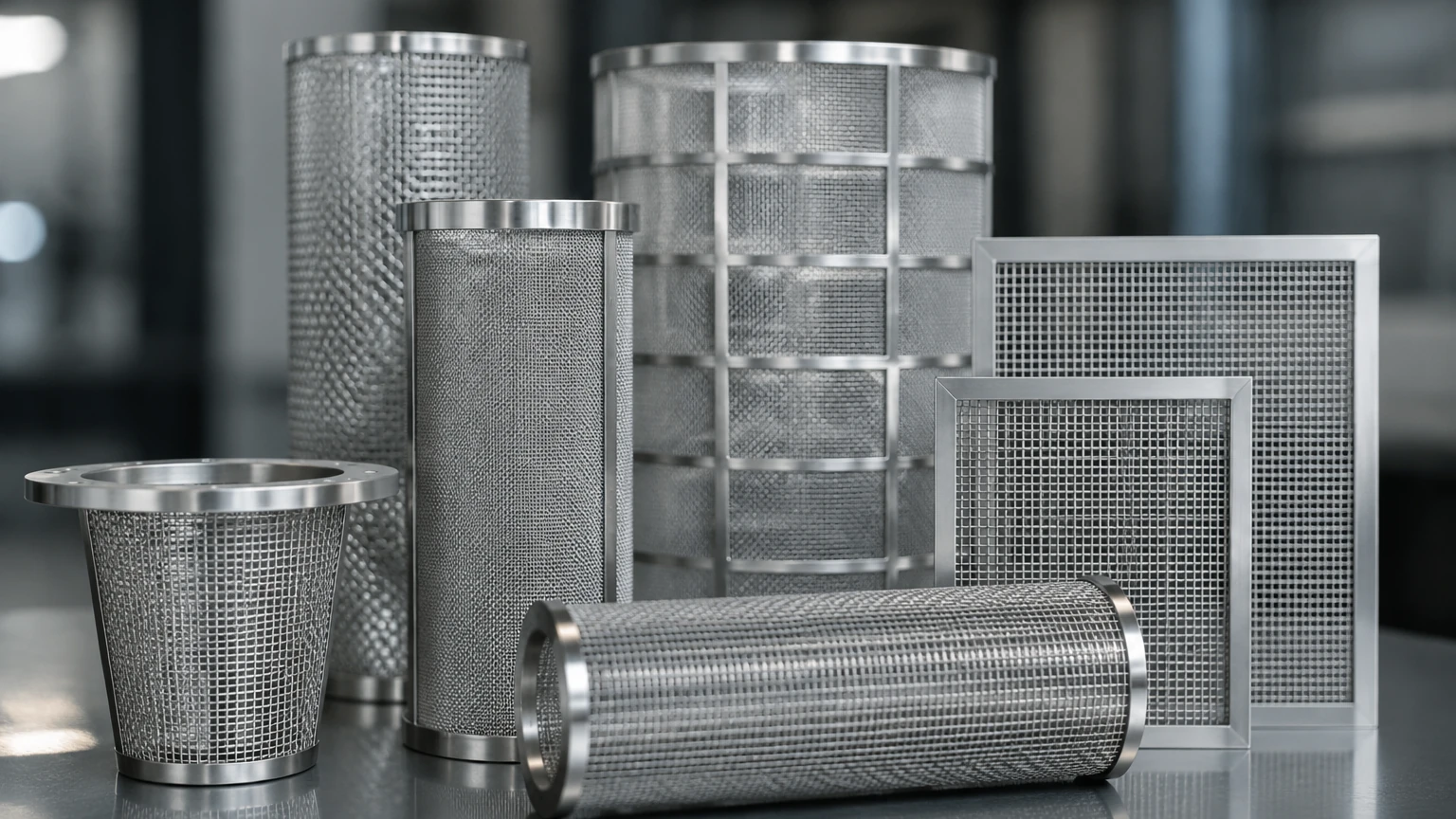
- Customization: It can be easily formed into various shapes, such as cylindrical cartridges or flat panels, to fit existing infrastructure.
Industrial Application Scenarios
1. Water Intake Structures
Power plants and industrial facilities drawing large volumes of water from natural bodies must use fish handling screens to comply with environmental standards. These are often large-scale installations, such as traveling water screens or stationary intake panels. The durability of stainless steel ensures these screens can withstand the impact of floating debris and the constant force of the current.
2. Aquaculture and Hatcheries
In aquaculture, screens are used for more than just exclusion. They are essential for tank drainage, grading fish by size, and preventing escapes. The precision of the mesh is critical here; if the openings are too large, stock is lost; if too small, the screen clogs quickly, leading to oxygen depletion in the tanks.
3. Fish Processing Facilities
During the processing of seafood, fish must be moved through various stages of cleaning and preparation. Screens are used in flumes and conveyors to separate fish from transport water. In these B2B environments, hygiene is as important as fish safety. Stainless steel's ability to withstand rigorous CIP (Clean-in-Place) cycles makes it the only viable material for these screens.
Customization and OEM Considerations
Every industrial site has unique hydraulic conditions and biological concerns, which is why off-the-shelf solutions are rarely sufficient. Customization is a core component of effective filtration engineering. When sourcing fish handling screens, purchasing teams should consider the following customization options:
- Dimensional Accuracy: Screens must fit perfectly into guides or frames to prevent "bypass," where fish or debris pass through gaps around the edges.
- Reinforcement: For deep-water intakes or high-velocity areas, additional structural support is required to prevent deformation.
- Cleaning Mechanisms: Many screens are designed to work with automated cleaning systems. Custom screens can include integrated spray bars or attachment points for mechanical scrapers.
At Kaifil, we work closely with engineering teams to develop bespoke filtration components that address these specific challenges. By leveraging advanced manufacturing techniques, we ensure that every screen meets the exact tolerances required for both biological protection and industrial efficiency.
Maintenance and Operational Efficiency
The total cost of ownership for fish handling screens is heavily influenced by maintenance requirements. A screen that clogs frequently or corrodes quickly will lead to increased labor costs and potential downtime.
Biofouling Management
In aquatic environments, biofouling—the accumulation of algae, barnacles, or biofilms—is a constant challenge. Stainless steel screens can be treated with specialized coatings, or the design can incorporate features that facilitate easy cleaning. Wedge wire, in particular, is highly compatible with air-burst cleaning systems, which use a sudden release of compressed water or air to clear the screen face remotely.
Inspection Cycles
Regular inspection is necessary to check for mechanical wear or damage caused by large debris. Because fish handling screens are often submerged, they should be designed for easy retrieval or be constructed from materials that require minimal intervention. The longevity of 316L stainless steel significantly extends the intervals between necessary replacements, providing a better long-term ROI for the facility.
Conclusion: Selecting the Right Solution
Choosing the appropriate fish handling screens requires a deep understanding of the intersection between biology and mechanical engineering. Whether the goal is to protect a local ecosystem at a water intake or to streamline a commercial aquaculture operation, the quality of the filtration media is the determining factor in success.
By focusing on high-grade materials, precise slot dimensions, and robust structural design, engineers can ensure their systems operate efficiently while meeting all environmental and safety standards. For those seeking reliable, custom-engineered stainless steel filtration components, exploring the options available on our Main Page is the first step toward an optimized solution. With the right technical partnership, industrial facilities can achieve a balance of high performance, regulatory compliance, and long-term durability in their fish handling and water management processes.
