


Foam Filter Air
In the landscape of industrial filtration, the term "foam filter air" refers to a specialized category of depth filtration media characterized by a reticulated, open-cell structure. Unlike surface filters that trap contaminants on a single plane, foam filters utilize a three-dimensional matrix to capture and hold particulate matter throughout the thickness of the material. For engineers and procurement specialists in sectors such as chemical processing, power generation, and heavy machinery manufacturing, understanding the technical nuances of foam air filtration is essential for optimizing equipment performance and longevity.
Industrial foam filters are engineered to balance two competing priorities: high dust-holding capacity and low resistance to airflow. This guide explores the engineering principles, material science, and selection criteria necessary for implementing effective foam filtration solutions in demanding industrial environments.
The Role of Foam Filter Air in Industrial Systems
Foam filter air components serve as critical safeguards in systems where high volumes of air must be processed with minimal pressure drop. Their primary function is to remove airborne contaminants—ranging from large debris to fine dust—before they can reach sensitive internal components like compressor vanes, engine cylinders, or delicate electronic controls.
In many industrial applications, foam filters are utilized as pre-filters. By capturing the bulk of larger particulates, they extend the service life of more expensive, high-efficiency secondary filters, such as HEPA or fine-grade stainless steel cartridges. The reticulated nature of the foam allows for a tortuous path; as air passes through the interconnected cells, particles are forced to change direction repeatedly, eventually impacting and adhering to the cell strands (ligaments) through a process known as inertial impaction.
Technical Specifications: PPI and Pore Architecture
A defining characteristic of foam filter air media is the "Pores Per Inch" (PPI) rating. This metric dictates the filtration efficiency and the physical structure of the foam. In industrial contexts, PPI typically ranges from 10 to 100, each serving distinct operational needs:
* 10 to 30 PPI (Coarse): These filters feature large, open cells. They are ideal for high-velocity air streams where minimal pressure drop is the priority. They are frequently used in heavy-duty air intakes for construction equipment or as mist eliminators in cooling systems.
* 45 to 60 PPI (Medium): This range offers a balance between efficiency and flow. It is commonly found in general industrial machinery and HVAC systems where moderate dust loading is expected.
* 80 to 100 PPI (Fine): Fine-pore foams provide the highest filtration efficiency in this category. They are used in applications requiring the removal of smaller particulates, though they necessitate more frequent monitoring of pressure differentials due to their higher resistance.
Engineers must also consider the "void volume" of the foam. High-quality reticulated foams often boast a void volume of 95% to 98%, meaning the vast majority of the filter's total volume is open space. This high porosity is what allows foam filter air systems to maintain low operating costs by reducing the energy required to move air through the media.
Material Science: From Polyurethane to Metal Foams
While polymer-based foams are common, the specific material choice for foam filter air is dictated by the chemical and thermal demands of the application.
Polyurethane Foams
Most standard industrial foam filters are made from polyester or polyether polyurethane. Polyester foams generally offer better resistance to hydrocarbons and chemicals, making them suitable for oil-mist environments. Polyether foams, conversely, provide superior resistance to hydrolysis (breakdown by water/moisture), which is critical for high-humidity or outdoor applications. However, both are limited by temperature, typically losing structural integrity above 120°C (248°F).
Metal Foams (Reticulated Metal)
For extreme environments—such as high-temperature exhaust gas filtration or aggressive chemical processing—engineers turn to metal foams. These components, often manufactured from nickel or stainless steel, replicate the open-cell structure of polymer foams but offer the durability of metal. Metal foam filter air solutions can withstand temperatures exceeding 500°C and are resistant to a wide array of corrosive agents. They provide the depth filtration benefits of foam with the mechanical strength and reusability associated with traditional metal filters.
Evaluating Filtration Efficiency and Pressure Drop
When selecting a foam filter air solution, the relationship between filtration efficiency and pressure drop (delta P) is the most critical engineering trade-off.
1. Inertial Impaction: This is the primary mechanism for foam filters. As air velocity increases, larger particles are more likely to strike the foam ligaments because they cannot follow the rapid changes in airflow direction.
2. Interception: Smaller particles that follow the air streamline may still come into contact with the foam strands and become trapped.
3. Diffusion: For very fine particles and low air velocities, Brownian motion causes particles to wander across streamlines and eventually hit the filter media.
Pressure drop is a direct function of the foam's PPI and the air velocity (Face Velocity). An improperly specified filter with too high a PPI for the required flow rate will lead to excessive energy consumption and potential system failure. Conversely, a PPI that is too low will allow bypass of contaminants, leading to downstream damage. Engineers should request flow-vs-pressure drop curves from manufacturers to ensure the selected media aligns with the system's fan or compressor curves.
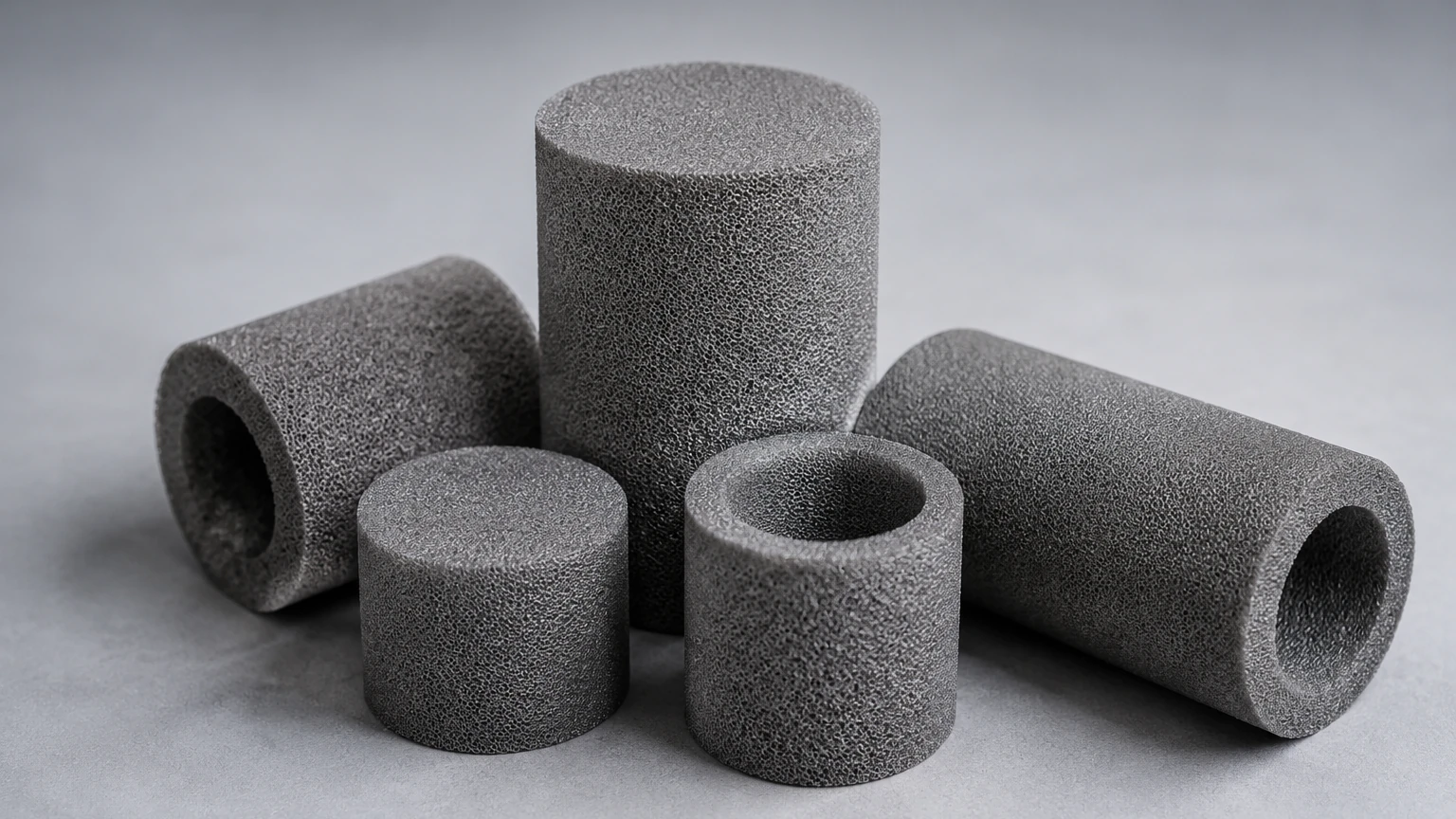
Foam vs. Stainless Steel Mesh: Engineering Trade-offs
In many high-performance industrial applications, engineers must choose between foam filter air media and stainless steel wire mesh. Both are specialties of advanced manufacturers like Kaifil, but they serve different roles.
* Filtration Type: Foam is a depth media; wire mesh is primarily a surface media. Foam can hold a higher volume of dust before clogging, whereas wire mesh provides a more precise and absolute micron rating.
* Durability: Stainless steel wire mesh is significantly more robust than polymer foam. It can be cleaned ultrasonically or through backwashing and reused indefinitely. While metal foams share this durability, polymer foams are often treated as semi-consumables, though some are washable.
* Precision: If an application requires a strict 10-micron absolute cutoff, a precision-woven stainless steel mesh or a sintered metal fiber felt is often the superior choice. Foam is better suited for applications where "nominal" filtration and high dirt-holding capacity are the priorities.
For those evaluating these options for complex systems, visiting the Main Page of a specialized manufacturer like Kaifil provides insights into how these different technologies can be customized to meet specific industrial tolerances.
Customization and OEM Design Considerations
Standard off-the-shelf foam filters rarely meet the rigorous requirements of specialized industrial equipment. Customization is often necessary in several areas:
* Geometry and Fit: Foam can be die-cut, CNC-profiled, or even molded into complex 3D shapes to fit specific housing constraints. Ensuring a tight seal at the edges is paramount to prevent "air bypass," where unfiltered air takes the path of least resistance around the filter.
* Gasketing and Framing: To facilitate installation and ensure a leak-proof seal, foam filters are often integrated into frames made of plastic, aluminum, or stainless steel. Gaskets made of EPDM or silicone may be added to the perimeter.
* Layering (Gradient Density): One advanced technique is to layer different PPI foams. A 20 PPI foam on the intake side can capture large debris, while a 60 PPI layer on the discharge side handles finer particles. This gradient density approach significantly maximizes the service life of the filter assembly.
Maintenance, Cleaning, and Replacement Cycles
The total cost of ownership (TCO) for foam filter air systems is heavily influenced by maintenance protocols. Unlike paper filters, many industrial foam filters are designed to be cleaned and reused.
Cleaning Protocols
Polyurethane foams can often be cleaned using vacuuming, compressed air (blown from the clean side to the dirty side), or washing with water and mild detergents. It is vital to ensure that the foam is completely dry before re-installation to prevent microbial growth or increased initial pressure drop. Metal foams, being much more resilient, can withstand aggressive chemical cleaning or high-pressure steam sterilization.
Replacement Indicators
Despite their cleanability, polymer foams eventually undergo "permanent set" or physical degradation due to UV exposure, chemical breakdown, or repeated mechanical stress. Replacement should be triggered by:
1. Visual Inspection: Signs of crumbling, loss of elasticity, or visible tears in the cell structure.
2. Pressure Differential: If the pressure drop across the filter remains high even after cleaning, the internal pore structure is likely clogged with fine particulates that cannot be removed.
3. Time-Based Cycles: In critical applications, a fixed replacement schedule (e.g., every 12 to 24 months) is often implemented to mitigate the risk of material failure.
Conclusion: Selecting the Right Filtration Partner
Implementing an effective foam filter air solution requires more than just selecting a material from a catalog. It involves a deep understanding of fluid dynamics, material compatibility, and the specific operational challenges of the target industry. Whether the application calls for a simple polyurethane pre-filter or a sophisticated custom-engineered metal filtration component, the quality of the manufacturing process determines the reliability of the system.
Working with a manufacturer that understands the transition from standard foam to high-precision metal filtration allows engineers to scale their solutions as performance requirements increase. For technical teams looking to optimize their filtration strategy, exploring the resources and product capabilities on the Main Page is a recommended first step in securing a reliable, high-performance filtration partner. By focusing on factual performance data and engineering-led design, organizations can ensure their air filtration systems provide maximum protection with optimal efficiency.
