


Fritted
In the landscape of industrial filtration, the term "fritted" refers to a specific class of porous materials created through the process of sintering. While the term is historically associated with glass components in laboratory settings, its application in heavy industry—specifically regarding stainless steel and specialized alloys—has become a cornerstone for high-performance filtration. Fritted metal components provide a unique combination of structural integrity, precise pore size control, and extreme thermal and chemical resistance that traditional fabric or paper filters cannot match.
For engineers and technical procurement teams, understanding the nuances of fritted filter production, material selection, and performance metrics is essential for optimizing process efficiency. This guide examines the technical foundations of fritted filtration solutions and the engineering considerations necessary for successful implementation in demanding industrial environments.
Understanding the Sintering Process for Fritted Components
The production of a fritted filter begins with the selection of raw materials, typically in the form of spherical or irregular metal powders, or multiple layers of woven wire mesh. These materials undergo a process called sintering, where they are subjected to high temperatures—just below their melting point—and controlled pressure within a vacuum or inert gas atmosphere.
During this thermal cycle, molecular diffusion occurs at the contact points between the particles or wire strands. This creates robust metallurgical bonds, essentially fusing the individual elements into a single, cohesive porous structure without the use of binders or adhesives. The resulting "fritted" material retains a network of interconnected voids, known as tortuous paths, through which fluids or gases can flow while solid contaminants are trapped.
From a manufacturing perspective, the geometry of the initial powder or the weave of the mesh determines the final porosity and permeability. By controlling the particle size distribution and the compaction force, manufacturers like Kaifil can engineer filters with specific micron ratings, ranging from sub-micron levels to several hundred microns. This level of precision allows for the creation of components that serve not only as filters but also as flow restrictors, flame arrestors, and gas spargers.
Key Characteristics of Fritted Stainless Steel Filters
When evaluating filtration media, stainless steel (typically 316L or 304L) is the preferred material for fritted components due to its versatile mechanical and chemical properties. Unlike polymer-based filters, fritted metal offers several distinct advantages:
1. Mechanical Strength: The sintered structure is self-supporting and highly resistant to deformation under high-pressure differentials. This eliminates the need for external support cages in many applications.
2. Thermal Stability: Fritted stainless steel can operate in environments exceeding 450°C (842°F) in oxidizing atmospheres and even higher in reducing environments, where synthetic media would melt or degrade.
3. Chemical Compatibility: The inert nature of high-grade stainless steel makes fritted filters suitable for aggressive solvents, caustic cleaning agents, and acidic process streams common in chemical and pharmaceutical manufacturing.
4. Fixed Pore Geometry: Because the structure is fused, the pores do not shift or enlarge under pressure. This ensures consistent filtration efficiency and prevents the "unloading" of trapped particles during pressure surges.
Engineering Considerations for Filter Selection
Selecting the correct fritted component requires a deep dive into the fluid dynamics and environmental conditions of the specific application. Engineers must move beyond simple micron ratings to consider how the filter will behave over its entire service life.
Micron Rating: Absolute vs. Nominal
In the context of fritted media, it is critical to distinguish between nominal and absolute ratings. A nominal rating refers to the ability of the filter to retain a majority percentage (usually 60% to 90%) of particles of a certain size. In contrast, an absolute rating signifies that 99.9% or more of particles at that size will be captured. For critical applications like catalyst recovery or pharmaceutical purification, absolute-rated fritted filters are mandatory to prevent downstream contamination.
Pressure Drop and Permeability
The pressure drop (ΔP) across a clean fritted filter is a function of the fluid's viscosity, the flow velocity, and the filter's permeability. A filter with very fine pores will naturally exhibit a higher pressure drop. Engineers must balance the need for high filtration efficiency with the energy costs associated with pumping fluids through the media. Calculating the clean pressure drop using Darcy’s Law for porous media is a standard step in the system design phase.
Dirt Holding Capacity
Fritted filters generally operate via surface filtration or depth filtration, depending on the thickness of the sintered layer. Thicker fritted plates or tubes offer greater depth, allowing them to trap more contaminants before reaching the terminal pressure drop. Understanding the nature of the solids—whether they are hard, deformable, or gelatinous—will dictate whether a surface-loading sintered mesh or a depth-loading sintered powder is more appropriate.
Common Industrial Applications
The versatility of fritted metal components allows them to solve complex engineering challenges across diverse sectors. To explore specific configurations and technical specifications for these industries, professionals can visit the Main Page for comprehensive product data.
Chemical and Petrochemical Processing
In these environments, fritted filters are used for the filtration of high-temperature polymers, the recovery of expensive precious metal catalysts, and the purification of aggressive chemical intermediates. Their ability to withstand backpulsing (using a reverse flow of gas or liquid to dislodge the filter cake) makes them ideal for continuous process loops.
Pharmaceutical and Biotechnology
Sanitary requirements in pharmaceutical production demand materials that are non-shedding and easy to sterilize. Fritted stainless steel filters meet these criteria, providing reliable microbial stabilization and the removal of pyrogens. They are also used in gas filtration for fermenters, where they must remain sterile and withstand repeated SIP (Steam-In-Place) cycles.
Food and Beverage Production
From steam filtration for direct food contact to the carbonation of beverages via sparging, fritted components ensure product purity. The precise pore control of sintered metal allows for the creation of uniform micro-bubbles in sparging applications, which optimizes gas absorption rates in liquids.
Aerospace and Hydraulics
High-pressure hydraulic systems rely on fritted filters to protect sensitive valves and actuators from particulate wear. The vibration resistance and structural integrity of sintered metal are vital in aerospace applications where component failure is not an option.
Customization and OEM Solutions
Industrial filtration is rarely a one-size-fits-all field. Most high-performance systems require customized fritted components tailored to specific spatial and functional constraints. Customization options usually include:
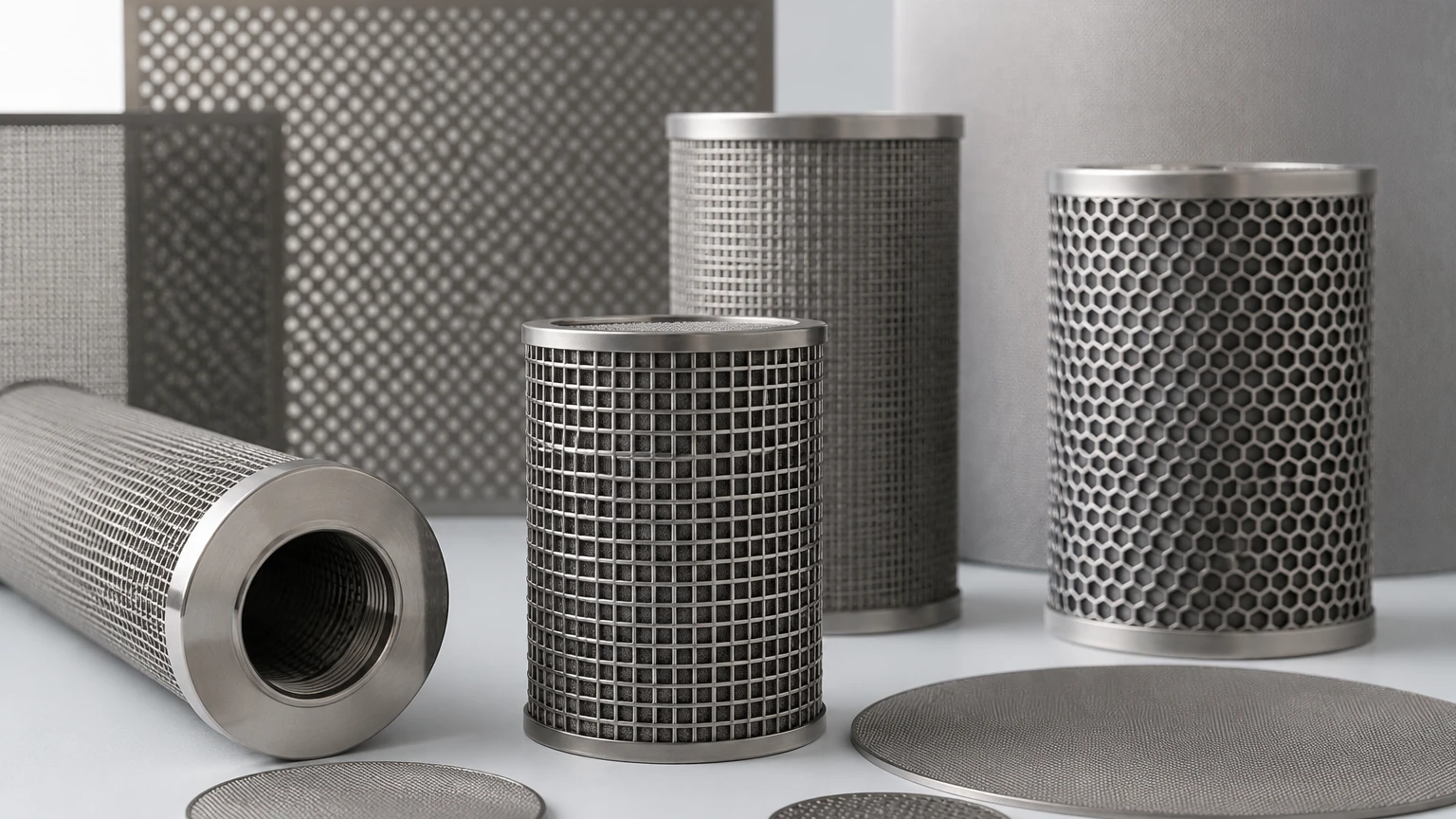
* Geometry: Fritted materials can be formed into discs, plates, tubes, conical shapes, or complex pleated cartridges to maximize surface area within a limited footprint.
* Alloy Selection: While 316L is standard, applications involving extreme corrosion may require Monel, Inconel, or Hastelloy.
* Integrated Fittings: Sintered components can be welded to standard NPT, flange, or sanitary Tri-Clamp fittings during the manufacturing process to ensure leak-free integration into existing piping.
When working with an OEM manufacturer, it is important to provide detailed data regarding the operating temperature, maximum allowable pressure drop, fluid chemistry, and the target particle size. This collaborative approach ensures that the final fritted component is optimized for both performance and longevity.
Maintenance, Cleaning, and Longevity
One of the primary economic drivers for choosing fritted metal over disposable media is the ability to clean and reuse the filter. Because the sintered structure is robust, it can withstand aggressive cleaning protocols that would destroy other filter types.
In-Situ Cleaning
Methods such as backwashing (liquid) or backpulsing (gas) are often automated within the filtration system. This involves reversing the flow through the filter to dislodge the accumulated cake. This extends the time between manual cleanings and maintains a more consistent flow rate.
Ex-Situ Cleaning
When contaminants cannot be removed by backpulsing, fritted filters can be removed and cleaned using:
* Ultrasonic Cleaning: High-frequency sound waves create cavitation bubbles that dislodge fine particles from deep within the pore structure.
* Chemical Cleaning: Soaking in solvents, caustic solutions, or acids to dissolve organic or inorganic deposits.
* Burn-off/Pyrolysis: Heating the filter in a controlled oven to carbonize and remove organic polymers or biological matter.
Proper maintenance significantly lowers the total cost of ownership (TCO). While the initial investment in a fritted stainless steel filter is higher than a disposable cartridge, the elimination of frequent replacement costs, disposal fees, and associated downtime often results in a lower TCO within the first year of operation.
Conclusion: Selecting the Right Filtration Partner
Implementing fritted filtration solutions requires a balance of theoretical engineering and practical manufacturing expertise. The complexity of pore dynamics, material science, and mechanical design means that the choice of a manufacturer is as important as the specification of the filter itself. Reliable filtration performance is built on the foundation of quality raw materials, precise sintering control, and rigorous testing protocols.
For technical teams looking to optimize their filtration processes, focusing on the long-term durability and specialized performance of fritted metal is a strategic move. By considering the environmental demands and the specific characteristics of the process fluid, engineers can ensure that their systems operate with maximum uptime and minimal maintenance overhead.
