


Gas Flow Restrictor
In industrial fluid dynamics, a gas flow restrictor is a precision-engineered component designed to provide a constant, predictable flow rate of gas by creating a specific pressure drop across the device. Unlike adjustable valves which may be subject to mechanical drift or human error, a fixed gas flow restrictor—particularly those constructed from porous metal media—offers a reliable method for managing gas delivery in critical applications. For engineers and system designers, selecting the correct restrictor involves a deep understanding of gas properties, pressure differentials, and material science to ensure long-term system stability.
Industrial gas flow restrictors serve as the primary interface between high-pressure gas sources and sensitive downstream processes. Whether used in semiconductor manufacturing, analytical instrumentation, or chemical processing, these components must maintain strict performance tolerances under varying environmental conditions. This guide examines the technical engineering considerations, material requirements, and application-specific criteria necessary for integrating gas flow restrictors into professional industrial systems.
The Engineering Principles of Gas Flow Restriction
The fundamental function of a gas flow restrictor is to convert a high-pressure upstream environment into a controlled downstream flow. This is achieved through the restriction of the gas path, which forces the fluid to lose energy in the form of a pressure drop. In industrial settings, there are two primary methods of achieving this: single-orifice restrictors and porous metal restrictors.
Single-Orifice vs. Porous Metal Design
A single-orifice restrictor utilizes a small, precisely drilled hole to limit flow. While effective for simple applications, they are highly susceptible to clogging from particulate matter and often produce turbulent flow patterns. In contrast, a porous metal gas flow restrictor utilizes a matrix of interconnected pores. This structure creates thousands of tiny flow paths, which effectively distributes the gas across a larger surface area.
The primary advantage of the porous metal design is the promotion of laminar flow. By eliminating the turbulence often associated with high-velocity gas passing through a single point, porous restrictors provide a smoother, more consistent flow profile. Furthermore, the multi-path nature of sintered metal media makes the restrictor significantly more resistant to failure; if one pore becomes blocked by a particle, thousands of others remain open, preventing a total system shutdown.
Material Selection and Sintered Metal Technology
In demanding industrial environments, the material composition of a gas flow restrictor is as critical as its geometry. Stainless steel, specifically 316L grade, is the industry standard for most filtration and flow control applications due to its exceptional mechanical strength and resistance to corrosion.
Why Stainless Steel 316L?
Stainless steel 316L is preferred because of its low carbon content and the addition of molybdenum, which enhances its resistance to pitting and crevice corrosion in chloride-rich or acidic environments. For gas flow restrictors, the material must withstand high differential pressures without deforming. Through the process of sintering—where metal powders are heated below their melting point to bond the particles—manufacturers like Kaifil create a rigid, porous structure that maintains its shape and pore size even under extreme stress.
For highly aggressive gases or ultra-high temperature applications, other alloys such as Inconel or Hastelloy may be utilized. However, for the vast majority of industrial, pharmaceutical, and food-grade applications, 316L stainless steel provides the optimal balance of performance and cost-effectiveness.
Key Evaluation Criteria for Engineers
When specifying a gas flow restrictor for a new or existing system, engineers must confirm several technical parameters to ensure the component meets the application's requirements. Failure to account for these variables can lead to inaccurate flow rates, premature clogging, or mechanical failure.
1. Flow Rate and Pressure Differential
The relationship between flow rate and pressure is the most critical factor. Engineers must define the desired Standard Cubic Centimeters per Minute (SCCM) or Standard Liters per Minute (SLPM) at a specific upstream and downstream pressure. Because gas is compressible, the density and viscosity of the gas change with pressure and temperature, directly impacting the flow rate through the porous media.
2. Gas Compatibility
Different gases have different viscosities and molecular weights. A restrictor calibrated for Nitrogen will not provide the same flow rate when used with Hydrogen or Carbon Dioxide. It is essential to specify the exact gas composition to the manufacturer so that the porosity can be adjusted to achieve the target flow.
3. Operating Temperature
High temperatures can cause gas expansion and changes in viscosity, which alters the restriction characteristics. Additionally, the physical integrity of the restrictor and its seals must be rated for the maximum expected operating temperature of the system.
4. Filtration Requirements
In many systems, the gas flow restrictor also acts as a final filter. By selecting a specific micron rating for the porous metal, engineers can protect downstream components from particulate contamination while simultaneously controlling the flow rate. This dual-functionality simplifies system design and reduces the number of potential leak points.
Applications in Industrial Environments
Gas flow restrictors are utilized across a broad spectrum of industries where precision and reliability are non-negotiable. Their ability to provide repeatable performance makes them indispensable in modern manufacturing and research.
* Semiconductor Manufacturing: In wafer fabrication, precise amounts of high-purity gases must be delivered to the process chamber. Porous metal restrictors ensure that gas delivery is steady and free of the pressure surges that could ruin a delicate batch.
* Analytical Instrumentation: Devices such as Gas Chromatographs (GC) and Mass Spectrometers (MS) require extremely stable carrier gas flows to ensure accurate data. A gas flow restrictor provides the necessary stability to maintain a constant baseline.
* Medical and Life Sciences: Restrictors are used in anesthesia machines and oxygen concentrators to ensure that patients receive a precise dosage of medical gases. The reliability of stainless steel components is vital here for safety and hygiene.
* Chemical and Petrochemical Processing: In large-scale reactors, restrictors are used for gas sparging—the introduction of gas into a liquid—and for controlling the venting of pressurized vessels. The corrosion resistance of 316L stainless steel is particularly valuable in these harsh environments.
Installation, Maintenance, and Longevity
To maximize the service life of a gas flow restrictor, proper installation and maintenance protocols must be followed. While porous metal restrictors are inherently durable, they are not immune to the effects of heavy contamination.
Installation Best Practices
Restrictors should be installed in a clean environment to prevent the introduction of debris during assembly. It is often recommended to install a pre-filter upstream of the restrictor if the gas source is known to contain significant particulate matter. This extends the life of the precision restrictor by capturing larger contaminants before they reach the finer porous matrix.
Cleaning and Regeneration
One of the primary benefits of stainless steel restrictors is their ability to be cleaned and reused. If a restrictor becomes partially blinded by contaminants, it can often be restored through ultrasonic cleaning or chemical backflushing. This is a significant cost advantage over disposable plastic or single-use orifice components. Engineers should monitor the pressure drop across the restrictor; a gradual increase in pressure for a given flow rate usually indicates that cleaning is required.
Customization and OEM Solutions
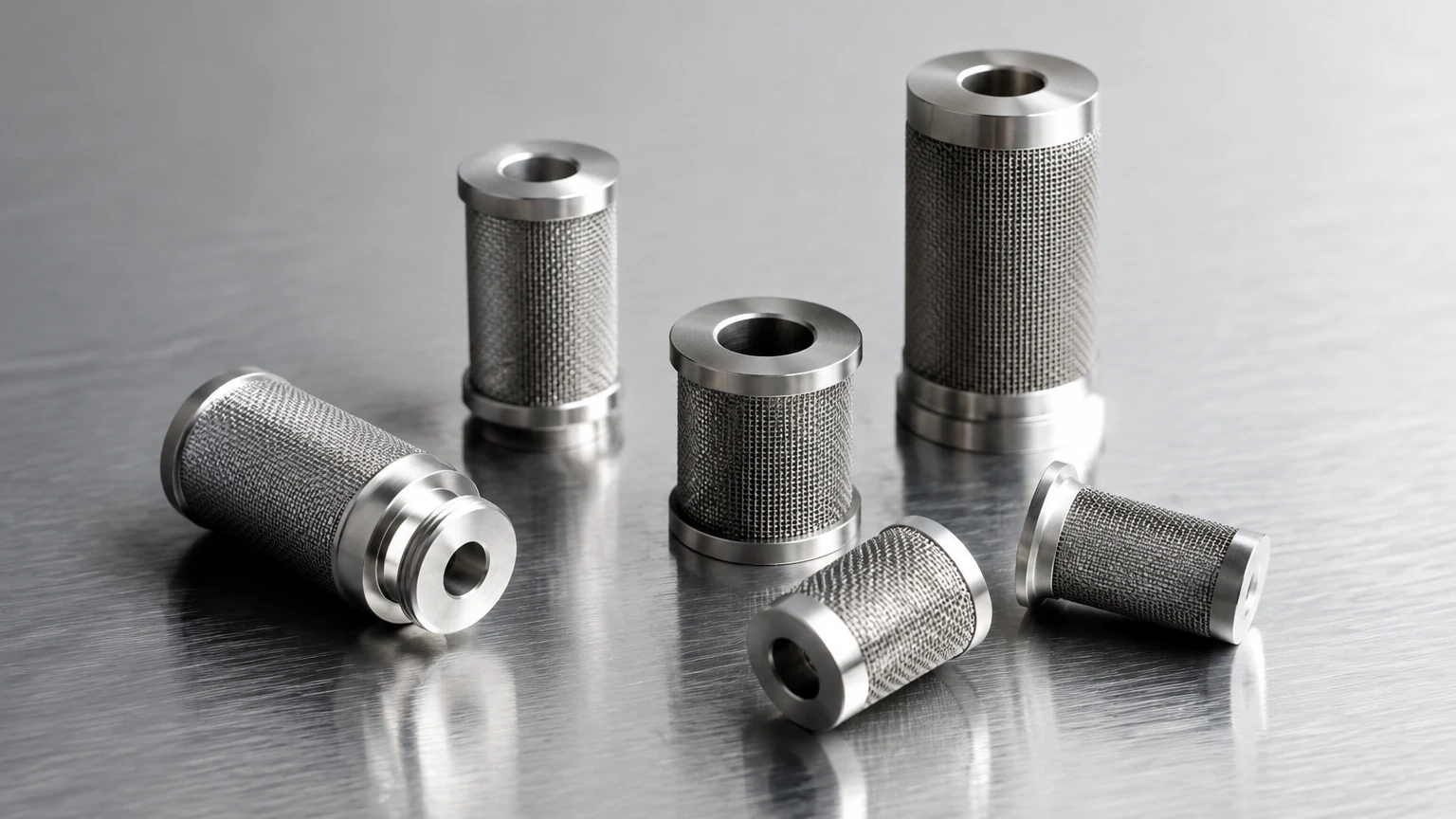
In many industrial projects, standard off-the-shelf components may not meet the exact spatial or performance requirements of a custom-built machine. This is where OEM (Original Equipment Manufacturer) capabilities become essential. Manufacturers specializing in stainless steel filtration, such as Kaifil, can produce gas flow restrictors in custom geometries, including threaded fittings, disc shapes, or integrated cartridge designs.
Customization allows engineers to specify the exact micron rating and flow characteristics needed for a unique application. By working closely with a manufacturer during the design phase, purchasing teams can ensure that the final product is optimized for both performance and total cost of ownership. For more information on specialized filtration and flow control components, engineers can visit the Main Page to explore technical specifications and customization options.
Conclusion: Selecting the Right Solution
The selection of a gas flow restrictor is a technical decision that impacts the accuracy, safety, and efficiency of an entire industrial system. By opting for porous stainless steel designs, engineers gain the benefits of laminar flow, high durability, and resistance to clogging. When evaluating suppliers, it is important to focus on those with a proven track record in precision sintering and material science.
Understanding the variables of pressure, temperature, and gas type allows for the implementation of a flow control solution that requires minimal maintenance and provides years of reliable service. As industrial processes become increasingly automated and sensitive, the role of the humble but highly engineered gas flow restrictor remains a cornerstone of successful fluid management.
