


Glass Filter Funnel
In the transition from laboratory research to industrial-scale production, the glass filter funnel serves as a foundational tool for liquid-solid separation. For engineers and technical professionals in the chemical, pharmaceutical, and food processing industries, understanding the nuances of laboratory filtration is essential for ensuring successful scale-up. While glass components are ubiquitous in R&D, their performance characteristics and limitations directly influence the design of larger, more robust industrial filtration systems.
This guide examines the technical specifications of the glass filter funnel, its operational parameters, and the critical factors that dictate when a process should transition from glass-based laboratory setups to high-performance stainless steel filtration solutions.
Fundamentals of Glass Filter Funnels in Industrial R&D
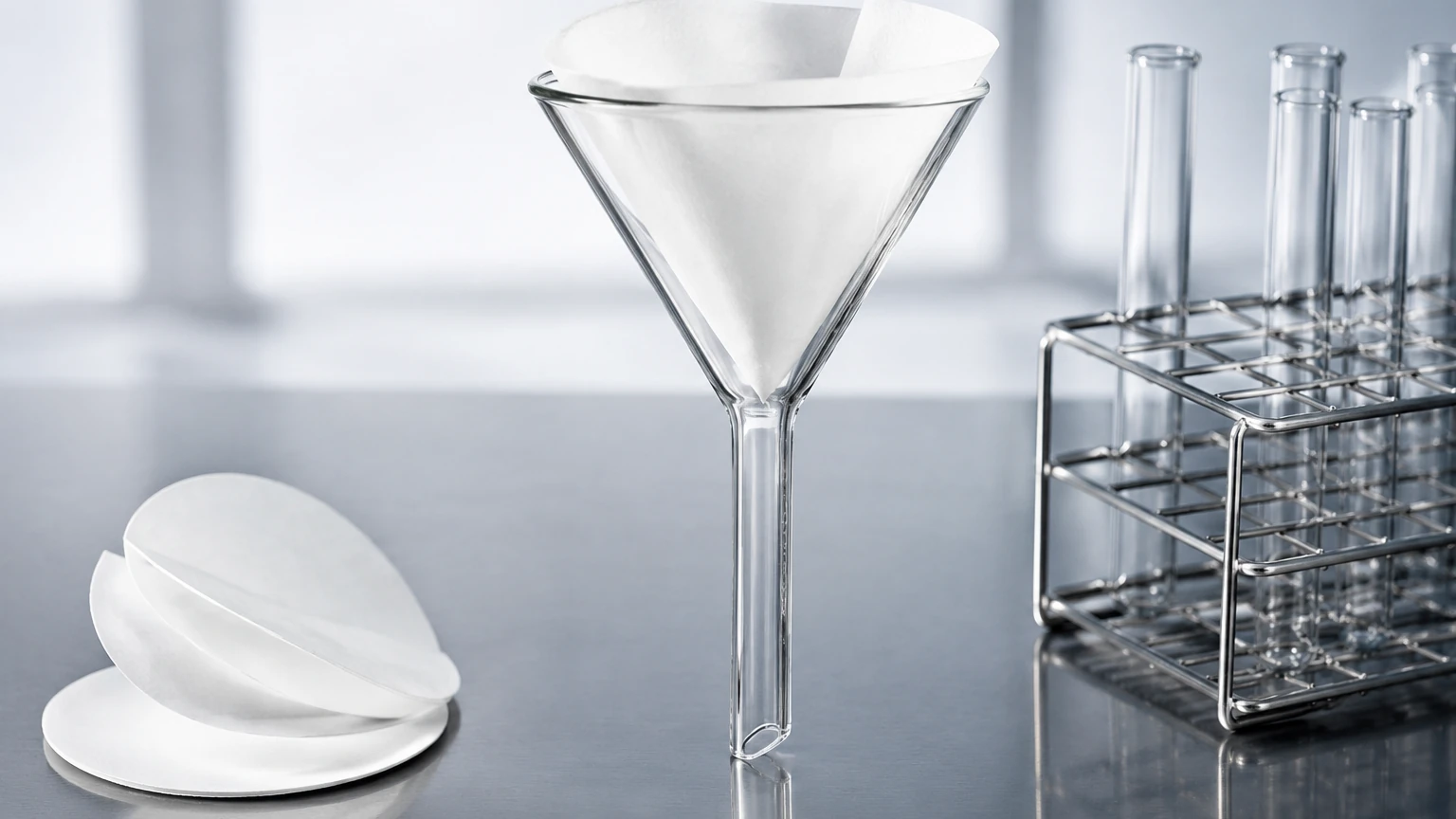
A glass filter funnel is a precision instrument designed to separate solids from liquids through a porous medium. In industrial research and development, these funnels are primarily used for small-batch processing, quality control testing, and pilot-scale experiments. The most common material used is borosilicate glass 3.3, favored for its exceptional thermal shock resistance and broad chemical compatibility.
There are two primary configurations used in professional settings:
1. Plain Glass Funnels: These require a secondary filter medium, such as filter paper or a membrane, to achieve the desired level of particle retention.
2. Fritted Glass Funnels (Buchner Style): These feature an integrated porous glass disc (the "frit") fused into the funnel body. This design eliminates the need for separate filter papers, reducing the risk of bypass and contamination, which is critical in high-purity pharmaceutical applications.
Engineers select these tools based on the volume of the slurry, the chemical nature of the filtrate, and the required clarity of the final product. Understanding the interaction between the fluid and the glass surface is the first step in optimizing any filtration workflow.
Porosity Grades and Filtration Efficiency
The most critical specification of a fritted glass filter funnel is its porosity grade. In the international standard (ISO 4793), porosity is categorized by the nominal maximum pore size, usually measured in micrometers (µm). Selecting the correct grade is a balance between filtration speed and retention efficiency.
* Grade P160 (G0): Pore size 160–250 µm. Used for coarse filtration and gas dispersion.
* Grade P100 (G1): Pore size 100–160 µm. Suitable for coarse precipitates and large crystalline solids.
* Grade P40 (G2): Pore size 40–100 µm. Often used in preparative work for medium-sized particles.
* Grade P16 (G3): Pore size 16–40 µm. A standard grade for analytical filtration and fine precipitates.
* Grade P10 (G4): Pore size 10–16 µm. Used for very fine precipitates and analytical work requiring high clarity.
* Grade P4 (G5): Pore size 1.0–4.0 µm. Designed for bacteria-retentive filtration and ultrafine particle removal.
For technical teams, identifying the particle size distribution (PSD) of the solids is mandatory before selecting a funnel grade. If the pores are too large, the filtrate will be contaminated; if they are too small, the funnel will clog rapidly, leading to excessive downtime and potential product degradation due to prolonged exposure to the filtration environment.
Engineering Considerations for Vacuum Filtration
Most industrial-grade glass filter funnels are designed for use with vacuum assistance to accelerate the filtration rate. This process, known as Buchner filtration, involves creating a pressure differential across the filter medium. However, using a glass filter funnel under vacuum introduces specific engineering risks and requirements.
Pressure Differentials
Glass is inherently strong under compression but weak under tension. When a vacuum is applied, the external atmospheric pressure exerts force on the funnel walls. Engineers must ensure that the glassware is rated for the intended vacuum level. Standard borosilicate funnels can typically handle a full vacuum (approx. 1 bar), provided there are no scratches or structural defects. Even a minor surface abrasion can act as a stress concentrator, leading to an implosion under vacuum.
Flow Rate and Surface Area
The effective filtration area (EFA) of the funnel determines the throughput. In a B2B context, where time-to-market and process efficiency are KPIs, calculating the flow rate per unit area (flux) is essential. If a glass funnel cannot meet the required flux during pilot testing, it signals that the eventual industrial system will require significant surface area, often achieved through pleated stainless steel cartridges or multi-plate filter presses.
Maintenance, Sterilization, and Handling Protocols
To maintain the integrity of the filtration process, strict maintenance protocols must be followed. Unlike disposable filter media, fritted glass funnels are intended for reuse, making cleaning validation a priority.
Cleaning Procedures
Residual solids trapped within the glass frit can lead to cross-contamination or reduced flow rates in subsequent batches. Standard cleaning involves back-flushing with a suitable solvent or a strong oxidizing agent, such as a hot sulfuric acid and nitric acid mixture, to dissolve organic residues. For inorganic clogs, specific chemical cleaners must be chosen based on the solubility of the contaminant.
Sterilization
In the pharmaceutical and food sectors, sterilization is non-negotiable. Borosilicate glass filter funnels can be autoclaved or sterilized using dry heat. However, rapid temperature changes must be avoided to prevent thermal stress. Engineers should specify a gradual heating and cooling ramp to ensure the longevity of the equipment.
Limitations of Glass and the Shift to Industrial Metal Filtration
While the glass filter funnel is an excellent tool for development, it has inherent limitations that make it unsuitable for high-volume industrial production. Recognizing these limitations is crucial for purchasing teams and project managers.
1. Fragility: Glass is susceptible to mechanical impact. In a high-traffic industrial environment, the risk of breakage leads to safety hazards and costly production halts.
2. Pressure Constraints: Glass funnels are generally limited to vacuum filtration (negative pressure). Industrial processes often require high-pressure filtration (positive pressure) to handle high-viscosity liquids or to achieve faster throughput, which necessitates metal housings.
3. Scaling Issues: Large-diameter glass funnels are difficult to manufacture and even more difficult to handle safely. When a process scales beyond 10–20 liters, the transition to stainless steel becomes a logistical and economic necessity.
4. Cleaning Complexity: Validating the cleanliness of a porous glass frit in a regulated environment is significantly more difficult than validating a smooth, electropolished stainless steel surface or a replaceable wire mesh filter.
Selecting the Right Filtration Partner for Scale-up
As a project moves from the laboratory bench to the production floor, the filtration requirements evolve from simple glass funnels to complex, high-durability systems. This is where the expertise of a professional manufacturer becomes invaluable. For those looking to transition their filtration processes, visiting the Main Page of an industry leader like Kaifil provides access to advanced stainless steel filtration solutions that overcome the limitations of laboratory glassware.
Kaifil specializes in custom stainless steel filter cartridges, wire mesh filters, and precision metal components designed for the most demanding industrial environments. By replacing fragile glass components with robust metal alternatives, companies can achieve:
* Higher Durability: Stainless steel filters withstand mechanical shock and high-pressure differentials that would shatter glass.
* Enhanced Cleanability: Metal filters, especially those made from sintered wire mesh, can be ultrasonically cleaned and reused over thousands of cycles, offering a lower total cost of ownership.
* Customization: Unlike standardized glass funnels, stainless steel filtration units can be custom-engineered to fit specific piping configurations, flow rates, and chemical environments.
Conclusion: Bridging the Gap in Filtration Technology
The glass filter funnel remains an indispensable tool for the initial stages of product development. Its transparency allows engineers to observe the cake formation and filtrate clarity in real-time, providing vital data for process optimization. However, the successful commercialization of a product depends on the ability to translate these laboratory results into a scalable, safe, and efficient industrial process.
By understanding the technical boundaries of glass filtration—from porosity grades to vacuum safety—technical professionals can better prepare for the eventual shift to industrial-grade hardware. When the time comes to scale, partnering with a manufacturer that understands the rigors of chemical, pharmaceutical, and industrial filtration ensures that the precision achieved in the lab is maintained at the production scale. For more information on durable, high-performance filtration components, exploring the resources available on the Main Page is the recommended next step for engineering and procurement teams seeking to optimize their filtration infrastructure.
