


Glass Filtration
In the industrial landscape, glass filtration represents a specialized challenge that requires a deep understanding of material science, fluid dynamics, and mechanical durability. Whether the objective is the recovery of precious glass fines from grinding slurries, the purification of cooling water in a float glass line, or the management of chemical baths in optical lens production, the choice of filtration media is paramount. For engineers and procurement specialists, navigating the complexities of glass filtration involves moving beyond generic solutions to identify components that can withstand abrasive particles, high temperatures, and corrosive environments.
Industrial glass processing—including cutting, grinding, and polishing—generates significant amounts of particulate matter. These glass shards and fines are not only abrasive but can also vary significantly in size and geometry. Effective glass filtration systems must be designed to handle these characteristics without frequent clogging or structural failure. This article examines the technical requirements of filtration in glass-related industries and provides a guide for selecting the most appropriate stainless steel filtration components.
Understanding the Requirements of Glass Filtration
The term "glass filtration" often refers to the removal of glass particles from a liquid carrier, such as water or oil-based coolants. Because glass is an amorphous solid with high hardness, the particles generated during manufacturing are exceptionally sharp and abrasive. This abrasiveness poses a risk to standard polymer-based filter media, which can suffer from premature erosion or tearing.
In precision applications, such as the manufacturing of smartphone screens or optical components, the filtration system must achieve high levels of clarity. Even sub-micron glass dust can cause surface defects during subsequent processing stages. Therefore, the filtration media must offer a stable pore structure that does not bypass under pressure. Stainless steel wire mesh and sintered metal components are frequently preferred in these scenarios due to their rigid geometry and resistance to the mechanical wear typical of glass slurry management.
Material Selection for Demanding Environments
When specifying filters for glass filtration, the material of construction is the first line of defense. Most industrial glass processes involve water-based coolants, but some utilize acidic or alkaline cleaning agents.
Stainless Steel 304 vs. 316L
For standard glass grinding and washing applications, Type 304 stainless steel offers a cost-effective solution with sufficient corrosion resistance. However, in environments involving saline solutions or harsh chemicals, Type 316L is the industry standard. The addition of molybdenum in 316L provides superior resistance to pitting and crevice corrosion, which is essential for long-term reliability in chemical glass etching or specialized lens coating processes.
High-Temperature Resilience
Certain stages of glass production involve high-temperature fluids. Unlike synthetic fibers that may soften or degrade at temperatures exceeding 100°C, stainless steel filtration components maintain their structural integrity at significantly higher thresholds. This makes them ideal for filtering molten glass precursors or high-temperature steam used in glass tempering and cleaning.
Engineering Considerations for High-Performance Filters
Selecting a filter for glass filtration requires a balance between filtration accuracy (micron rating) and system throughput. Engineers must evaluate several technical parameters to ensure the filter performs according to specifications.
Micron Rating and Pore Geometry
In glass filtration, the target particle size can range from several hundred microns in raw cullet processing to less than 1 micron in final polishing stages.
* Plain Weave Mesh: Suitable for high-flow applications where the primary goal is removing large shards.
* Dutch Weave Mesh: Offers a more tortuous path and higher filtration density, making it effective for capturing fine glass dust while maintaining high mechanical strength.
* Sintered Metal Fiber: For the most demanding sub-micron applications, sintered fiber felt provides high porosity and excellent dirt-holding capacity, extending the time between cleaning cycles.
Pressure Drop and Flow Rates
As glass particles accumulate on the surface of the filter, a "filter cake" forms. While this cake can actually improve filtration efficiency, it also increases the pressure drop across the media. Engineers must calculate the Clean Pressure Drop (CPD) and define the Terminal Pressure Drop (TPD) at which the filter must be cleaned or replaced. Using a filter with a high open-area percentage helps maintain lower operational costs by reducing the energy required for pumping.
Structural Integrity and Pleating
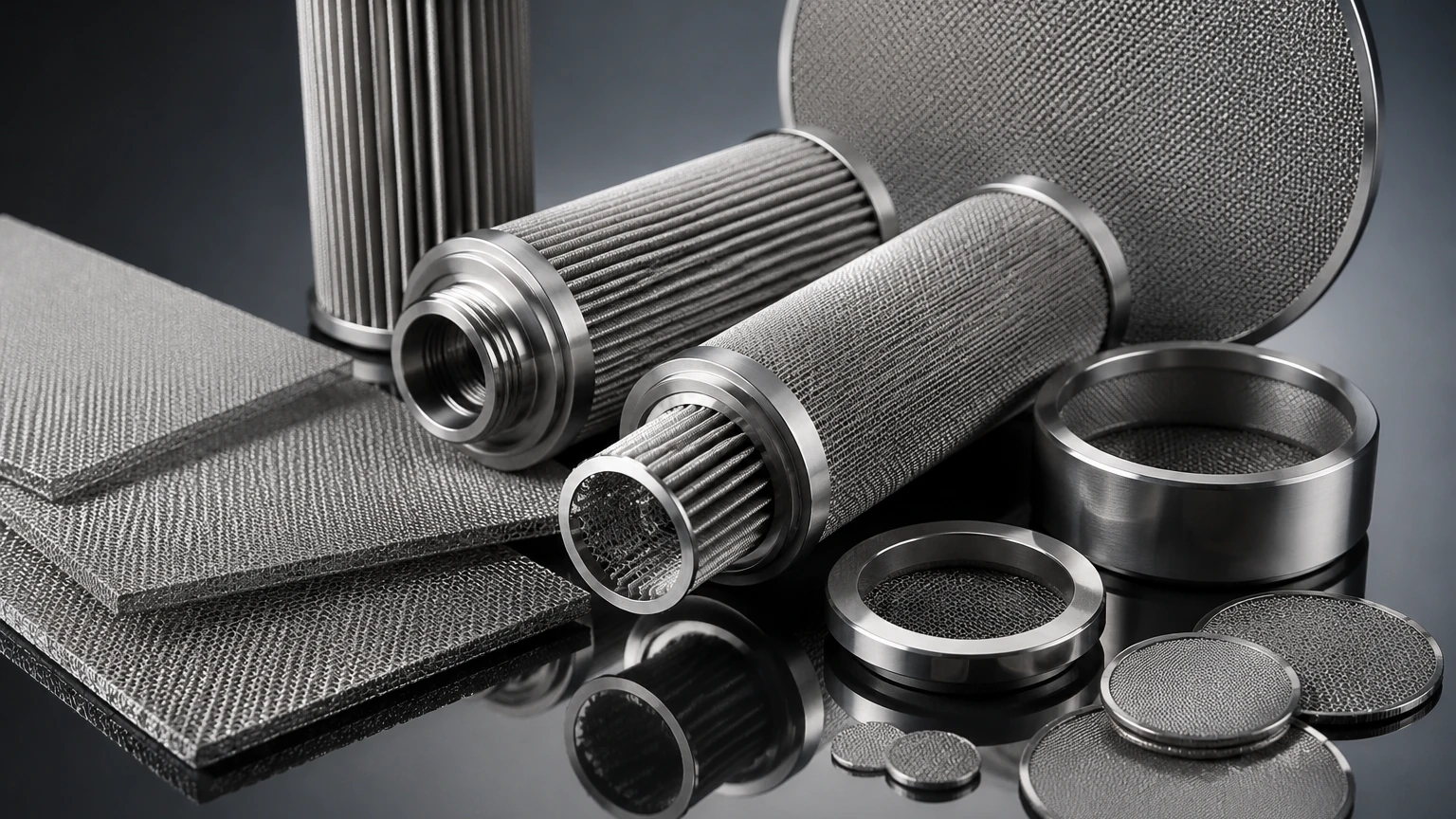
To maximize the filtration surface area within a compact footprint, stainless steel media is often pleated. In glass filtration, the pleats must be expertly engineered to prevent "pleat bunching" under high-pressure pulses. Reinforced support layers are often added to the filter cartridge to ensure that the mesh remains stable even when subjected to the heavy weight of accumulated glass fines.
Applications of Metal Filters in the Glass Industry
Stainless steel filtration solutions are utilized across various segments of the glass industry, each with unique operational demands.
1. Grinding and Polishing Slurry Recovery
In the production of mirrors, windows, and automotive glass, grinding fluids are used to cool the cutting tools and wash away debris. These fluids are expensive and are typically recycled. A multi-stage glass filtration system uses coarse stainless steel mesh to remove large chips, followed by fine sintered cartridges to remove microscopic glass dust. This protects the high-pressure pumps and ensures the recycled fluid does not scratch the glass surface.
2. Glass Washing Machines
Before coating or tempering, glass sheets must be chemically cleaned. The wash water must be free of any particulates that could interfere with the adhesion of coatings. Stainless steel filter cartridges are used here because they do not shed fibers (unlike some fabric filters) and can be easily sterilized or chemically cleaned.
3. Cullet Processing
Recycled glass, or cullet, must be cleaned of contaminants before being remelted. Filtration systems in these plants often deal with large volumes of water containing glass fragments, paper labels, and organic residue. Heavy-duty stainless steel screens are essential for the primary separation phase.
Evaluating the Total Cost of Ownership (TCO)
For procurement teams, the initial purchase price of a filter is only one component of the total cost. In glass filtration, where the media is subjected to constant abrasion, the longevity of the filter is a critical factor.
Disposable vs. Cleanable Media
While polymer-based disposable filters have a lower upfront cost, they must be frequently replaced and disposed of as hazardous waste if contaminated with certain glass additives. Stainless steel filters are an investment in sustainability and long-term savings. They are cleanable and reusable. Methods such as ultrasonic cleaning, backwashing, or chemical dipping can restore a stainless steel filter to near-original performance levels, significantly reducing the cost per liter of filtered fluid over the life of the equipment.
Maintenance and Replacement Cycles
The durability of metal filters means fewer system shutdowns for filter changes. In high-volume glass production lines, where downtime can cost thousands of dollars per hour, the reliability of a robust stainless steel filter cartridge provides a substantial operational advantage.
Customization Options for OEM Filtration Solutions
No two glass manufacturing processes are identical. Factors such as the chemical composition of the glass, the viscosity of the coolant, and the specific geometry of the machinery require customized filtration components.
When partnering with a manufacturer like Kaifil, engineers can specify custom dimensions, end-cap configurations (such as DOE, 222, or 226), and specialized reinforcement layers. Customization ensures that the filter fits perfectly into existing housing and meets the exact micron requirements of the application. For those looking to optimize their current systems or develop new filtration hardware, visiting the Main Page provides a comprehensive overview of available technical configurations and manufacturing capabilities.
Information for Technical Confirmation
Before finalizing a glass filtration specification, engineers should confirm the following data points with their supplier:
1. Particle Size Distribution (PSD): A detailed understanding of the glass fines being targeted.
2. Chemical Compatibility: Ensuring the filter seals (O-rings) and metal alloys are compatible with any additives in the cooling or cleaning fluids.
3. Operating Pressure and Temperature: Both steady-state and peak values.
4. Cleaning Protocol: Confirming that the filter structure can withstand the intended cleaning method (e.g., high-pressure backpulsing).
By focusing on these technical boundaries, industrial operators can implement glass filtration solutions that enhance product quality, protect downstream equipment, and reduce environmental impact through efficient fluid recycling. Stainless steel remains the material of choice for these demanding applications, offering a combination of precision, strength, and long-term economic value.
