


Guard Bed Reactor
In high-value industrial processing, particularly within the petrochemical, chemical, and refining sectors, the longevity and efficiency of primary catalytic reactors are paramount. The guard bed reactor serves as the first line of defense in these complex systems. By acting as a sacrificial unit, it captures contaminants—ranging from physical particulates like scale and catalyst fines to chemical poisons like sulfur, arsenic, or lead—before they can reach and deactivate the expensive catalyst beds in the main reactor.
For engineers and procurement specialists, understanding the technical nuances of guard bed reactor design and the filtration components that support them is essential for maintaining process uptime and optimizing the total cost of ownership. This guide explores the engineering principles, material requirements, and selection criteria for the filtration solutions that ensure these reactors perform reliably in demanding environments.
The Fundamental Role of a Guard Bed Reactor
A guard bed reactor is strategically positioned upstream of a main process reactor, such as a hydrocracker, reformer, or isomerization unit. Its primary function is to protect the downstream catalyst from fouling and poisoning. Fouling occurs when solid particles accumulate in the catalyst bed, increasing pressure drop and restricting flow. Poisoning occurs when chemical impurities irreversibly bind to the catalyst's active sites, destroying its reactivity.
The guard bed typically contains a less expensive, high-surface-area material or a specialized adsorbent designed to trap these impurities. However, the effectiveness of the adsorbent bed is heavily dependent on the mechanical filtration components that hold the media in place and prevent particulate bypass. High-quality stainless steel internals, such as those found on the Main Page of specialized manufacturers like Kaifil, are critical for maintaining the structural integrity of these systems.
Mechanical Filtration vs. Chemical Adsorption
While the term "guard bed" often refers to the chemical media inside the vessel, the system's success relies on a synergy between mechanical filtration and chemical adsorption.
Particulate Removal
Mechanical filtration involves the physical trapping of solids. In a guard bed reactor, this is achieved through scale traps, inlet baskets, and support grids. These components must be engineered to withstand high velocity and turbulent flow without vibrating or collapsing. Common particulates include pipe scale, corrosion products, and fines from upstream equipment.
Chemical Scavenging
Chemical adsorption involves the use of specialized pellets or beads that react with dissolved impurities. For example, a lead guard bed will use a specific adsorbent to remove trace lead from a naphtha stream. If the mechanical support structures (like center pipes or outlet collectors) fail, these adsorbent beads can migrate into the main reactor, causing catastrophic damage. Therefore, the precision of the wire mesh and the durability of the stainless steel filter cartridges used as internals are non-negotiable.
Engineering Considerations for Reactor Internals
Designing filtration components for a guard bed reactor requires a deep understanding of fluid dynamics and metallurgy. Engineers must account for several critical factors to ensure the system does not become a bottleneck.
Pressure Drop (Delta P) Management
Every filtration stage introduces a resistance to flow. In a guard bed, the pressure drop must be carefully monitored. An excessive initial Delta P reduces the available operating window before the bed requires servicing. Precision-engineered stainless steel wire mesh provides a high open area, which minimizes resistance while maintaining strict micron ratings.
Flow Distribution
Non-uniform flow, or "channeling," can lead to premature breakthrough. If the fluid moves faster through one section of the guard bed, the adsorbent in that area will saturate quickly while other areas remain unused. Effective internal design uses perforated plates and specialized mesh laminates to ensure even distribution across the entire bed diameter.
Thermal and Chemical Stability
Guard bed reactors often operate at elevated temperatures and pressures. Material selection is critical; while SS304 may suffice for some water treatment applications, chemical processing often requires SS316L, Duplex stainless steel, or high-nickel alloys to resist stress corrosion cracking and hydrogen embrittlement.
Common Contaminants and Removal Mechanisms
To select the right filtration media, one must first identify the nature of the contaminants present in the feedstock.
1. Inorganic Solids: These include rust (iron oxide), sand, and silt. They are typically removed using multi-layered stainless steel wire mesh filters that offer depth-loading capabilities.
2. Catalyst Fines: Small fragments of catalyst from upstream reactors can migrate through the system. These require high-precision filtration, often in the range of 5 to 25 microns, to prevent them from clogging the downstream bed.
3. Gums and Polymers: In some hydrocarbon streams, organic compounds can polymerize and form sticky deposits. These require robust, cleanable filter elements that can withstand aggressive solvent cleaning or thermal burnout.
4. Metallic Poisons: Elements like mercury or arsenic are usually handled by the guard bed's chemical media, but the support structures must be compatible with the specific chemistry of the adsorbent to prevent galvanic corrosion.
Selection Criteria for Filter Components
When specifying filtration components for a guard bed reactor, engineers should evaluate products based on the following technical benchmarks:
* Micron Rating (Absolute vs. Nominal): For protecting sensitive catalysts, absolute micron ratings are preferred to ensure that no particles above a certain size can pass through.
* Mechanical Strength: Internals must resist the "crush pressure" exerted by the weight of the catalyst bed and the force of the fluid flow. This often involves reinforcing wire mesh with perforated metal cores.
* Ease of Maintenance: In many B2B industrial environments, downtime is the most significant cost. Filter cartridges that are easily accessible and cleanable reduce the time required for turnaround.
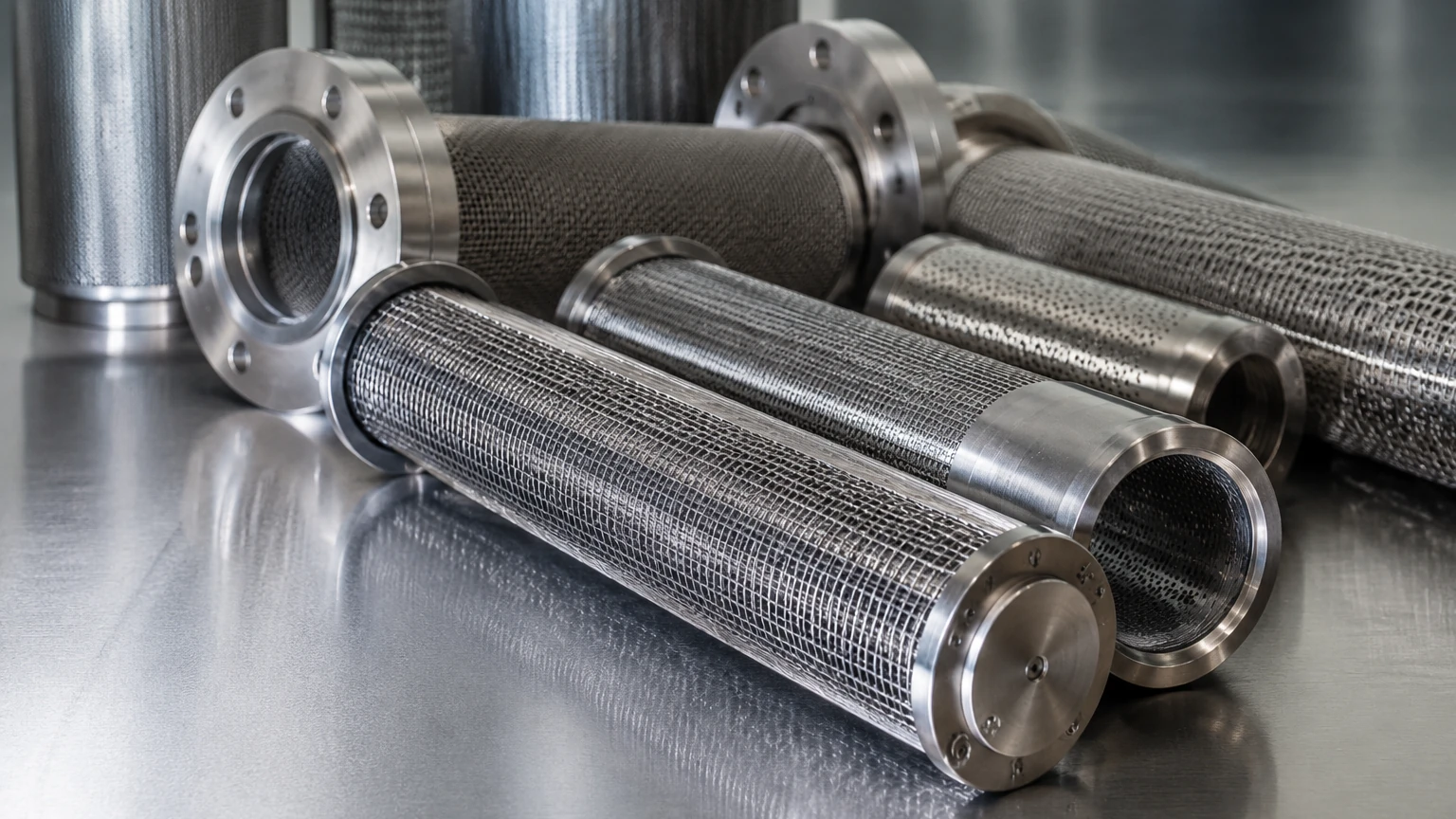
* Customization Options: Since no two reactors are identical, the ability to customize the diameter, length, and fitting type of the filter elements is essential. Manufacturers like Kaifil specialize in these OEM solutions, providing tailored components that fit existing vessel architectures.
The Importance of Material Quality in Corrosive Environments
The durability of a guard bed reactor is only as good as its weakest component. In applications involving sour gas or acidic chemical intermediates, standard carbon steel is insufficient. Stainless steel filtration solutions are the industry standard due to their passive oxide layer, which provides exceptional resistance to oxidation and chemical attack.
When sourcing components, it is vital to confirm material certifications (MTRs). For instance, using SS316L (low carbon) prevents sensitization during welding, which is a common failure point in high-temperature reactor internals. Precision in the weaving of the wire mesh also ensures consistent pore size, which is critical for maintaining the integrity of the filtration barrier over thousands of hours of operation.
Maintenance Cycles and Replacement Strategies
A proactive maintenance strategy for guard bed reactors involves monitoring the pressure differential across the bed. A sudden spike in Delta P usually indicates a heavy slug of particulates, while a gradual increase is expected as the bed loads over time.
Replacement cycles are determined by:
* Adsorbent Saturation: When the chemical media can no longer remove poisons (detected via outlet sampling).
* Mechanical Clogging: When the pressure drop reaches the design limit of the vessel or the compressor capacity.
Using high-quality, cleanable stainless steel filters can extend these cycles by allowing for periodic backwashing or mechanical cleaning, rather than requiring a full replacement of the filtration hardware every time the adsorbent is changed.
Total Cost of Ownership (TCO) in Industrial Filtration
While the initial purchase price of a high-performance stainless steel filter may be higher than disposable alternatives, the TCO is significantly lower. In a B2B context, the cost of a single hour of unplanned downtime in a chemical plant can exceed the entire cost of the filtration system.
By investing in robust guard bed reactor internals, facilities benefit from:
1. Extended Main Catalyst Life: Reducing the frequency of expensive catalyst changeouts.
2. Reduced Energy Consumption: Lower average pressure drops mean pumps and compressors work less hard.
3. Improved Product Quality: Consistent removal of contaminants ensures the final product meets stringent purity specifications.
Conclusion: Selecting a Reliable Partner
Successfully implementing a guard bed reactor strategy requires more than just purchasing a vessel; it requires a deep technical partnership with a manufacturer that understands the rigors of industrial filtration. From selecting the correct micron rating for wire mesh filters to designing custom stainless steel filter cartridges that can withstand high-pressure differentials, the engineering details make the difference between a reliable process and a frequent maintenance headache.
For those seeking to optimize their filtration performance, reviewing technical specifications and application-specific designs is the next logical step. Reliable manufacturers provide the expertise needed to navigate material selection and mechanical design, ensuring that the guard bed reactor serves its purpose as a dependable shield for the heart of the industrial process. For more information on customized filtration components and engineering support, engineers are encouraged to explore the resources available on the Main Page of industry-leading providers.
