


Hobby Maple Syrup Filter Press
In the production of high-quality maple syrup, the transition from raw sap to a finished, shelf-stable product requires meticulous attention to clarity and purity. For small-scale producers and dedicated enthusiasts, the hobby maple syrup filter press represents a significant technological step up from traditional gravity-fed filtration methods. While the scale may be smaller than industrial operations, the engineering principles remain the same: achieving precise particle separation while maintaining the organoleptic properties of the syrup. Understanding the technical specifications, material requirements, and operational mechanics of these systems is essential for any producer looking to achieve professional-grade results.
The Fundamentals of Maple Syrup Clarification
During the evaporation process, as sap is concentrated into syrup, minerals—primarily calcium malate—precipitate out of the solution. These precipitates are commonly referred to as "sugar sand" or "niter." If left in the final product, niter creates a cloudy appearance, imparts a gritty texture, and can even affect the flavor profile and shelf life of the syrup.
Filtration is the mechanical process of removing these solids. In a hobby maple syrup filter press, this is achieved by forcing the hot syrup through a series of filter media under pressure. Unlike gravity filtration, which relies on the weight of the liquid to pass through felt or synthetic bags, a pressurized system ensures a much higher degree of consistency. The goal is to reach a level of clarity that meets or exceeds grading standards, which often requires removing particles down to the 1-5 micron range. For those seeking advanced filtration components to optimize these systems, visiting the Main Page of a specialized manufacturer can provide insights into the stainless steel technologies that drive modern industrial separation.
Technical Components of a Hobby Maple Syrup Filter Press
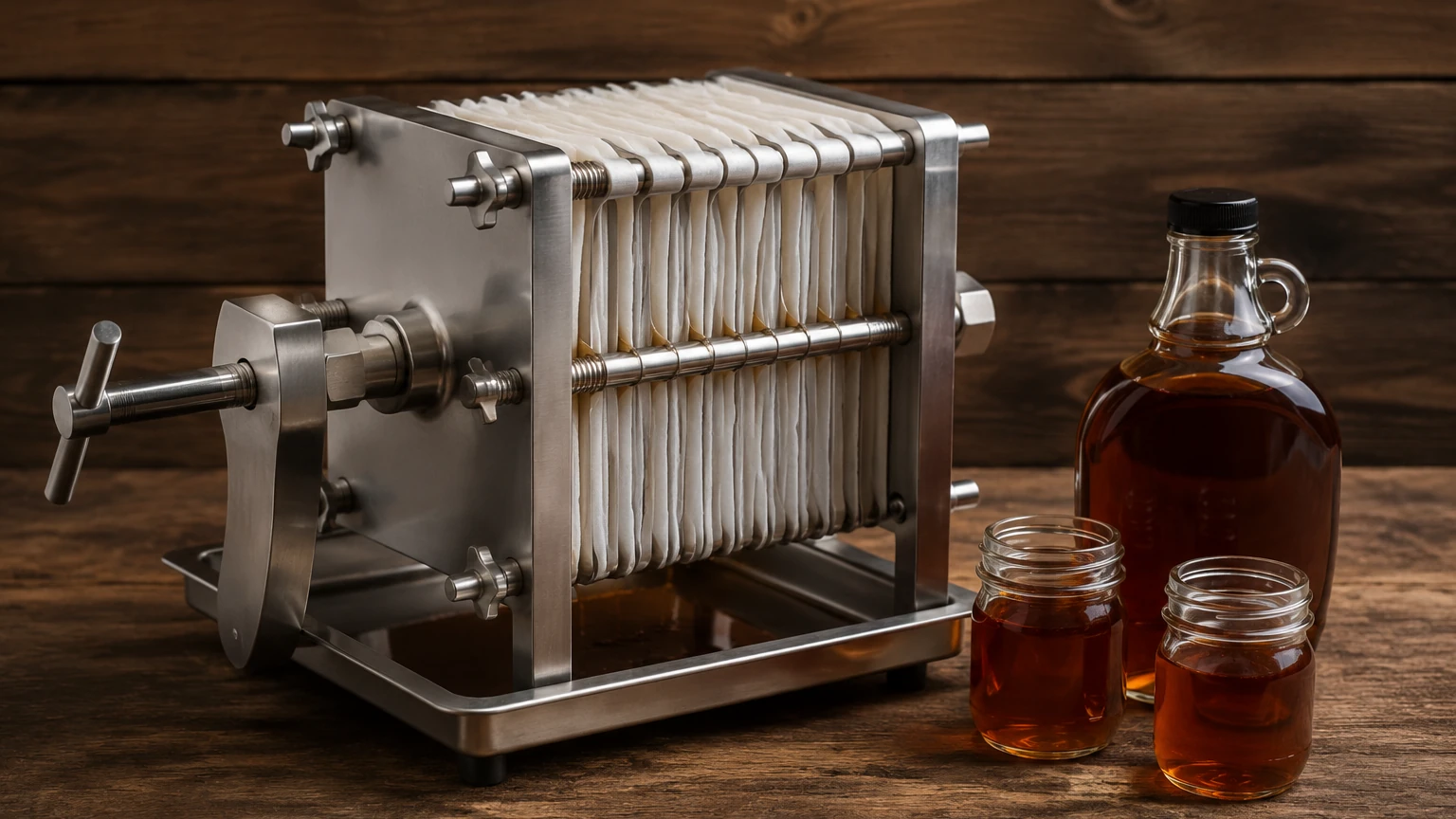
A standard hobby-scale filter press is typically a plate-and-frame design, scaled down for manageable batch sizes. Understanding the individual components is vital for evaluating the performance and durability of the unit.
1. Filter Plates and Frames
These are the core of the press. In a hobby maple syrup filter press, plates are often made of food-grade aluminum or, preferably, 304/316 stainless steel. Stainless steel is favored in professional and high-end hobby applications due to its superior corrosion resistance and ease of sterilization. The plates provide the structural support for the filter media, while the frames create the chambers where the niter is collected.
2. The Pump System
Pressure is provided by a pump, usually a diaphragm or gear pump capable of handling high temperatures. Maple syrup must be filtered while hot—ideally between 180°F and 190°F (82°C to 88°C)—to maintain a low viscosity. If the syrup cools, its viscosity increases exponentially, making it difficult to pump and significantly reducing filtration efficiency.
3. Filter Media (Papers and Powder)
Most presses use a combination of filter papers and Diatomaceous Earth (DE), also known as filter aid. The DE is mixed into the syrup before filtration to form a "pre-coat" on the filter papers. This porous layer traps the fine niter particles while allowing the liquid syrup to pass through, preventing the filter papers from clogging prematurely (a condition known as blinding).
Material Selection and Food Safety Standards
When selecting a hobby maple syrup filter press, material compatibility is the most critical engineering consideration. Maple syrup is naturally slightly acidic and is processed at high temperatures, which can accelerate the leaching of metals if the wrong materials are used.
* Stainless Steel (304/316): This is the gold standard for food processing. It does not react with the syrup, is easy to clean, and withstands the thermal shock of repeated heating and cooling cycles. Manufacturers like Kaifil specialize in these high-performance alloys to ensure long-term reliability in industrial environments.
* Food-Grade Plastics: Some hobby units use high-density polyethylene (HDPE) or other plastics for frames. While cost-effective, these materials have lower thermal limits and may warp over time if subjected to boiling syrup temperatures.
* Gaskets and Seals: These must be made of food-grade silicone or Viton to ensure they do not impart off-flavors or degrade under heat and pressure.
Evaluating Filtration Efficiency and Micron Ratings
The efficiency of a hobby maple syrup filter press is measured by its ability to maintain flow rate while achieving the desired clarity. In engineering terms, this involves balancing the "flux" (flow per unit area) against the "differential pressure" (the pressure drop across the filter media).
As the filter chambers fill with niter and DE, the differential pressure will rise. A well-designed press will allow for a significant accumulation of solids before the pressure reaches the pump's limit. For a hobbyist, a press that can process 5 to 10 gallons of syrup before requiring a teardown and cleaning is generally considered efficient.
Micron ratings are also a key metric. While raw sugar sand can vary in size, the most stubborn particles are often smaller than 10 microns. A high-quality press setup, utilizing the correct grade of DE and high-retention filter papers, can effectively clarify syrup to a brilliant, sediment-free state. For producers looking to scale their operations, integrating precision-engineered stainless steel mesh or sintered metal filters can further refine this process, providing more robust and reusable alternatives to disposable paper media.
Operational Challenges and Maintenance Protocols
Operating a hobby maple syrup filter press requires a disciplined approach to prevent equipment failure and ensure product quality. Common challenges include:
* Thermal Management: If the press is not pre-heated by running hot water through it before the syrup, the initial surge of syrup will cool rapidly upon contact with the cold metal plates. This can cause the syrup to "sugar up" inside the press, leading to immediate blockages.
* Air Leaks: Because these systems operate under pressure, even a small air leak on the suction side of the pump can introduce bubbles into the syrup, which may lead to oxidation or foaming issues during bottling.
* Cleaning and Sanitation: After each use, the press must be completely disassembled. Any residual syrup left in the plates or lines can harbor mold or bacteria. Stainless steel components are advantageous here, as they can withstand caustic cleaning agents and high-pressure steam if necessary.
Transitioning from Gravity to Pressure Filtration
For many hobbyists, the decision to invest in a hobby maple syrup filter press comes when their production volume exceeds 20-30 gallons per season. Gravity filtration, while inexpensive, is slow and often requires multiple passes to achieve professional clarity. It also results in more "sweetwater" loss—syrup trapped in the thick felt filters.
A filter press minimizes waste by compressing the filter cake, squeezing out as much syrup as possible. The speed of a pressurized system also allows producers to bottle their syrup immediately after boiling, which preserves the delicate flavor compounds that can be lost if the syrup is held at high temperatures for extended periods during slow gravity filtration.
When evaluating the total cost of ownership, producers should consider not just the initial purchase price, but the cost of consumables (DE and papers) and the value of the time saved. A robustly engineered press made from high-quality metal components will often pay for itself through increased yield and higher-grade product pricing.
Conclusion: Selecting the Right Filtration Solution
The choice of a hobby maple syrup filter press should be guided by technical requirements rather than just price. Engineers and serious producers must look for units that offer consistent pressure, food-safe material construction, and ease of maintenance. By applying industrial-grade filtration principles to the hobby sugarhouse, producers can ensure that every drop of syrup meets the highest standards of clarity and quality.
For those interested in exploring the broader applications of precision filtration or sourcing custom stainless steel components for specialized processing needs, Review product options and application support to see how professional manufacturing expertise can enhance filtration performance across various industries. Whether you are refining maple syrup or managing complex chemical separation, the right filtration hardware is the foundation of a successful process.
