


Horizontal Filter Separators
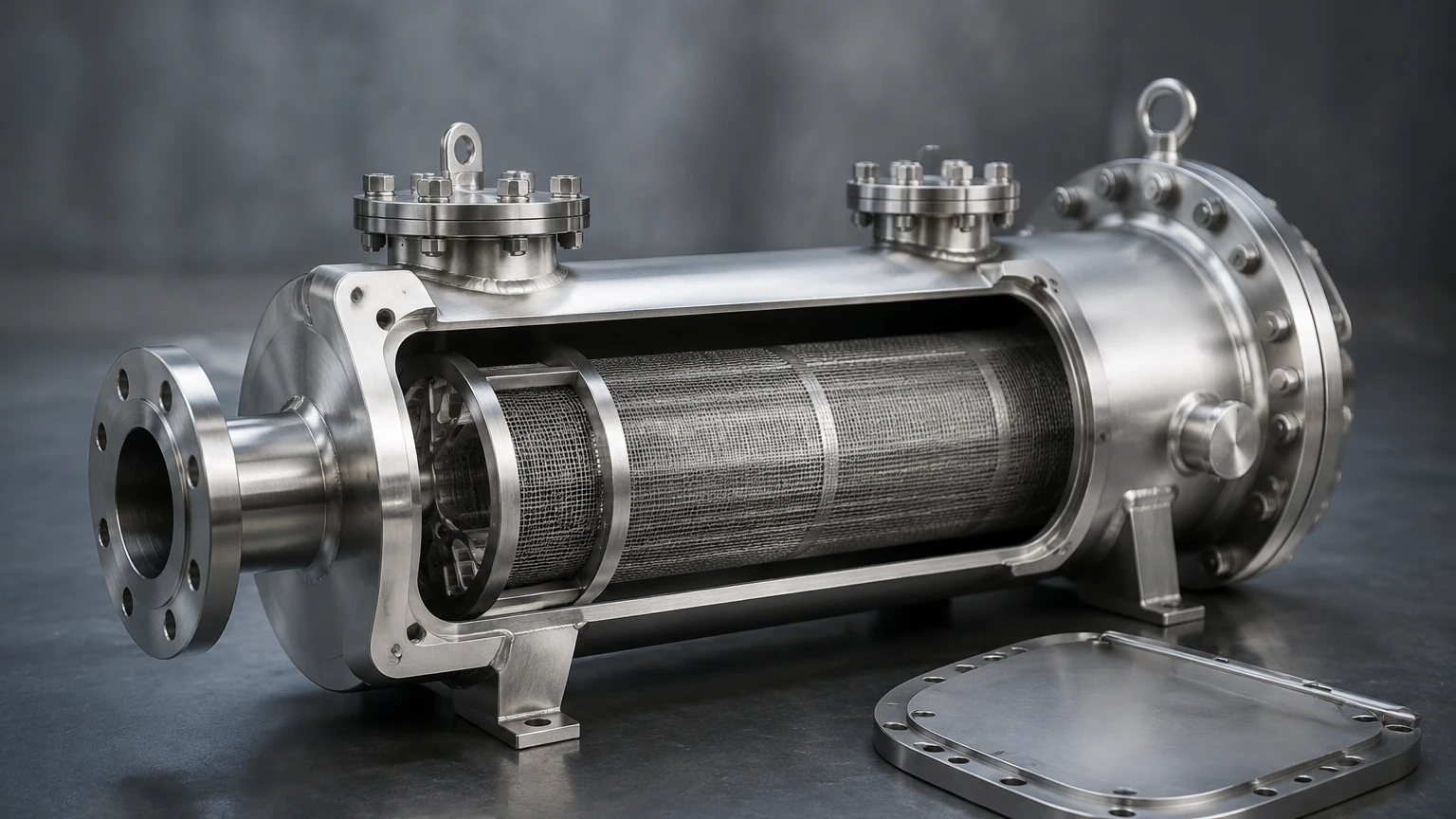
In the landscape of industrial fluid dynamics, horizontal filter separators represent a critical engineering solution for the removal of entrained liquids and solid contaminants from gas or liquid streams. These vessels are foundational in sectors such as natural gas processing, chemical manufacturing, and large-scale hydraulic systems where the purity of the medium directly impacts the longevity of downstream equipment. Unlike vertical configurations, horizontal filter separators are specifically engineered to handle high liquid loading and provide a larger surface area for phase separation, making them indispensable for high-volume industrial applications.
For engineers and procurement professionals, understanding the internal mechanics and material specifications of these systems is essential. Selecting the right filtration media—often involving precision-engineered stainless steel wire mesh or specialized filter cartridges—determines the overall efficiency and maintenance frequency of the system. As a professional manufacturer, Kaifil provides the technical components necessary to optimize these separators for demanding environments.
The Role of Horizontal Filter Separators in Industrial Processing
Horizontal filter separators are primarily utilized when a process stream contains a significant volume of liquid mist or solid particulates that must be removed to protect compressors, turbines, or sensitive chemical reactors. The horizontal orientation is advantageous because it allows for a longer residence time and a larger interface area, facilitating the gravitational settling of heavier phases.
In gas processing, for instance, these separators prevent "slugs" of liquid from entering gas compressors, which could lead to catastrophic mechanical failure. In liquid-liquid applications, they are used to separate immiscible fluids, such as oil from water, by utilizing the differences in density and the coalescing properties of internal filter elements. The design must account for the gas flux, liquid loading, and the specific gravity of the contaminants to ensure that the velocity of the stream does not bypass the filtration stages.
Mechanical Design and Separation Stages
A standard horizontal filter separator typically operates in two or more distinct stages. Each stage is designed to address specific particle sizes and phases, ensuring a high degree of separation efficiency.
The First Stage: Coalescence and Pre-filtration
The primary stage usually consists of a bank of filter-coalescer cartridges. As the contaminated stream enters the vessel, it passes through these elements. The filter media—often constructed from multi-layered stainless steel wire mesh or synthetic fibers—traps solid particulates while simultaneously forcing small liquid droplets to merge into larger ones. This process, known as coalescence, is vital because larger droplets are easier to remove from the stream in the subsequent stage.
The Second Stage: Mist Extraction
Once the droplets have been coalesced, the stream moves into the second stage, which often features a mist extractor, such as a vane pack or a wire mesh pad. These components provide a tortuous path for the gas. As the gas changes direction rapidly through the mesh or vanes, the heavier liquid droplets strike the surfaces, adhere to them, and eventually drain into a collection sump at the bottom of the vessel. The horizontal design allows for a dedicated liquid collection area that does not interfere with the ongoing flow of the processed gas or liquid.
Key Components: Filter Cartridges and Coalescing Elements
The performance of horizontal filter separators is heavily dependent on the quality and design of the internal filter elements. These components must be engineered to withstand the specific chemical and thermal conditions of the application.
Stainless steel filter cartridges are frequently preferred in industrial settings due to their structural integrity and resistance to corrosion. These cartridges can be customized with various weave patterns, such as plain weave, twill weave, or Dutch weave, depending on the required filtration accuracy. For high-pressure environments, sintered wire mesh elements provide the necessary mechanical strength to resist deformation under high differential pressure ($ΔP$).
When evaluating these components, engineers must consider the micron rating—the size of the smallest particle the filter can reliably capture. In horizontal separators, the coalescing elements often require a fine micron rating to capture sub-micron aerosols, while the mist extraction stage handles larger droplets. For more detailed technical specifications on available filtration media, professionals can refer to the Main Page of the manufacturer’s technical catalog.
Material Selection and Engineering Standards
Material compatibility is a non-negotiable factor in the design of horizontal filter separators. The choice of metal for the filter mesh and housing determines the system's resistance to oxidation, sulfidation, and chemical attack.
1. Stainless Steel 304: Suitable for general industrial applications where basic corrosion resistance is required.
2. Stainless Steel 316/316L: The industry standard for chemical processing and offshore oil and gas applications. The addition of molybdenum provides superior resistance to chlorides and pitting.
3. Specialty Alloys: In highly acidic or high-temperature environments, alloys like Monel or Inconel may be used for the wire mesh components to ensure long-term durability.
Beyond material type, the physical construction of the mesh—including wire diameter and pore distribution—must be precisely controlled. Precision metal filter components ensure that the flow remains laminar where necessary and that the pressure drop across the vessel remains within the design limits. If the mesh is too dense, the pressure drop will be excessive, increasing energy costs; if it is too sparse, separation efficiency will drop, risking downstream contamination.
Performance Evaluation: Pressure Drop and Efficiency
The efficiency of a horizontal filter separator is measured by its ability to achieve a specific "cleanliness level" in the outlet stream. This is typically expressed as the percentage of contaminants removed at a specific micron size (e.g., 99.9% removal of particles 0.3 microns and larger).
However, efficiency must be balanced against the pressure drop. A high initial $ΔP$ indicates that the filter elements may be undersized or that the media is too restrictive for the flow rate. Engineers use the following criteria to evaluate performance:
* Flux Rate: The volume of fluid passing through a unit area of the filter media. Maintaining an optimal flux rate is essential to prevent "re-entrainment," where liquid droplets are stripped off the filter surface by high-velocity gas.
* Liquid Handling Capacity: The maximum volume of liquid the separator can collect and drain without affecting the filtration process.
* Turndown Ratio: The ability of the separator to maintain efficiency even when the flow rate fluctuates significantly below the design maximum.
Operational Maintenance and Replacement Cycles
Maintaining horizontal filter separators involves monitoring the differential pressure across the filter stages. As solid contaminants accumulate on the surface of the filter cartridges, the $ΔP$ will gradually increase.
Monitoring and Cleaning
Most industrial systems are equipped with differential pressure gauges and automated alarms. A common "change-out" point for filter cartridges is when the $ΔP$ reaches 10-15 psi over the clean pressure drop. In some applications, stainless steel filter elements can be cleaned using ultrasonic baths or backwashing, extending their service life and reducing the total cost of ownership. However, in applications involving heavy waxes or polymers, replacement may be the only viable option.
Replacement Considerations
When replacing internal components, it is vital to ensure that the new elements meet the original equipment manufacturer (OEM) specifications. Variations in mesh density or cartridge length can lead to bypassing, where the fluid takes the path of least resistance around the filter rather than through it. Regular inspection of the seals and gaskets is also necessary to prevent internal leaks between the separation stages.
Customization and OEM Integration
No two industrial processes are identical, and horizontal filter separators often require customization to meet specific site conditions. This includes variations in vessel diameter, the number of filter elements, and the inclusion of specialized drainage systems.
Kaifil specializes in providing customized stainless steel filtration solutions that integrate seamlessly into existing horizontal separator designs. Whether the requirement is for a specific micron rating in a pharmaceutical process or a high-strength sintered mesh for a hydraulic system, customization ensures that the filtration performance is optimized for the specific fluid properties and flow conditions.
Engineers should work closely with manufacturers to confirm the chemical compatibility of the filter media and the mechanical requirements of the vessel. By providing detailed parameters—such as operating temperature, maximum pressure, and the nature of the contaminants—procurement teams can ensure they receive components that offer the best balance of performance and longevity.
Summary of Selection Criteria for Engineers
When specifying or purchasing components for horizontal filter separators, the following checklist serves as a guide for technical confirmation:
* Filtration Accuracy: Define the required micron rating based on downstream equipment sensitivity.
* Flow Conditions: Confirm the maximum and minimum flow rates (turndown) to ensure the vessel and elements are sized correctly.
* Fluid Properties: Identify the viscosity, density, and chemical composition of both the continuous and dispersed phases.
* Structural Requirements: Ensure the filter elements can withstand the maximum possible differential pressure without collapsing.
* Maintenance Access: Verify that the vessel design allows for the easy removal and installation of filter cartridges during scheduled shutdowns.
By focusing on these technical boundaries, industrial operations can achieve reliable, high-performance separation that protects critical infrastructure and optimizes process efficiency. For further information on custom metal filtration components and engineering support, visiting the Main Page provides access to a wide range of industrial filtration resources.
