


How to Size a Pool Filter
In industrial water treatment and large-scale commercial aquatic facilities, filtration is the primary line of defense against particulate accumulation, biological growth, and mechanical wear on downstream equipment. Selecting the correct filter size is not merely a matter of following a manufacturer’s chart; it requires a rigorous engineering approach that considers hydraulic flow rates, turnover requirements, and the physical properties of the filtration media.
For engineers and facility managers, understanding how to size a pool filter involves balancing the desired water clarity with the operational constraints of the pump system and the long-term durability of the filter housing. This guide examines the technical parameters required to specify a filtration system that ensures optimal performance and reduced maintenance cycles.
Understanding the Relationship Between Volume and Turnover
The first step in sizing any filtration system is determining the total volume of water in the system. While residential pools use simplified calculations, industrial-scale applications must account for surge tanks, piping volume, and specific geometric configurations.
Calculating Total Water Volume
For a standard rectangular pool, the formula is:
Length × Width × Average Depth × 7.48 (gallons per cubic foot).
For complex or irregular shapes, the volume is often calculated by dividing the pool into sections or using flow meters during the initial fill. Once the total volume is established, the next critical metric is the turnover rate. The turnover rate is the period required to circulate the entire volume of the pool through the filtration system once.
In commercial and industrial settings, turnover rates are often mandated by local health codes or process requirements, typically ranging from 4 to 6 hours for high-load public pools and up to 8 hours for less frequently used installations.
Calculating the Required Flow Rate (GPM)
Once the volume and turnover rate are defined, the engineer must calculate the Design Flow Rate (DFR) in Gallons Per Minute (GPM). This is the amount of water the filter must be able to process continuously to meet the turnover goal.
The formula for Flow Rate is:
*Total Pool Volume ÷ (Turnover Rate in Hours × 60 minutes) = Required GPM.*
For example, a 100,000-gallon commercial pool requiring a 6-hour turnover would need a filtration system capable of handling approximately 277 GPM. It is essential to size the filter based on this flow rate rather than the maximum capacity of the pump. A common error in system design is installing a high-head pump that exceeds the filter’s maximum flow velocity, which can lead to media migration, structural damage to the filter elements, and poor filtration efficiency.
Determining Filter Surface Area Requirements
The efficiency of a filtration system is largely dependent on the "filter media rate," which is the flow rate per square foot of effective filtration area. Different types of media have different maximum flow velocities.
Filtration Media Comparisons
1. Sand Filters: Typically operate at 15–20 GPM per square foot. While robust, they require significant space and frequent backwashing.
2. Cartridge Filters: Generally sized at 0.25 to 0.50 GPM per square foot for high-clarity applications. They offer superior surface area in a smaller footprint.
3. Stainless Steel Wire Mesh Filters: In industrial applications, precision metal mesh filters provide high-velocity capabilities with exceptional durability. These are often used when chemical compatibility or high-temperature resistance is required.
To find the required filter area, divide the Required GPM by the Media Rate. Using the previous example of 277 GPM and assuming a cartridge filtration rate of 0.375 GPM/sq. ft., the facility would require approximately 738 square feet of filtration area.
Engineering Considerations: Pressure Drop and Hydraulic Resistance
When evaluating how to size a pool filter, engineers must account for the Total Dynamic Head (TDH) of the system. Every component—pipes, valves, heaters, and the filter itself—contributes to hydraulic resistance.
Clean vs. Dirty Pressure Drop
A filter’s resistance increases as it captures debris. A well-sized system should have a low "clean" pressure drop (typically under 2–5 PSI) to allow for a significant "dirt loading" capacity before the system reaches its maximum operational pressure. If the filter is undersized, the pressure will rise rapidly, necessitating frequent cleaning and increasing the energy consumption of the pump as it struggles to maintain the required flow rate.
In custom industrial applications, using high-quality components from a Main Page of a specialized manufacturer ensures that the filter housing and internal elements are engineered to minimize turbulence and maximize effective surface area.
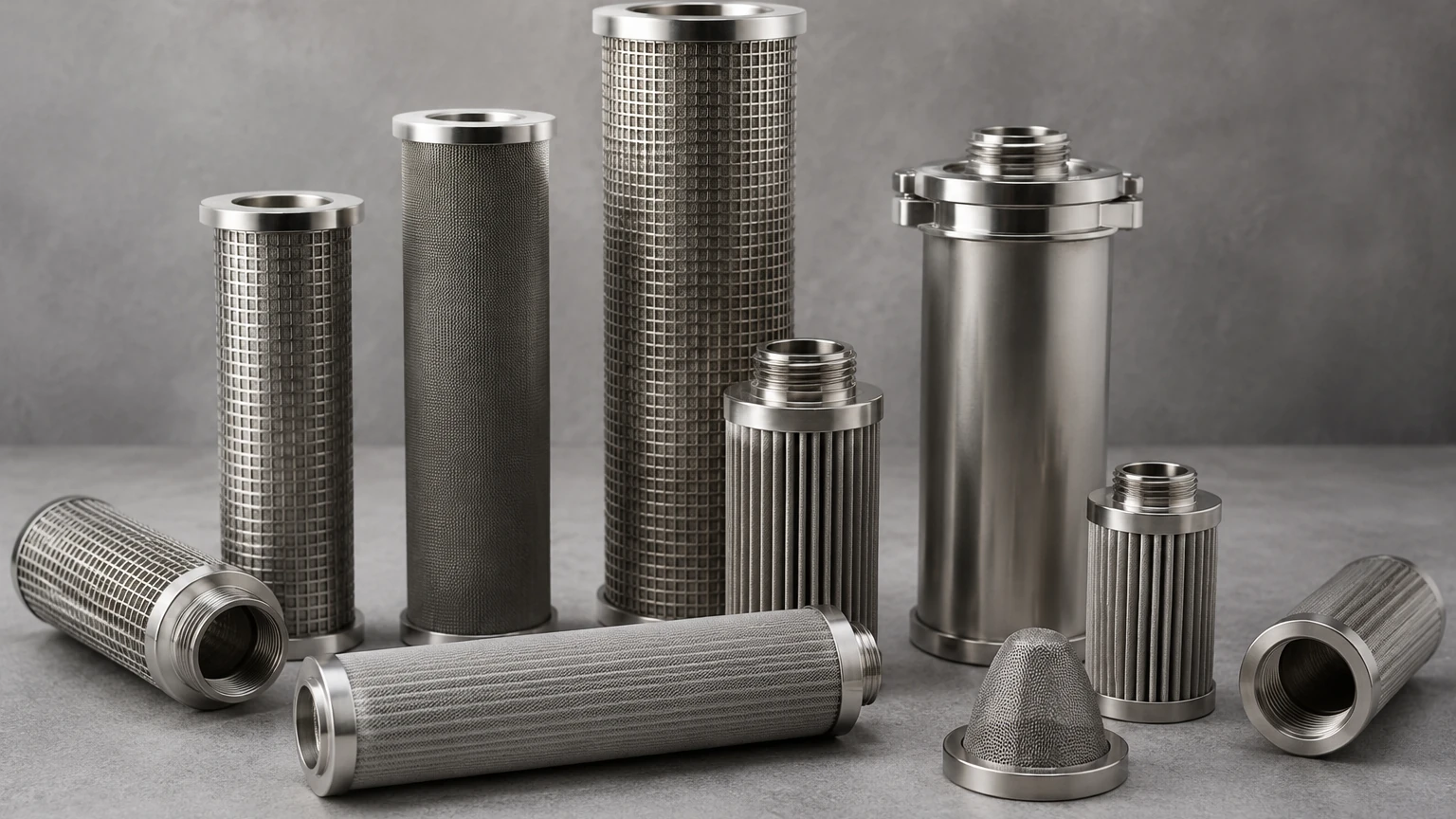
The Advantages of Stainless Steel and Custom Filtration Components
In demanding environments, such as chemical processing water or high-use commercial aquatic centers, standard plastic or fiberglass filter housings may lack the necessary structural integrity. Stainless steel filtration solutions offer several technical advantages:
* Corrosion Resistance: Stainless steel (304 or 316L) is resistant to the corrosive effects of chlorine, bromine, and other sanitizing chemicals used in water treatment.
* Pressure Tolerance: Metal housings can withstand higher operating pressures and water hammer effects that might rupture composite tanks.
* Precision Micron Ratings: Custom wire mesh filters allow for precise control over the particle size being removed. This is critical for protecting sensitive downstream equipment like UV sterilizers or heat exchangers.
* Longevity: Unlike synthetic cartridges that degrade over time, stainless steel mesh elements can often be cleaned and reused, reducing the total cost of ownership.
Common Risks of Improper Filter Sizing
Failure to accurately size a filtration system leads to several operational failures that can be costly to remediate.
Undersizing Risks
An undersized filter forces water through the media at excessive velocities. This phenomenon, known as "channeling," creates paths of least resistance through the media, allowing unfiltered water and contaminants to bypass the filter entirely. Furthermore, high velocity can cause "bridge failure" in cartridges, where the pleats collapse, or even mechanical failure of the internal support structures.
Oversizing Considerations
While oversizing a filter is generally safer than undersizing, it is not without drawbacks. An excessively large filter may result in flow velocities that are too low to effectively distribute water across the entire media surface, leading to stagnant zones within the filter housing. Additionally, the initial capital expenditure and the space requirements must be balanced against the marginal gains in filtration intervals.
Maintenance Cycles and Total Cost of Ownership (TCO)
For B2B purchasing teams, the decision-making process should extend beyond the initial purchase price. A filter that is sized correctly for the application will significantly reduce labor costs associated with cleaning and replacement.
When specifying a system, consider the following:
* Cleaning Frequency: A larger surface area extends the time between maintenance cycles.
* Replacement Part Availability: Custom-engineered solutions from established manufacturers ensure that replacement mesh or cartridges meet the original engineering specifications.
* Energy Efficiency: A filter with a lower pressure drop allows the pump to operate at a lower RPM (if using a Variable Frequency Drive), leading to substantial energy savings over the life of the system.
Technical Specification Checklist
Before finalizing a filter selection, engineers should confirm the following data points with their supplier:
1. Maximum Operating Pressure: Does it exceed the pump’s shut-off head?
2. Chemical Compatibility: Are the gaskets, O-rings, and media resistant to the specific water chemistry?
3. Micron Rating: Is the filtration fineness appropriate for the target contaminants without causing premature blinding?
4. Connection Sizes: Do the inlet and outlet ports match the system piping to avoid restrictive flow bottlenecks?
By following these technical guidelines on how to size a pool filter, facility managers can ensure their water treatment systems operate with maximum reliability. For those requiring specialized components or custom-engineered filtration housings, consulting with a manufacturer that specializes in stainless steel and precision metal mesh is the most effective way to ensure system longevity.
For more information on high-performance filtration components and custom OEM solutions, visit the Main Page to explore technical specifications and application support for industrial-grade water treatment.
