


Hydraulic Filter Housing Assembly
In industrial hydraulic systems, the hydraulic filter housing assembly serves as the critical interface between the fluid power circuit and the filtration media. While the filter element performs the actual task of removing contaminants, the housing assembly provides the structural integrity required to withstand system pressures, manage fluid flow, and facilitate maintenance. For engineers and procurement teams, understanding the technical nuances of housing design is essential for ensuring system reliability and preventing catastrophic component failure.
A hydraulic filter housing assembly is more than a simple container; it is a precision-engineered pressure vessel designed to operate under varying thermal and mechanical stresses. Selecting the correct assembly requires a deep dive into pressure ratings, flow dynamics, material compatibility, and the specific requirements of the application environment.
Core Components of a Hydraulic Filter Housing Assembly
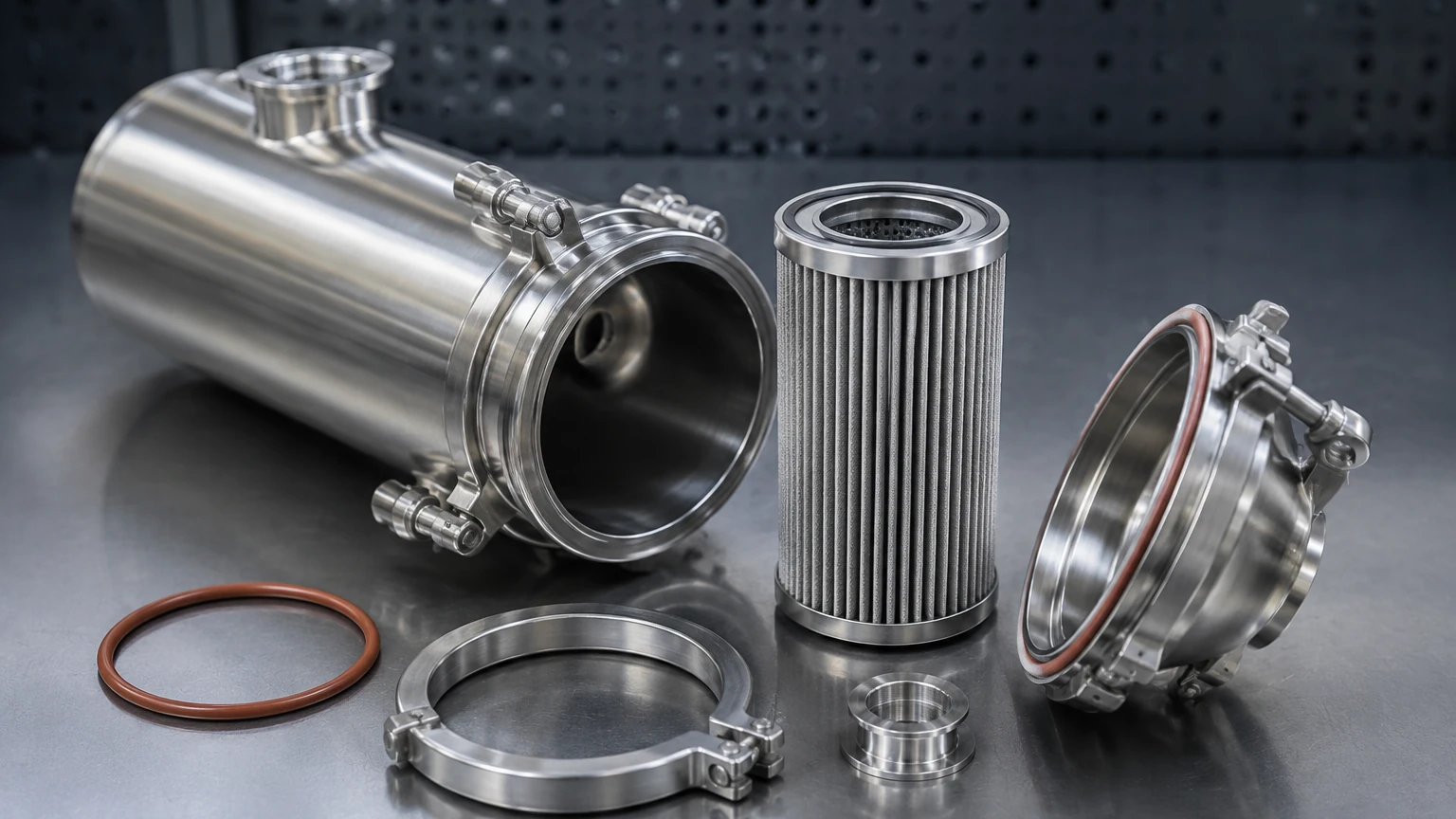
A standard industrial hydraulic filter housing assembly consists of several integrated components, each serving a specific functional role. Understanding these parts helps in troubleshooting and specifying custom solutions.
The Filter Head
The head is the primary structural component that connects the assembly to the hydraulic lines. It contains the inlet and outlet ports and often houses the bypass valve and the differential pressure indicator ports. In high-pressure applications, the head is typically manufactured from high-strength materials like ductile iron or stainless steel to prevent fatigue-related cracking.
The Filter Bowl or Canister
The bowl is the section of the assembly that contains the filter element. Depending on the mounting configuration—whether it is a top-loading or bottom-loading design—the bowl must be easily removable for element replacement while maintaining a leak-proof seal during operation. For high-pressure systems, the bowl is often threaded into the head or secured with high-tensile bolts.
The Bypass Valve
To protect the system from fluid starvation, most assemblies include a bypass valve. If the filter element becomes clogged and the pressure drop (differential pressure) exceeds a specific threshold, the bypass valve opens, allowing fluid to circumvent the filter. While this introduces unfiltered fluid into the system, it prevents the filter element from collapsing and ensures that downstream components continue to receive lubrication.
Seals and O-Rings
Sealing integrity is paramount. Depending on the hydraulic fluid used—whether mineral-based oils, water glycols, or phosphate esters—the seals must be made of compatible materials such as Nitrile (Buna-N), Viton (FKM), or EPDM. Improper seal selection is a leading cause of external leaks and internal fluid bypassing.
Engineering Specifications and Performance Metrics
When evaluating a hydraulic filter housing assembly, engineers must look beyond basic dimensions. The performance of the assembly is dictated by several key engineering metrics.
Pressure Ratings: Static vs. Dynamic
Hydraulic systems are categorized into low-pressure (return line), medium-pressure, and high-pressure (pressure line) segments. It is vital to distinguish between the nominal working pressure and the fatigue pressure rating. A housing might be rated for a static pressure of 400 bar, but in a system with high-frequency pressure ripples or water hammer effects, its dynamic fatigue rating might be significantly lower. Engineers should specify housings that have been tested for millions of cycles at the expected peak operating pressure.
Flow Fatigue and Pressure Drop (ΔP)
The internal geometry of the housing assembly influences the "clean pressure drop." Every bend and transition within the head and bowl creates turbulence and resistance. An efficient design minimizes this initial pressure drop, leaving more "room" for the pressure to increase as the filter element captures contaminants. This extends the effective service life of the element.
Porting Options
Standardization in porting is essential for ease of installation. Common port types include SAE straight threads, NPT (National Pipe Thread), and BSPP (British Standard Parallel Pipe). For high-flow industrial applications, flange mounts (such as SAE J518) are often preferred to provide a more robust connection that is less prone to vibration-induced loosening.
Material Selection for Demanding Environments
The choice of material for the housing assembly is dictated by the operating environment and the fluid chemistry. While aluminum is common for mobile equipment due to its light weight, industrial and process applications often require more robust materials.
Stainless Steel for Corrosive Applications
In industries such as chemical processing, offshore oil and gas, or food and beverage, carbon steel or aluminum housings may succumb to corrosion. Stainless steel (304 or 316L) is the preferred material for these environments. Stainless steel housing assemblies offer superior resistance to chemical attack and can withstand higher temperature ranges without losing structural integrity. Furthermore, in pharmaceutical or food-grade applications, the non-reactive nature of stainless steel prevents fluid contamination.
Ductile Iron and Carbon Steel
For standard high-pressure hydraulic circuits where weight is not the primary concern, ductile iron provides excellent fatigue resistance and strength. These are commonly used in heavy industrial machinery, such as presses and injection molding machines, where the assembly must endure constant pressure cycling.
Installation and Assembly Best Practices
The longevity of a hydraulic filter housing assembly is often determined by the quality of the initial installation. Improper mounting or torqueing can lead to premature failure.
1. Orientation and Clearance: The assembly should be mounted in a position that allows for easy access to the bowl. Sufficient clearance must be maintained to remove the filter element without disconnecting the entire housing from the system. For bottom-loading housings, this means ensuring there is enough space beneath the unit to drop the bowl.
2. Seal Lubrication: Before assembly, O-rings and seals should be lightly lubricated with the system fluid. This prevents the seals from pinching or tearing during the threading process, which is a common cause of "weeping" leaks.
3. Torque Specifications: Over-tightening the bowl can deform the seals or strip the threads, while under-tightening can lead to leaks under pressure. Manufacturers provide specific torque values that must be followed using calibrated tools.
4. Bleeding Air: After installation or element replacement, air trapped in the housing can cause cavitation or erratic system behavior. Many high-quality assemblies include a bleed plug at the highest point of the head to allow for the safe evacuation of trapped air.
Maintenance, Monitoring, and Replacement Cycles
Maintaining a hydraulic filter housing assembly involves more than just changing the element. It requires a systematic approach to monitoring the health of the filtration system.
Differential Pressure Indicators
To avoid unnecessary downtime or the risk of running in bypass mode, assemblies should be equipped with differential pressure indicators. These can be visual (a pop-up button or color-coded gauge) or electrical (sending a signal to a PLC). These indicators tell the operator exactly when the element has reached its dirt-holding capacity, based on the pressure differential between the inlet and outlet.
Element Replacement Protocols
When replacing the filter element, the interior of the bowl should be inspected for sediment or metallic particles. The presence of large metal chips may indicate a failing pump or actuator upstream. It is also a best practice to replace the housing seals every time the element is changed to ensure continued leak-free performance.
Total Cost of Ownership (TCO)
When purchasing a housing assembly, procurement teams should consider the total cost of ownership rather than just the initial purchase price. A cheaper housing may have a higher clean pressure drop, leading to higher energy costs for the pump, or it may use proprietary elements that are expensive and difficult to source. Selecting an assembly that uses standard-sized, high-performance elements can lead to significant long-term savings.
Customization and OEM Considerations
For many specialized industrial applications, off-the-shelf housing assemblies may not meet specific spatial or functional requirements. This is where OEM and customized filtration solutions become necessary.
Customization options often include:
* Specialized Porting: Manifold mounting or custom flange patterns to fit into tight machine envelopes.
* High-Temperature Seals: Utilizing Kalrez or other high-performance elastomers for extreme thermal environments.
* Integrated Sensors: Adding temperature sensors or oil condition monitoring ports directly into the filter head.
* Multi-Chamber Designs: Duplex filter assemblies that allow for element replacement without shutting down the system, which is critical for 24/7 manufacturing operations.
By working with a manufacturer that understands the complexities of metal fabrication and filtration science, engineers can develop a Main Page of specifications that ensure the housing assembly is perfectly matched to the hydraulic system's demands. Whether it is a precision wire mesh filter or a high-pressure stainless steel cartridge housing, the assembly must be viewed as a foundational component of system health.
In conclusion, the hydraulic filter housing assembly is a vital component that protects the most sensitive parts of a hydraulic circuit. By focusing on material quality, pressure fatigue ratings, and ease of maintenance, industrial operators can ensure their systems run efficiently with minimal unplanned downtime. Confirming technical specifications and compatibility early in the design or procurement phase is the most effective way to optimize filtration performance and extend the life of hydraulic machinery.
