


Hydraulic Oil Filter Element
In industrial hydraulic systems, the hydraulic oil filter element serves as the primary defense against particulate contamination. These components are engineered to maintain the cleanliness of hydraulic fluids, which is vital for protecting sensitive valves, pumps, and actuators from wear and catastrophic failure. As systems become more complex and operate under higher pressures, the selection of a robust hydraulic oil filter element becomes a critical engineering decision rather than a routine maintenance task. For engineers and procurement professionals, understanding the technical nuances of filter media, structural integrity, and performance metrics is essential to ensuring system reliability and optimizing the total cost of ownership.
The Critical Role of Filtration in Hydraulic Systems
Hydraulic systems operate by transmitting power through pressurized fluid. Even microscopic particles—often invisible to the naked eye—can cause significant damage. Contaminants such as metal shavings, silica, elastomers, and chemical byproducts act as abrasive agents. When these particles circulate through a system, they lead to "component siltation," where fine particles wedge into tight clearances, causing sticking valves and increased friction.
A high-quality hydraulic oil filter element is designed to capture these contaminants before they reach critical components. The placement of these elements within the circuit determines their specific function. Suction filters protect the pump from large debris, pressure filters safeguard downstream components from pump-generated wear, and return-line filters clean the fluid before it enters the reservoir. Each position requires a specific filter configuration to handle varying flow rates and pressure differentials.
Engineering Specifications of a High-Performance Hydraulic Oil Filter Element
When evaluating a hydraulic oil filter element, several engineering parameters must be considered to ensure compatibility with the application. These specifications define how the filter will behave under operational stress.
Collapse Pressure Rating
In high-pressure hydraulic circuits, the filter element must withstand the differential pressure (ΔP) created as the media becomes loaded with contaminants. If the differential pressure exceeds the element's structural limits, the filter may collapse, allowing unfiltered fluid and filter media debris to bypass into the system. Standard industrial elements often feature collapse ratings ranging from 20 bar to over 210 bar for high-pressure applications. Stainless steel reinforcement and heavy-duty center tubes are common features in elements designed for extreme environments.
Flow Fatigue Resistance
Hydraulic systems often experience rapid fluctuations in flow and pressure. A hydraulic oil filter element must be able to withstand these cycles without experiencing media migration or structural cracking. Flow fatigue resistance is a measure of the element's ability to maintain its integrity over thousands of pressure cycles. This is particularly important in mobile machinery and heavy industrial presses where duty cycles are intense.
Chemical and Thermal Compatibility
The fluid chemistry and operating temperature significantly influence material selection. While standard mineral oils are common, many industrial processes use fire-resistant fluids, water-glycols, or synthetic esters. The hydraulic oil filter element, including its adhesives and seals (such as Viton or Buna-N), must be chemically inert to the fluid to prevent degradation. Furthermore, in applications like plastic injection molding or metal smelting, filters must maintain performance at elevated temperatures, often necessitating the use of all-metal, stainless steel constructions.
Material Selection: Stainless Steel vs. Conventional Media
The choice of filter media is the most significant factor in determining the performance and lifespan of a hydraulic oil filter element. While cellulose and glass fiber are common in general-purpose applications, specialized industrial environments often require the durability of stainless steel.
Stainless Steel Wire Mesh
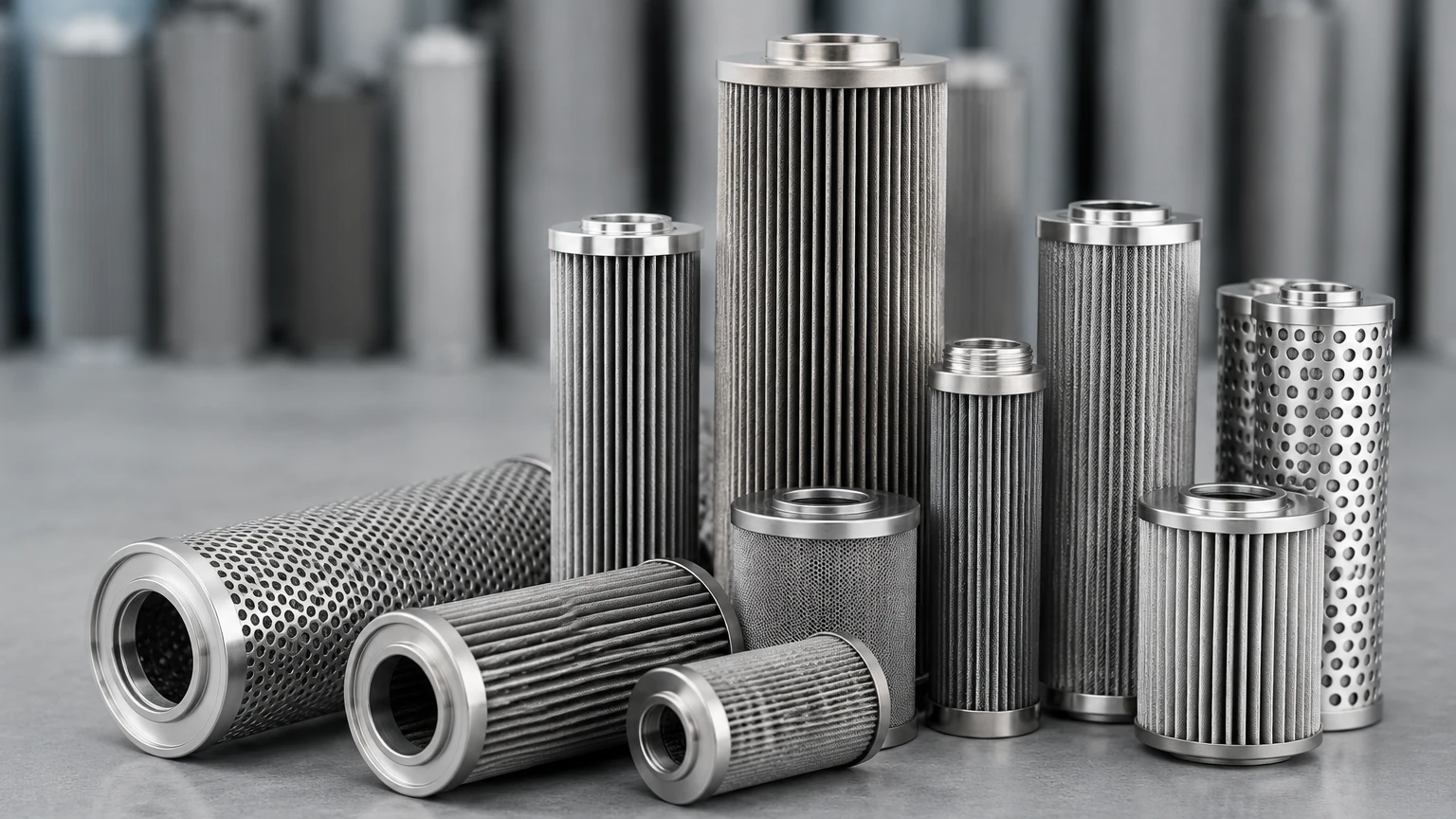
Stainless steel wire mesh is a preferred choice for applications requiring high strength and cleanability. These elements are typically constructed using 304 or 316L stainless steel. The primary advantage of wire mesh is its ability to be cleaned and reused, which reduces long-term waste and replacement costs. It offers excellent resistance to high temperatures and corrosive fluids, making it ideal for chemical processing and heavy industrial hydraulics.
Sintered Metal Media
For applications requiring extremely fine filtration combined with high structural strength, sintered metal media—often in the form of sintered fiber felt or multi-layer sintered mesh—is utilized. Sintering bonds the metal strands together, creating a rigid structure that prevents media migration even under high-pressure pulses. This material provides high porosity, which translates to a lower initial pressure drop and a higher dirt-holding capacity compared to standard woven mesh.
Conventional Glass Fiber and Cellulose
Glass fiber (often referred to as synthetic or micro-glass) offers high efficiency and a high dirt-holding capacity due to its multi-layered structure. However, it is a disposable medium and lacks the mechanical robustness of stainless steel. Cellulose is the most economical option but is limited by its lower efficiency and susceptibility to water-induced swelling, which can restrict flow.
Evaluating Filtration Efficiency: Beta Ratios and Micron Ratings
To accurately compare one hydraulic oil filter element against another, engineers rely on standardized testing metrics, most notably the Beta Ratio (β), as defined by ISO 16889.
Micron Rating: Absolute vs. Nominal
A nominal micron rating is an empirical value indicating the filter’s ability to stop a percentage of particles of a certain size. However, it is often considered inconsistent. An absolute micron rating indicates the particle size at which the filter has a 99.9% (or higher) efficiency. For critical hydraulic components, absolute-rated filters are generally required to ensure consistent protection.
Understanding the Beta Ratio
The Beta Ratio provides a more comprehensive view of filtration efficiency. It is calculated by dividing the number of particles of a specific size upstream of the filter by the number of particles of the same size downstream. For example, a Beta Ratio of β10 = 200 means that for every 200 particles of 10 microns entering the filter, only one passes through. This equates to 99.5% efficiency. When sourcing a hydraulic oil filter element, identifying the Beta Ratio at a specific micron size is far more useful than a simple micron number.
Operational Challenges and Failure Modes
Even the best-engineered hydraulic oil filter element can fail if not properly integrated or maintained. Recognizing common failure modes helps in developing a proactive maintenance strategy.
1. Bypass Valve Leakage: Most filter housings include a bypass valve to protect the system from oil starvation if the filter becomes completely clogged. However, if the bypass valve opens too early or fails to seal properly, unfiltered oil circulates through the system, leading to rapid component wear.
2. Media Migration: In low-quality filters, the fibers of the filter media itself can break loose and enter the fluid stream. This is why high-strength stainless steel or bonded synthetic media are preferred for sensitive circuits.
3. Channeling: If a filter is subjected to a pressure differential beyond its design limit, the fluid may force a path through the media, creating a "channel" that bypasses the filtration surface entirely.
4. Water Contamination: Standard cellulose elements can absorb water, which causes the fibers to swell and increases the pressure drop. In systems prone to moisture ingress, specialized water-absorbing elements or stainless steel mesh (which is unaffected by water) should be considered.
Customization and OEM Considerations for Industrial Applications
Standard off-the-shelf filter elements do not always meet the rigorous demands of specialized industrial machinery. Customization allows engineers to tailor the hydraulic oil filter element to the exact needs of the equipment. At Kaifil, the focus is on providing these tailored solutions through advanced manufacturing and material science.
Customization options often include:
* Specific End-Cap Designs: Machined or stamped end-caps in various metals to ensure a perfect mechanical fit and seal within existing housings.
* Layered Media Configurations: Combining different mesh counts or media types to achieve a specific balance between filtration fineness and dirt-holding capacity.
* Reinforcement Sleeves: Adding internal or external support tubes to handle extreme pressure spikes or high-viscosity fluids.
* Dimension Scaling: Producing elements in non-standard lengths or diameters for legacy equipment or compact system designs.
By working with a manufacturer that understands OEM requirements, purchasing teams can ensure that the replacement elements meet or exceed the original equipment specifications, often at a better value and with improved lead times.
Total Cost of Ownership and Maintenance Strategies
The purchase price of a hydraulic oil filter element is only a small fraction of its total cost. The true cost includes the labor for replacement, the cost of system downtime, and the potential expense of repairing damaged hydraulic components due to poor filtration.
Monitoring Differential Pressure
The most effective way to manage filter life is through differential pressure monitoring. By installing transducers or visual indicators on the filter housing, maintenance teams can replace the hydraulic oil filter element exactly when it reaches its dirt-holding capacity, rather than on a fixed time schedule. This prevents premature replacement and ensures the system is never running on bypass.
The Case for Cleanable Elements
In many high-volume or high-contamination environments, the use of cleanable stainless steel elements can significantly reduce the total cost of ownership. While the initial investment is higher than disposable glass fiber elements, the ability to ultrasonically clean and reuse the stainless steel element multiple times provides substantial long-term savings and reduces the environmental impact of used filter disposal.
Verification Before Purchase
Before finalizing a procurement decision, engineers should confirm several key details with their supplier:
* Fluid Compatibility: Ensure the media and seals are rated for the specific hydraulic fluid used.
* Target ISO Cleanliness Code: Align the filter's Beta Ratio with the cleanliness requirements of the most sensitive component in the system (e.g., servo valves usually require a cleaner ISO code than gear pumps).
* Operational Environment: Account for vibration, temperature extremes, and potential for moisture.
For those seeking technical guidance or customized filtration components tailored to specific industrial demands, you can Review product options and application support on our Main Page. Accessing professional engineering support ensures that the selected filtration solution provides the necessary protection for your high-value hydraulic assets.
Conclusion
The hydraulic oil filter element is a foundational component of system reliability. From the selection of stainless steel wire mesh for durability to the precise calculation of Beta Ratios for efficiency, every technical detail contributes to the longevity of the hydraulic circuit. By prioritizing high-quality materials and engineering-led selection processes, industrial operations can minimize downtime, reduce component wear, and achieve a more sustainable and cost-effective filtration strategy. Whether through standard replacements or custom OEM designs, the right filtration approach is an investment in the continued performance of industrial machinery.
