


Dust Extraction Booth
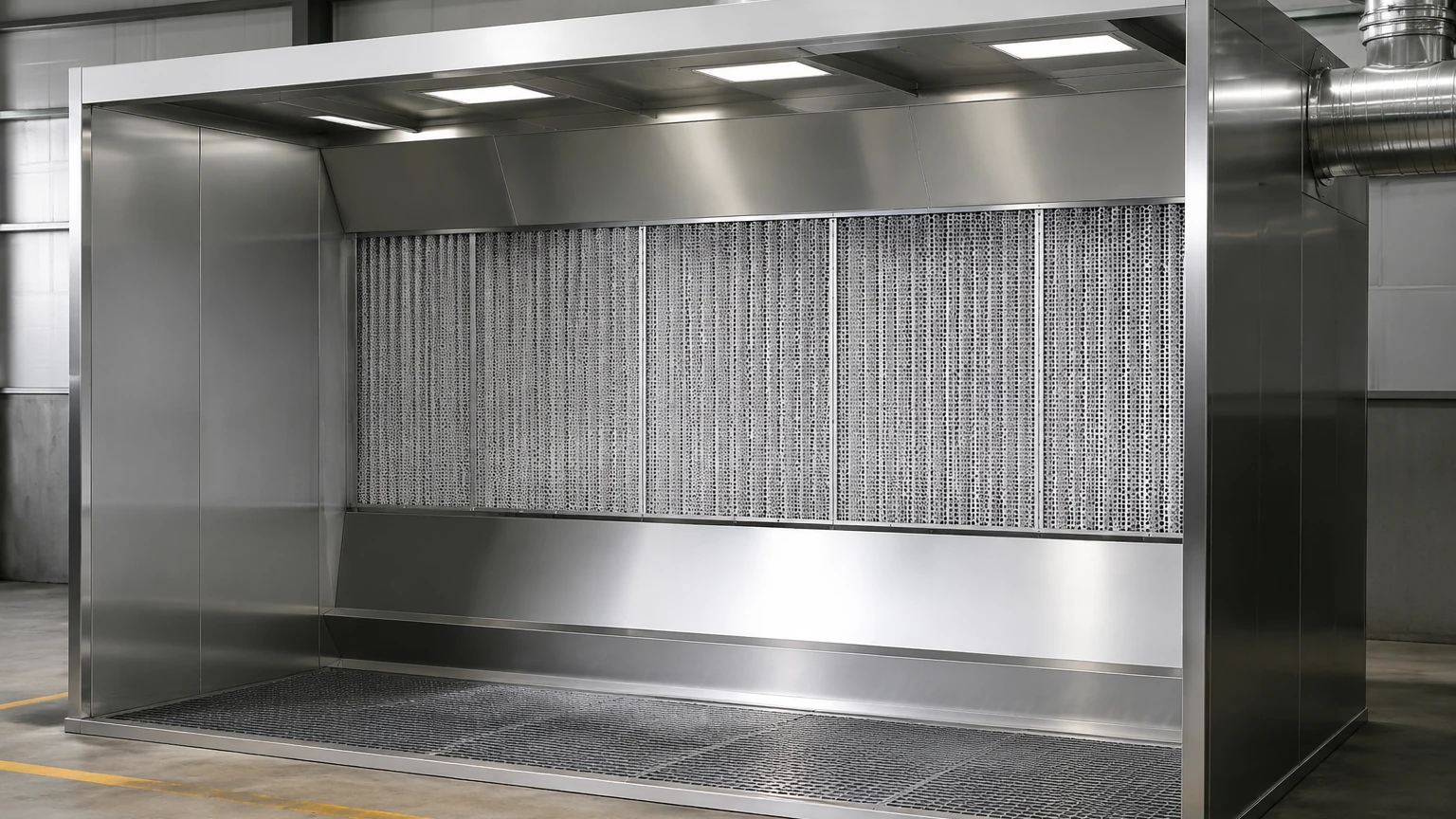
In industrial manufacturing, maintaining air quality and managing particulate matter is not merely a matter of compliance but a fundamental requirement for operational efficiency and worker safety. A dust extraction booth serves as a localized containment environment designed to capture airborne contaminants at the source, preventing them from migrating into the broader facility. While the structural design of the booth provides the necessary containment, the core of its performance lies in the filtration technology employed to separate solids from the airstream.
For engineers and facility managers, selecting the right dust extraction booth involves a deep understanding of airflow dynamics, particle characteristics, and the durability of filtration components. As a specialist in custom stainless steel filtration solutions, Kaifil provides the precision-engineered components necessary to support high-performance extraction systems. To explore our full range of industrial filtration products, visit our Main Page.
Principles of Operation in Industrial Dust Extraction
A dust extraction booth operates on the principle of negative pressure. By utilizing high-capacity centrifugal fans, the system draws air from the open face of the booth toward a filtration plenum. The goal is to achieve a specific "capture velocity"—the speed of air required to overcome the inertia of dust particles and pull them into the extraction stream. For most industrial applications, such as grinding, sanding, or powder mixing, capture velocities typically range between 0.5 to 1.0 meters per second (m/s).
The airflow must be laminar and uniform across the booth's cross-section to ensure that no "dead zones" exist where dust can accumulate. Engineering these systems requires precise calculations of the Total External Static Pressure (TESP), which accounts for the resistance offered by the booth structure, ductwork, and, most importantly, the filter media. As filters accumulate dust, the static pressure increases, necessitating a robust filtration design that can withstand these fluctuations without compromising airflow.
The Critical Role of Filtration Media in Booth Performance
The efficiency of a dust extraction booth is directly proportional to the quality and suitability of its filters. In many demanding industrial environments, standard fabric or paper filters are insufficient due to high temperatures, moisture, or the abrasive nature of the dust. This is where stainless steel filtration components become essential.
Stainless steel wire mesh and pleated metal cartridges offer several technical advantages:
1. Structural Integrity: Unlike synthetic media, stainless steel filters do not collapse under high pressure or high-velocity airflow.
2. Thermal Resistance: In applications involving metal grinding or thermal spraying, sparks and hot particulates can ignite flammable filter media. Stainless steel acts as an inherent spark arrestor and can operate in temperatures exceeding 500°C.
3. Chemical Compatibility: For chemical processing or pharmaceutical booths, the filtration media must resist corrosion from aggressive solvents or acidic dust. 304 and 316L stainless steel provide the necessary chemical inertness.
4. Cleanability: Stainless steel filters are often permanent components. They can be cleaned via ultrasonic baths, back-pulsing, or chemical washing, significantly reducing the long-term cost of consumables.
Engineering Considerations for Selecting Stainless Steel Filters
When integrating stainless steel components into a dust extraction booth, engineers must evaluate several technical parameters to ensure optimal performance. The selection process should begin with a detailed analysis of the dust's physical properties, including particle size distribution (PSD), morphology, and moisture content.
Micron Rating and Filtration Efficiency
Filtration accuracy is defined by the micron rating. In a dust extraction booth, a multi-stage filtration approach is often used. A coarse stainless steel wire mesh may serve as a pre-filter to capture large debris and protect the more sensitive secondary filters. For fine dust, precision-woven wire cloth or sintered metal fiber felt can achieve high efficiency for particles as small as 1 to 5 microns.
Surface vs. Depth Filtration
Most industrial dust extraction systems rely on surface filtration, where particles are captured on the exterior of the media. This allows for easier cleaning through automated pulse-jet systems. Stainless steel pleated cartridges provide a high surface-area-to-volume ratio, which is critical for maintaining low face velocities and extending the intervals between cleaning cycles.
Pressure Drop (Delta P)
The initial pressure drop across a clean filter is a vital metric. High-quality stainless steel mesh is engineered to provide maximum open area, ensuring that the fan motor does not have to work excessively hard to maintain the required airflow. Engineers must balance the need for high filtration efficiency with the energy costs associated with overcoming a high Delta P.
Managing Airflow and Filtration Efficiency
The effectiveness of a dust extraction booth is not solely dependent on the filter's micron rating but also on how the airflow interacts with the media. In a well-designed booth, the air should be distributed evenly across the entire surface of the filter bank. Uneven loading, often caused by poor plenum design, leads to "blinding" in certain areas of the filter, which increases localized velocity and can cause particle breakthrough.
For applications involving fine, dry dust, pulse-jet cleaning systems are often integrated into the booth. These systems use a burst of compressed air to dislodge the dust cake from the filter surface. The mechanical strength of Kaifil’s stainless steel cartridges ensures they can withstand the repetitive mechanical stress of high-pressure pulses without fatigue or tearing, a common failure point in paper or polyester alternatives.
Furthermore, the seal between the filter element and the booth housing is a critical engineering detail. Even a minor bypass can allow significant amounts of dust to reach the clean side of the system, potentially damaging the fan or violating emission standards. Precision-machined metal end caps and high-temperature gaskets are used to ensure a leak-proof interface.
Maintenance and Operational Longevity of Filtration Components
One of the primary drivers for choosing stainless steel filtration in a dust extraction booth is the reduction in total cost of ownership (TCO). While the initial capital expenditure for metal filters is higher than for disposables, the lifecycle benefits are substantial.
Replacement Cycles
Standard filters in high-volume dust environments may require replacement every few weeks or months. In contrast, a properly maintained stainless steel filter can last for several years. This eliminates the recurring costs of purchasing, shipping, and disposing of contaminated filter media.
Monitoring Performance
To maximize the lifespan of the filtration system, operators should monitor the differential pressure continuously. A sudden drop in pressure may indicate a leak or a failed seal, while a rapid increase suggests that the cleaning system is not effectively removing the dust cake. Regular inspections of the wire mesh for signs of mechanical wear or chemical pitting are recommended, especially in corrosive environments.
Cleaning Procedures
Unlike disposable filters, stainless steel elements can be restored to near-original performance levels through professional cleaning. For oily or sticky dust, chemical cleaning agents can be used without damaging the structural integrity of the 316L stainless steel. This ability to reuse components aligns with modern industrial sustainability goals by reducing waste.
Custom Solutions for Demanding Industrial Environments
No two industrial processes are identical, and a standard, off-the-shelf dust extraction booth may not meet the specific requirements of a specialized facility. Customization is often required in the following areas:
* Food and Beverage: Booths used for ingredient weighing or powder mixing must utilize FDA-compliant materials. Stainless steel filtration is the gold standard here, as it does not shed fibers and can be sterilized.
* Pharmaceuticals: High-potency active pharmaceutical ingredients (HPAPIs) require ultra-high efficiency filtration. Sintered metal media can be engineered to meet stringent HEPA-level requirements while remaining robust enough for clean-in-place (CIP) processes.
* Hydraulic and Metalworking: In environments where oil mist is mixed with metal dust, specialized coalescing filters made from multi-layered stainless steel mesh are necessary to separate both liquid and solid contaminants.
Kaifil specializes in the OEM manufacturing of these precision components. By working closely with booth designers and plant engineers, we develop filtration elements that are tailored to the specific airflow, pressure, and chemical requirements of the application. Our expertise ensures that the filtration component is not the bottleneck in your system’s performance.
Conclusion: Optimizing Your Dust Extraction Strategy
A dust extraction booth is a vital investment in industrial health and safety, but its performance is only as reliable as its filtration system. By moving beyond disposable media and adopting high-performance stainless steel solutions, manufacturers can achieve greater filtration precision, improved safety in high-temperature environments, and a significant reduction in long-term maintenance costs.
When evaluating your next extraction project, consider the engineering advantages of durable, cleanable, and precisely rated metal filters. For technical specifications, material selection guides, or to discuss a custom filtration project for your dust extraction booth, please visit our Main Page to connect with our engineering team. Our commitment to quality and durability ensures that your filtration systems perform reliably in even the most demanding industrial conditions.
