


Hydraulic Return Line Filters
In the architecture of a high-performance hydraulic system, the management of fluid cleanliness is a continuous process of risk mitigation. While suction strainers protect the pump from catastrophic failure and pressure filters safeguard sensitive downstream valves, hydraulic return line filters serve as the primary gatekeeper for the reservoir. By capturing contaminants generated within the system—such as wear debris from cylinders, motors, and valves—before the fluid is recirculated, these filters maintain the long-term integrity of the entire hydraulic circuit.
For engineers and procurement professionals, selecting the correct filtration solution requires a deep understanding of system dynamics, fluid chemistry, and the mechanical properties of filter media. As a specialist in custom stainless steel filtration, Kaifil provides the technical expertise necessary to navigate these complexities, ensuring that systems meet stringent ISO cleanliness standards while optimizing the total cost of ownership.
The Strategic Role of Return Line Filtration
Hydraulic return line filters are positioned at the end of the hydraulic circuit, just before the fluid returns to the reservoir. This positioning is strategic for several reasons. First, the return line is typically a low-pressure environment compared to the high-pressure supply lines, allowing for the use of lighter, more cost-effective housing designs without sacrificing filtration efficiency.
Second, the return line is where the majority of system-generated contamination is found. As hydraulic components operate, internal friction releases microscopic metallic particles, seal fragments, and chemical byproducts into the fluid. If these contaminants reach the reservoir, they can settle at the bottom, form sludge, or be drawn back into the pump, leading to a cycle of accelerated wear known as the "chain reaction of wear." By intercepting these particles at the return stage, hydraulic return line filters prevent the reservoir from becoming a source of secondary contamination.
Technical Evaluation Criteria for Filter Selection
When specifying a filter for an industrial application, engineers must look beyond simple micron ratings. A comprehensive evaluation involves several interconnected variables that dictate the performance and reliability of the filtration system.
1. Flow Rate and Surge Capacity
One of the most common errors in sizing hydraulic return line filters is failing to account for surge flows. In systems utilizing large-diameter cylinders, the return flow can significantly exceed the pump's output flow. For instance, a cylinder with a 2:1 area ratio will return twice the volume of fluid it receives during the retraction stroke. If the filter is sized only for the pump's nominal flow, these surges can trigger the bypass valve or, worse, cause a pressure spike that damages the filter element or housing. Engineers should size return filters based on the maximum possible instantaneous flow rate, typically with a safety factor of 1.5 to 2.0.
2. Filtration Efficiency and Beta Ratio
The effectiveness of a filter is measured by its Beta Ratio (β), which compares the number of particles upstream of the filter to the number of particles downstream for a specific micron size. For critical industrial applications, "absolute" filtration (β ≥ 75 or 1000) is often required to achieve specific ISO 4406 cleanliness codes. Kaifil's precision-engineered stainless steel wire mesh filters offer consistent pore sizes that maintain their structural integrity even under the pulsating flow conditions common in return lines.
3. Differential Pressure (ΔP) and Energy Efficiency
Every filter introduces a degree of resistance to the flow, resulting in a pressure drop. A high initial ΔP reduces the efficiency of the system and shortens the effective service life of the filter element. Factors influencing ΔP include the viscosity of the fluid (which changes with temperature), the flow velocity, and the surface area of the filter media. Utilizing pleated stainless steel media increases the available surface area within a compact footprint, effectively lowering the ΔP and extending the interval between cleanings or replacements.
Structural Considerations: Housing and Media
The physical construction of the filter assembly must be compatible with both the fluid and the operating environment. Return line filters are generally available in two configurations: tank-top mounted and in-line mounted.
* Tank-Top Filters: These are mounted directly onto the reservoir lid. They simplify plumbing and allow for easy access during maintenance. Many designs include an integrated "diffuser" that prevents the returning fluid from agitating the oil in the reservoir, which helps reduce aeration and foaming.
* In-Line Filters: These are installed directly into the return piping. They are often used in systems where reservoir space is limited or where the filter must be located closer to specific components.
Regarding the filter media, while disposable cellulose or synthetic glass fiber elements are common, stainless steel wire mesh is increasingly preferred in demanding B2B environments. Stainless steel offers superior chemical compatibility, especially with fire-resistant fluids, phosphate esters, and high-temperature oils. Furthermore, stainless steel elements are often cleanable and reusable, providing a sustainable alternative to disposable media in high-volume industrial processes.
Engineering the Bypass and Indicator System
A critical safety feature of any hydraulic return line filter is the bypass valve. As the filter element captures contaminants, the differential pressure across the media increases. If the pressure reaches a predetermined limit, the bypass valve opens to allow fluid to flow directly into the reservoir, preventing the element from collapsing or the housing from bursting.
However, a filter in bypass mode is not filtering. To manage this, engineers must integrate clogging indicators. These can be:
* Visual Indicators: A simple gauge or color-coded pop-up pin that shows the status of the element.
* Electrical/Electronic Indicators: These send a signal to the system's PLC (Programmable Logic Controller), allowing for automated alerts or even system shutdown if the filter remains in bypass for too long.
Properly setting the bypass cracking pressure is a balancing act. It must be high enough to avoid opening during cold starts (when oil viscosity is high) but low enough to protect the system components from excessive backpressure.
The Advantage of Stainless Steel in Return Line Applications
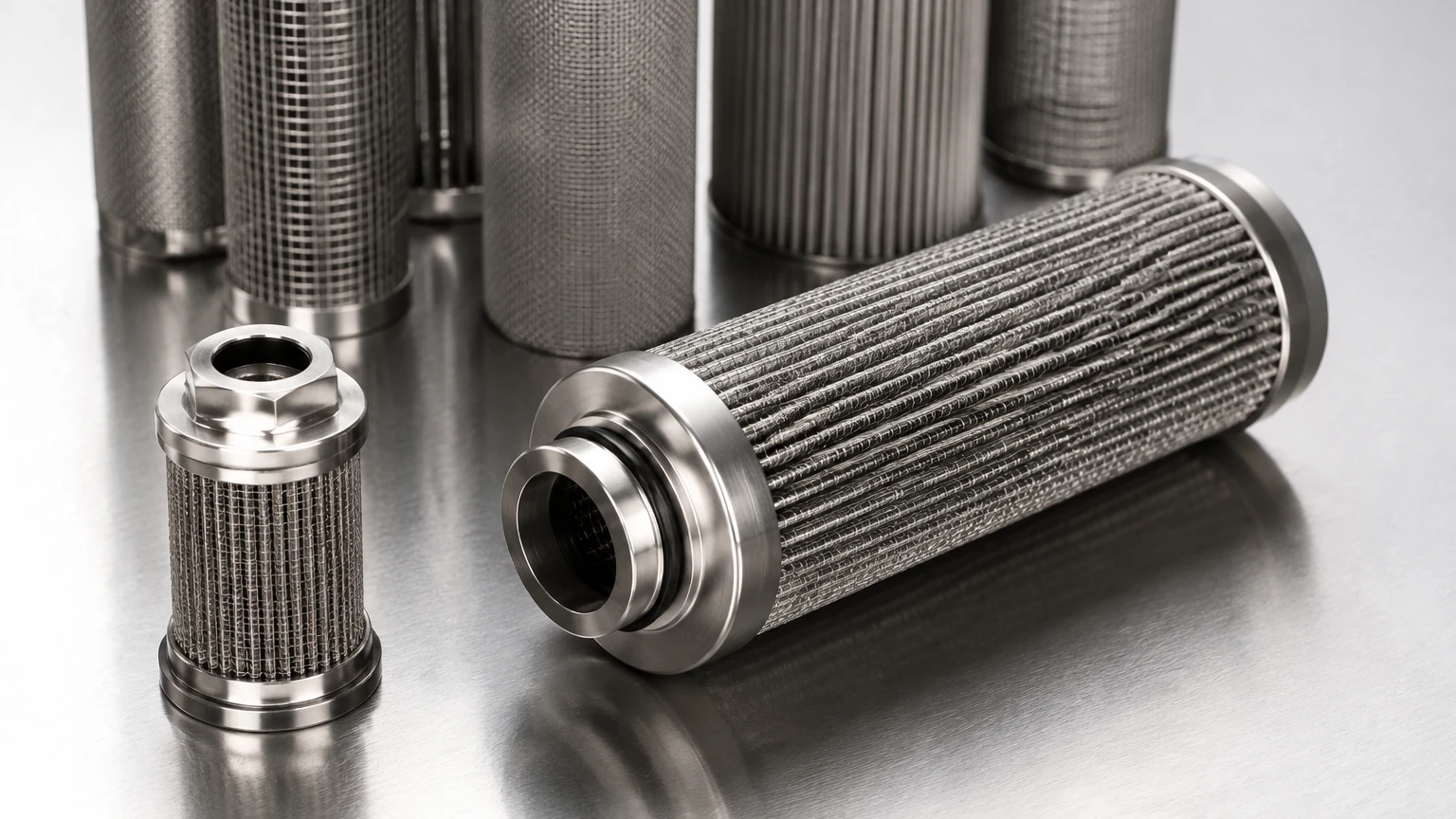
In industries such as chemical processing, food and beverage, and pharmaceutical manufacturing, the choice of filter material is dictated by more than just pressure and flow. Material purity and corrosion resistance are paramount. Kaifil specializes in manufacturing stainless steel filtration solutions that excel where traditional materials fail.
Stainless steel wire mesh provides several technical advantages:
1. Durability under Pulsation: Return lines often experience rapid flow fluctuations. Unlike paper or fiberglass, which can suffer from media migration or fatigue failure, stainless steel mesh is mechanically robust and maintains its pore structure under stress.
2. Temperature Resistance: In systems operating at high temperatures, synthetic binders used in disposable filters can degrade. Stainless steel remains stable across a wide thermal range.
3. Customization: Industrial systems often require non-standard dimensions or specific fitting types. Through OEM and customized design services, Kaifil can develop filtration components tailored to unique equipment specifications, ensuring a perfect fit and optimal performance.
For those seeking comprehensive data on material specifications and custom engineering capabilities, visiting the Main Page provides access to technical resources and product configurations designed for industrial-scale applications.
Maintenance and Total Cost of Ownership (TCO)
While the initial purchase price of a filter is a factor, the Total Cost of Ownership (TCO) is a more accurate metric for B2B decision-making. TCO includes the cost of replacement elements, labor for maintenance, fluid disposal costs, and, most importantly, the cost of downtime caused by component failure.
Using high-quality hydraulic return line filters with reusable stainless steel elements can significantly reduce TCO. Instead of purchasing and disposing of dozens of synthetic elements over the life of a machine, a single stainless steel element can be ultrasonically cleaned and returned to service. This not only reduces waste but also ensures that the system is always protected by a media that does not shed fibers or degrade chemically.
Regular oil analysis is a recommended companion to any filtration strategy. By monitoring the actual cleanliness of the fluid (ISO 4406 codes), maintenance teams can adjust filter replacement schedules based on real-world conditions rather than arbitrary time intervals. This proactive approach prevents premature filter changes while ensuring the system never operates with contaminated fluid.
Conclusion: Confirming Specifications for Procurement
Before finalizing a purchase or design specification for hydraulic return line filters, technical teams should confirm the following data points:
* Maximum Surge Flow: Ensure the filter can handle the peak return flow from all actuators combined.
* Fluid Compatibility: Verify that the seals (Viton, Buna-N, etc.) and the media are compatible with the specific hydraulic fluid in use.
* Target Cleanliness Level: Define the required ISO code for the most sensitive component in the system.
* Environmental Conditions: Consider ambient temperature, potential for external vibration, and exposure to corrosive elements.
By focusing on these factual engineering requirements and leveraging the manufacturing expertise of specialists like Kaifil, organizations can implement filtration solutions that provide reliable, long-term protection for their hydraulic investments. For more detailed product options and application support, engineers are encouraged to consult the Main Page to explore the full range of custom stainless steel filtration components available for modern industrial systems.
