


Industrial Filtered Dispensing Systems
In high-precision manufacturing and fluid handling, the integrity of the final product often depends on the purity of the media at the point of discharge. Industrial filtered dispensing systems are integrated assemblies designed to deliver controlled volumes of liquids or gases while simultaneously removing contaminants that could compromise the process or the end product. Whether in chemical processing, pharmaceutical filling, or food and beverage production, the filtration component within these systems serves as the final barrier against particulate matter, ensuring that dispensing accuracy and product quality remain consistent.
For engineers and procurement professionals, selecting the appropriate filtration technology for a dispensing system involves more than choosing a micron rating. It requires a comprehensive understanding of fluid dynamics, material compatibility, and the mechanical stresses inherent in industrial environments. This guide examines the technical considerations, engineering parameters, and material requirements for optimizing industrial filtered dispensing systems.
The Critical Role of Filtration in Dispensing Applications
Industrial filtered dispensing systems are utilized in applications where even microscopic contaminants can lead to system failure or product rejection. In automated dispensing lines, particulates can clog precision nozzles, cause wear on volumetric pumps, or lead to inconsistent flow rates. By integrating high-performance stainless steel filters directly into the dispensing loop, manufacturers can protect sensitive downstream components and maintain the purity of the dispensed media.
In the context of hydraulic and lubrication systems, filtered dispensing ensures that the fluids being introduced into machinery are free from debris that could cause abrasive wear. In the chemical and pharmaceutical sectors, filtration at the dispensing stage is a safeguard against cross-contamination and ensures compliance with stringent purity standards. The choice of filter media—ranging from sintered wire mesh to pleated cartridges—depends heavily on the specific requirements of the application, including the nature of the fluid, the required flow rate, and the target particle size.
Engineering Material Selection: Why Stainless Steel?
When designing or specifying components for industrial filtered dispensing systems, material selection is the foundation of durability and performance. While polymer-based filters are common in low-pressure or disposable applications, industrial-grade dispensing systems typically require the robustness of stainless steel.
Corrosion Resistance and Chemical Compatibility
Stainless steel, particularly grades 304, 316, and 316L, offers exceptional resistance to a wide array of corrosive agents. In chemical dispensing, where fluids may have extreme pH levels or contain aggressive solvents, 316L stainless steel is often the preferred choice due to its low carbon content and the addition of molybdenum, which enhances resistance to pitting and crevice corrosion. This ensures that the filter itself does not become a source of contamination through material degradation.
Thermal and Mechanical Stability
Industrial processes often involve high temperatures or significant pressure fluctuations. Stainless steel filter elements maintain their structural integrity under thermal stress that would cause synthetic media to soften or fail. Furthermore, the mechanical strength of metal mesh and sintered structures allows them to withstand high differential pressures without bypassing or collapsing, a critical factor in high-viscosity dispensing.
Cleanability and Longevity
Unlike disposable filters, stainless steel components in industrial filtered dispensing systems are often designed for reuse. They can be cleaned using ultrasonic baths, backwashing, or chemical solvents, significantly reducing the total cost of ownership and minimizing waste in the production cycle.
Technical Parameters for Filter Selection
To ensure an industrial filtered dispensing system operates efficiently, several engineering parameters must be evaluated during the design phase. Over-specifying can lead to unnecessary costs and pressure drops, while under-specifying can result in inadequate filtration and frequent maintenance.
Filtration Accuracy (Micron Rating)
Filtration accuracy is defined by the size of the particles the media can effectively trap. It is important to distinguish between nominal and absolute ratings. A nominal rating indicates the filter's ability to retain a majority of particles of a certain size, whereas an absolute rating (often associated with high-precision wire mesh) signifies that 99.9% of particles larger than the specified micron size will be captured. For precision dispensing, absolute ratings are typically required to ensure consistent output.
Flow Rate and Differential Pressure ($ΔP$)
The relationship between flow rate and pressure drop is a primary concern for system engineers. As fluid passes through the filter media, a natural resistance occurs, resulting in a pressure drop. If the filter is too small for the required flow rate of the industrial filtered dispensing systems, the $ΔP$ will be excessively high, placing undue strain on pumps and potentially causing the filter media to deform. Engineers must calculate the effective filtration area (EFA) to ensure that the dispensing speed is maintained without exceeding the recommended pressure limits.
Fluid Viscosity
The viscosity of the media being dispensed significantly impacts filter performance. High-viscosity fluids, such as oils, resins, or syrups, require larger pore sizes or increased surface area (through pleating) to maintain acceptable flow rates. Temperature also plays a role here, as many fluids become less viscous when heated, which can alter the filtration dynamics within the dispensing system.
Types of Filter Media for Dispensing Systems
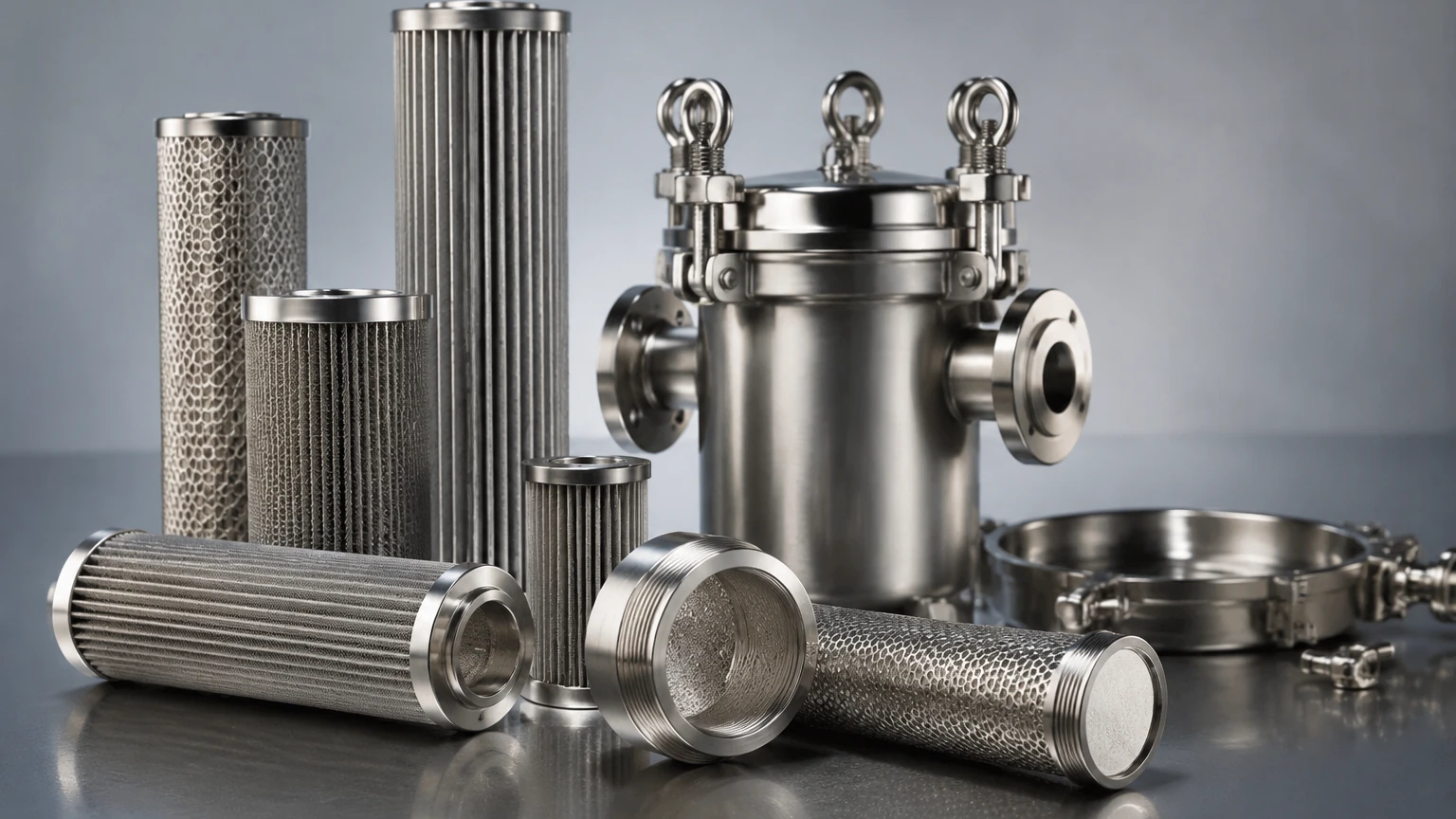
Different dispensing applications require different filter structures. Kaifil provides a range of custom solutions tailored to these specific needs.
1. Sintered Wire Mesh: This involves multiple layers of stainless steel wire mesh bonded together through a heat-treatment process (sintering). The result is a highly stable, porous material that offers excellent mechanical strength and precise filtration ratings. It is ideal for high-pressure dispensing environments.
2. Pleated Filter Cartridges: By pleating the filter media, the surface area is significantly increased within the same footprint. This allows for higher flow rates and a higher dirt-holding capacity, making it suitable for systems where downtime for cleaning must be minimized.
3. Wedge Wire Filters: These are constructed from V-shaped profiles and are particularly effective for dispensing fluids with high solid loads. Their non-clogging surface makes them easy to clean via backwashing.
For more information on specific configurations, you can Review product options and application support on the Kaifil Main Page.
Industry-Specific Applications
Food and Beverage
In the food industry, dispensing systems must meet sanitary standards. Stainless steel filters used in these systems are typically manufactured with smooth surface finishes to prevent bacterial growth and are designed to withstand Clean-in-Place (CIP) and Steam-in-Place (SIP) sterilization processes. Common applications include the filtration of edible oils, beverages, and liquid ingredients during the bottling or packaging stage.
Pharmaceutical and Biotech
Precision is paramount in pharmaceutical dispensing. Filters must be validated for their retention capabilities to ensure that injectable medications or topical solutions are free from particulates. The use of 316L stainless steel ensures that there is no leaching of metallic ions into the product, maintaining the highest levels of purity.
Chemical and Petrochemical
Dispensing aggressive chemicals requires filters that can withstand both corrosion and high pressure. Industrial filtered dispensing systems in this sector often utilize heavy-duty sintered metal components that can handle the abrasive nature of catalysts or the high temperatures of molten polymers.
Maintenance and Performance Monitoring
The longevity of an industrial filtered dispensing system is directly linked to its maintenance regime. In most industrial settings, the condition of the filter is monitored via differential pressure gauges. A gradual increase in $ΔP$ indicates that the filter is accumulating contaminants and will soon require cleaning or replacement.
Key Maintenance Considerations:
* Cleaning Cycles: Establishing a regular cleaning schedule based on pressure drop readings prevents permanent clogging of the media.
* Seal Integrity: During filter maintenance, it is essential to inspect O-rings and gaskets. Common materials include Viton, EPDM, and PTFE, selected based on their compatibility with the fluid being dispensed.
* Total Cost of Ownership (TCO): While stainless steel filters have a higher initial capital cost compared to disposable plastic filters, their durability and reusability often result in a lower TCO over the life of the dispensing system.
Customization: Tailoring the Solution
No two industrial dispensing applications are identical. Factors such as unique housing dimensions, specific end-fitting requirements (e.g., NPT, flange, or quick-connect), and non-standard micron ratings necessitate customized filtration solutions. Working with a manufacturer that understands the nuances of metal fabrication and filtration physics allows engineers to develop components that fit seamlessly into existing industrial filtered dispensing systems.
When specifying a custom filter, engineers should confirm:
* The maximum operating pressure and temperature.
* The chemical composition of the fluid.
* The desired flow rate and allowable pressure drop.
* The specific particulate size that must be excluded.
Conclusion
Industrial filtered dispensing systems are essential for maintaining the precision and reliability of modern manufacturing processes. By selecting high-quality stainless steel filtration components, businesses can ensure product purity, protect expensive equipment, and optimize their production efficiency. Understanding the technical trade-offs between flow rate, filtration accuracy, and material durability is the key to implementing a successful dispensing solution. For those seeking specialized guidance on component selection and custom manufacturing, visiting the Main Page provides access to technical resources and engineering support tailored to industrial filtration needs.
