


Industrial Water Filtration Skid
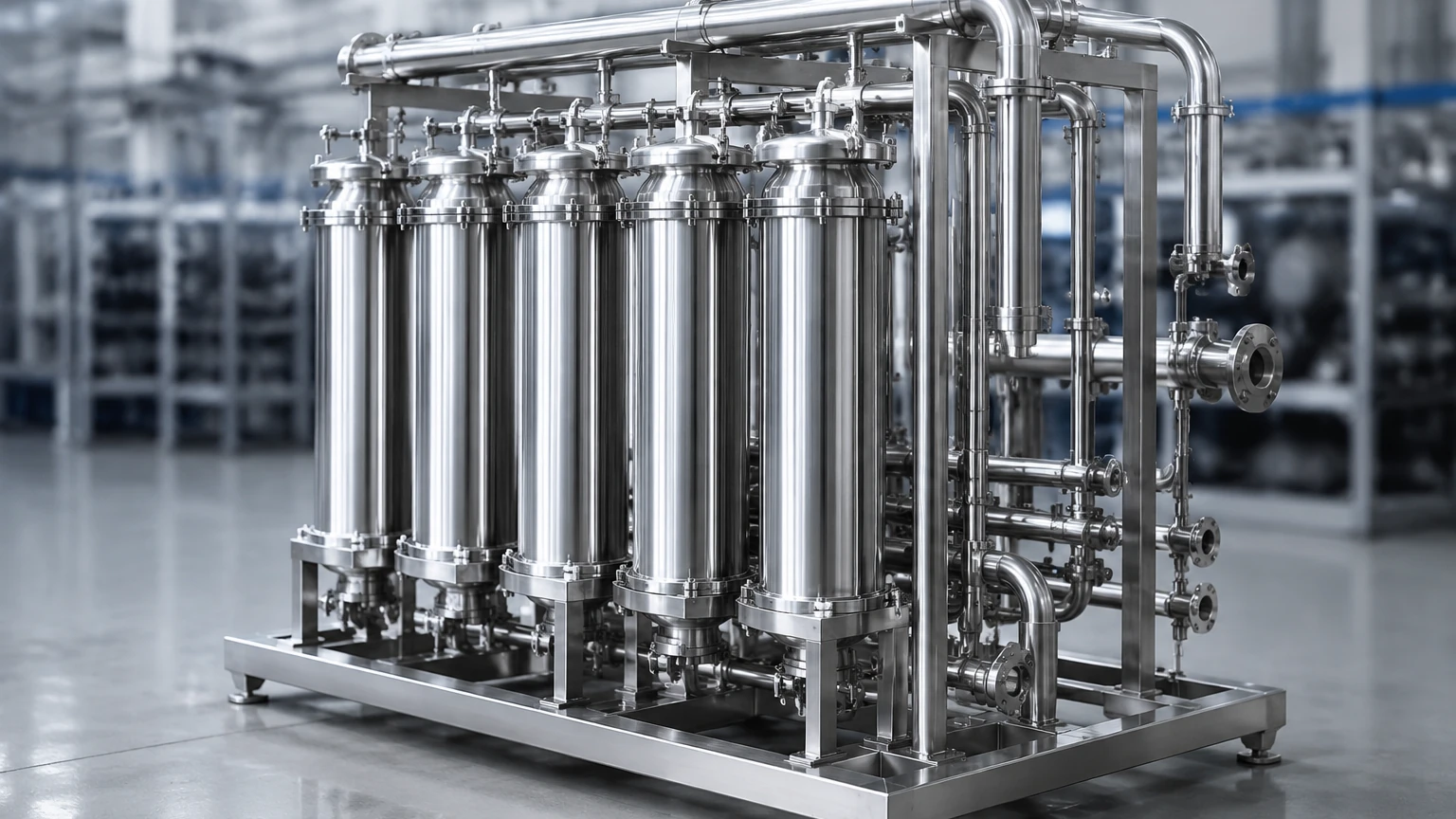
In modern industrial processing, the efficiency of water treatment systems is often defined by the integration and reliability of the filtration components. An industrial water filtration skid represents a centralized, modular solution designed to house multiple filtration stages, piping, valves, and control systems on a single structural frame. For engineers and procurement teams, selecting the right skid configuration is critical to ensuring process continuity, protecting downstream equipment, and meeting stringent regulatory standards in sectors like chemical processing, pharmaceuticals, and food and beverage production.
As a specialized manufacturer of stainless steel filtration solutions, Kaifil emphasizes the importance of precision engineering in these systems. A well-designed industrial water filtration skid is not merely a collection of parts but a synchronized system where material science and fluid dynamics intersect to provide consistent water quality.
Understanding the Architecture of an Industrial Water Filtration Skid
The primary advantage of a skid-mounted system is its "plug-and-play" capability. By pre-assembling the filtration unit in a controlled manufacturing environment, industrial facilities can reduce on-site installation time and minimize the risk of assembly errors.
Structural Frame and Manifolding
The foundation of the skid is the structural frame, typically constructed from carbon steel or stainless steel depending on the environment's corrosivity. The manifolding—the network of pipes that distributes water to various filter housings—must be engineered to balance flow and minimize turbulence. For high-purity applications, the internal surfaces of the piping are often electropolished to prevent bacterial growth and facilitate Cleaning-in-Place (CIP) procedures.
Filter Housings and Vessels
The heart of the skid consists of one or more filter housings. In industrial water applications, stainless steel is the material of choice due to its pressure ratings and chemical compatibility. These housings may contain multi-round cartridge filters or high-capacity bag filters. When dealing with high solids loading, duplex systems are often employed, allowing one side of the skid to remain operational while the other undergoes maintenance or element replacement.
Instrumentation and Control
A sophisticated industrial water filtration skid includes pressure transducers, flow meters, and automated valves. These components allow for real-time monitoring of the differential pressure ($ΔP$) across the filter media. When the $ΔP$ reaches a predetermined setpoint, the system can trigger an alarm or automatically initiate a backwash cycle or a switch to a standby housing.
Key Engineering Considerations for Skid Design
When designing or specifying an industrial water filtration skid, several technical parameters must be evaluated to ensure the system meets the specific demands of the application. Engineers must look beyond the initial flow rate and consider the long-term operational stability of the unit.
Material Compatibility and Corrosion Resistance
Industrial water can vary significantly in pH, chloride content, and temperature. While Stainless Steel 304 is suitable for many general-purpose water applications, Stainless Steel 316 or 316L is often required for brackish water or processes involving corrosive chemicals. The selection of gaskets and O-rings (EPDM, Viton, or PTFE) is equally critical to prevent leaks and ensure chemical compatibility with the process fluid.
Flux Rates and Velocity
The flux rate—the volume of water passing through a unit area of filter media over time—directly impacts the longevity of the filter elements. Operating at excessively high flux rates can lead to premature fouling and structural failure of the filter media. Similarly, the velocity of the water within the skid's piping must be managed to prevent erosion-corrosion and excessive pressure drops.
Filtration Accuracy and Micron Ratings
Defining the required filtration accuracy is a balance between water quality needs and operational costs. A skid might utilize a multi-stage approach, starting with a coarse wire mesh filter (e.g., 100 microns) to remove large debris, followed by a fine stainless steel cartridge (e.g., 5 microns) for final polishing. This staged approach protects the more expensive fine filters and extends the overall maintenance interval.
Filtration Media and Cartridge Selection
The performance of an industrial water filtration skid is ultimately limited by the quality of the filter media housed within it. Kaifil specializes in custom stainless steel filter cartridges that offer distinct advantages over disposable polymer-based filters in demanding industrial environments.
Stainless Steel Wire Mesh Filters
Wire mesh filters provide surface filtration and are highly effective for removing rigid particles. They are characterized by their precise pore sizes and the ability to be cleaned and reused. In a skid configuration, these are often used as pre-filters to remove sand, scale, and other large contaminants from raw water sources.
Sintered Metal Filter Elements
For applications requiring higher mechanical strength and finer filtration, sintered metal elements are used. These are created by fusing layers of wire mesh or metal fibers under heat and pressure. The resulting structure is extremely robust, capable of withstanding high differential pressures and extreme temperatures that would cause synthetic filters to collapse or bypass.
Advantages of Metal Media in Skids
1. Durability: Unlike polypropylene or pleated paper, stainless steel media does not shed fibers into the filtrate.
2. Cleanability: Metal filters can be cleaned via backpulsing, ultrasonic cleaning, or chemical soaking, significantly reducing the total cost of ownership.
3. Temperature Resistance: They maintain structural integrity in high-temperature boiler feed water or steam filtration applications.
Evaluation Criteria for Purchasing Decisions
Procuring an industrial water filtration skid requires a comprehensive evaluation of both the manufacturer's capabilities and the system's technical specifications. To ensure a successful implementation, purchasing teams should focus on the following criteria:
Total Cost of Ownership (TCO)
While the initial capital expenditure (CAPEX) of a stainless steel filtration skid may be higher than plastic alternatives, the TCO is often lower. Factors contributing to a lower TCO include reduced filter replacement costs, lower labor costs for maintenance, and decreased water waste during backwash cycles. For more information on durable filtration components, you can Review product options and application support.
Customization and OEM Capabilities
Off-the-shelf filtration units rarely meet the exact needs of a complex industrial process. A manufacturer's ability to provide OEM and customized filtration solutions is vital. This includes customizing the skid footprint to fit within existing plant constraints, selecting specific valve brands to match plant standards, and engineering custom filter lengths or diameters to optimize flow.
Quality Assurance and Testing
Before a skid leaves the factory, it should undergo rigorous testing. This includes hydrostatic pressure testing to ensure the integrity of welds and seals, as well as functional testing of the control logic. Documentation such as Material Test Reports (MTRs) for all stainless steel components is essential for compliance in regulated industries like pharmaceuticals.
Common Risks and Performance Expectations
Failure to properly specify an industrial water filtration skid can lead to several operational risks. Understanding these risks allows engineers to build safeguards into the system design.
Media Migration and Bypass
If a filter element is not seated correctly or if the housing design is flawed, "bypass" can occur, where unfiltered water leaks around the filter media. High-quality skids utilize precision-machined seats and robust sealing mechanisms to ensure that 100% of the water passes through the filter.
Structural Collapse
In high-pressure systems, the filter media must be able to withstand the maximum possible differential pressure of the pump. If a filter becomes fouled and the system continues to operate, the media may collapse. Engineering the skid with a high-pressure bypass valve or automated shut-off protects both the filter elements and the downstream process.
Biofouling
In water systems, biological growth can quickly clog filters and contaminate the process. Designing the skid with minimal "dead legs" (areas of stagnant flow) and ensuring compatibility with biocides or hot water sanitization is necessary to mitigate this risk.
Maintenance and Replacement Cycles
A proactive maintenance strategy is essential for the longevity of an industrial water filtration skid. While stainless steel filters are designed for long-term use, they are not "set and forget" components.
Monitoring Differential Pressure
The most reliable indicator of filter status is the differential pressure. A gradual increase in $ΔP$ is normal as the filter captures contaminants. However, a sudden drop in pressure may indicate a ruptured filter or a seal failure, while a sudden spike may indicate a change in the influent water quality.
Cleaning Procedures
For cleanable stainless steel elements, the cleaning protocol must be strictly followed. Over-aggressive cleaning can damage the fine wire mesh, while insufficient cleaning can lead to permanent fouling. Many modern skids incorporate automated backwash systems that use a small portion of the filtered water to flush contaminants from the surface of the media without interrupting the main flow.
Industry-Specific Applications
The versatility of the industrial water filtration skid makes it a staple across various sectors, each with its own set of requirements.
* Chemical Processing: Skids are used to filter process water, protecting sensitive catalysts and preventing the buildup of scale in heat exchangers. The use of corrosion-resistant alloys is paramount here.
* Food and Beverage: Filtration skids ensure the ingredient water is free of particulates and microorganisms. These systems must adhere to sanitary design principles, using 316L stainless steel and food-grade seals.
* Pharmaceutical: High-purity water systems require multi-stage filtration skids that can be validated for microbial removal. These units often feature electropolished surfaces and orbital welding.
* Hydraulic and Cooling Systems: In heavy industry, skids filter cooling water to prevent the clogging of small orifices in hydraulic components and cooling jackets, extending the life of the machinery.
Finalizing the Specification
Before moving forward with a project, the intended audience—engineers and purchasing managers—should confirm the following details with their filtration partner:
1. Influent Water Quality: Provide a detailed analysis of the TSS (Total Suspended Solids), particle size distribution, and chemical composition.
2. Target Effluent Quality: Define the maximum allowable particle size and concentration in the filtered water.
3. Operational Constraints: Confirm the available space, power supply for the control system, and the required flow rates (average and peak).
4. Regulatory Compliance: Identify any specific industry standards (e.g., ASME, PED, FDA) that the skid must meet.
By addressing these factors during the design phase, organizations can ensure that their industrial water filtration skid provides reliable, high-performance service for years to come. For technical guidance and custom stainless steel filter components, visiting the Main Page of a specialized manufacturer like Kaifil can provide the necessary resources to begin the selection process.
