


Industrial Water Sand Filters
Industrial water sand filters represent a cornerstone technology in the field of large-scale water treatment and process fluid purification. As a form of depth filtration, these systems are engineered to remove suspended solids, turbidity, and organic matter from water by passing it through a thick bed of granular media. While the concept of sand filtration is centuries old, modern industrial applications demand high levels of precision, durability, and integration with secondary filtration stages to ensure system longevity and product quality.
For engineers and procurement professionals, understanding the nuances of industrial water sand filters is essential for optimizing plant operations. These systems are rarely used in isolation; rather, they serve as the primary defense line, protecting more sensitive downstream components such as reverse osmosis membranes, ion exchange resins, and precision stainless steel filter cartridges. This guide examines the technical mechanics, critical evaluation criteria, and the engineering considerations necessary for selecting and maintaining high-performance sand filtration systems.
Principles of Depth Filtration in Industrial Systems
Industrial water sand filters operate on the principle of depth filtration, which differs significantly from surface filtration. In surface filtration, particles are trapped on a single plane (such as a fine wire mesh). In contrast, depth filtration utilizes the entire volume of the media bed to capture contaminants. As water percolates through the sand, particles are trapped within the interstitial spaces between the grains.
Several physical and chemical mechanisms facilitate this process:
1. Mechanical Straining: Particles larger than the voids between sand grains are physically trapped.
2. Sedimentation: Fine particles settle onto the surface of the media grains as they travel through the tortuous path of the bed.
3. Adsorption: Electrostatic forces and van der Waals forces cause smaller particles to adhere to the surface of the sand media.
In industrial settings, "sand" filters often utilize multi-media configurations. This involves layering materials of different densities and grain sizes—such as anthracite coal, garnet, and gravel—to create a gradient. This design allows larger particles to be trapped in the top layers while finer particles penetrate deeper, effectively increasing the dirt-holding capacity of the filter and extending the time between backwash cycles.
Critical Components: The Importance of Stainless Steel Internals
While the sand media performs the filtration, the structural integrity and efficiency of the system depend heavily on the internal distribution and collection components. This is where the expertise of manufacturers like Kaifil becomes vital. The internal "underdrain" system must be robust enough to support the weight of the media while ensuring uniform flow during both the filtration and backwash phases.
Lateral Systems and Nozzles
Precision-engineered stainless steel laterals and filter nozzles are the preferred choice for industrial sand filters. Unlike plastic alternatives, stainless steel components offer superior mechanical strength and resistance to thermal expansion. For applications involving high-temperature process water or aggressive chemical cleaning agents, SS304 or SS316L components are essential.
Wedge Wire Technology
Many high-end industrial water sand filters utilize wedge wire screens for their collection systems. The V-shaped profile of the wire prevents clogging and ensures a low pressure drop. By maintaining precise slot openings, these stainless steel internals prevent the migration of sand media into the downstream process—a common failure point in poorly designed systems. When evaluating a sand filter, engineers should prioritize the quality of these internal metal components to ensure long-term reliability.
Performance Metrics and Evaluation Criteria
Selecting the right industrial water sand filter requires a deep dive into performance metrics that go beyond simple flow rates. Engineers must evaluate the system based on its ability to handle specific influent characteristics and meet effluent requirements.
Filtration Velocity (Flux Rate)
Filtration velocity is typically measured in gallons per minute per square foot (gpm/ft²) or meters per hour (m/h). Lower velocities generally result in higher filtration efficiency and longer run times but require a larger footprint. For industrial pretreatment, velocities typically range from 2 to 7 gpm/ft². High-rate sand filters may operate at higher velocities but often require chemical coagulants to maintain efficiency.
Backwash Efficiency
Backwash is the process of reversing the flow of water to flush out accumulated solids. An efficient backwash must fluidize the media bed to release trapped particles without losing the media itself. Factors to consider include:
* Backwash Flow Rate: Usually 3 to 4 times the filtration rate.
* Air Scour: The introduction of compressed air to agitate the media, which significantly improves cleaning efficiency and reduces water consumption.
* Duration and Frequency: Systems that require frequent, long backwash cycles can lead to significant water waste and operational downtime.
Pressure Drop (ΔP)
The differential pressure across the filter bed is the primary indicator of when a backwash is needed. A high initial pressure drop suggests that the media size is too fine or the internal distribution system is restrictive. Monitoring ΔP is critical for preventing "breakthrough," where contaminants are forced through the bed due to excessive pressure.
Operational Challenges and Maintenance Strategies
Even the most robust industrial water sand filters face operational risks that can compromise water quality. Identifying these risks early is key to maintaining system performance.
Channeling and Media Fouling
Channeling occurs when water finds a path of least resistance through the media, bypassing the bulk of the filtration bed. This is often caused by uneven flow distribution or inadequate backwashing. Over time, media grains can become coated with biofilms or mineral scale, a phenomenon known as "mudballing." If left untreated, this reduces the effective surface area of the filter and leads to premature breakthrough.
Media Migration
If the internal screens or laterals fail, sand can enter the downstream piping. This is catastrophic for high-precision equipment. Utilizing high-quality stainless steel filtration components from a reliable manufacturer ensures that the media remains contained within the vessel. Regular inspections of the effluent for sand traces are a necessary part of industrial maintenance protocols.
Automation and Control
Modern industrial sand filters are increasingly automated. Programmable Logic Controllers (PLCs) monitor pressure sensors and trigger backwash cycles based on time, pressure differential, or turbidity levels. Automation reduces the risk of human error and ensures the filter operates within its designed parameters.
Synergistic Filtration: Sand Filters and Stainless Steel Cartridges
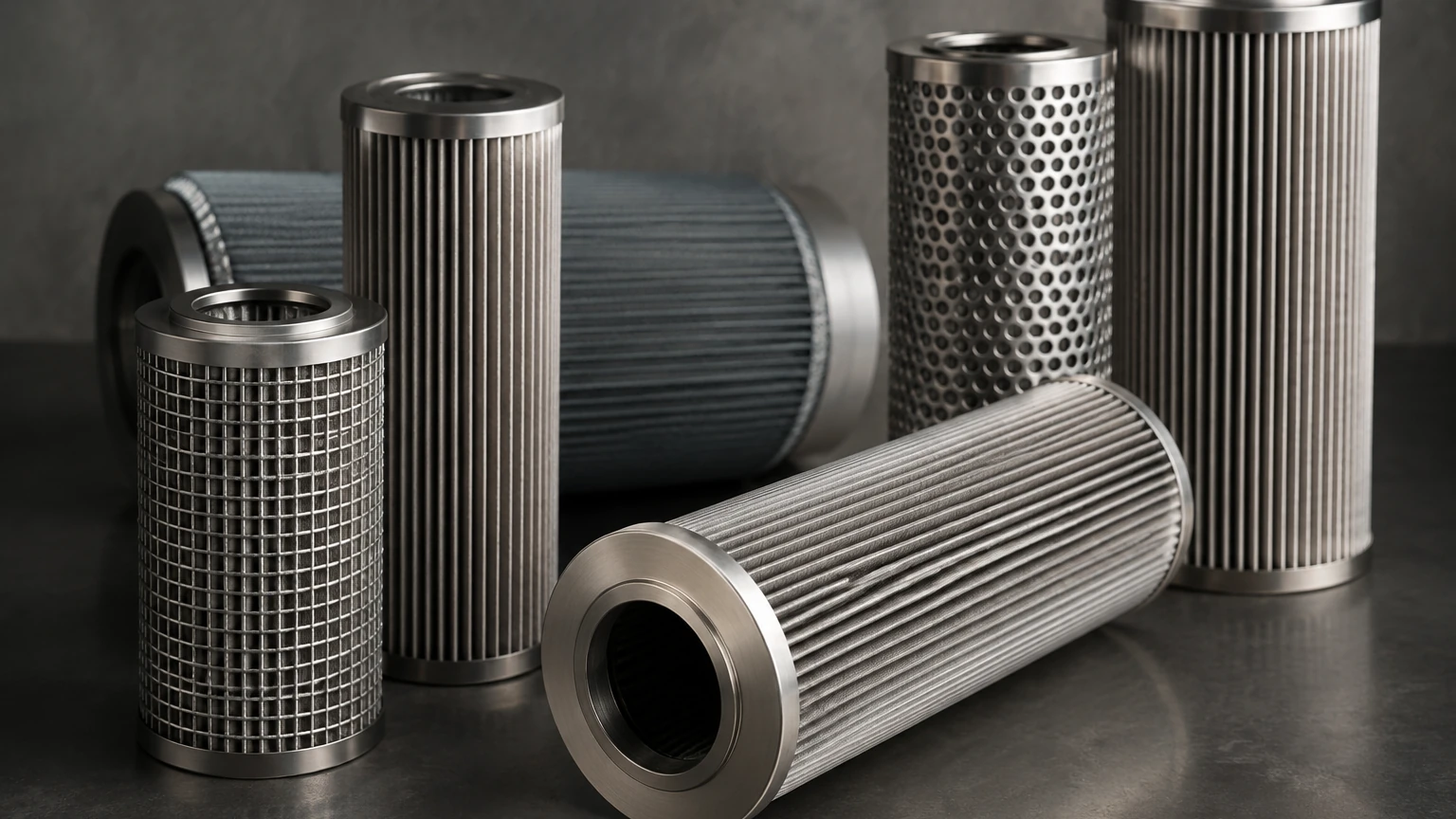
In many industrial process water applications, sand filters serve as the "roughing" stage. While they are excellent at removing the bulk of suspended solids, they may not reach the sub-micron levels required for sensitive equipment. This is where the synergy between sand filtration and stainless steel cartridge filtration becomes apparent.
After passing through industrial water sand filters, the water often flows through secondary stainless steel filter cartridges. These cartridges provide a definitive barrier against any remaining fine particulates or potential media fines. For example, in a hydraulic system or a chemical processing line, a sand filter might reduce turbidity to acceptable levels, while a final stainless steel mesh filter ensures that no particles larger than 5 or 10 microns reach the critical components.
This multi-stage approach optimizes the total cost of ownership. The sand filter, which is easily cleaned via backwash, handles the heavy lifting, while the stainless steel cartridges—which offer high precision and durability—provide the final polish. For more information on specialized metal filtration components that complement these systems, you can Review product options and application support on the Kaifil website.
Engineering Checklist for System Selection
Before finalizing a purchase or design for industrial water sand filters, engineers and purchasing teams should confirm the following technical details with their suppliers:
* Influent Water Analysis: What is the Particle Size Distribution (PSD), Total Suspended Solids (TSS), and the nature of the contaminants (organic vs. inorganic)?
* Vessel Material and Coating: Is the vessel carbon steel with an epoxy lining, or is a full stainless steel construction required for corrosion resistance?
* Internal Specification: Are the laterals and nozzles made of high-grade stainless steel (SS316L) to prevent corrosion and mechanical failure?
* Media Selection: Is the media specifically graded for the required micron rating? Does the system use multi-media layers for optimized depth filtration?
* Backwash Requirements: Does the facility have the necessary water volume and pressure for backwashing? Is an air scour system included to reduce water waste?
* Scalability: Can the system be expanded with additional tanks in parallel to handle future increases in flow demand?
Conclusion
Industrial water sand filters remain an indispensable tool for large-scale water treatment due to their reliability and cost-effectiveness in removing suspended solids. However, the performance of these systems is only as good as their design and the quality of their internal components. By focusing on robust engineering, particularly the use of stainless steel internals and a clear understanding of filtration mechanics, industrial facilities can ensure consistent water quality and protect their downstream investments.
When integrated correctly into a comprehensive filtration strategy—often involving secondary precision metal filters—industrial sand filters provide a durable solution for the most demanding applications in chemical processing, food and beverage production, and industrial water reuse. For professionals seeking to optimize their filtration processes, focusing on material quality and system compatibility is the first step toward achieving long-term operational efficiency.
