


Livewell Screen
In professional aquaculture, marine research, and industrial water management, the integrity of a livewell system depends heavily on the precision of its filtration components. A livewell screen is not merely a barrier; it is a critical engineering component designed to regulate fluid flow, protect sensitive pump equipment, and ensure the health of aquatic specimens by maintaining water quality. For engineers and procurement specialists, selecting the right screen involves a deep understanding of material science, fluid dynamics, and mechanical durability.
Kaifil, a leader in custom stainless steel filtration solutions, provides high-performance components that meet the rigorous demands of industrial marine environments. By focusing on precision-manufactured wire mesh and perforated metal, Kaifil ensures that every livewell screen delivers consistent performance under pressure. For more information on our full range of industrial filtration products, visit our Main Page.
Understanding the Role of Livewell Screens in Industrial and Marine Applications
The primary function of a livewell screen is to prevent debris from entering the circulation system while simultaneously ensuring that aquatic life remains safely within the containment area. In large-scale applications—such as commercial fishing vessels, public aquaria, or marine biological laboratories—the volume of water moved per hour is significant. This necessitates a screen that can handle high flow rates without causing excessive pressure drops.
From an engineering perspective, the livewell screen acts as the first line of defense for the entire hydraulic circuit. If a screen fails or becomes clogged, the resulting suction restriction can lead to pump cavitation, overheating, and eventual system failure. Furthermore, in applications involving delicate larvae or small crustaceans, the screen must provide a fine enough mesh to prevent entrainment without sacrificing the structural integrity required to withstand the force of incoming or outgoing water.
Material Engineering: Why Stainless Steel is the Standard
When selecting materials for a livewell screen, environmental factors are the primary consideration. Marine environments are notoriously corrosive, characterized by high salinity, fluctuating temperatures, and the presence of organic matter. While plastic or nylon screens are available for consumer-grade applications, industrial-grade systems almost exclusively utilize stainless steel.
304 vs. 316L Stainless Steel
Grade 304 stainless steel offers excellent strength and basic corrosion resistance, making it suitable for freshwater livewell systems. However, for saltwater or brackish environments, Grade 316L is the industry standard. The addition of molybdenum in 316L provides superior resistance to pitting and crevice corrosion caused by chloride ions. Furthermore, the "L" (low carbon) designation ensures that the material remains resistant to intergranular corrosion after welding, which is a critical factor in the longevity of custom-fabricated filter components.
Durability and Rigidity
Unlike synthetic materials, stainless steel wire mesh maintains its shape under high-pressure suction. It does not degrade when exposed to UV light or chemical cleaning agents, such as those used in pharmaceutical-grade aquaculture research. This mechanical stability ensures that the aperture size remains constant over the life of the screen, providing predictable filtration performance.
Technical Parameters: Mesh Count, Aperture, and Open Area
Specifying a livewell screen requires a detailed analysis of three technical parameters: mesh count, aperture size, and percentage of open area. These factors directly influence the filtration efficiency and the hydraulic resistance of the system.
1. Mesh Count: This refers to the number of openings per linear inch. A higher mesh count indicates a finer screen. For general livewell applications, a medium mesh is often preferred to balance debris exclusion with flow capacity.
2. Aperture Size: This is the clear distance between two adjacent wires. Engineers must choose an aperture size that is smaller than the smallest object they wish to retain or exclude. In industrial intake systems, this is calculated based on the specific species or debris profile of the local environment.
3. Percentage of Open Area: This is perhaps the most critical metric for hydraulic engineers. It is the ratio of the area of the openings to the total area of the screen. A higher open area reduces the velocity of the water passing through the screen, which minimizes the risk of "impingement"—where organisms are pinned against the screen by the force of the water.
Kaifil’s expertise in weaving and perforating allows for the creation of screens with optimized open areas, ensuring that the livewell screen provides maximum throughput while maintaining the necessary structural rigidity.
Design Variations: Suction Strainers vs. Discharge Screens
A livewell system typically utilizes different types of screens at different points in the fluid circuit. Understanding the mechanical stresses at each point is essential for proper selection.
Suction-Side Screens
Located at the intake of the pump, these screens are designed to protect the impeller from damage. They are often cylindrical or dome-shaped to increase the surface area, which helps distribute the suction force and reduce the likelihood of clogging. These screens must be robust enough to resist collapsing under the vacuum pressure generated by high-capacity pumps.
Discharge and Overflow Screens
Screens used at the discharge or overflow points are primarily focused on retention. In many industrial livewells, these are flat or recessed panels. The design priority here is to prevent "blinding" (surface clogging) caused by biological waste or scales. Self-cleaning designs or screens with specific surface treatments are often employed in these locations to extend maintenance cycles.
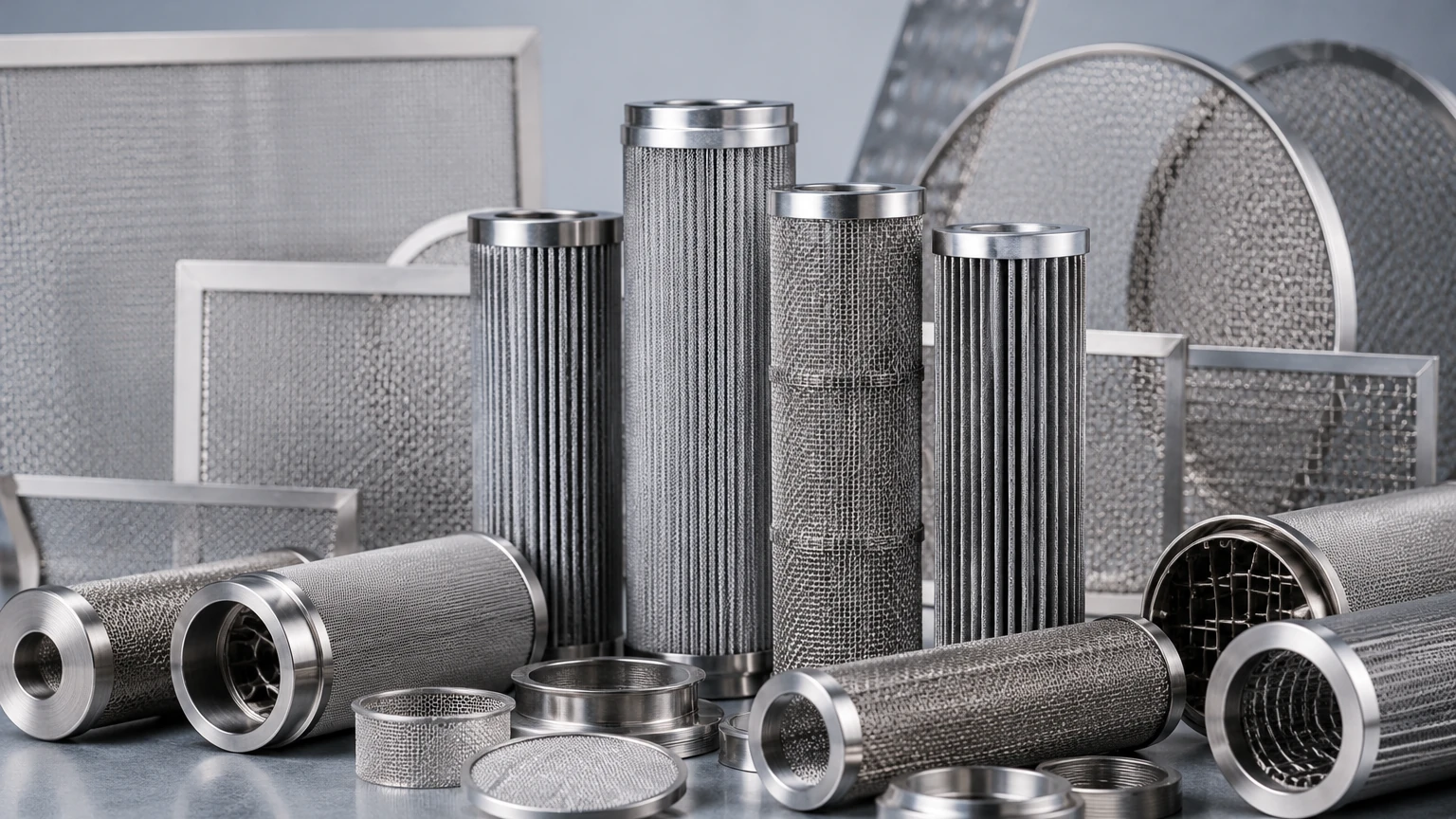
Custom OEM Solutions for Complex Filtration Requirements
Every industrial livewell system has unique spatial and performance constraints. Off-the-shelf solutions rarely meet the exacting standards required for high-stakes marine or chemical processing applications. This is where custom OEM manufacturing becomes indispensable.
Kaifil specializes in the development of bespoke filtration components. Whether the application requires a specific thread type for easy installation, a reinforced internal skeleton for high-pressure environments, or a unique geometric shape to fit into a compact manifold, custom fabrication ensures a perfect fit. By visiting our Main Page, technical teams can explore the various ways Kaifil supports custom designs, from initial material selection to final precision welding.
Customization also extends to the finishing processes. Techniques such as electropolishing can be applied to a livewell screen to create a microscopically smooth surface. This not only further enhances corrosion resistance but also reduces the ability of biofouling organisms, such as barnacles or algae, to adhere to the screen mesh.
Mitigating Risks: Cavitation, Biofouling, and Structural Failure
Failure to properly specify a livewell screen can lead to several operational risks that increase the total cost of ownership for a facility.
Preventing Pump Cavitation
If the screen's open area is too small or if the mesh is too fine for the pump's flow rate, a significant pressure drop occurs across the screen. This can cause the fluid to vaporize, leading to cavitation bubbles that implode and erode the pump's internal components. Engineers must calculate the Net Positive Suction Head (NPSH) available and ensure the screen does not cause the system to drop below the required threshold.
Managing Biofouling
In any marine application, biofouling is an inevitability. However, the choice of screen material and design can significantly influence the rate of accumulation. Stainless steel screens are easier to clean than plastic counterparts and can withstand mechanical scrubbing or high-pressure washing without damage. Furthermore, the use of high-quality alloys reduces the chemical bonding of organic matter to the metal surface.
Structural Integrity
In large tanks, the weight of the water and the force of the currents can put immense mechanical stress on the screen. A poorly constructed screen may suffer from wire displacement or weld failure. Kaifil utilizes advanced welding techniques, including TIG and resistance welding, to ensure that every joint in the livewell screen is as strong as the base material itself.
Selection Guide for Procurement and Engineering Teams
When preparing to purchase or specify a livewell screen for an industrial project, the following checklist should be used to ensure all technical requirements are met:
* Environment Compatibility: Is the system freshwater, saltwater, or chemically treated? (Select 304, 316, or 316L accordingly).
* Flow Rate Requirements: What is the maximum GPM (gallons per minute) of the system? Does the screen's open area support this without excessive pressure drop?
* Target Particle Size: What is the smallest organism or debris particle that must be excluded?
* Mechanical Interface: What are the mounting requirements? (NPT threads, flange mount, or friction fit).
* Maintenance Access: How easily can the screen be removed for cleaning? Does the design allow for in-situ maintenance?
* Certification Standards: Does the application require material traceability or specific manufacturing certifications (e.g., ISO standards)?
Conclusion
The livewell screen is a fundamental component that bridges the gap between mechanical system protection and biological preservation. By selecting high-quality stainless steel components and adhering to rigorous engineering standards, facilities can ensure long-term reliability and efficient operation. Kaifil remains committed to providing the technical expertise and manufacturing precision necessary to solve the most challenging filtration problems in the industrial and marine sectors. For a comprehensive look at our capabilities and to discuss your specific project needs, please refer to our Main Page.
