


Mash Filter Press
In the industrial brewing and distilling sectors, the efficiency of wort separation is a critical factor in determining overall brewery throughput and extract yield. While traditional lauter tuns have long been the industry standard, the adoption of the mash filter press has increased significantly among high-capacity facilities and those seeking to optimize raw material usage. A mash filter press is a specialized piece of equipment designed to separate the liquid wort from the spent grain solids using pressure-driven filtration.
As a professional manufacturer of stainless steel filtration solutions, Kaifil understands that the performance of these systems is heavily dependent on the quality and precision of the filtration media. Selecting the right components for a mash filter press requires a deep understanding of fluid dynamics, material science, and the specific mechanical stresses encountered during the brewing process.
Understanding the Role of Mash Filter Presses in Industrial Brewing
The primary objective of the mashing process is to convert grain starches into fermentable sugars. Once this enzymatic conversion is complete, the resulting mash must be separated. In a mash filter press, this separation is achieved by pumping the mash into a series of chambers lined with filter media. Unlike a lauter tun, which relies on gravity and a deep grain bed to act as a natural filter, the mash filter press uses mechanical pressure to force the liquid through a fine mesh or cloth.
This method offers several technical advantages for industrial operators:
* Higher Extract Yield: The use of pressure allows for more efficient rinsing (sparging) of the spent grains, often resulting in an extract recovery exceeding 98%.
* Reduced Water Consumption: Because the filter cake is compressed, less sparge water is required to achieve the same gravity, which also reduces the energy needed for subsequent boiling.
* Faster Cycle Times: Pressure-driven filtration is significantly faster than gravity-fed systems, allowing for more brews per day.
* Flexibility in Grist Composition: Mash filters can handle very finely ground grain (hammer-milled), as well as adjuncts like rye or wheat that typically cause "set mashes" in traditional tuns.
The Mechanics of Pressure-Driven Wort Separation
The operation of a mash filter press follows a specific sequence of stages, each of which places different demands on the filtration components. Understanding these stages is essential for engineers when specifying replacement parts or designing new systems.
1. Filling and Filtration
The mash is pumped into the filter chambers. As the chambers fill, the liquid wort passes through the filter media while the solids are retained, forming a "filter cake." During this stage, the initial layer of solids contributes to the filtration accuracy, but the primary barrier is the stainless steel mesh or filter cloth.
2. Pre-Squeezing
Once the chambers are full, many modern mash filters use an inflatable membrane to compress the grain cake. This initial squeeze removes the "first wort" and prepares the cake for uniform sparging.
3. Sparging (Washing)
Hot water is pumped through the compressed cake to wash out remaining sugars. The design of the filter plates must ensure an even distribution of water to prevent "channeling," where water bypasses parts of the grain bed.
4. Final Squeezing and Discharge
A final high-pressure squeeze maximizes the dryness of the spent grains. The plates then shift, and the dry cake drops out. The durability of the filter media is tested here, as it must withstand the mechanical movement and the abrasive nature of the grain solids.
Critical Components: The Importance of Stainless Steel Filtration Media
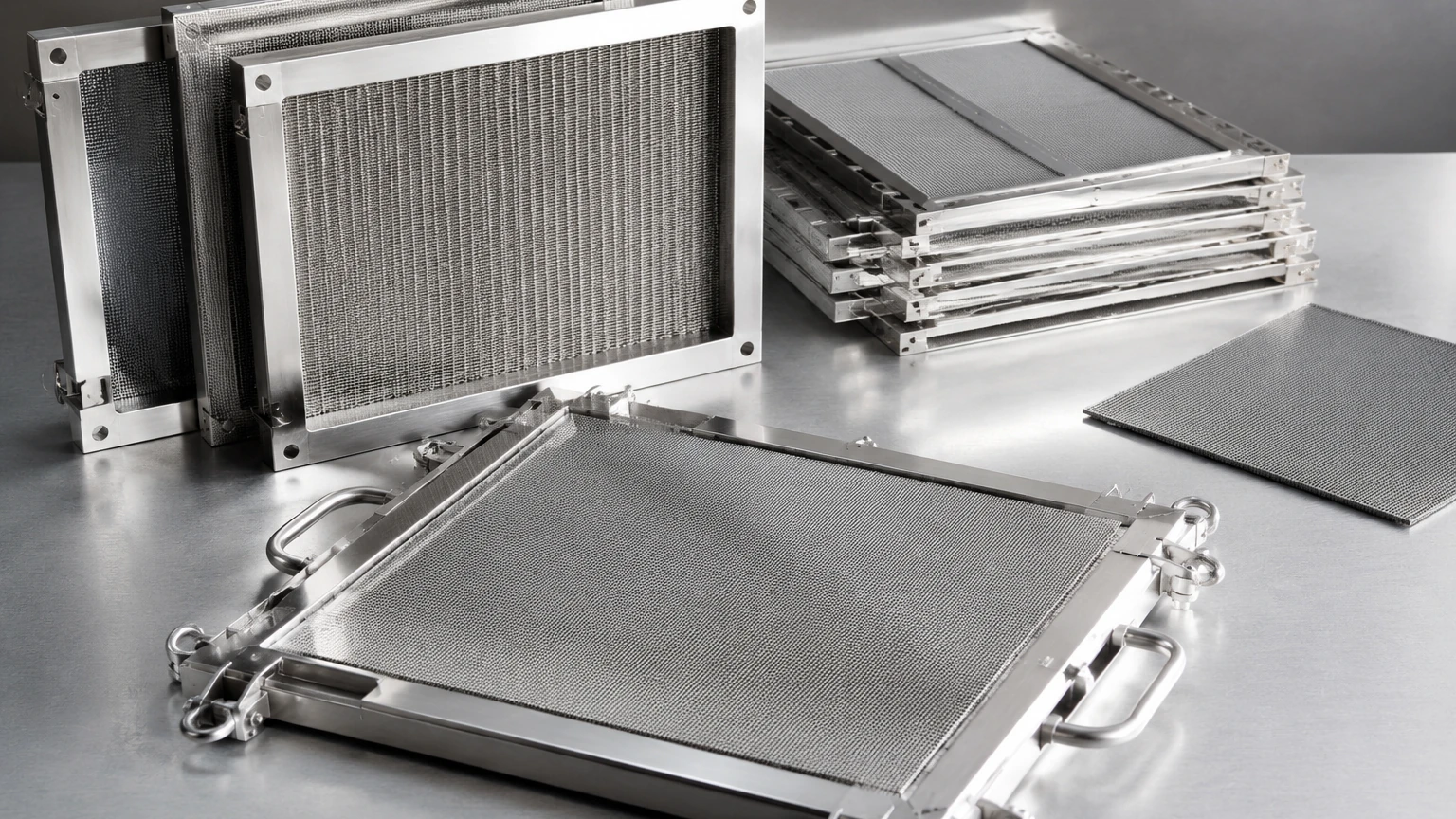
While many mash filters historically used textile cloths, there is a growing trend toward integrating stainless steel wire mesh components, particularly in high-demand industrial environments. Kaifil specializes in custom stainless steel filtration solutions that address the limitations of traditional fabrics.
Durability and Longevity
Standard filter cloths are prone to tearing, stretching, and blinding (clogging). In contrast, stainless steel wire mesh provides superior structural integrity. It resists the high pressures of the squeezing cycle and does not deform over time. For a brewery, this translates to fewer maintenance shutdowns and a lower total cost of ownership.
Hygiene and Cleanability
In food and beverage applications, hygiene is non-negotiable. Stainless steel is inherently resistant to bacterial growth and can withstand aggressive Cleaning-in-Place (CIP) chemicals and high-temperature sanitization. The precision weaving of Kaifil’s mesh ensures that there are no "dead zones" where organic material can accumulate, reducing the risk of contamination between batches.
Precision Filtration Accuracy
The micron rating of the filter media determines the clarity of the wort. If the mesh is too coarse, excessive solids (polyphenols and proteins) pass through, potentially affecting the flavor and stability of the final product. If it is too fine, the flow rate drops and the system pressure rises. Engineering the correct balance is a core competency of Kaifil’s manufacturing process.
Engineering Selection Criteria for Mash Filtration Systems
When engineers evaluate components for a mash filter press, several technical parameters must be confirmed to ensure compatibility and performance.
Material Grade Selection
For most brewing applications, SS304 is the standard. However, in environments using high-chloride water or aggressive acidic cleaners, SS316L is preferred due to its enhanced corrosion resistance. Kaifil provides both options, ensuring that the material selection aligns with the specific chemical environment of the facility.
Micron Rating and Open Area
The "open area" of a filter mesh refers to the percentage of the surface that allows liquid to pass. A higher open area reduces pressure drop and increases flow rates. Engineers must select a micron rating that captures the required particle size while maintaining the desired throughput. Typical mash filtration requires precision in the 50 to 150-micron range, depending on the grist profile.
Mechanical Resistance
The filter media must be able to withstand the "squeeze pressure," which can reach up to 10-15 bar in some industrial mash filters. This requires not just high-quality wire but also robust welding and finishing techniques to ensure the mesh remains bonded to the support structure of the filter plate.
Maintenance, Durability, and Total Cost of Ownership (TCO)
Investing in a mash filter press involves significant capital expenditure. To maximize the return on investment (ROI), operators must focus on the total cost of ownership rather than just the initial purchase price. Filtration components play a major role in this calculation.
Replacement Cycles: Traditional cloths may need replacement every 300 to 500 brews. High-quality stainless steel mesh components, when properly maintained, can last significantly longer, often spanning several years of continuous operation. This reduces the labor costs associated with frequent change-outs.
Energy Efficiency: A clean, well-designed filter mesh maintains a lower pressure differential. This reduces the load on the mash pumps, leading to measurable energy savings over the life of the equipment.
Product Consistency: Consistent filtration performance ensures that every batch of wort has the same clarity and sugar content. This predictability is vital for large-scale breweries that need to maintain brand consistency across multiple production sites.
Customization and OEM Solutions for Filtration Components
Every industrial brewing setup is unique. Factors such as the variety of grains used, the desired beer style, and the specific design of the filter press manufacturer (such as Meura or Landaluce) dictate the requirements for filtration parts.
Kaifil works closely with global customers to develop customized filtration solutions. Whether it is a specific wire mesh weave for a unique grain bill or a custom-dimensioned filter cartridge for a specialized bypass system, our engineering team provides the technical expertise needed to optimize performance. Our manufacturing capabilities include:
* Custom Mesh Weaving: Tailoring the weave pattern to balance flow rate and particle retention.
* Precision Fabrication: Ensuring that metal filter components fit perfectly within existing plate frames to prevent bypass leaks.
* Technical Support: Assisting engineers in troubleshooting filtration issues, such as premature blinding or insufficient wort clarity.
By focusing on the technical nuances of metal filtration, Kaifil helps breweries transition from standard operations to high-efficiency, precision-controlled production.
Conclusion
The mash filter press is a powerful tool for modern breweries, offering unparalleled efficiency and flexibility. However, the system is only as effective as its filtration media. By selecting high-performance stainless steel components, engineers can ensure their systems operate at peak performance with minimal downtime.
For technical professionals and purchasing teams looking to optimize their industrial filtration processes, understanding the interplay between material selection, micron ratings, and mechanical durability is the first step toward achieving superior results. For more information on our range of custom stainless steel filtration solutions and how they can support your industrial applications, please visit our Main Page.
Kaifil remains committed to providing the durable, precise, and reliable filtration components required for today’s demanding industrial environments. Review product options and application support to find the right solution for your specific filtration challenges.
