


Merv 14 Bag Filters
In industrial and commercial environments, air quality and particulate control are critical for both process integrity and personnel safety. The Minimum Efficiency Reporting Value (MERV) system, established by ASHRAE Standard 52.2, provides a standardized method for evaluating the performance of air filters. Among the various tiers, MERV 14 bag filters represent a high-efficiency solution designed to capture sub-micron particles, bridging the gap between standard commercial filtration and High-Efficiency Particulate Air (HEPA) systems. For engineers and facility managers, understanding the technical nuances of these filters is essential for optimizing HVAC performance and ensuring compliance with industry-specific air purity standards.
Understanding the MERV 14 Rating and Efficiency Standards
The MERV rating system evaluates a filter's ability to capture particles of varying sizes, categorized into three ranges: E1 (0.3 to 1.0 microns), E2 (1.0 to 3.0 microns), and E3 (3.0 to 10.0 microns). A MERV 14 bag filter is characterized by its high efficiency in the E1 and E2 ranges.
According to ASHRAE 52.2, a MERV 14 filter must achieve:
* E1 Efficiency: 75% to 84% capture of particles between 0.3 and 1.0 microns.
* E2 Efficiency: Greater than 90% capture of particles between 1.0 and 3.0 microns.
* E3 Efficiency: Greater than 90% capture of particles between 3.0 and 10.0 microns.
This level of filtration is particularly effective at removing fine dust, bacteria, tobacco smoke, and even some viral carriers. In industrial contexts, these filters are often utilized as secondary filters in multi-stage systems or as final filters in environments that require high air purity but do not strictly mandate the 99.97% efficiency of a HEPA filter.
Material Science and Construction of Bag Filters
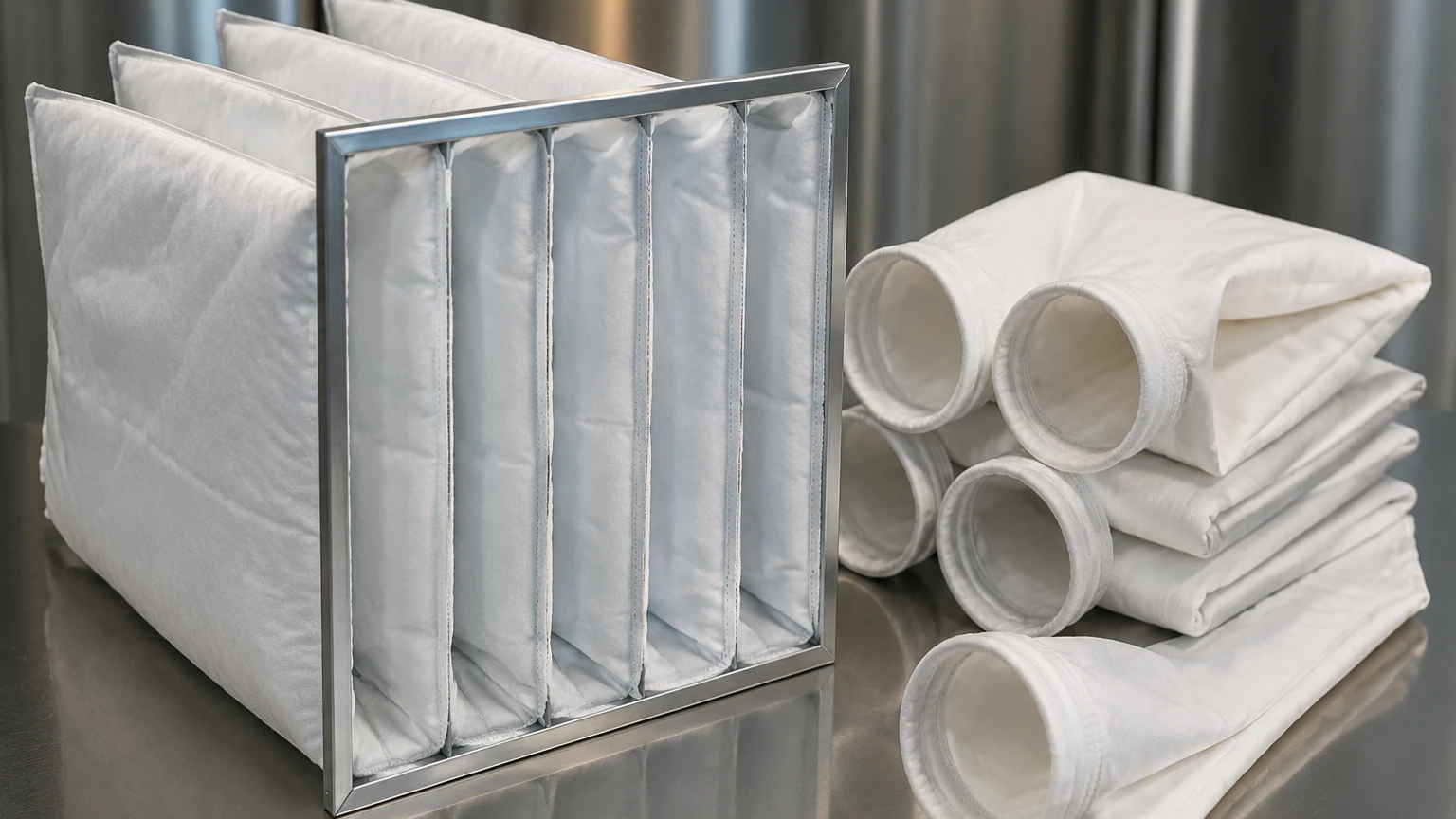
MERV 14 bag filters, also known as pocket filters, are engineered to maximize surface area within a given footprint. This design is critical for managing airflow resistance while maintaining high capture rates. The construction typically involves several key components:
Filter Media
The media is the core of the filter's performance. Most MERV 14 bag filters utilize either synthetic melt-blown polymers or micro-fine glass fibers.
* Synthetic Media: Often preferred for its durability and resistance to moisture. Synthetic fibers are frequently electrostatically charged to improve the capture of fine particles without significantly increasing the physical density of the media.
* Glass Fiber Media: Known for its consistent performance and stability over the life of the filter. Unlike some synthetic media, glass fiber does not rely on electrostatic charges, which can dissipate over time as the filter loads with dust.
Pocket Configuration
The "bags" or pockets are aerodynamically shaped to ensure even air distribution. Internal spacers or span-stitching are used to prevent the pockets from over-inflating or touching each other, which would create "blind spots" and increase pressure drop. A higher number of pockets generally translates to a larger surface area, which lowers the face velocity and extends the service life of the unit.
Header and Frame Design
The pockets are secured to a rigid header, typically made of galvanized steel or high-impact plastic. The header must provide a leak-proof seal against the holding frame of the HVAC system. In high-vibration industrial environments, the structural integrity of the header-to-pocket bond is vital to prevent bypass—where unfiltered air leaks around the media.
Engineering Considerations: Pressure Drop and Airflow Dynamics
For mechanical engineers, the most critical trade-off in air filtration is between efficiency and pressure drop. Pressure drop, measured in inches of water gauge (in. w.g.) or Pascals (Pa), represents the resistance the filter poses to the airflow.
Initial vs. Final Resistance
* Initial Resistance: The pressure drop across a clean filter. For a typical MERV 14 bag filter at a standard face velocity of 500 feet per minute (fpm), the initial resistance usually ranges from 0.35 to 0.60 in. w.g.
* Design Final Resistance: The point at which the filter is considered "loaded" and requires replacement. For MERV 14 systems, this is often set between 1.0 and 1.5 in. w.g. Operating beyond this point significantly increases energy consumption and risks media rupture.
Impact on Fan Energy
As a filter accumulates dust, the pressure drop increases, forcing the system's fan to work harder to maintain the required CFM (cubic feet per minute). Selecting MERV 14 bag filters with a lower initial pressure drop can lead to substantial energy savings over the filter’s lifecycle. Engineers should evaluate the "Dust Holding Capacity" (DHC) provided in manufacturer data sheets to estimate how quickly the pressure drop will rise under specific environmental conditions.
Industrial Applications for High-Efficiency Air Filtration
MERV 14 bag filters are deployed in sectors where particulate control is a prerequisite for process quality or health standards.
1. Healthcare and Hospitals: Used in general surgery rooms, laboratories, and inpatient care areas to reduce the concentration of airborne pathogens and allergens.
2. Pharmaceutical Manufacturing: Often used as pre-filtration for HEPA systems to extend the life of more expensive final filters by removing the bulk of sub-micron contaminants.
3. Food and Beverage Processing: In areas where dry ingredients are handled, these filters prevent cross-contamination and protect sensitive packaging environments from airborne microbes.
4. Commercial Office Buildings: High-rise buildings in urban areas use MERV 14 filtration to mitigate the impact of outdoor pollutants like vehicle exhaust and fine industrial dust.
5. Data Centers: Protecting sensitive electronic components from microscopic dust that can cause overheating or electrical arcing.
Total Cost of Ownership and Maintenance Cycles
When evaluating filtration solutions, the purchase price is only a fraction of the total cost of ownership (TCO). A comprehensive analysis includes:
* Energy Costs: The largest component of TCO. Filters with high surface area and low resistance reduce the brake horsepower required by the fan motor.
* Maintenance Labor: The cost of technicians' time to monitor, remove, and replace filters. Choosing filters with a higher dust-holding capacity reduces the frequency of these interventions.
* Disposal Costs: Bag filters are generally non-cleanable and must be disposed of according to local environmental regulations, especially if they have captured hazardous materials.
To optimize maintenance, it is recommended to install differential pressure gauges (manometers) across the filter bank. This allows for data-driven replacement schedules rather than relying on arbitrary calendar dates, which often results in either premature replacement or excessive energy waste.
Integrating Bag Filters with Custom Industrial Filtration Solutions
While MERV 14 bag filters are standard for air handling units, many industrial processes involve more demanding conditions—such as high temperatures, corrosive chemicals, or liquid-solid separation—that require specialized metal filtration. In these scenarios, engineers often look to manufacturers like Kaifil for custom solutions.
While bag filters are disposable and designed for gas-phase filtration, stainless steel filter cartridges and wire mesh components provide the durability needed for process fluids and harsh environments. For instance, in a chemical processing plant, a MERV 14 system might handle the cleanroom air, while Kaifil’s precision metal filters manage the filtration of the chemical products themselves.
When designing a holistic filtration strategy, it is important to consult with experts who understand the interplay between different filtration media. For technical professionals looking to optimize their entire facility's filtration performance, you can Review product options and application support to see how custom-engineered metal components complement standard air filtration systems.
Selection Criteria: Questions for Purchasing Teams
Before procuring MERV 14 bag filters, technical teams should confirm the following parameters with their suppliers:
* Face Velocity Compatibility: Is the filter rated for the specific CFM of the air handler? Operating a filter at a higher-than-rated velocity will decrease efficiency and increase the risk of particle bypass.
* Environmental Constraints: Will the filter be exposed to high humidity (above 90% RH) or temperatures exceeding 150°F (65°C)? This determines whether synthetic or glass media is required.
* UL Classification: Does the filter meet UL 900 standards for flammability and smoke generation?
* Gasket Requirements: Does the header require a specialized gasket (neoprene, EPDM) to ensure a bypass-proof seal in the specific housing used?
By focusing on these technical specifications and the long-term energy implications, engineers can ensure that their choice of MERV 14 bag filters provides the necessary air purity while maintaining operational efficiency.
