


Mesh Size Strainer
In industrial fluid handling and processing, the selection of a mesh size strainer is a critical engineering decision that directly impacts the efficiency, safety, and longevity of downstream equipment. Whether protecting high-pressure pumps in a hydraulic system or ensuring the purity of a pharmaceutical batch, the mesh size determines which particles are captured and which are allowed to pass. Understanding the technical nuances of mesh counts, wire diameters, and open area ratios is essential for any engineer or procurement specialist tasked with optimizing filtration performance.
The Fundamentals of Mesh Size in Industrial Strainers
The term "mesh" is the standard unit of measurement used to describe the density of a wire cloth or screen. Specifically, mesh refers to the number of openings per linear inch, measured from the center of one wire to the center of the next. For example, a 20-mesh screen has 20 openings per inch in both the horizontal and vertical directions.
However, mesh size alone does not provide a complete picture of filtration capability. Because the wires themselves take up space, the actual size of the opening (the aperture) depends on the diameter of the wire used. As the mesh count increases, the number of openings per inch grows, which typically requires thinner wires to maintain a functional open area. This relationship is fundamental when specifying a mesh size strainer for industrial applications, as it dictates the "micron rating"—the measurement of the largest particle that can pass through the mesh.
Mesh vs. Micron: Bridging the Gap
While mesh is a count of openings, a micron (micrometer) is a unit of length equal to one-millionth of a meter. In industrial filtration, the micron rating is often the more precise metric for determining filtration efficiency. Engineers must convert mesh sizes to microns to ensure compatibility with process requirements. For instance:
- A 60-mesh strainer typically provides an opening of approximately 250 microns.
- A 100-mesh strainer provides an opening of approximately 149 microns.
- A 400-mesh strainer provides an opening of approximately 37 microns.
It is important to note that these conversions are approximate and vary based on the wire diameter specified during the manufacturing process at facilities like those operated by Kaifil.
Technical Specifications: Wire Diameter and Open Area
When evaluating a mesh size strainer, two technical parameters are as important as the mesh count: wire diameter and the percentage of open area (POA). These factors determine the structural integrity of the filter and its hydraulic performance.
Wire Diameter Considerations
The wire diameter influences the mechanical strength of the strainer. In high-pressure environments, such as hydraulic systems or high-velocity chemical lines, a thicker wire is often required to prevent the mesh from deforming or "bursting" under the force of the fluid. However, increasing the wire diameter for a fixed mesh count reduces the size of the openings and the total open area.
Calculating Percentage Open Area (POA)
The POA is the ratio of the total area of the openings to the total area of the mesh screen. It is calculated using the formula:
POA = (Aperture Size / (Aperture Size + Wire Diameter))² x 100
A higher POA results in a lower pressure drop ($ΔP$) across the strainer, allowing for higher flow rates. Conversely, a low POA increases resistance, which may necessitate a larger strainer housing or more frequent cleaning cycles to prevent system cavitation or reduced throughput. Most industrial applications aim for a POA between 30% and 60%, depending on the balance required between filtration fineness and flow efficiency.
Material Selection for Stainless Steel Mesh Strainers
Industrial environments often involve corrosive fluids, extreme temperatures, or strict hygienic requirements. Consequently, the material of the mesh size strainer is a primary factor in its performance. Stainless steel is the industry standard due to its durability and resistance to oxidation.
1. AISI 304 Stainless Steel: The most common grade, offering excellent value and good corrosion resistance for water treatment, food and beverage, and general industrial use.
2. AISI 316 Stainless Steel: Contains molybdenum, which provides superior resistance to chlorides and marine environments. It is the preferred choice for chemical processing and more aggressive fluid media.
3. AISI 316L Stainless Steel: The low-carbon version of 316, which is essential for applications involving welding. 316L prevents carbide precipitation, ensuring the integrity of the filter cartridge in pharmaceutical and high-purity applications.
Kaifil specializes in these high-performance alloys, ensuring that the mesh size strainer can withstand the specific chemical and thermal stresses of the intended application. For more information on material compatibility and custom configurations, engineers can refer to the Main Page for detailed technical resources.
Engineering Considerations for Selecting a Mesh Size
Selecting the correct mesh size for a strainer is not simply about choosing the finest possible filtration. Over-filtering can lead to excessive pressure drops and rapid clogging, while under-filtering can lead to equipment failure. Engineers should follow a structured selection process based on the following criteria:
1. Particle Size Distribution
The primary goal of a strainer is to remove particles that could damage downstream components. If a pump can tolerate particles up to 200 microns, a 100-mesh (149 micron) or 80-mesh (177 micron) strainer is appropriate. Selecting a 400-mesh strainer in this scenario would be inefficient, as it would capture harmlessly small particles and require excessive maintenance.
2. Fluid Viscosity
The viscosity of the fluid significantly impacts the flow through a mesh size strainer. High-viscosity fluids (like heavy oils or resins) experience much higher pressure drops than water-like fluids. For viscous media, engineers typically specify a coarser mesh or a significantly larger surface area to maintain acceptable flow rates.
3. Flow Rate and Velocity
High flow velocities can cause "particle migration," where flexible or soft particles are forced through the mesh openings. If the process involves high-velocity flow, a more rigid mesh structure or a multi-layered sintered mesh design may be required to maintain filtration accuracy.
4. Solids Loading
The concentration of solids in the fluid (solids loading) determines how quickly the strainer will reach its holding capacity. In applications with high solids loading, a mesh size strainer with a large surface area—such as a pleated cartridge or a multi-basket design—is necessary to extend the time between cleaning cycles.
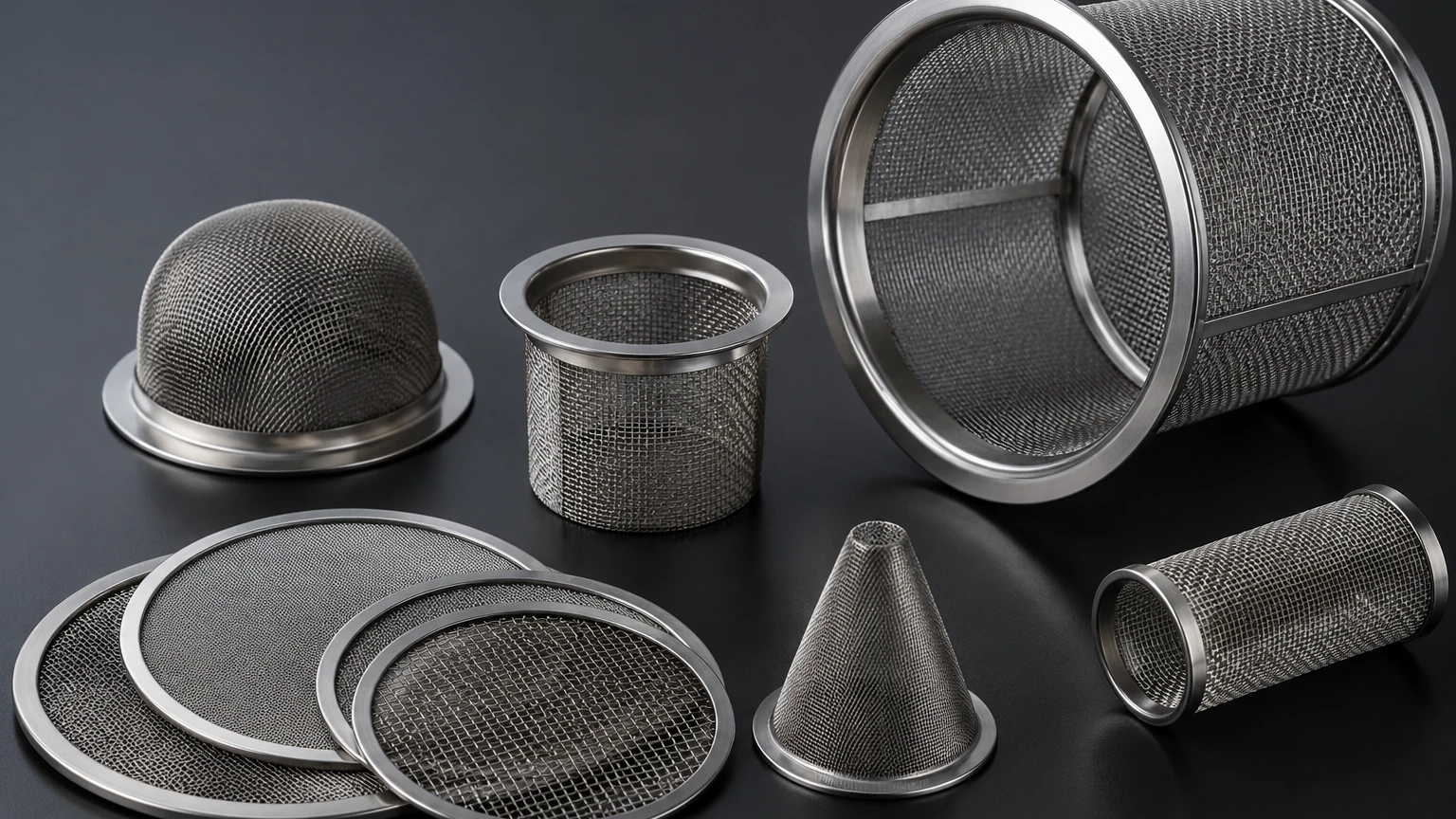
Weave Types and Their Impact on Filtration
The method by which the wires are woven also affects the performance of the mesh size strainer. Different weave patterns offer varying levels of strength and filtration precision:
* Plain Weave: The most common pattern where each warp wire crosses alternately over and under each shute wire. It provides the highest open area and is suitable for most standard filtration tasks.
* Twilled Weave: Each warp wire passes alternately over and under two shute wires. This allows for the use of heavier wires in a given mesh count, providing greater strength for fine mesh sizes.
* Dutch Weave (Plain or Twilled): This weave uses a larger diameter for the warp wires and a smaller diameter for the shute wires, which are woven closely together. This creates a dense, strong mesh with very small, tortuous openings, ideal for high-pressure and fine filtration applications.
Maintenance, Cleaning, and Replacement Protocols
A mesh size strainer is a "surface filter," meaning it captures contaminants on the surface of the mesh. As these contaminants accumulate, the differential pressure across the strainer increases. To ensure optimal performance, a maintenance schedule must be established.
Differential Pressure Monitoring
Installing pressure gauges upstream and downstream of the strainer is the most effective way to monitor its condition. A common industry standard is to clean or replace the mesh element when the differential pressure reaches 5-10 psi (0.35-0.7 bar) above the clean pressure drop. Allowing the pressure drop to exceed 20 psi can lead to mesh deformation or bypass.
Cleaning Methods
Stainless steel mesh strainers are often reusable. Cleaning methods include:
* Backwashing: Reversing the flow of fluid to flush particles off the mesh surface.
* Ultrasonic Cleaning: Using high-frequency sound waves in a solvent bath to remove fine particles lodged in the mesh openings.
* Chemical Cleaning: Using compatible acids or alkalis to dissolve organic or mineral scale.
Customization and OEM Capabilities in Mesh Strainer Production
Standard off-the-shelf strainers often fail to meet the specific spatial or performance requirements of complex industrial systems. This is where custom manufacturing becomes essential. Professional manufacturers like Kaifil provide OEM solutions that allow engineers to specify not only the mesh size but also the overall dimensions, end-cap configurations, and reinforcement structures.
Customization options often include:
* Reinforced Support: Adding perforated metal cores or external cages to support fine mesh under high pressure.
* Pleated Designs: Increasing the effective filtration area within the same footprint to handle higher flow rates or solids loading.
* Multi-Layer Sintering: Bonding multiple layers of mesh together through a heat-treating process to create a single, robust filtration element that combines fine filtration with high mechanical strength.
By working closely with a manufacturer that understands the engineering behind the mesh size strainer, purchasing teams can ensure they are receiving a component that is optimized for their specific total cost of ownership (TCO), balancing initial price with durability and maintenance costs.
Conclusion
The selection of a mesh size strainer is a foundational element of industrial process design. By accurately assessing the relationship between mesh count, micron rating, and open area, and by selecting the appropriate stainless steel grade and weave type, engineers can protect their equipment and maintain process integrity. Whether the application requires a simple 20-mesh basket for coarse water filtration or a precision 400-mesh sintered cartridge for chemical processing, understanding these technical variables is the key to filtration success. For further technical guidance and to explore a wide range of custom filtration solutions, professionals are encouraged to visit the Main Page to connect with engineering support.
